Securing admission to Harvard University is widely regarded as a pinnacle of academic achievement, representing the culmination of years of rigorous coursework, standardized testing, and extracurricular dedication. For most incoming freshmen, the acceptance letter marks the end of a grueling selection process. However, for a select group of undergraduates arriving on the Cambridge campus, a formidable hurdle remains: gaining a seat in Humanities 10: A Humanities Colloquium.
Despite its unassuming moniker, Humanities 10 stands as one of the most intellectually demanding, structurally rigid, and fiercely contested courses in American higher education. The class routinely attracts intense public scrutiny not only for its punishing workload, which requires students to digest roughly one heavy volume per week alongside regular essays, but also for its uncompromising pedagogical environment. In an era defined by digital ubiquity and artificial intelligence integration, Humanities 10 enforces a strict ban on electronic devices, mandates attendance at every single lecture, and completely eliminates the pass/fail grading option.
The Genesis and Historical Evolution of Core Humanities
To understand the cultural phenomenon of Humanities 10, one must examine its institutional ancestry. Founded in 2008 by renowned English professors and acclaimed writers Stephen Greenblatt and Louis Menand, the course was conceived as a modern Harvard adaptation of prestigious legacy programs, such as Columbia University’s legendary senior seminar and Yale University’s Directed Studies program. Greenblatt and Menand sought to construct a robust intellectual countermeasure against a long-term, nationwide decline in student enrollment within the humanities.
Yet, the ideological roots of the course reach back even further into the twentieth century. In 1945, Harvard published a landmark administrative report titled General Education in a Free Society. The document articulated a visionary framework for higher education, arguing that all university students—regardless of their eventual professional specialization—should share a common, non-vocational intellectual foundation. Shortly after the report’s release, the university introduced Humanities 2: The Epic and the Novel, a sprawling two-semester sequence that, at its historical peak, commanded an astonishing annual enrollment of 850 students.
In stark contrast, Humanities 10 deliberately limits its cohort to just 90 freshmen each academic year. This severe capacity restriction transforms enrollment into a high-stakes competition. Students must submit an intensive written application and successfully clear a secondary entrance evaluation just to secure a desk in the lecture hall.
The Uncompromising Reading List
The curriculum of Humanities 10 spans millennia of human thought, traversing the Western canon while strategically incorporating select global masterworks. The syllabus functions as a chronological expedition through philosophy, epic poetry, drama, and political theory.
For the Fall semester, students begin with Homer’s The Odyssey before moving through Aeschylus’s The Oresteia, Michel de Montaigne’s Essays, William Shakespeare’s Hamlet, and Baruch Spinoza’s Theological-Political Treatise. The reading list continues with foundational economic and literary texts, including Adam Smith’s The Wealth of Nations, Jane Austen’s Emma, Mary Shelley’s Frankenstein, Walt Whitman’s selected poetry, Friedrich Nietzsche’s On the Genealogy of Morality, T.S. Eliot’s The Waste Land, and James Baldwin’s The Fire Next Time and Notes of a Native Son.
The Spring semester maintains this relentless momentum, opening with James Joyce’s Ulysses, a notoriously complex modernist text that occupies two consecutive weeks. Subsequent assignments feature Virginia Woolf’s essays and stories, Edith Wharton’s The House of Mirth, Friedrich Schiller’s Letters on the Aesthetic Education of Man, Ueda Akinari’s Tales of Moonlight and Rain, Giovanni Boccaccio’s The Decameron, Eihei Dōgen’s Treasury of the True Dharma Eye, Dante Alighieri’s Inferno, Longus’s Daphnis and Chloe, and Plato’s The Symposium, before culminating in a multi-week deep dive into Homer’s The Iliad.
With minor exceptions—such as James Baldwin’s essays or Krzysztof Kieślowski’s film installation Dekalog—the curriculum could easily be mistaken for a century-old academic blueprint. Yet, its deliberate inclusion of global perspectives, including Lady Murasaki, Sor Juana, and Cao Xueqin in various iterations, reflects a modern recalibration of classical education.
The Pedagogical Philosophy and the War on Shortcuts
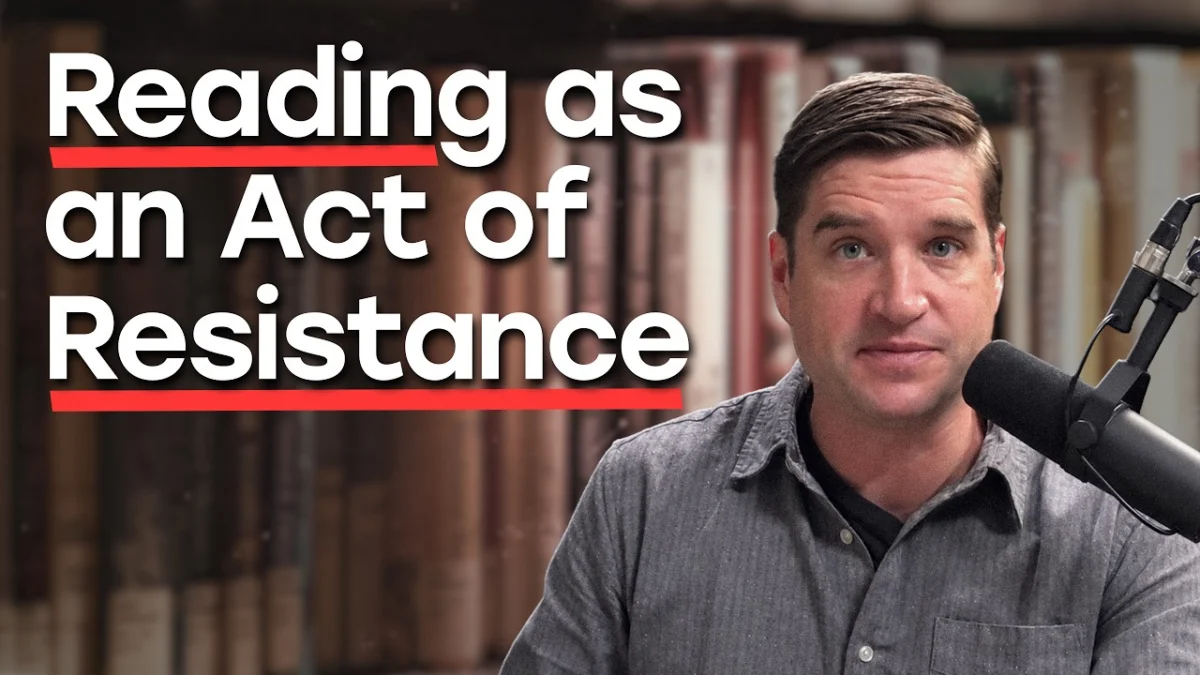
The intense culture surrounding Humanities 10 has sparked broader conversations among educators regarding the value of academic friction. In recent commentary, author and productivity expert Cal Newport highlighted the profound sociological implications of the students’ willingness to engage directly with difficult texts rather than relying on technological shortcuts.
Newport argues that modern technological developments have systematically conditioned students to seek immediate gratification by bypassing foundational experiences. Whether substituting a physical journey with a travel video, cultivating curated personas on social media instead of building offline relationships, or prompting a large language model to generate an essay instead of writing it independently, contemporary tools often strip human activities of their context, friction, and inherent meaning.
Within this framework, the extreme difficulty of the Humanities 10 reading list is not an arbitrary barrier designed to weed out applicants; rather, the difficulty itself constitutes the core value of the education. Complex texts resist superficial consumption, forcing students to cultivate sustained, undistracted focus—a cognitive muscle that modern digital ecosystems actively erode.
Broader Implications for Modern Higher Education
The enduring popularity and fierce selectivity of Humanities 10 offer a revealing lens through which to view the current state of American universities. While undergraduate programs nationwide grapple with plummeting humanities enrollment and the disruptive emergence of generative artificial intelligence, Harvard’s elite seminar demonstrates that rigorous, traditional academic discipline still holds immense cachet among top-tier students.
By refusing to water down its curriculum, accommodate digital distractions, or offer effortless grading paths, Humanities 10 establishes an uncompromising standard of intellectual rigor. As universities continue to debate the ethical and practical boundaries of educational technology, programs like Humanities 10 suggest that the future of deep learning may rely less on technological efficiency and more on the willingness to embrace intellectual difficulty.