
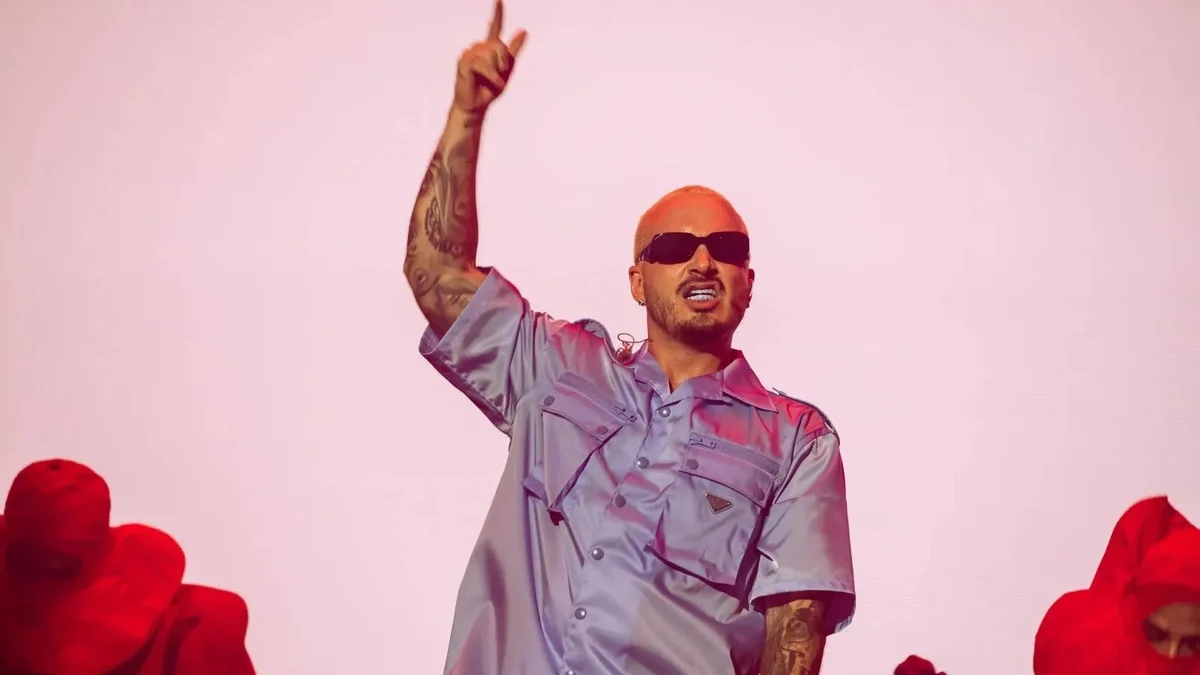
The Palco Mundo at Rock in Rio, arguably the most iconic stage in global music, transformed into a vibrant bridge between Colombian reggaeton and the kinetic energy of Brazilian pop during J Balvin’s headlining set this past Saturday. In an hour-long performance that solidified the symbiotic relationship between Latin American musical movements, the Medellín-born superstar curated a setlist that served as both a retrospective of his own chart-topping discography and a respectful homage to the host country’s unique rhythmic sensibilities.
A Masterclass in Cultural Crossover
J Balvin’s appearance at the 2026 edition of Rock in Rio was not merely a concert; it was a demonstration of the current geopolitical shift in the music industry. By weaving together global reggaeton staples with localized Brazilian collaborations, Balvin underscored a narrative he has championed for years: the era of Spanish and Portuguese-language dominance in the global mainstream.
The set began with a high-octane exploration of Balvin’s most recognizable hits, setting a frenetic pace that the massive audience met with equal intensity. However, the performance pivoted toward a more nuanced cultural exchange as Balvin invited specific local luminaries to join him, effectively blurring the lines between his sound and the funk-pop fusion that currently dominates the Brazilian charts.
The Chronology of a High-Stakes Performance
The trajectory of the evening was marked by three distinct phases: the solo exhibition of global reggaeton, the intimate celebration of his history with Anitta, and the electric surprise cameos that turned the stadium into a collective dance floor.
Early in the set, Balvin established his bona fides as a reggaeton pioneer, moving through tracks that have defined the genre’s expansion into the Northern Hemisphere. As the energy reached a fever pitch, he transitioned into a dedicated segment celebrating his deep ties to Brazil. He revisited “Downtown,” his 2017 collaboration with Anitta, and “Bola Rebola,” the 2019 anthem that brought together a diverse group of artists including Tropkillaz and MC Zaac. Balvin’s verbal acknowledgments of Anitta’s contributions to his own career path served as a pivot point for the evening, reinforcing the idea that his success is inextricably linked to the cross-pollination of these two massive Latin American cultures.
The climax of the performance arrived when Pedro Sampaio—a titan of the current Brazilian scene—emerged to join Balvin for “Perversa.” The chemistry between the two was immediate, shifting the sonic landscape of the stage toward a more localized funk-infused aesthetic. The momentum accelerated further when pop sensation Melody took the stage. The trio’s performance of “JETSKI” served as the evening’s centerpiece, a moment that encapsulated the meeting point of reggaeton, baile funk, and modern pop production.
Contextualizing the Rock in Rio Impact
Rock in Rio 2026 stands as a benchmark for the global music festival circuit, serving as a barometer for regional influence. Since its inception in 1985, the festival has evolved from a local cultural event into a global brand that dictates which artists have successfully bridged the gap between national superstardom and international recognition.
J Balvin’s presence on the Palco Mundo this year was highly anticipated, not only for his status as a Grammy-winning artist but because of his vocal stance on the independence of Latin music. Industry analysts have long noted that Balvin’s deliberate choice to continue recording in his native tongue, rather than pivoting to English-language pop, has been a strategic masterstroke. By maintaining his linguistic integrity, he has forced international markets to adapt to the music, rather than forcing the music to adapt to the markets.
Data and Market Implications
The success of the performance can be viewed through the lens of recent streaming data and industry trends. According to recent reports from the International Federation of the Phonographic Industry (IFPI), the Latin American market is currently one of the fastest-growing regions for music consumption, with streaming revenue in Brazil and Mexico consistently outpacing traditional markets in North America and Europe.
Balvin’s assertion in a recent interview with GQ—that he no longer sees a need to record an English-language album—is supported by this data. Artists like Karol G, Bad Bunny, and, indeed, Balvin himself, are now operating at a level where their global reach is independent of the traditional "crossover" path. For the modern listener, the barrier of language has been effectively dismantled by the ubiquity of high-production reggaeton and the globalization of social media platforms like TikTok, which often turn regional tracks into worldwide viral hits overnight.
Reactions and Industry Analysis
The social media response to the cameos of Pedro Sampaio and Melody was immediate, with hashtags related to the set trending across Latin American platforms within minutes. Music critics noted that the inclusion of these specific artists was a calculated decision, designed to ground Balvin’s global star power in the authenticity of the local scene.
Industry observers suggest that this performance will have lasting implications for festival programming. By prioritizing artists who engage in genuine collaboration rather than simple guest spots, festivals like Rock in Rio are creating "cultural moments" that transcend the stage. For Balvin, the set was an affirmation of his position as a primary architect of this new era.
Broader Impact: The Movement, Not a Trend
The significance of the 2026 performance lies in its rejection of the "trend" label. As Balvin stated, the current dominance of Spanish and Portuguese-language music is not a passing phase but a structural shift in how the world consumes culture.
Looking at the trajectory of the last decade, it is clear that the integration of Brazilian funk—a genre once largely confined to the favelas of Rio de Janeiro—into the global reggaeton lexicon is a testament to the power of artistic collaboration. The synergy witnessed on stage between a Colombian superstar and Brazilian icons reflects a broader trend of "South-South" cultural trade. Artists are increasingly finding that the most potent collaborations occur not by looking toward Los Angeles or London, but by looking toward their own neighbors.
Looking Toward the Future
As the dust settles on the Rock in Rio 2026 performances, the industry is left to analyze the long-term impact of such high-profile cross-border collaborations. Balvin’s set served as a blueprint for how a global artist can effectively honor local traditions while maintaining a cohesive, international aesthetic.
The inclusion of rising talent like Melody alongside established hitmakers like Pedro Sampaio indicates a conscious effort to keep the sound evolving. It signals to the audience that the "movement" is not stagnant; it is constantly incorporating new voices, new beats, and new cultural narratives.
Ultimately, J Balvin’s hour at Rock in Rio was a declaration of arrival. It was a statement that the music of the Americas—spanning the diverse linguistic and cultural heritage of its nations—is now the standard-bearer for pop music globally. As he continues his tour, the echo of that night in Rio will likely inform the way his contemporaries approach their own international festival appearances, signaling a shift toward more inclusive, collaborative, and culturally rooted performances on the world’s largest stages.








Leave a Reply