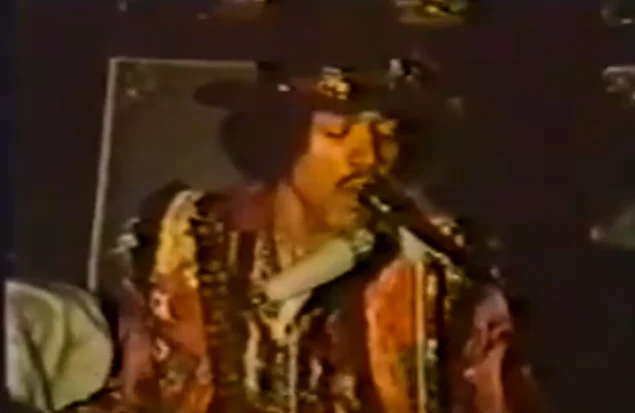
On the evening of June 4, 1967, at the Saville Theatre in London, a moment occurred that would forever be etched into the annals of rock and roll history. Jimi Hendrix, the American guitar virtuoso who had recently taken the London music scene by storm, took the stage and performed a rendition of the title track from the Beatles’ newly released album, Sgt. Pepper’s Lonely Hearts Club Band. The performance was not merely a cover; it was a profound gesture of musical respect delivered to an audience that included Paul McCartney and George Harrison. This event, occurring just three days after the album’s official United Kingdom release, serves as a testament to Hendrix’s extraordinary musical ear and his position within the elite hierarchy of 1960s rock royalty.
The significance of this performance is magnified by the timing and the technical complexity of the material. When the Beatles released Sgt. Pepper’s Lonely Hearts Club Band on June 1, 1967, it was immediately recognized as a revolutionary work that pushed the boundaries of studio production. Many critics and musicians at the time believed the album’s intricate layers and experimental sounds were impossible to replicate in a live setting. By performing the title track on June 4, Hendrix effectively challenged this notion, proving that the raw energy of a power trio—the Jimi Hendrix Experience—could capture the spirit of the Beatles’ most ambitious work through sheer improvisational brilliance.
The Chronology of a Musical Milestone
To understand the weight of this event, one must look at the condensed timeline of early June 1967. The Beatles had officially retired from touring in 1966, choosing instead to focus on the possibilities of the recording studio. Sgt. Pepper was the culmination of months of intensive labor at Abbey Road Studios.
On Thursday, June 1, 1967, the album was released to the public in the UK. It was an immediate cultural phenomenon, selling hundreds of thousands of copies within its first week. Jimi Hendrix, who had moved to London in late 1966 under the management of Chas Chandler, was among those who purchased the record on its first day of availability.
By Friday and Saturday, June 2 and 3, Hendrix was reportedly obsessed with the record. Despite his own busy schedule—his debut album Are You Experienced had been released only weeks earlier on May 12—he spent his limited downtime learning the arrangements of the title track.
On Sunday, June 4, 1967, Hendrix was scheduled to perform two shows at the Saville Theatre. The venue was leased by Brian Epstein, the Beatles’ manager, making it a frequent hangout for the band and their inner circle. That night, Paul McCartney, George Harrison, Eric Clapton, and various other luminaries of the London "Swinging Sixties" scene were in attendance. Hendrix chose to open his set with the "Sgt. Pepper" title track, catching the Beatles entirely off guard.
A High-Stakes Tribute in the Presence of Royalty
The Saville Theatre performance was characterized by the "Hendrix-ified" style that had become his trademark: high-volume feedback, heavy distortion, and an aggressive use of the vibrato arm, or "whammy bar." While the Beatles’ original version was a polished, brass-heavy rock song, Hendrix transformed it into a psychedelic blues explosion.
Paul McCartney has frequently recounted the story in interviews, often citing it as one of the greatest honors of his professional life. McCartney noted that the album had only been out for a few days, making Hendrix’s ability to master the song and incorporate it into a live set nearly instantaneous. "It’s still obviously a shining memory for me," McCartney recalled decades later. "To think that that album had meant so much to him as to actually do it by the Sunday night, three days after the release… it’s a pretty major compliment in anyone’s book."
The performance also featured a famous moment of onstage levity and technical difficulty. During his intense solo, Hendrix used his whammy bar so aggressively that his guitar went significantly out of tune. In a display of his characteristic confidence and "cool," Hendrix looked out into the audience, spotted Eric Clapton, and asked him to come up and tune the guitar. Clapton, reportedly embarrassed and wanting to remain a spectator, declined the offer, leaving Hendrix to wrestle the instrument back into pitch himself.
Technical Analysis and Cultural Context
The 1967 London music scene was a melting pot of innovation where the lines between genres were constantly being blurred. Hendrix’s decision to cover the Beatles was a bridge between the avant-garde studio experimentation of the UK’s greatest pop band and the American electric blues tradition that Hendrix represented.
From a technical standpoint, Hendrix’s rendition utilized the Marshall amplification stacks that were becoming synonymous with his sound. While the Beatles’ version of "Sgt. Pepper" relied on the interplay of Paul McCartney’s melodic bass lines and a four-piece horn section, Hendrix condensed these elements into a three-piece arrangement. His drummer, Mitch Mitchell, provided a jazz-influenced percussive foundation, while bassist Noel Redding held down the root notes, allowing Hendrix the freedom to use his Fender Stratocaster to mimic the vocal and brass melodies of the original recording.
Data from the era illustrates the dominance of these artists. By the time of the Saville Theatre gig, the Beatles’ Sgt. Pepper was on its way to spending 27 weeks at number one on the UK charts. Simultaneously, Hendrix’s "Hey Joe" and "Purple Haze" had established him as a commercial force. This meeting of musical minds was not just a fan paying tribute to an idol; it was a peer-to-peer acknowledgment between the most influential artists of the decade.
Historical Accuracy and Media Portrayals
The event has been dramatized in various forms of media, most notably in the 2013 biographical film Jimi: All Is by My Side, starring André Benjamin. While the film captures the tension and excitement of the era, historians have noted several creative liberties taken by the filmmakers.
In the cinematic version, Hendrix is shown playing a Gibson Flying V during the performance, whereas photographic evidence and eyewitness accounts confirm he used his iconic white Fender Stratocaster that evening. Furthermore, the film depicts a backstage argument between Hendrix and Noel Redding regarding the decision to play the song, suggesting Redding feared the Beatles would be offended. In reality, most accounts suggest the band was well-rehearsed enough to pull off the cover, even if the decision was made relatively close to showtime.
Another point of historical debate is whether Hendrix knew the Beatles were in the audience. While some sources, including the BBC and NME, have suggested he might have been unaware of their specific location in the theater, the small, tight-knit nature of the London elite at the time makes it highly likely he expected them to be there. The Saville Theatre was, after all, Epstein’s venue, and the Beatles were known to frequent the Sunday night shows.
Broader Impact on Rock History
The Saville Theatre performance remains a pivotal moment because it symbolized the end of the "pop" era and the beginning of "rock" as a serious art form. The fact that the world’s most famous pop group was being covered by the world’s most innovative guitarist within 72 hours of a release signaled a new speed of cultural exchange.
This event also solidified the mutual admiration between Hendrix and the Beatles. McCartney would later become one of Hendrix’s most vocal supporters, even going so far as to insist that the organizers of the Monterey Pop Festival in June 1967 include Hendrix on the bill. McCartney’s recommendation was instrumental in Hendrix’s breakthrough in the United States, as the Monterey performance—where he famously set his guitar on fire—catapulted him to international superstardom.
Furthermore, Hendrix’s "Sgt. Pepper" cover highlights a quality of his character often overshadowed by his flamboyant stage persona: his genuine collegiality. In an industry often defined by rivalry, Hendrix’s public tribute to his contemporaries was a rare display of professional solidarity. It showed that he was a student of music as much as he was a master of it, constantly listening to and absorbing the innovations of those around him.
Legacy of the June 4th Performance
Today, the 1967 Saville Theatre performance is regarded as a "holy grail" of rock history. While high-quality film of the entire set is scarce, the accounts of those present—McCartney, Harrison, and Clapton—have ensured its place in the collective memory of music fans. It serves as a reminder of a time when the boundaries of music were being redrawn on a weekly basis.
The interaction between these artists helped define the sound of the late 1960s—a blend of melody, volume, and experimentalism. When Hendrix played those opening chords of "Sgt. Pepper," he wasn’t just playing a song; he was acknowledging a shift in the cultural landscape. He was telling the Beatles, and the world, that the new era of music they had ushered in with their album was one he was ready to inhabit and expand.
As rock music continues to be studied as a formal academic subject, the events of June 4, 1967, provide a clear example of the "intertextuality" of the genre—how artists influence one another in real-time. For Paul McCartney, the memory remains a career highlight, a moment where the "coolest guy in the world" gave the Beatles the ultimate "thumbs up." For the rest of the world, it remains a defining snapshot of the Summer of Love, capturing the brief window where anything seemed possible in the world of music.