The literary landscape underwent a significant shift with the publication of George Saunders’ "A Swim in a Pond in the Rain: In Which Four Russians Give a Master Class on Writing, Reading, and Life." While ostensibly a craft book for aspiring writers, the work has been recognized by critics and scholars as a profound philosophical treatise on the dangers of human certainty and the transformative power of narrative empathy. Saunders, a Man Booker Prize-winning novelist and a long-time professor at Syracuse University, utilizes the works of Russian masters—Chekhov, Turgenev, Tolstoy, and Gogol—to diagnose a fundamental flaw in human consciousness: the tendency to mistake our subjective stories for objective reality.
At the heart of Saunders’ exploration is the assertion that certainty is not a virtue but a psychological trap. He argues that the stories we construct to navigate the world often act as "corks" that stifle possibility, severing individuals from the full spectrum of human experience. By tensing against the inherent "tenderness of life" in an attempt to maintain control, humans inadvertently cause harm to themselves and others. This journalistic analysis explores the mechanical, psychological, and cultural implications of Saunders’ philosophy, examining how the "courage of uncertainty" serves as a vital tool for contemporary survival.
The Architecture of Certainty and the Narrated Self
Drawing on insights that mirror those of the late neurologist Oliver Sacks, Saunders posits that narrative is the primary pillar of personal identity. From the moment of waking, the human mind begins a process of "world-making" through internal monologue. This process is inherently Darwinian; it is a survival mechanism designed to parse a vast, complex, and often threatening reality into a manageable narrative. However, this survival-enhancing range is necessarily narrow.
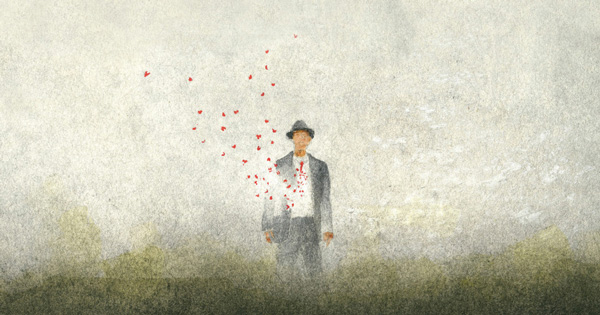
Saunders notes that we do not see or hear everything that exists, but only that which is helpful for our immediate thriving. The "unfortunate by-product" of this limited thinking is the ego. By selecting a tiny segment of the universe—the self—and narrating from that perspective, the mind creates a delusional gulf between things as they are and things as they are perceived. In this "movie" of the self, the individual is always the protagonist, and moral judgments are rendered based on what benefits that protagonist. Saunders argues that dysfunction and "evil" occur in direct proportion to how solidly a person believes their projections are absolute truths.
The Mechanics of Skaz: Misunderstanding as a Human Constant
A central concept in Saunders’ analysis is skaz, a Russian literary term referring to a technique where the narration mirrors the idiosyncratic speech and limited perspective of a specific character, often an unreliable one. Saunders applies this literary device to human interaction at large, suggesting that every person is an embodiment of skaz.
When two "Skaz-Headed Persons" meet, they bring two different, often conflicting, certainties into the same space. Because each believes they are at the center of the universe, they inevitably misunderstand one another. Saunders describes this as a "tragicomedy" where the collision of mind-made worlds leads to action based on wrong thinking, which in turn exacerbates global and personal conflicts. The recognition that reality is plural rather than singular is, for Saunders, the first step toward a more compassionate engagement with the world.
A Pedagogy of Doubt: The Syracuse Legacy
The origins of "A Swim in a Pond in the Rain" lie in Saunders’ twenty-year tenure at Syracuse University’s Creative Writing MFA program. For two decades, Saunders has taught a course on the 19th-century Russian short story, a class that has become legendary among students. The book serves as a distillation of these sessions, aiming to democratize the elite MFA experience.

Timeline of Development:
- 1997: George Saunders joins the faculty at Syracuse University.
- Early 2000s: Saunders begins focusing on the Russian masters as a way to teach the "physics" of storytelling.
- 2017: Saunders wins the Man Booker Prize for "Lincoln in the Bardo," solidifying his status as a leading voice in global literature.
- 2021: Publication of "A Swim in a Pond in the Rain," which reached the New York Times Best Seller list shortly after its release.
Saunders’ pedagogical approach is unique in its focus on "reconsideration." He views the short story not just as an art form, but as a "reconsideration machine." By engaging with a text, a reader is forced to constantly update their understanding of a character or a situation as new information is revealed. This practice, Saunders argues, trains the brain to remain open and curious in real-life scenarios.
The Russian Influence: A Case Study of Chekhov
The choice of Russian authors is deliberate. Anton Chekhov, Ivan Turgenev, Leo Tolstoy, and Nikolai Gogol wrote during a period of intense social transition and moral questioning in Russia. Chekhov, in particular, serves as Saunders’ primary exemplar of the "unsure" mind.
As a physician by training, Chekhov understood the necessity of a diagnosis, but as a writer, he championed the "eternal sandbox of doubt." Saunders analyzes Chekhov’s "Gooseberries" to illustrate how a story can resist easy moral conclusions. Rather than asking if a character is "good" or "bad," the story asks: "Under what conditions? For whom? What are the unintended consequences?"
This refusal to decide is what Saunders calls "holy." It requires the courage to deny oneself the comfort of a fixed identity. In a world where certainty is often mistaken for power, Saunders suggests that the most powerful act is to remain "perpetually curious."

Supporting Data and Critical Reception
The impact of Saunders’ work is reflected in both its commercial success and its critical standing. "A Swim in a Pond in the Rain" holds a 4.5/5 rating on major literary platforms like Goodreads and has been praised by the New York Times as "the best book on writing since Stephen King’s ‘On Writing’."
Comparative Analysis of Literary Pedagogy:
| Feature | Traditional Writing Guides | Saunders’ Approach |
|---|---|---|
| Focus | Plot structure, grammar, tropes | Consciousness, empathy, psychological "physics" |
| Goal | Producing a finished product | Transforming the reader’s/writer’s worldview |
| Philosophy | Rule-based | Uncertainty-based |
| Core Value | Clarity | Curiosity |
Critics have noted that Saunders’ timing was impeccable. Released during a period of high global polarization and "post-truth" discourse, the book’s emphasis on breaking down rigid belief systems resonated with a public weary of ideological tensity. Literary critic Michiko Kakutani noted that Saunders’ work acts as an "antidote to the reductive, binary thinking of the internet age."
Official Responses and Cultural Impact
While Saunders himself remains modest about his role as a philosopher, the academic community has embraced the book as a bridge between creative writing and ethics. Faculty members at several leading universities have integrated the book into their curricula, not only in English departments but also in psychology and philosophy programs.
In interviews following the book’s release, Saunders has expressed that his goal was to help people "unbreak their hearts." He argues that the tensing of the mind—the insistence on being right—is what leads to emotional and societal breakage. By practicing the "splendid reconsideration" found in literature, individuals can learn to love the world more by demanding less certainty from it.

Broader Impact and Implications
The broader implications of Saunders’ philosophy extend into the realms of social justice and conflict resolution. If, as Saunders suggests, evil occurs in proportion to how solidly a person believes their projections, then the "courage of uncertainty" is a radical political act. It suggests that the solution to polarization is not "better" certainty, but a willingness to inhabit the "delusional gulf" and acknowledge the validity of other skaz narratives.
Furthermore, the book reinforces the value of the humanities in a tech-centric world. At a time when STEM fields receive the lion’s share of funding and attention, Saunders provides a data-backed (albeit qualitatively) argument for the necessity of fiction. Stories, in his view, are not mere entertainment; they are essential cognitive exercises that prevent the "hardening" of the human heart.
As society continues to grapple with the complexities of the 21st century, the lessons from four 19th-century Russians, curated by a modern master, offer a pathway toward a more tender and curious existence. "A Swim in a Pond in the Rain" stands as a testament to the idea that by letting go of our need to be right, we gain a much more valuable capacity: the ability to see the world as it truly is, in all its pluralistic and uncertain beauty.