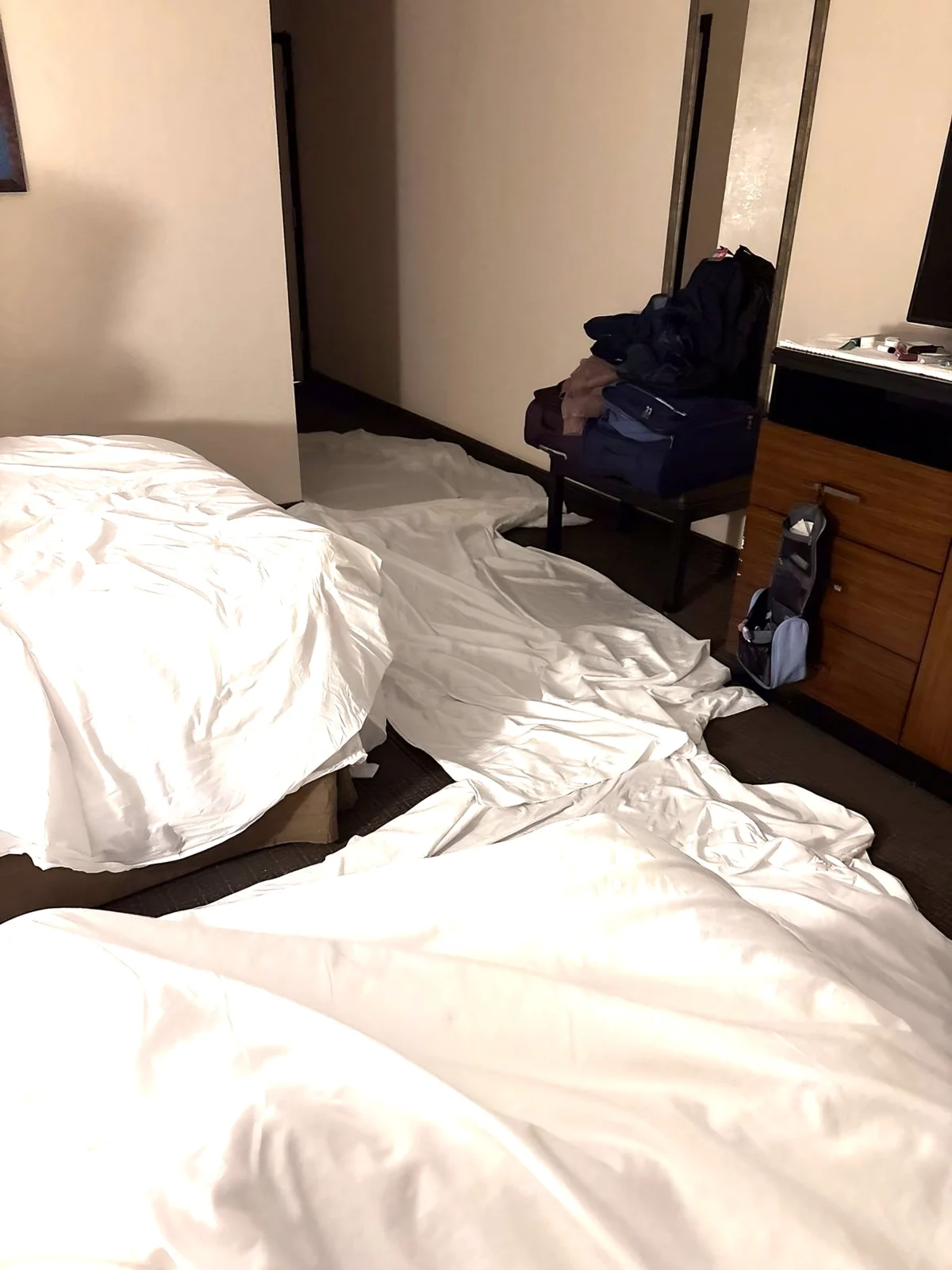
The Baymont by Wyndham Latham Albany Airport, a property that should ostensibly operate under the standardized quality assurance protocols of a global hotel brand, has become the epicenter of a public health investigation following harrowing reports of severe sanitation neglect. Residents, including families placed in the facility by county social services, have documented a disturbing array of conditions that defy basic habitability standards. These reports, which include infestations of rodents and insects, as well as significant structural decay, have cast a harsh light on the discrepancy between branded hotel promises and the reality of franchised property management.
The severity of the situation reached a breaking point when a mother reported that mice were observed crawling across her three-year-old child while the toddler was sleeping. This incident, among others, has triggered a broader examination of how such properties are vetted, inspected, and maintained, particularly when they serve as emergency housing for vulnerable populations.
A Chronology of Declining Conditions
The degradation of the Baymont by Wyndham Latham property did not occur in a vacuum. Maintenance logs and public records suggest a trajectory of neglect that spans several months. According to data from the New York State health inspection database, an entry dated March 13, 2025, highlighted persistent maintenance concerns at the property, specifically noting visible water stains and evidence of active plumbing leaks. Such indicators are frequently precursors to the mold growth later reported by occupants.
As the months progressed, the reports from residents became increasingly alarming. Occupants described a pervasive environment of squalor, citing the presence of cockroaches, bedbugs, and mouse droppings scattered across bedding. One resident, who was staying at the hotel with her nine-month-old daughter, detailed an environment where the carpets were perpetually damp and the rooms emitted a noxious, pervasive odor. The distress was such that many parents felt compelled to implement desperate measures, such as keeping their children from sleeping in the provided beds to avoid direct contact with vermin.
By October 2025, the volume of complaints reached a level that necessitated formal intervention. On October 13, 2025, Albany County health inspectors conducted an on-site visit. While the inspection concluded that there were no immediate "public health hazards" that required an emergency closure, the inspectors did record six distinct code violations.
The Inspection Paradox and Regulatory Limitations
The fact that the hotel passed a county health inspection while simultaneously being cited for six violations highlights a critical tension in local regulatory oversight. According to officials, the rooms where the most egregious violations—including potential pest entry points and safety hazards—were identified were marked as unoccupied at the time of the inspection.

The hotel’s management provided assurances to the county that these rooms would remain out of circulation until the necessary repairs were completed. This "remediation plan" allowed the hotel to maintain its operational status. However, public health experts often argue that in multi-unit structures like hotels, pests and mold do not respect the boundaries of specific room numbers. Infestations in one sector of a building frequently permeate ventilation systems, plumbing chases, and wall voids, making the isolation of violations in a few "unoccupied" rooms a questionable containment strategy.
Furthermore, the presence of a missing smoke detector, even in a room marked as vacant, represents a fundamental failure in safety compliance. For residents living in adjacent rooms, the potential for a fire hazard to escalate unchecked remains a significant concern, regardless of the room’s booking status.
The Role of Social Services and Emergency Housing
The Baymont by Wyndham in Latham functions not only as a commercial hotel for travelers but also as a provider of emergency housing for county social services. This dual-purpose model creates a unique set of challenges. When county agencies place families in temporary lodging, there is an implicit expectation that the facility meets a baseline of safety and hygiene that is often more rigorous than the average tourist might require.
Following the reports of vermin and unsanitary conditions, the response from local authorities was swift but fragmented. Albany County officials began the process of relocating some social services clients to alternative housing. In a separate, precautionary move, another county that had been utilizing the hotel for client placement suspended its usage of the property entirely. These actions reflect an acknowledgement that the hotel had failed to meet the duty of care expected for individuals placed there by government agencies.
The Erosion of Brand Integrity
The "Wyndham" name is intended to serve as a proxy for quality, consistency, and cleanliness. When a traveler books a room at a branded hotel, they are paying a premium for the expectation that the property adheres to a standardized set of corporate operating procedures. However, the reality of the modern hotel industry is dominated by franchising, where individual owners are responsible for day-to-day maintenance and staff management.
The situation at the Latham property raises broader questions about the effectiveness of corporate oversight. If a property can fall into a state of disrepair that includes rodent infestations and active water leaks, the question arises: what are the consequences for the franchisee, and what mechanisms are in place to ensure brand standards are being met?
History has shown that brand-name hotels are not immune to systemic cleanliness failures. Investigative reporting, such as the long-running series by Inside Edition involving ultraviolet light testing on linens, has previously revealed that even high-profile chains have struggled to maintain basic hygiene standards between guest stays. From reports of used sheets being left on beds to the discovery of hair and bodily fluids in rooms, the disconnect between corporate marketing and operational reality is a recurring issue in the hospitality sector.

Implications for Travelers and Industry Standards
The incidents at the Baymont by Wyndham in Latham serve as a stark reminder to travelers and institutional clients alike: brand loyalty and official "pass" grades from inspections are not absolute guarantees of quality. The implications for the industry are significant. There is an increasing demand for transparency in hotel maintenance, with calls for more frequent, unannounced, and rigorous inspections that account for the interconnected nature of hotel infrastructure.
For those booking travel—whether for business or personal reasons—the advice from consumer advocates has become increasingly cautious. Travelers are now encouraged to treat "brand reliability" with a degree of skepticism. Checking real-time user reviews on multiple platforms, looking for patterns in recent complaints rather than relying on total star ratings, and maintaining a high level of vigilance upon check-in have become standard survival tactics for the modern traveler.
Moreover, the use of hotels as emergency housing for social services creates a captive audience that lacks the luxury of choice. This demographic is disproportionately affected when standards drop, as they often do not have the financial means to "check out" and move to a competitor. The situation in Latham underscores a moral and legal imperative for local governments to conduct more stringent, recurring audits of any commercial property used for the temporary or long-term housing of vulnerable citizens.
Conclusion
The events at the Baymont by Wyndham Latham are a microcosm of a larger issue within the hotel industry: the struggle to maintain standardized quality in a franchised market. While the hotel has stated its intent to address the six violations cited by the health department, the damage to the trust of both the local community and the traveling public is substantial.
As regulatory bodies continue to monitor the property and social services agencies reassess their housing contracts, the case remains a sobering example of the dangers of institutionalized neglect. Until the hospitality industry reconciles its marketing promises with the reality of its maintenance requirements, the burden of ensuring basic health and safety remains, unfortunately, on the consumer. The case serves as a call to action for stricter accountability, better inter-agency cooperation, and a reevaluation of the standards that allow a facility to operate while simultaneously harboring conditions that no human being—let alone a child—should ever have to endure.