
Movistar Creates Service Improve Coverage: A Deep Dive into Network Expansion and Enhancement
Movistar, a leading telecommunications provider, has consistently prioritized enhancing its network coverage to meet the ever-growing demand for seamless connectivity. This commitment is not merely about expanding geographical reach but also about optimizing signal strength, speed, and reliability across diverse environments. Movistar’s strategic initiatives to improve coverage are multifaceted, encompassing significant investments in infrastructure, the adoption of cutting-edge technologies, and a data-driven approach to identifying and addressing service gaps. Understanding these efforts is crucial for consumers, businesses, and policymakers alike, as robust mobile coverage forms the bedrock of digital inclusion and economic progress. This article will delve deeply into the various strategies and technologies Movistar employs to create a superior coverage experience, exploring the technical underpinnings, the business rationale, and the tangible benefits for its customer base.
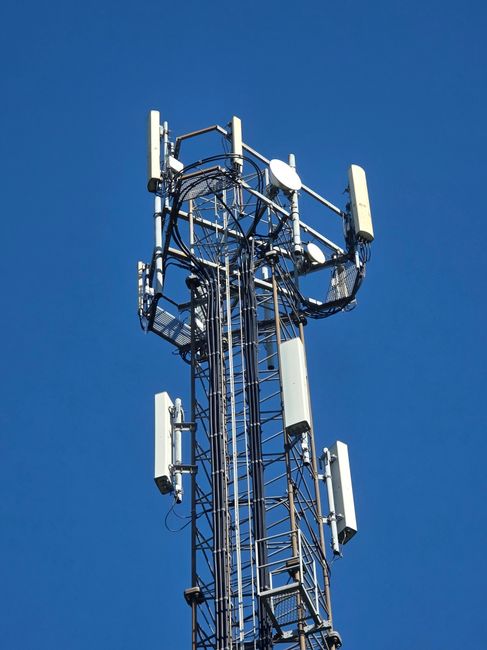
One of the foundational pillars of Movistar’s coverage improvement strategy is the relentless expansion of its physical network infrastructure. This involves the deployment of new base stations, often referred to as cell towers, in areas previously underserved or entirely lacking mobile signal. This process is a complex undertaking, requiring meticulous planning, site acquisition, regulatory approvals, and substantial capital expenditure. Movistar actively surveys potential locations, utilizing data analytics to pinpoint areas with high population density, significant traffic flow, or specific industry needs that necessitate enhanced connectivity. The deployment of these new sites is not limited to rural or remote regions; it also includes densification efforts in urban centers where increasing user numbers and data consumption can strain existing capacity, leading to slower speeds and dropped calls. This strategic placement of new infrastructure aims to ensure that a greater percentage of the population has access to Movistar’s services, thereby broadening its market penetration and customer satisfaction.
Beyond the sheer quantity of new sites, Movistar places a strong emphasis on the technological advancements incorporated into its network. This includes a commitment to rolling out and optimizing 4G LTE (Long-Term Evolution) and, increasingly, 5G networks. 4G LTE technology has been a critical component in improving data speeds and overall capacity, enabling richer mobile experiences such as high-definition video streaming and responsive online gaming. Movistar’s continuous upgrades to its 4G infrastructure ensure that existing spectrum is utilized more efficiently, delivering better performance even without immediate deployment of new spectrum. The advent of 5G, however, represents a significant leap forward in coverage capabilities. 5G offers substantially higher bandwidth, lower latency, and the ability to connect a vastly greater number of devices simultaneously. Movistar’s rollout of 5G is not uniform but rather strategic, often starting in densely populated urban areas where the impact is most immediate and noticeable. However, the company is also exploring innovative ways to extend 5G’s reach, including the use of mid-band and high-band spectrum, each with its own propagation characteristics and deployment challenges. Mid-band spectrum, for instance, offers a good balance of speed and coverage, making it a key component in Movistar’s 5G expansion plans for a wider geographical reach than millimeter-wave 5G.
Furthermore, Movistar leverages a range of innovative technologies to overcome the inherent challenges of signal propagation and penetration. Small cells, for example, are crucial for addressing indoor coverage issues and filling in coverage gaps in dense urban environments. These compact base stations can be deployed on lampposts, buildings, and other street furniture, bringing the network closer to users and improving signal strength within specific areas. Distributed Antenna Systems (DAS) are another vital tool, particularly in large indoor venues like stadiums, airports, and shopping malls. DAS networks utilize a series of interconnected antennas to distribute wireless signals throughout a building, ensuring consistent and robust coverage where traditional macro cells might struggle to penetrate. Movistar’s investment in these solutions demonstrates a commitment to providing a comprehensive coverage experience, not just outdoors but also in the indoor environments where a significant portion of mobile usage occurs.
The company’s approach to coverage improvement is also heavily influenced by data analytics and network monitoring. Movistar continuously collects and analyzes vast amounts of data related to network performance, user activity, and customer feedback. This data allows them to identify specific areas experiencing poor signal quality, high congestion, or frequent dropped calls. By understanding these pain points at a granular level, Movistar can prioritize its network investments and deployment efforts to address the most critical issues first. This data-driven approach ensures that resources are allocated efficiently, maximizing the impact of network upgrades. Furthermore, customer feedback channels, including complaint logs and social media monitoring, play a vital role in providing real-time insights into coverage performance from the user’s perspective. This feedback loop is essential for continuous improvement and for ensuring that the company’s network development aligns with customer expectations.
Movistar’s commitment to improving coverage extends beyond its core mobile network to encompass its fixed wireless access (FWA) and fiber optic offerings. While distinct from mobile coverage, these services are integral to Movistar’s overall connectivity strategy. Fiber optic networks provide high-speed, reliable broadband internet to homes and businesses, offering a robust alternative or complement to mobile data. Movistar’s aggressive fiber rollout program is designed to expand high-speed internet access to a greater number of households, reducing the reliance on slower, less reliable connections and indirectly alleviating pressure on the mobile network in areas where FWA might be a viable option. Fixed wireless access, utilizing mobile network technologies, also plays a role in bridging the digital divide, providing broadband connectivity to areas where laying fiber optic cables is cost-prohibitive. By offering a diverse portfolio of connectivity solutions, Movistar aims to ensure that all customers, regardless of their location or specific needs, have access to high-quality internet and communication services.
The regulatory environment and spectrum management also significantly influence Movistar’s coverage enhancement efforts. Governments and regulatory bodies play a crucial role in allocating radio spectrum, the essential resource for wireless communication. Movistar actively participates in spectrum auctions and engages with regulators to advocate for policies that support network investment and expansion. The availability of sufficient and appropriately licensed spectrum is critical for deploying advanced technologies like 5G and for ensuring adequate capacity to meet growing demand. Furthermore, regulatory frameworks that streamline site acquisition processes and reduce bureaucratic hurdles can significantly accelerate the deployment of new infrastructure, thereby speeding up coverage improvements. Movistar’s proactive engagement in these areas is vital for its ability to execute its coverage strategies effectively.
The business rationale behind Movistar’s persistent focus on coverage improvement is clear: a superior network directly translates to a competitive advantage and increased customer loyalty. In a market where mobile services are increasingly commoditized, network quality becomes a key differentiator. Customers are more likely to choose and remain with a provider that offers reliable and fast connectivity, regardless of their location. For businesses, robust mobile coverage is essential for operational efficiency, remote work capabilities, and the adoption of new technologies like the Internet of Things (IoT). Movistar’s investment in coverage is therefore an investment in its market share, its revenue streams, and its long-term sustainability.
In conclusion, Movistar’s efforts to improve service coverage are a complex and ongoing endeavor, driven by a combination of strategic infrastructure investment, the adoption of cutting-edge technologies like 5G, the intelligent use of data analytics, and proactive engagement with the regulatory landscape. The deployment of new base stations, the optimization of existing networks, and the introduction of innovative solutions such as small cells and DAS are all critical components of this strategy. By continuously striving to expand and enhance its network, Movistar aims to provide a seamless and reliable connectivity experience for its growing customer base, thereby reinforcing its position as a leader in the telecommunications industry and contributing to the broader digital transformation. The ongoing evolution of mobile technology and the ever-increasing demand for data necessitate a perpetual commitment to network improvement, a commitment that Movistar demonstrates through its sustained and multifaceted approach to coverage enhancement.





Leave a Reply