
The intersection of global environmental degradation and human well-being has reached a critical juncture, prompting international institutions and sovereign governments to forge deeper alliances. In a significant move to address the escalating health burdens caused by global warming, the World Health Organization (WHO) and the Kingdom of the Netherlands have officially renewed their strategic partnership. This revitalized collaboration is underpinned by a fresh financial contribution of €500,000 from the Dutch government for the year 2024. Designed to fortify climate resilience and foster sustainable healthcare infrastructure across the globe, this funding builds upon a foundational partnership initiated in 2023, bringing the total cumulative financial support from the Netherlands for WHO’s climate and health initiatives to more than €1.1 million.
The announcement comes at a pivotal moment for the international public health community. As nations worldwide grapple with increasingly frequent extreme weather events, shifting disease vectors, and compromised food and water security, the mandate for climate-smart healthcare systems has never been more urgent. The renewed funding will be directly channeled into bolstering the Secretariat of the Alliance for Transformative Action on Climate and Health (ATACH) and accelerating the implementation of WHO’s comprehensive global climate change and health programs.
Main Facts and Core Objectives of the Renewed Partnership
The collaboration between the WHO and the Netherlands is not merely a financial transaction; it represents a strategic alignment of policy, diplomacy, and technical expertise. The core objective of the €500,000 allocation is to empower member states—particularly those in developing and highly vulnerable regions—to transition toward low-carbon, climate-resilient health systems.
Key pillars of the renewed partnership include:
- Strengthening ATACH: Enhancing the operational capacity of the Alliance for Transformative Action on Climate and Health Secretariat to coordinate global multi-stakeholder commitments.
- Early Warning Systems: Advancing integrated climate and health surveillance systems, allowing nations to anticipate and mitigate health-related climate risks before they escalate into humanitarian catastrophes.
- Capacity Building: Assisting governments in fulfilling the health commitments made at COP26 and subsequent global climate summits.
- Sustainable Infrastructure: Supporting nations in greening their health sectors, recognizing that the healthcare industry itself contributes significantly to global carbon emissions and must transition to sustainable models.
The partnership operates on the understanding that climate change is fundamentally a health crisis. Rising global temperatures expand the geographic range of vector-borne diseases such as malaria and dengue fever, while severe droughts and floods devastate sanitation infrastructure, triggering outbreaks of cholera and other waterborne illnesses. By providing targeted technical and financial assistance, the WHO-Netherlands alliance seeks to insulate fragile healthcare networks against these shocks.
Chronology of Collaboration: From COP26 to the 2024 World Health Assembly
The formalization of this partnership is the culmination of years of escalating diplomatic and technical engagement between the Dutch government and the United Nations’ public health agency. A chronological overview illustrates the steady momentum behind this international coalition:
- November 2021 (COP26): Nations gathered in Glasgow for the UN Climate Change Conference, where health emerged as a central thematic focus. A critical mass of countries committed to building climate-resilient and low-carbon health systems, laying the groundwork for subsequent institutional frameworks like ATACH.
- Throughout 2022: The global health community observed unprecedented climate-induced health emergencies, from catastrophic flooding in Pakistan to historic heatwaves across Europe, cementing the necessity for coordinated multilateral intervention.
- 2023: The Kingdom of the Netherlands and the WHO officially established their bilateral partnership targeting climate change and health. Initial funding was deployed to assist countries in Africa, Asia, and the Eastern Mediterranean region in implementing integrated early warning systems and meeting COP26 health mandates.
- May 2024 (World Health Assembly 77): Demonstrating global leadership, the Netherlands, alongside Peru, spearheaded the adoption of the landmark World Health Assembly 77 Resolution on Climate Change and Health. This resolution successfully updated and replaced the outdated 2008 framework, calling for a comprehensive WHO global action plan, intensified national mitigation efforts, and the mainstreaming of climate and health into the WHO’s Fourteenth General Programme of Work (GPW 14).
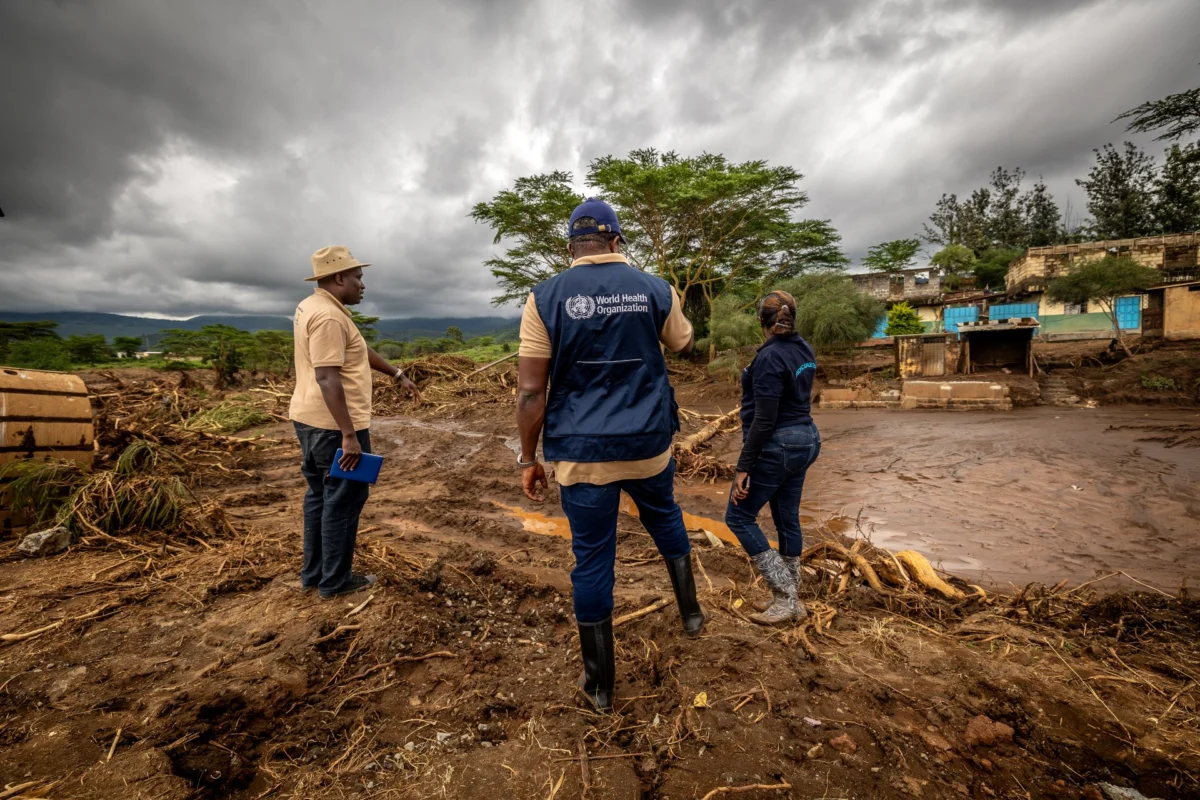
- April–May 2024: Practical realities of the climate crisis manifested vividly in regions like East Africa. In Kenya, exceptionally heavy seasonal rains led to widespread devastation, flash flooding, and subsequent disease outbreaks. WHO-trained Rapid Responders were deployed to evaluate the aftermath in regions such as Mai Mahiu, underscoring the vital importance of the surveillance and early warning systems funded by partnerships like the one between the WHO and the Netherlands.
- Late 2024: The renewal of the partnership with a €500,000 allocation arrives just ahead of the United Nations Climate Change Conference (COP29) in Azerbaijan, positioning the partners to advocate aggressively for health priorities in global climate negotiations.
Supporting Data and the Human Cost of Climate Inaction
The urgency driving the WHO-Netherlands partnership is firmly rooted in empirical data regarding the lethal intersection of environmental degradation and human health. According to recent WHO assessments, climate change is the single biggest health threat facing humanity, undermining decades of progress in global public health, air quality, and disease control.
Vector-borne diseases are encroaching upon new territories as temperatures rise. For instance, the World Health Organization estimates that billions of people globally are currently at risk of contracting vector-borne illnesses, with changing precipitation and temperature patterns lengthening transmission seasons and expanding endemic zones. Furthermore, extreme weather events—such as the devastating floods witnessed in Kenya in early 2024—frequently destroy healthcare facilities, contaminate water supplies, and displace populations, creating fertile ground for acute malnutrition and communicable disease epidemics.
Conversely, the healthcare sector itself carries a heavy environmental footprint. If the global health sector were a country, it would be the fifth-largest emitter of greenhouse gases on earth. Recognizing this contradiction, the Netherlands and the WHO are intensely focused on promoting low-carbon healthcare solutions. Transitioning hospitals and clinics to renewable energy, optimizing supply chains, and reducing medical waste are essential components of the transition toward sustainable healthcare models supported by the new funding.

Within the framework of the WHO’s Fourteenth General Programme of Work (GPW 14), the organization has established ambitious targets. Backed by rigorous economic and epidemiological modeling outlined in its latest Investment Case, the WHO projects that collaborative, multi-partner interventions in climate resilience and health can save an estimated 7.5 million lives over the next four years.
Official Responses and Strategic Policy Alignment
The Netherlands has long positioned itself as a progressive leader in international development, sustainability, and global health diplomacy. This commitment is explicitly codified in the Dutch Global Health Strategy 2023-2030, a comprehensive policy framework that recognizes the inextricable link between planetary boundaries and human health. By prioritizing the climate-health nexus within its foreign policy, The Hague has sought to bridge the traditional divide between environmental ministries and health ministries on the international stage.
Diplomats and public health officials have underscored that the leadership demonstrated by the Netherlands—particularly through its co-sponsorship of the World Health Assembly 77 Resolution alongside Peru—serves as a model for other high-income nations. By mobilizing financial resources and political capital, the Dutch government is helping to ensure that climate adaptation funds are not exclusively channeled into infrastructure and energy sectors, but are strategically directed toward safeguarding human populations at the community level.
From the perspective of the World Health Organization, the continuation of Dutch support provides vital institutional flexibility. While traditional multilateral funding streams often come with rigid administrative constraints or lengthy bureaucratic delays, flexible allocations allow the WHO to rapidly deploy technical assistance where emergencies arise. Whether supporting a Ministry of Health in the Eastern Mediterranean to establish heat-health early warning systems or assisting African nations in reinforcing post-flood disease surveillance, this financial agility is indispensable.
Furthermore, the partnership actively fosters multi-stakeholder engagement. Addressing a crisis as multifaceted as climate change requires a whole-of-society approach. Consequently, the WHO and the Netherlands routinely collaborate with civil society organizations, Multilateral Development Banks, academic institutions, and frontline health professionals to ensure that grassroots realities inform high-level policy formulation.
Broader Impact and Implications for Global Climate Diplomacy
As the international community prepares for the upcoming COP29 summit in Azerbaijan, the renewal of the WHO-Netherlands partnership sends a powerful political signal. For decades, health was largely treated as a peripheral issue in international climate negotiations, overshadowed by discussions surrounding energy transition, carbon markets, and industrial emissions. However, the relentless escalation of climate-driven health emergencies has forced a paradigm shift.
By anchoring health at the core of climate negotiations, coalitions like the one between the WHO and the Netherlands ensure that the human face of the climate crisis remains central to decision-making. When governments calculate the economic and social costs of inaction, the morbidity and mortality resulting from air pollution, heat stress, and infectious disease outbreaks represent staggering losses that demand immediate mitigation and adaptation financing.
Moreover, the partnership’s emphasis on vulnerable regions highlights a crucial issue of climate justice. Low- and middle-income countries, which have historically contributed the least to global greenhouse gas emissions, disproportionately bear the brunt of climate-related health shocks. By transferring technical expertise, strengthening local surveillance systems, and assisting in the development of low-carbon healthcare infrastructure, the WHO and the Netherlands are actively contributing to global health equity.
Looking forward, the success of these initiatives will depend heavily on whether other sovereign donors follow the Dutch lead. While the €500,000 2024 allocation and the cumulative €1.1 million investment since 2023 represent substantial catalytic funding, the global deficit in climate-health financing remains vast. Scaling up these efforts will be essential to meet the targets outlined in the WHA 77 Resolution and to fulfill the life-saving projections of the WHO’s Fourteenth General Programme of Work.
Ultimately, the enduring alliance between the World Health Organization and the Kingdom of the Netherlands demonstrates that targeted, strategic investments in health resilience can yield profound dividends. By bridging the gap between policy and practice, science and diplomacy, the two entities are helping to construct a more secure, sustainable, and resilient global health architecture capable of withstanding the unprecedented environmental realities of the twenty-first century.








Leave a Reply