
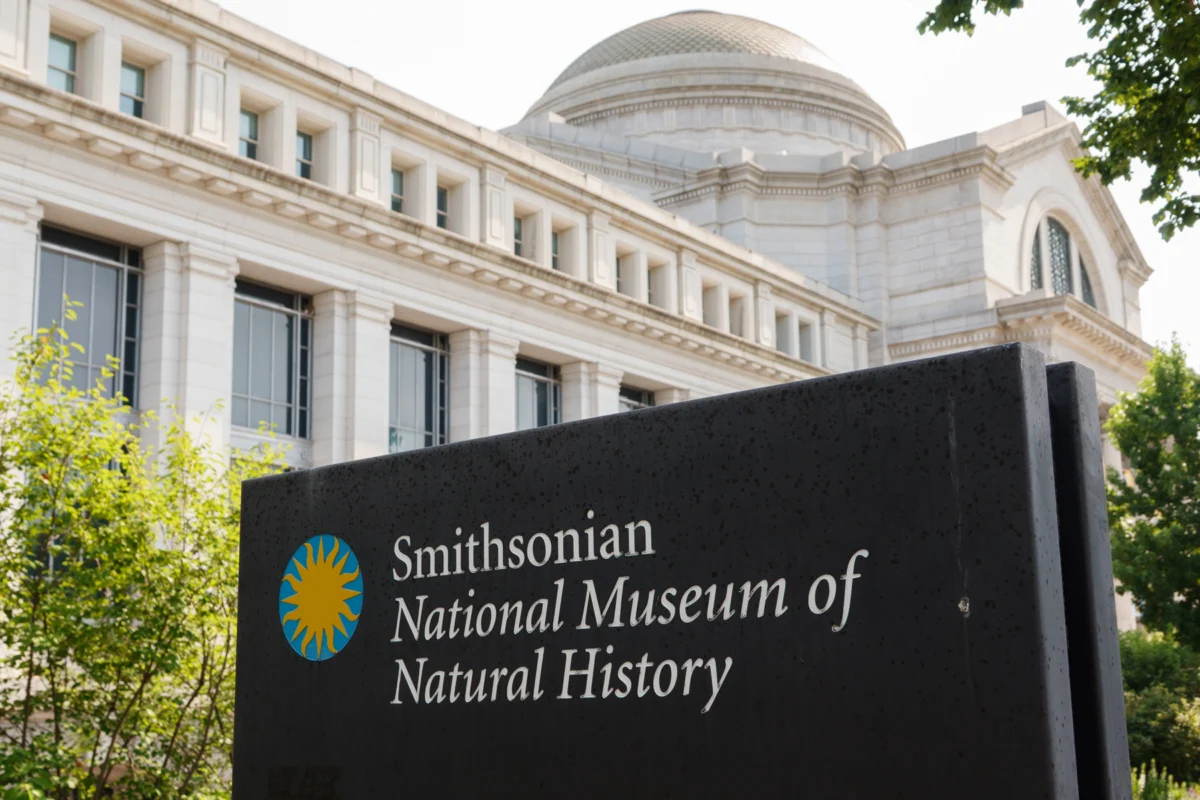
The federal government is moving forward with an $84,000 administrative initiative to install prominent warning signs outside the Smithsonian National Museum of American History, an unprecedented intervention that targets the institution’s historical framing and curatorial decisions. This policy reflects a sustained federal effort to reshape public presentations of American heritage, placing federal cultural institutions at the center of ongoing ideological debates over national identity, historical interpretation, and institutional autonomy.
Main Facts of the Administrative Action
Under directives spearheaded by the executive branch, the Department of the Interior has outlined plans to allocate $84,000 for the production and installation of large-scale exterior signage at the flagship history museum on the National Mall. According to official correspondence, including letters obtained by media outlets from Interior Secretary Doug Burgum, these placards are designed to inform visitors that the museum presents perspectives deemed by the administration to be politically or ideologically biased.
The initiative moves beyond traditional oversight mechanisms—such as congressional appropriations, board appointments, and internal peer reviews—by introducing direct, external messaging at the physical threshold of a public museum. The planned signage asserts that the institution’s exhibits advance specific partisan and cultural viewpoints, particularly regarding race, gender, and the foundational narrative of the United States. Administration officials have defended the expenditure as a measure of consumer transparency, intended to prepare visitors for what the executive branch characterizes as revisionist or controversial interpretations of history.
Chronology and Policy Evolution
The placement of exterior warning signs is the latest development in a multi-step executive campaign targeting federal cultural and educational institutions.
- March 2025: President Donald Trump signed an executive order titled “Restoring Truth and Sanity to American History.” The directive mandated a comprehensive review of federal properties, specifically identifying the Smithsonian Institution as requiring intervention to remove what the administration termed “improper ideology.”
- Summer 2025: Federal agencies began formulating guidelines to evaluate exhibits across various Smithsonian museums, focusing heavily on installations addressing racial history, systemic inequality, and civil rights movements.
- July 2026: A follow-up executive order was issued, formally authorizing the installation of temporary and permanent signage to provide the administration’s counter-narrative directly to museum patrons. The text of the order argued that the institution had fallen under the influence of a "race-centered ideology" that portrays Western values as inherently harmful.
- September 2026: Interior Secretary Doug Burgum detailed the operational scope of the project in official communications, confirming that $84,000 had been earmarked for the manufacturing and erection of the physical signs outside the National Museum of American History.
Supporting Data and Context
The Smithsonian Institution, established by an act of Congress in 1846 and funded in part by annual federal appropriations, comprises 21 museums, the National Zoo, and numerous research centers. As a trust instrumentality of the United States, it has historically maintained a degree of structural independence designed to insulate scholarly research, archival preservation, and museum curation from immediate political shifts.
The National Museum of American History alone houses over 1.8 million objects and 3 million archival documents, charting the political, social, cultural, and technological development of the nation. In recent decades, museum leadership and independent historians have expanded the scope of exhibits to incorporate more inclusive social histories. These include examinations of the transatlantic slave trade, Jim Crow segregation, the labor movement, Indigenous history, and the evolution of civil rights for various marginalized demographics, including LGBTQ+ Americans.
Critics of these expansions, including conservative policymakers and advocacy groups, argue that contemporary museum programming places disproportionate emphasis on national shortcomings, cultural conflict, and identity politics, thereby undermining civic unity. Conversely, museum professionals, academic historians, and museum associations maintain that incorporating diverse perspectives and confronting difficult historical realities is essential to rigorous, comprehensive scholarship.
Official Responses and Stakeholder Reactions
The administration’s initiative has elicited sharp divisions among policymakers, historians, and cultural preservationists.
Proponents of the executive action argue that taxpayer-funded institutions have a fundamental obligation to reflect mainstream values and present a unifying historical narrative. In statements accompanying the Interior Department letters, officials emphasized that the signage is necessary to "ensure parents bringing young children to the museum are equipped to protect the well-being of their children." The administration’s communications specifically highlight exhibits that address gender identity, arguing that certain presentations conflict with biological realities and traditional social norms.
In contrast, museum advocates, historical societies, and congressional critics have condemned the intervention as political interference in cultural and educational spaces. Representatives from museum leadership organizations have pointed out that historical interpretation is an evolving academic discipline driven by peer-reviewed research, archival evidence, and ongoing scholarly debate, rather than executive decree. Critics contend that placing ideologically motivated warning signs outside a national museum establishes a dangerous precedent for government censorship and the politicization of public knowledge.
Furthermore, legal and constitutional scholars have raised questions regarding the boundaries of executive authority over independent trust instruments like the Smithsonian. While the federal government provides a substantial portion of the institution’s operational budget through congressional allocations, the Smithsonian’s Board of Regents—comprising the Chief Justice of the United States, the Vice President, members of Congress, and private citizens—has historically guarded its operational autonomy.
Broader Impact and Implications
The decision to install partisan advisory signs at the Smithsonian National Museum of American History carries significant implications for the future of federal cultural institutions, tourism in the nation’s capital, and the broader American culture wars.
- Politicization of Cultural Infrastructure: By turning a premier educational institution into a physical platform for partisan grievances, the action blurs the line between public scholarship and government propaganda. This approach risks eroding public trust in federal scientific, historical, and cultural repositories, which have traditionally been viewed as nonpartisan arbiters of fact and heritage.
- Precedent for Future Administrations: The normalization of executive intervention in museum curation sets a precedent whereby future administrations could use federal signage, funding adjustments, or direct oversight to alter or protest historical exhibits according to shifting political priorities.
- Impact on Tourism and Public Perception: Washington, D.C., attracts tens of millions of domestic and international visitors annually, with the Smithsonian museums serving as central attractions. Introducing overt political messaging at the entrance of these institutions alters the visitor experience, transforming a space of quiet contemplation and learning into an extension of ongoing political disputes.
- Implications for Academic Freedom: The policy underscores a broader national debate over the teaching of history in public schools, universities, and cultural centers. As debates over curricula intensify, the outcome of the friction between the executive branch and the Smithsonian may serve as a benchmark for the autonomy of cultural institutions nationwide.
As the $84,000 signage project moves toward completion, the broader conflict over who controls the narrative of the American past remains unresolved, highlighting deep ideological fractures regarding national identity, historical truth, and the role of the federal government in shaping public memory.










Leave a Reply