
Nothing Phone (2a): Price, Features, and Why It’s a Smart Choice
The Nothing Phone (2a) emerges as a compelling mid-range contender, aiming to disrupt the segment with a focus on user experience, unique design, and surprisingly capable hardware at an attractive price point. This device is not just another smartphone; it’s an embodiment of Nothing’s philosophy of making technology feel more human and less intrusive. Its predecessor, the Nothing Phone (1), laid the groundwork, and the Phone (2a) refines and expands upon that vision, bringing premium features down to a more accessible tier.
The pricing strategy for the Nothing Phone (2a) is one of its most significant selling points. It aims to directly challenge established players in the highly competitive mid-range market. Across different regions and configurations, the Nothing Phone (2a) typically starts in the ballpark of €329 (approximately $350 USD, though exact pricing can fluctuate based on import duties, taxes, and regional retail markups). This base price often corresponds to the model featuring 8GB of RAM and 128GB of internal storage. For users requiring more substantial storage capacity, a 12GB RAM and 256GB internal storage variant is also available, usually priced around €379 (approximately $400 USD). These price points position the Phone (2a) strategically, undercutting many of its direct competitors while offering a feature set that punches above its weight class. This aggressive pricing makes it a particularly attractive option for budget-conscious consumers who refuse to compromise on core smartphone functionalities and a distinctive user experience. The value proposition is clear: high-end aspirations met with mid-range accessibility.
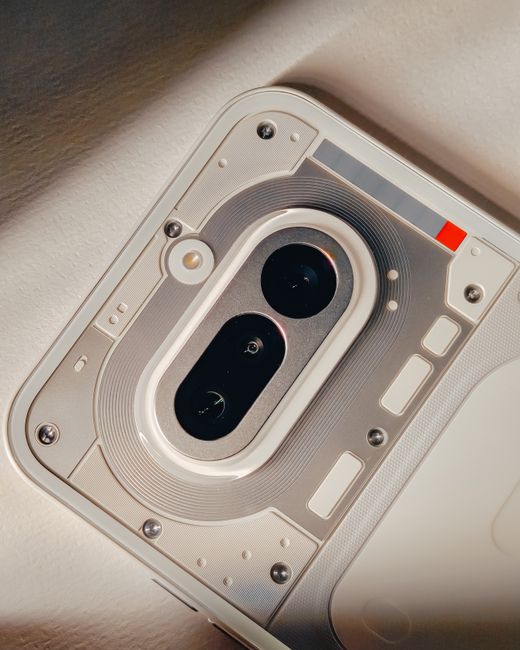
One of the most distinctive aspects of the Nothing Phone (2a) is its design, which continues the brand’s signature aesthetic of transparency and minimalist elegance. The rear of the device showcases a semi-transparent back panel, revealing some of the internal components in a visually appealing manner. This is not merely for show; it’s an integral part of Nothing’s design language. The most striking element, however, remains the Glyph Interface, a series of LED lights embedded beneath the transparent back. On the Phone (2a), the Glyph Interface has been re-engineered and simplified, featuring 26 individually addressable zones arranged in a more subtle, yet still functional, configuration. These lights are more than just decorative; they serve as visual notifications for calls, messages, app alerts, and even indicate charging status. Users can customize specific Glyph patterns for contacts, apps, and notification types, allowing for a glanceable understanding of incoming information without needing to pick up or unlock the phone. This reduces screen time and fosters a more mindful interaction with the device. The ergonomic design, with a comfortable grip and balanced weight distribution, further enhances its usability. The choice of materials, while not overtly premium like glass and metal found on flagship devices, still feels solid and well-constructed, contributing to the overall sense of quality despite the more affordable price tag. The symmetrical design language, from the front camera placement to the rear accents, further solidifies its unique visual identity.
Under the hood, the Nothing Phone (2a) is powered by the MediaTek Dimensity 7200 Pro chipset, a custom-tuned processor designed in collaboration with MediaTek specifically for this device. This partnership aims to optimize performance and power efficiency, ensuring a smooth and responsive user experience for everyday tasks and even moderate gaming. The Dimensity 7200 Pro is an octa-core processor built on a 4nm manufacturing process, which contributes to its energy efficiency. It comprises two ARM Cortex-A715 performance cores clocked at up to 2.8GHz and six ARM Cortex-A510 efficiency cores. This architecture allows the chipset to intelligently allocate resources, prioritizing performance when needed and conserving power during less demanding operations. Coupled with either 8GB or 12GB of LPDDR5 RAM, the Phone (2a) handles multitasking with ease. Apps open quickly, switching between them is seamless, and most popular mobile games run without significant lag or stuttering at decent graphical settings. The inclusion of UFS 3.1 storage further boosts performance, ensuring rapid app loading times and quick file transfers. This combination of a capable processor, ample RAM, and fast storage makes the Phone (2a) a surprisingly powerful device for its price segment, capable of handling a wide range of user demands.
The display on the Nothing Phone (2a) is a vibrant 6.7-inch AMOLED panel with a resolution of 1080 x 2412 pixels (FHD+). This screen offers excellent color reproduction, deep blacks, and impressive contrast, making content consumption, whether it’s watching videos, browsing photos, or scrolling through social media, a visually pleasing experience. The AMOLED technology also contributes to power efficiency by allowing individual pixels to be turned off when displaying black. A crucial feature for a fluid user experience is the adaptive 120Hz refresh rate. This dynamically adjusts the screen’s refresh rate up to 120 times per second, resulting in incredibly smooth scrolling, responsive gaming, and more fluid animations. The adaptive nature ensures that the refresh rate drops when static content is displayed, conserving battery life. The display also boasts a peak brightness of up to 1300 nits, ensuring good visibility even in bright outdoor conditions. Furthermore, it supports HDR10+ content, enhancing the viewing experience for compatible media with richer colors and greater dynamic range. The Corning Gorilla Glass 5 protection adds a layer of durability, safeguarding the display against everyday scratches and minor impacts. The bezels surrounding the display are remarkably thin and symmetrical, contributing to an immersive viewing experience and a premium feel, a rarity in this price segment.
The camera system on the Nothing Phone (2a) is designed to deliver impressive results without overcomplicating things. It features a dual-rear camera setup, headlined by a 50-megapixel main sensor with an f/1.8 aperture and optical image stabilization (OIS). OIS is a significant advantage, helping to reduce blur caused by hand shake, especially in low-light conditions, and producing sharper, more detailed photos. Complementing the main sensor is a 50-megapixel ultrawide camera with an f/2.2 aperture and a 114-degree field of view. This allows for capturing expansive landscapes or fitting more subjects into a single frame. Both rear cameras are capable of recording 4K video at 30fps. On the front, a 32-megapixel selfie camera with an f/2.2 aperture is situated within a centered punch-hole cutout, ensuring high-quality self-portraits and clear video calls. While the Phone (2a) may not boast the computational photography prowess of flagship devices, its robust hardware, combined with Nothing’s software optimizations, allows it to capture excellent photos in good lighting conditions. Features like Night Mode and Portrait Mode are also present, further enhancing its versatility. The ability to capture detailed images with natural colors, especially from the main sensor, makes it a reliable companion for everyday photography.
The software experience on the Nothing Phone (2a) is one of its strongest selling points, running Nothing OS 2.5 based on Android 14. Nothing OS is designed to be a clean, intuitive, and bloatware-free operating system, offering a refreshing alternative to the heavily customized Android skins found on many other devices. The core philosophy behind Nothing OS is to create a distraction-free environment that prioritizes user interaction and mindful technology use. This is achieved through a minimalist design language, with a focus on typography, custom widgets, and a distinct monochromatic aesthetic that can be optionally applied across the entire system. The Glyph Interface integration is also a key part of the software, allowing for deep customization of the LED patterns and their corresponding functions. Nothing OS 2.5 brings several enhancements, including improved performance, new widgets, enhanced customization options for the Glyph Interface, and tighter integration with Nothing’s ecosystem. The company also promises timely software updates, including three major Android version upgrades and four years of security patches, ensuring the device remains up-to-date and secure for an extended period. This commitment to software support is a significant value proposition in the mid-range market, where many devices often fall behind on updates.
Battery life is a crucial consideration for any smartphone user, and the Nothing Phone (2a) delivers admirably in this regard. It is equipped with a substantial 5000 mAh battery, which, when combined with the power-efficient MediaTek Dimensity 7200 Pro chipset and Nothing OS’s optimizations, provides excellent longevity. For most users, this battery capacity will comfortably see them through a full day of moderate to heavy usage, and potentially even into a second day for lighter users. When it does come time to recharge, the Phone (2a) supports 45W wired fast charging. This allows for rapid replenishment of the battery, capable of charging from 0 to 50% in approximately 23 minutes, and a full charge in under an hour. While wireless charging is absent, a common omission in this price bracket, the 45W wired charging speed is more than adequate for most users. The inclusion of USB Power Delivery 3.0 support ensures compatibility with a wide range of chargers. This combination of a large battery and fast wired charging minimizes downtime and ensures the phone is ready when you are.
The Nothing Phone (2a) is positioned as a strong contender in the mid-range smartphone market, offering a compelling blend of unique design, capable performance, and a clean software experience at an attractive price. Its key differentiators include the customizable Glyph Interface, the near-stock Android experience with Nothing OS 2.5, and the custom-tuned MediaTek Dimensity 7200 Pro chipset. For users seeking a smartphone that stands out from the crowd without breaking the bank, the Phone (2a) presents a well-rounded and thoughtful package. The €329 starting price for the 8GB/128GB model and €379 for the 12GB/256GB model makes it an accessible option for a broad audience. When considering its competitors, the Phone (2a) often offers a more refined user interface and a more distinctive aesthetic, which are subjective but important factors for many consumers. The emphasis on reducing digital distractions and providing a more human-centric technology experience further sets it apart. Its robust display, capable camera system, and solid battery life round out a package that represents excellent value for money. The Nothing Phone (2a) is not just a spec sheet; it’s a statement about what a mid-range smartphone can and should be.





Leave a Reply