
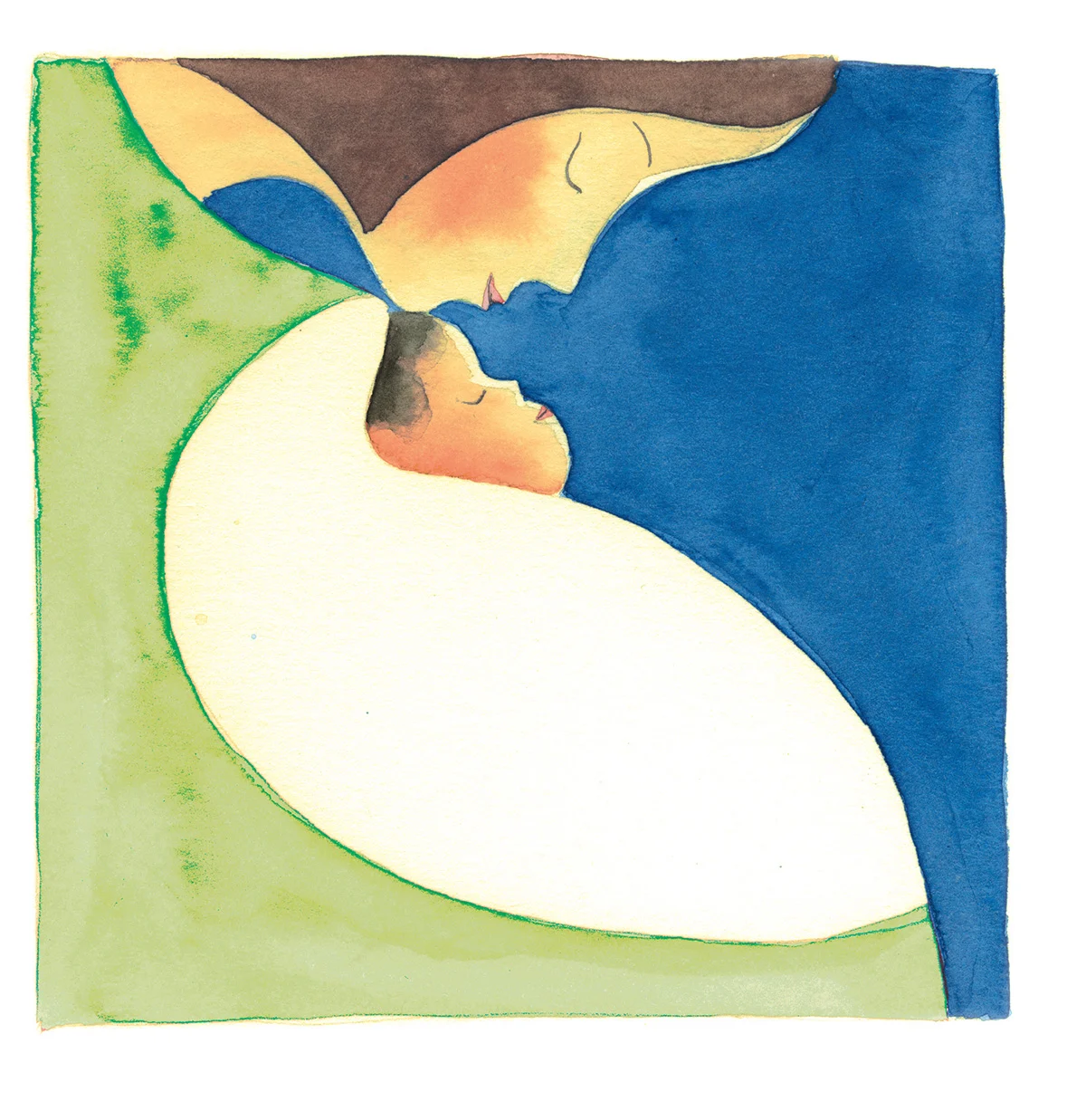
In the span of a century, the discourse surrounding the role of the parent and the autonomy of the child has undergone a profound transformation. As global sociopolitical landscapes shift—marked by economic volatility, technological advancement, and an increasing focus on individual rights—the perennial question of how to raise a human being remains central to the human experience. At the heart of this inquiry sits the work of Lebanese-American poet, painter, and philosopher Kahlil Gibran, whose 1923 literary classic The Prophet continues to serve as a foundational text for understanding the delicate balance between guardianship and independence.
The Philosophical Context of Gibran’s Work
Kahlil Gibran, born in 1883 in the village of Bsharri, Lebanon, navigated a world defined by the collapse of empires and the rise of modern nationalism. His migration to the United States and his immersion in both Eastern and Western philosophical traditions allowed him to synthesize a perspective on humanity that transcended localized culture. Published during the aftermath of the First World War—a period of immense disillusionment and radical societal reorganization—The Prophet emerged as a meditative guide on the human condition.
The section dedicated to children, often cited by sociologists and developmental psychologists alike, challenges the traditional view of children as extensions of the parental ego. By asserting that children are "the sons and daughters of Life’s longing for itself," Gibran proposed a model of stewardship rather than ownership. This philosophical stance resonates with contemporary movements in child psychology, which emphasize the "secure base" model, wherein parents provide the emotional scaffolding necessary for a child to develop their own agency and identity.
Chronology of Influence and Intellectual Legacy
The legacy of Gibran’s philosophy can be traced through various milestones of twentieth and twenty-first-century literature and advocacy:
- 1923: Publication of The Prophet by Alfred A. Knopf. The work gains slow but steady momentum, eventually becoming one of the best-selling books in history.
- 1950s–1960s: As the counterculture movement emerges, Gibran’s focus on the soul’s autonomy and the rejection of inherited dogma finds a new generation of readers who prioritize self-actualization over traditional family hierarchy.
- 1980s–1990s: The rise of parenting literature emphasizing "gentle parenting" and "attachment theory" aligns with Gibran’s imagery of the "bows and arrows," suggesting that the parent’s role is to propel the child forward into an uncertain future rather than holding them back to replicate the past.
- 2010s–Present: Digital-age scholars re-examine Gibran’s work in the context of the "helicopter parenting" phenomenon. His warning that "you may house their bodies but not their souls" is frequently cited as a counter-argument to the hyper-curated, surveillance-heavy approach to modern child-rearing.
Statistical Perspectives on Modern Child-Rearing
The challenge of "making the world worthy of its children," a phrase popularized by cellist and activist Pablo Casals, is reflected in current global demographic and social data. According to UNICEF’s 2023 State of the World’s Children report, the mental health of adolescents is increasingly tied to the perception of parental pressure and the lack of autonomy in a digitally saturated environment.

Data from the American Psychological Association (APA) suggests a correlation between "autonomy-supportive" parenting—a modern clinical term for the philosophy Gibran articulated—and higher levels of resilience in children. Longitudinal studies indicate that children who perceive their parents as guides rather than controllers show lower incidences of anxiety and higher levels of intrinsic motivation. Conversely, societal structures that treat children as commodities or extensions of parental achievement often correlate with increased burnout and decreased life satisfaction in young adulthood.
Analytical Implications: Stewardship vs. Ownership
From a developmental perspective, Gibran’s metaphor of the "archer" serves as an analytical framework for modern family dynamics. The archer—representing the forces of nature, time, or the divine—requires the bow to be "stable," a term implying both strength and flexibility.
In a professional analysis of the text, the "stability" Gibran refers to is interpreted as the parent’s own self-actualization. If a parent is fragile or overly rigid, they cannot effectively direct the "arrow" of the child. This implies that the most effective parenting strategy is not the micromanagement of the child’s choices, but the maintenance of the parent’s own internal stability and personal growth.

Furthermore, the declaration that the child’s soul dwells in the "house of tomorrow" acknowledges the rapid acceleration of technological and cultural change. A parent raising a child in the 2020s is effectively preparing that child for a world that may not resemble their own. Gibran’s advice serves as a safeguard against the "generational projection" that often occurs when parents attempt to solve their own past regrets through the lives of their offspring.
Official and Cultural Reactions
While Gibran’s work is largely celebrated as a masterpiece of lyrical philosophy, it has not been without its critics. Some scholars of the early twentieth century viewed his work as overly sentimental or lacking the rigors of formal logic. However, the cultural reaction has remained overwhelmingly positive, with his poetry being utilized in educational settings, marriage counseling, and human rights advocacy worldwide.
Advocates for children’s rights often cite Gibran’s passages when arguing for policies that protect the autonomy of minors. In the context of global child advocacy, the emphasis on the child as an independent entity aligns with the United Nations Convention on the Rights of the Child (UNCRC), which posits that children are rights-holders rather than mere recipients of parental or state benevolence.

Broader Impact and Future Outlook
The endurance of Gibran’s words lies in their universality. As society continues to grapple with the ethics of prenatal intervention, artificial intelligence, and the rapidly changing definition of the family unit, the core tenets of his philosophy remain relevant. The tension between the "bow" (the parent) and the "arrow" (the child) is a permanent feature of human life.
As we look toward the mid-twenty-first century, the application of these principles may become even more vital. With the proliferation of technology that allows for unprecedented monitoring of children, the reminder that a child’s soul exists in a "house of tomorrow" acts as a necessary check on parental overreach.
Ultimately, Gibran’s contribution is not a set of instructions, but an invitation to a different way of seeing. By shifting the focus from the parent’s desire to possess or influence, to the parent’s responsibility to facilitate the child’s flight, we create a framework for a more respectful and sustainable relationship between generations. The "unrepeatable miracle" of the child remains, as it was in 1923, a source of both profound responsibility and essential hope, requiring a level of detachment that is perhaps the highest form of love a parent can offer.







Leave a Reply