The political landscape in Washington is currently defined by a sharp contrast between the administration’s high-profile international engagements and the sobering reality of the domestic midterm environment. As the nation sits 36 days out from a pivotal series of elections that will determine the legislative trajectory of the remainder of his term, President Donald Trump has spent the recent weekend navigating a complex schedule that alternated between symbolic displays of presidential power and an intensifying focus on the economic anxieties of the American electorate.
Following a highly publicized summit with Chinese President Xi Jinping last week—an event the White House characterized as "historic" despite the absence of concrete policy breakthroughs—the president’s recent itinerary has leaned heavily into the cultural sphere. This strategic choice to prioritize high-visibility appearances at major sporting events comes at a time when internal GOP polling suggests a cooling in enthusiasm for Republican candidates, prompting some party allies to publicly urge the administration to pivot toward a more disciplined focus on the cost-of-living crisis.
A Weekend of Optics and Diplomacy
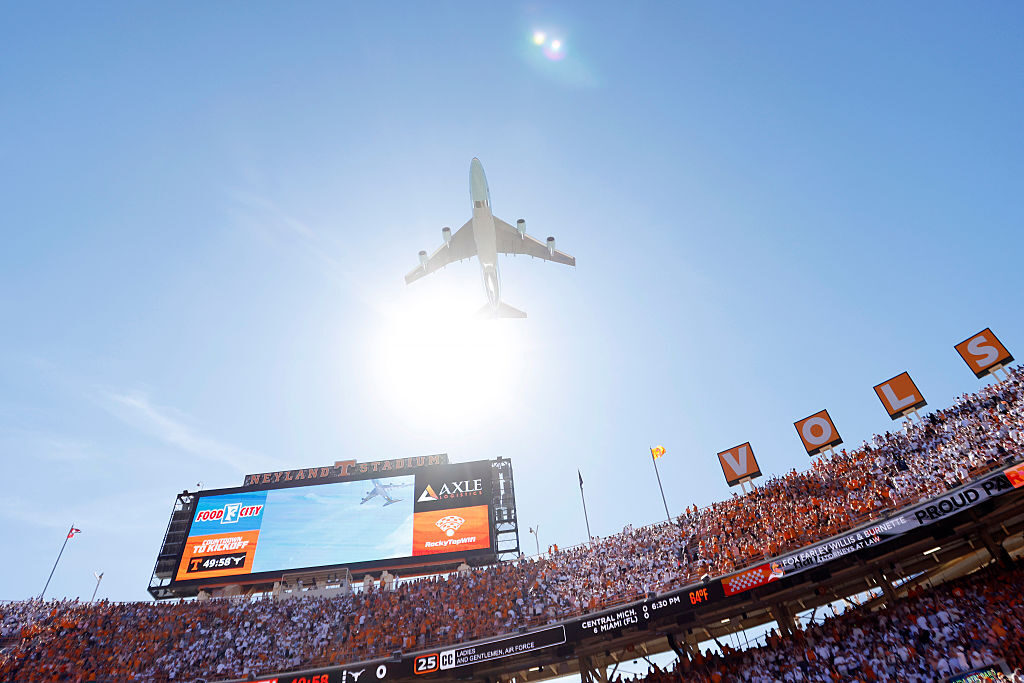
The weekend was marked by a distinct focus on grand, televised gestures. On Saturday, Air Force One executed a low-altitude flyover of Neyland Stadium in Knoxville, Tennessee, ahead of a high-stakes college football matchup between the University of Texas and the University of Tennessee. This display of "buzzing the tower," as it is colloquially known, occurred while the Senate was entering the final stages of debate over the "Protect College Sports Act." Despite the president’s public endorsement of the bipartisan legislation—which aims to establish a federal framework for student-athlete compensation and collegiate governance—Trump notably avoided discussing the bill during his Tennessee visit.
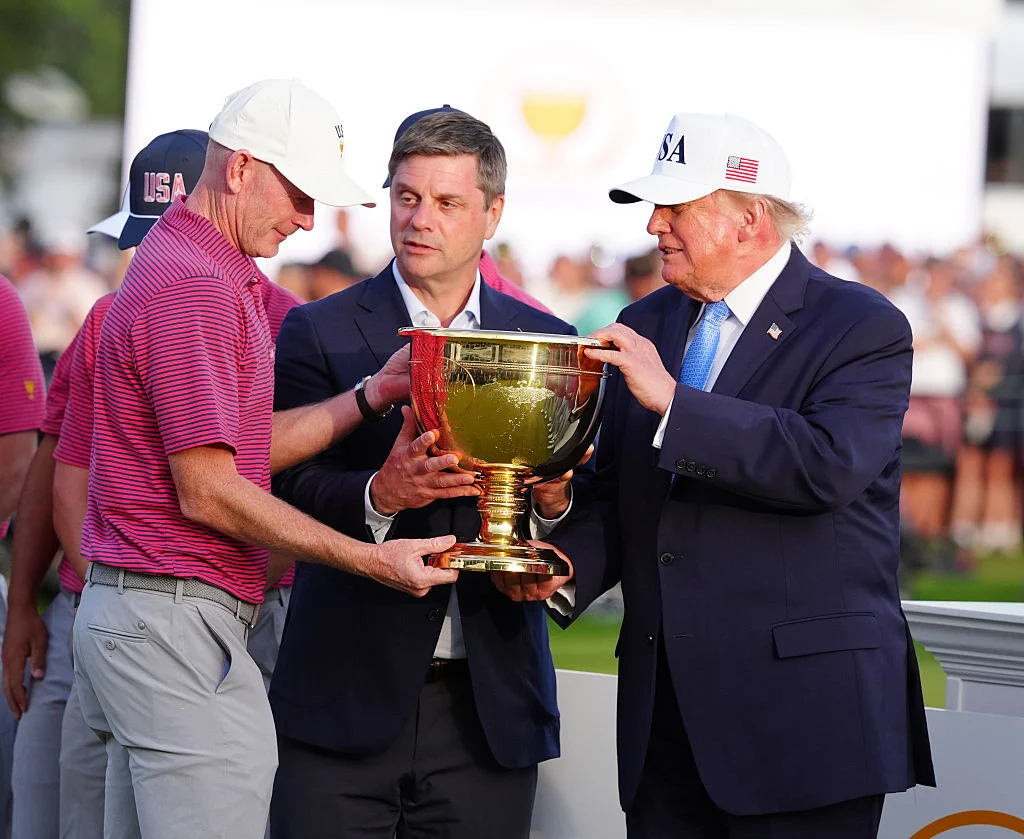
The spectacle continued Sunday in suburban Chicago at the Medinah Country Club, where the United States secured a victory in the Presidents Cup. During the trophy ceremony, U.S. Team Captain Brandt Snedeker publicly credited the president’s presence for the team’s rally, noting, "He brought some juice for us today." The president appeared at ease during the event, signaling a personal investment in the optics of success, even as the broader political environment remains fraught with challenges.
The Economic Disconnect
While the president utilized the weekend to cultivate an image of vitality and victory, the economic reality for the average voter remains a source of persistent friction. The primary point of contention continues to be energy prices, a topic that dominated the president’s remarks upon his return to the White House on Sunday evening.
When pressed by reporters regarding the ongoing conflict involving Iran and its impact on domestic energy costs, the president dismissed the validity of current market concerns. "Oil will come dropping down as soon as demand gives up, as soon as the war is over," Trump stated, asserting that current prices are lower than they were during the tenure of his predecessor, Joe Biden.
However, federal data suggests a more nuanced reality. According to figures provided by the American Automobile Association (AAA), the average price of a gallon of gasoline stood at approximately $3.10 when the previous administration concluded its term in January 2025. By late September 2026, the national average had climbed to $4.47, while diesel prices saw an even more dramatic spike, rising from $3.68 one year ago to $6.45. Analysts point to the ongoing geopolitical instability, particularly the conflict involving Iran and the resulting impact on the Strait of Hormuz, as a central driver of this volatility. Despite the president’s claims of record oil extraction, market observers remain skeptical that current domestic production levels are sufficient to offset the global supply shocks caused by the regional war.
The Legislative and Campaign Calendar
The political stakes for the coming weeks are immense. With 36 days remaining until the midterms, the Republican party faces the dual pressure of defending its legislative majorities while addressing a voter base that is increasingly vocal about inflation. The Senate is expected to pass the "Protect College Sports Act" on Monday evening, marking a rare point of bipartisan legislative consensus. However, the success of this measure is unlikely to soothe the broader anxieties surrounding the economy.
The president’s upcoming schedule reflects a transition toward direct campaign intervention. Following a fundraising swing in the Western United States on Wednesday, Trump is slated to headline rallies in Oklahoma and Alabama on Thursday and Friday. These events are designed to bolster GOP congressional and gubernatorial candidates who are currently struggling to maintain momentum.
Prominent party figures have begun to signal that the current campaign strategy requires recalibration. Senator John Kennedy of Louisiana, appearing on CBS’s "Face the Nation" on Sunday, offered a candid assessment of the party’s standing. "It would help if the president would stay focused on cost of living," Kennedy said, suggesting that a nationwide address on economic policy would be a more effective use of the president’s platform than the current approach.
The China Summit and AI Policy
The ambiguity surrounding last week’s summit with President Xi Jinping remains a point of interest for foreign policy analysts. While administration officials have consistently described the meeting as a success, they have provided limited detail on substantive outcomes. The primary focus for the White House has been the maintenance of a trade truce and a temporary delay in China’s restrictive policies on the export of rare earth minerals.
However, many within the Republican caucus had anticipated a more robust outcome, specifically regarding the international regulation of artificial intelligence. Expectations were high that the two leaders would establish a framework for the responsible development and oversight of AI technologies. To date, no such agreement has been announced.
In a move that appeared to be a response to ongoing questions about his own workload and capacity, the president highlighted a late-night meeting with Dario Amodei, the CEO of the AI research firm Anthropic. "These are long days," the president told reporters, framing his late-night schedule as evidence of his personal stamina. "People said, ‘Really?’ I said, ‘I’m having dinner at 10 o’clock tonight.’"
Strategic Implications and Outlook
The divergence between the White House’s messaging and the voters’ experience is expected to define the final month of the midterm cycle. By prioritizing large-scale events and dismissing public concerns about "affordability" as a "hoax," the president is choosing to lean into his established brand of populist optimism.
However, the warnings from within his own party suggest that the "affordability" narrative is not merely a media-driven concern, but a lived reality for families in swing districts. Candidates such as former Representative Mike Rogers have begun to explicitly call for a more focused approach, emphasizing that voters in states like Michigan are prioritizing relief from the high cost of groceries and fuel over abstract geopolitical successes.
As the administration prepares for its final campaign push, the core challenge remains the tension between the "spectacle" of the presidency and the "substance" of the economy. Whether the president’s ability to "bring the juice" to sporting events will translate into electoral success for the GOP remains the central question of the 2026 midterms. With ballots already being mailed in several states, the window for the administration to shift the narrative is closing rapidly. The coming week of fundraising and rallies will serve as a bellwether for whether the president can effectively align his messaging with the pressing economic demands of the American voter.