
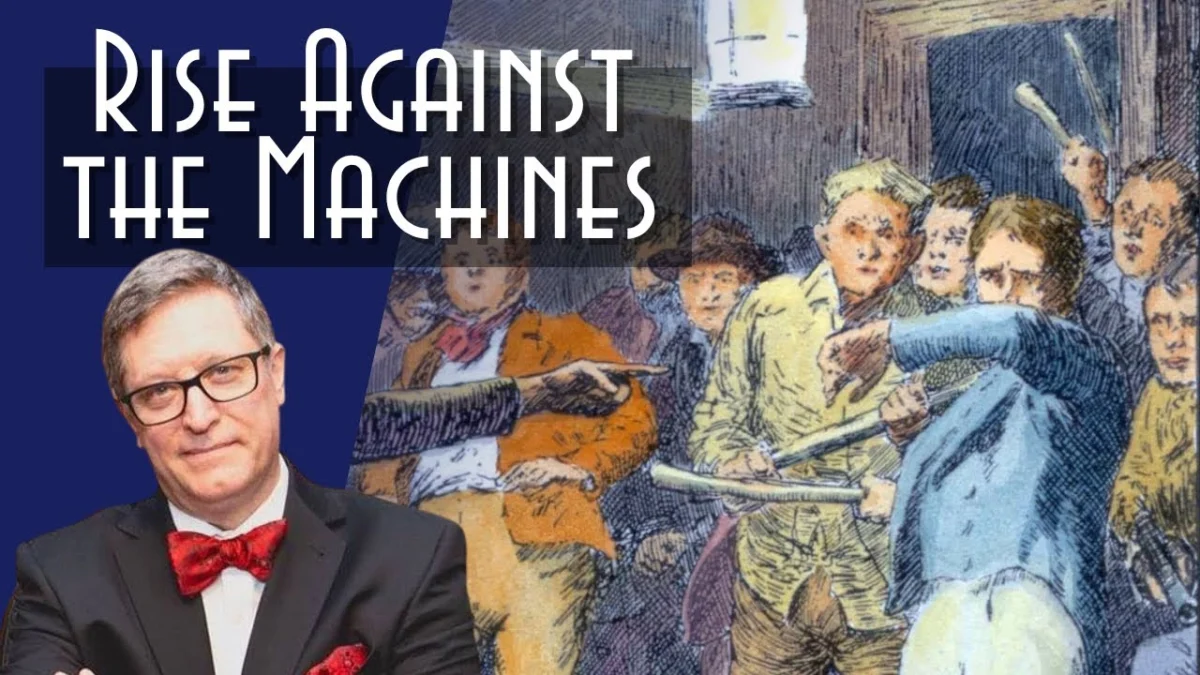
The friction between human labor and technological advancement has defined the trajectory of economic development for centuries. Whether manifested in the anxieties of modern knowledge workers facing generative artificial intelligence or the violent uprisings of nineteenth-century artisans, society has repeatedly wrestled with the disruptive velocity of innovation. This tension, oscillating between utopian visions of efficiency and dystopian fears of mass obsolescence, reflects a fundamental anxiety: the preservation of human agency and livelihood in the face of relentless automation.
To understand the modern backlash against artificial intelligence, cloud computing infrastructure, and algorithmic oversight, it is instructive to examine the historical roots of anti-technology movements. While contemporary debates often reduce these conflicts to binary arguments between progress and stagnation, the historical reality reveals a complex interplay of economics, class struggle, and the defense of skilled labor.
The Historical Precedent: 1812 and the Luddite Uprising
Popular mythology often portrays the original Luddites as simpleminded technophobes cowering in fear of anything mechanical. Historical scholarship, however, paints a vastly different picture. The Luddite movement, which reached its bloody apex in 1812 industrial England, was a calculated campaign waged by skilled textile artisans whose livelihoods, communities, and traditions were threatened by unregulated industrialization.
The flashpoints of this era were characterized by fierce resistance against automated looms, wide-frame stocking knitters, and power machinery that allowed mill owners to bypass traditional apprenticeship standards and employ cheaper, unskilled labor. The conflict turned fatal in April 1812, when a crowd of approximately 150 armed workers launched an assault on a mill in Huddersfield. British soldiers stationed at the facility opened fire on the mob, fatally wounding two attackers. This violent confrontation was part of a broader wave of unrest that included widespread machinery-breaking and, in some extreme cases, the assassination of Yorkshire mill owners.
The movement derived its symbolic identity from Ned Ludd, a mythical or semi-legendary weaver said to have smashed automated knitting frames decades earlier. Yet, contrary to popular belief, the Luddites did not represent the general English workforce en masse. Rather, they formed an elite stratum of the labor market—artisans who had undergone rigorous multi-year apprenticeships and viewed their craft as a legally protected right. Their resistance was less an opposition to machines per se and more a desperate defense of fair wages, working conditions, and the social contract governing labor.
The Modern Parallel: AI and the Knowledge Worker
More than two centuries after the Huddersfield mill raid, the anxieties of the nineteenth-century artisan have found a modern echo in the twenty-first-century knowledge economy. The rapid maturation of generative artificial intelligence, machine learning models, and automated administrative systems has shifted the locus of technological displacement from blue-collar factory floors to white-collar offices, creative studios, and software development hubs.
Writers, illustrators, legal professionals, coders, and educators now find themselves confronting the same existential questions that faced the weavers of Nottinghamshire. As algorithms capable of synthesizing prose, generating complex imagery, and processing data in milliseconds are deployed across global enterprises, the traditional pathways of professional development are increasingly scrutinized. Critics of unchecked AI deployment argue that the rush to automate threatens not only individual livelihoods but also the integrity of human culture, intellectual property rights, and the quality of public discourse.
This contemporary pushback has manifested in various cultural and social phenomena. On elite university campuses, student-led "Luddite clubs" have emerged, promoting screen-free socialization, analog hobbies, and a conscious decoupling from ubiquitous digital connectivity. Similarly, academic institutions and cultural hubs have hosted initiatives such as the "Summer of Ludd" conference, focusing on reclaiming human-centric spaces free from algorithmic curation and social media metrics.
Infrastructure Backlash: The Physical Footprint of the Digital Age
Beyond software and labor displacement, the modern anti-technology backlash has increasingly taken on a physical dimension centered on the infrastructure powering the digital revolution: data centers. As artificial intelligence models demand unprecedented computational power, technology conglomerates are racing to construct massive server farms across suburban and rural landscapes.
These facilities, essential for training and running large language models, have encountered fierce resistance from local communities. Key friction points include:
- Resource Consumption: Data centers require immense amounts of electrical energy, often straining local power grids and threatening carbon-reduction targets. Additionally, millions of gallons of water are consumed daily for cooling purposes, raising severe environmental and sustainability concerns.
- Land Use and Noise Pollution: The massive physical footprint of these complexes alters rural aesthetics, while the continuous operation of heavy-duty industrial cooling fans generates persistent, disruptive noise pollution for nearby residents.
- Economic Disparity: While tech corporations promise regional economic growth and high-tech job creation, local residents frequently observe that these facilities generate minimal long-term employment relative to their massive environmental and infrastructural footprint.
These grievances have transformed zoning boards, municipal council meetings, and environmental review panels into modern battlegrounds where citizens push back against the relentless expansion of digital infrastructure.
Economic Implications and the Search for Solutions
Economists and policy experts remain sharply divided on the long-term socioeconomic implications of this wave of automation. Proponents of technological acceleration argue that historical precedent is on their side: previous industrial revolutions ultimately created vastly more jobs than they destroyed, raised global living standards, and liberated humanity from grueling manual labor. From this perspective, attempting to halt artificial intelligence or data infrastructure expansion is viewed as a futile effort to protect obsolete economic models at the expense of collective progress.
Conversely, labor advocates and technological ethicists contend that the current transition is fundamentally different from past industrial shifts. The velocity of artificial intelligence development, combined with its ability to replicate cognitive rather than merely physical tasks, creates a unique displacement crisis. Without adequate regulatory frameworks, safety nets, or retraining programs, the social costs of unmitigated automation could outweigh its productive benefits.
This debate has resurrected interest in forward-thinking economic policies first proposed decades ago. The concept of a Universal Basic Income (UBI), famously anticipated by mid-century thinkers like economist and philosopher Alan Watts, has re-entered mainstream policy discussions as a potential mechanism to decouple human survival from traditional wage labor in an automated economy. Proponents argue that if artificial intelligence and robotics capture the bulk of productive output, redistributive economic models will become a structural necessity to maintain societal stability.
Conclusion: A Continuous Dialogue Between Humanity and Innovation
The historical continuum connecting the Luddite movement of 1812 to the contemporary resistance against artificial intelligence and data centers underscores a persistent truth: technological progress is never value-neutral. It is invariably accompanied by profound social negotiations over who bears the costs of disruption and who reaps the rewards of efficiency.
Whether through the destruction of mechanical looms in Yorkshire, the formation of screen-free student clubs on modern campuses, or zoning battles over server farm emissions, society continues to articulate a fundamental demand that technology must serve human flourishing rather than subjugate it. As the twenty-first century navigates the uncharted waters of artificial intelligence, the challenge for policymakers, technologists, and citizens alike will be to balance the undeniable potential of innovation with the preservation of human dignity, economic security, and environmental stewardship.










Leave a Reply