In a momentous decision that defied the prevailing consensus of recent decades, the Federal Open Market Committee (FOMC) voted 10-2 to maintain its benchmark interest rate at the 3.75% to 4% range, a choice overshadowed by a historic split within the central bank’s leadership. Federal Reserve Governor Lisa Cook and Cleveland Fed President Beth Hammack broke ranks to advocate for a quarter-percentage-point rate increase, signaling rising internal anxiety over persistent inflationary pressures. While the decision to hold rates steady was largely anticipated by Wall Street analysts, the composition of the dissent has injected new uncertainty into the trajectory of monetary policy as the United States navigates a complex economic landscape characterized by sticky consumer prices and an outwardly resilient labor market.
The vote marks a profound historical milestone for the central bank. For Cook, who joined the Board of Governors in 2022, this represents her very first dissent. More significantly, it is the first time since October 1992 that a Washington-based Fed governor and a regional Federal Reserve bank president have dissented on the exact same side of a policy decision. The last occurrence of such a pairing happened more than three decades ago, during a markedly different economic epoch, highlighting the rarity with which central bank leadership aligns across geographical and institutional divides to challenge a consensus holding pattern.
A Rare Convergence: Revisiting the Decades-Long History of Fed Dissents
To understand the weight of the October vote, one must examine the historical mechanics of FOMC dissents. Historically, when policy disagreements arise, they typically feature regional bank presidents pushing back against the prevailing stance of the Washington governors, who generally form a cohesive block under the leadership of the Fed Chair.
In October 1992, the dynamic involved two separate camps advocating for immediate rate cuts: Governor Lawrence Lindsey and Cleveland Fed President Jerry Jordan teamed up from one angle, while Governor John LaWare and St. Louis Fed President Thomas Melzer dissented together on the opposite side. Throughout 1993, governors Wayne Angell and Lindsey occasionally found common ground in pushing for higher rates, but they stood largely isolated without a regional president echoing their stance. When Philadelphia Fed President Edward Boehne joined Angell in May of that year, he did so from an opposing viewpoint.
As the decades progressed, coordinated cross-constituency dissents virtually vanished. Governors largely stopped dissenting altogether, with isolated exceptions such as Mark Olson breaking ranks alone in 2005 and Michelle Bowman casting a solitary dissent in 2024. When dissents did occur in recent years, they typically saw governors and regional presidents opposing the consensus from opposite directions during the same meeting.
For instance, in October 2025, Governor Stephen Miran pushed for aggressive rate cuts while Kansas City Fed President Jeff Schmid opposed any easing whatsoever. Similarly, in April of the following year, Miran again favored cuts, whereas Hammack, Minneapolis Fed President Neel Kashkari, and Dallas Fed President Lorie Logan jointly objected to the committee’s signaling that monetary loosening was on the horizon.
Laura Ullrich, director of economic research for North America at the Indeed Hiring Lab and a former researcher at the Richmond Fed, noted the unusual nature of the latest alignment. While Hammack’s hawkish stance did not catch observers entirely off guard—given that she had recently outlined similar views during a public appearance in Cleveland—Cook’s decision to join her was unexpected. "It’s not that common to have one governor and one president that dissent," Ullrich remarked, emphasizing that the Lisa Cook dissent caught many veteran watchers off guard.
Economic Backdrop: Stubborn Inflation Confronts a Standing Benchmark
The FOMC’s decision to keep borrowing costs anchored at 3.75% to 4% comes against a backdrop of uncomfortably high consumer prices. According to data from the Bureau of Labor Statistics, consumer prices rose 3.7% on an annualized basis in September, driven heavily by persistent pressures in energy markets, including high gasoline prices.
This upward tick in inflation sits uncomfortably alongside the central bank’s mandate and its repeated public commitments over the preceding five months to restore long-term price stability. Aubrey Woessner, an associate economist at the Indeed Hiring Lab, pointed out the incongruity between the committee’s rhetoric and its actions. "Ultimately, the FOMC’s vote to keep its target federal funds rate unchanged today, while widely expected, is a bit hard to square with its unconditional pledge to restore price stability that has repeatedly been made over the past five months," Woessner stated. "Whether the public believes the Fed will bring inflation down in a timely manner matters for everyone."
Economists warn that public psychology plays a critical role in the inflation fight. Ullrich pointed out that while consumer inflation expectations have managed to remain remarkably anchored given the circumstances, they have begun to creep upward. Economic literature consistently demonstrates that when long-term inflation expectations unmoor, actual inflation tends to follow, creating a self-fulfilling cycle that central banks strive desperately to avoid.
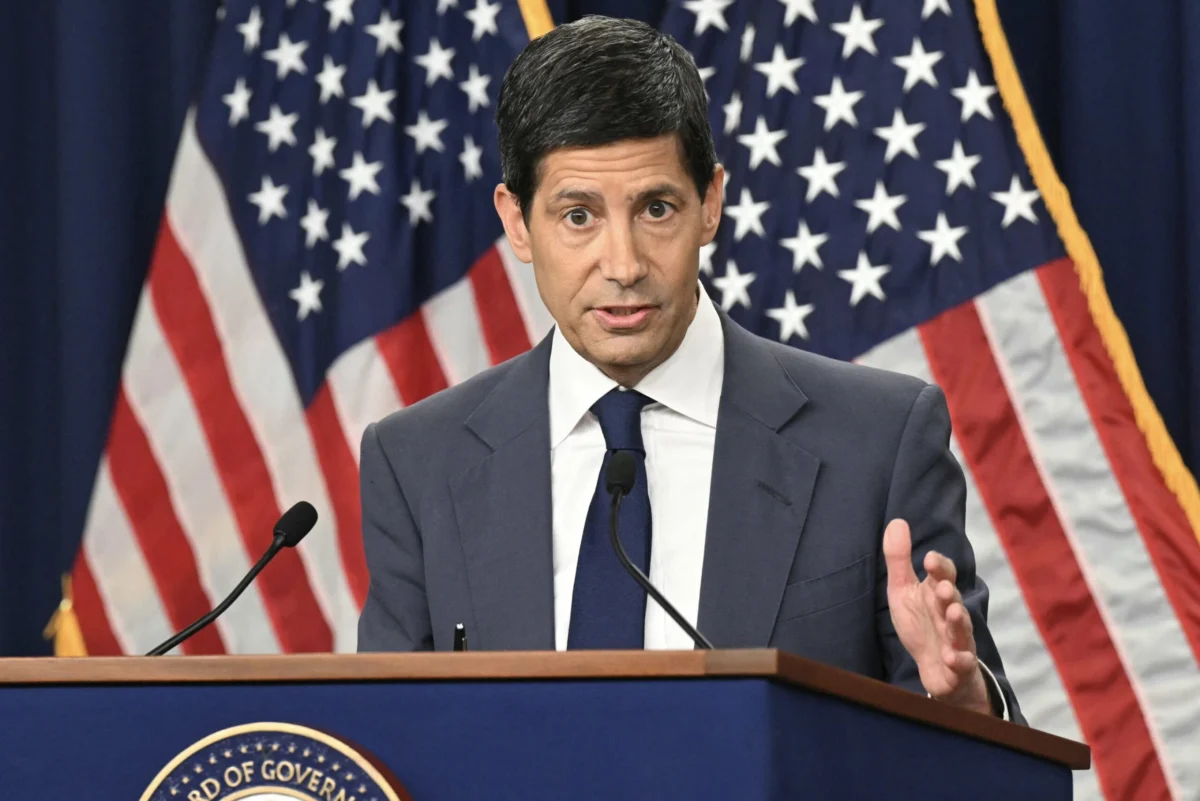
Despite these warning signs, Federal Reserve Chair Kevin Warsh defended the committee’s choice to pause and evaluate incoming economic indicators during the post-meeting press conference. Describing the current strategy as a deliberate "wait-and-see" approach, Warsh explained that the committee opted to take stock of evolving conditions rather than pre-commit to a definitive path.
"What we decided to do was to call these questions, take stock of where we are, evaluate what we’re seeing out the window, ask ourselves whether the period right in front of us is likely to provide more clarity," Warsh told reporters. He added that while the overarching consensus suggests that previous monetary tightening—often referred to by policymakers as "monetary medicine"—is beginning to bite, the committee still lacks definitive proof that the job is complete.
Market Reactions and the Probability of Future Rate Action
Financial markets quickly recalibrated in response to the meeting’s outcome and the hawkish dissent from Cook and Hammack. Prior to the announcement, CME Group’s FedWatch tool indicated that traders had already priced in a roughly 78% probability of a quarter-point rate hike at the upcoming December FOMC meeting. Following the decision and the release of the statement detailing the internal split, market expectations for a December tightening climbed even higher.
Ullrich expressed a strong belief that a rate hike is likely on the horizon, noting that recent economic reports have offered little relief on the inflation front. "Since the last meeting, none of the inflation data has gotten better. It’s gotten worse," she observed. "I think the probability of a hike in December is very, very high. It was already high in the market, so it’ll probably go even higher after today’s decision."
The timing of the Fed’s announcement—arriving less than a week before national midterm elections—inevitably drew scrutiny from political commentators and market participants searching for signs of political calculations. However, seasoned Fed watchers urge caution against reading too much into the calendar. Historically, the central bank has adjusted rates, implemented cuts, or held policy steady in the immediate run-up to midterm elections depending entirely on prevailing economic conditions rather than political cycles.
Ullrich emphasized that internal deliberations within the Fed are strictly data-driven. "There have been years when they’ve hiked right before a midterm. There are years they’ve cut right before midterms. There are years they’ve held stable right before a midterm," she noted. "I wouldn’t read too much into that. I know it’s very easy to read into it… They’re looking at a whole lot of data points. Do the midterms factor in as one of those points? Maybe at some level, but I personally don’t read too much into that."
Evaluating the Broader Economic Landscape and Labor Market Resilience
Reinforcing its cautious stance on interest rates, the FOMC also upgraded its assessment of broader macroeconomic conditions in its official policy statement. The committee noted that overall economic activity is now "expanding at a strong pace," marking a notable upgrade from its characterization as "solid" in the previous September statement.
This assessment aligns with auxiliary indicators pointing to underlying economic durability. For instance, Indeed’s proprietary job postings index turned positive on a year-over-year basis in mid-September for the first time in four years, signaling a stabilization in labor demand. Nevertheless, analysts characterize the current employment landscape as a "low hire, low fire" environment, where neither massive layoffs nor aggressive hiring sprees dominate the corporate sector.
This resilience in growth and employment provides the central bank with the economic buffer it needs to maintain restrictive monetary policy without immediately triggering a recessionary downturn. However, it also complicates the task of subduing price pressures that continue to outpace the Fed’s target.
Broader Implications for Consumers and Businesses
As the Federal Reserve navigates the closing months of the year, the implications of its policy stance extend directly to households and corporations across the country. Borrowing costs for mortgages, auto loans, and corporate debt remain elevated, reflecting the higher federal funds rate. For consumers, the ongoing persistence of 3.7% inflation means that cost-of-living pressures will continue to bite, even as wage growth normalizes.
For businesses, the uncertainty surrounding a potential December rate hike complicates capital expenditure planning. Companies must weigh the likelihood of tighter financial conditions against an expanding economy that continues to demand investment and operational scaling.
Ultimately, the rare unity displayed by Governor Lisa Cook and Cleveland Fed President Beth Hammack serves as a bellwether for shifting sentiments within the central bank. As inflation data refuses to yield easily to current interest rate levels, the pressure on Chairman Warsh and the broader FOMC to take decisive action before the end of the year will only intensify. Whether the central bank transitions from its current holding pattern to renewed monetary tightening in December will depend entirely on whether incoming economic data confirms the fears of its most hawkish members or justifies a continued pause.