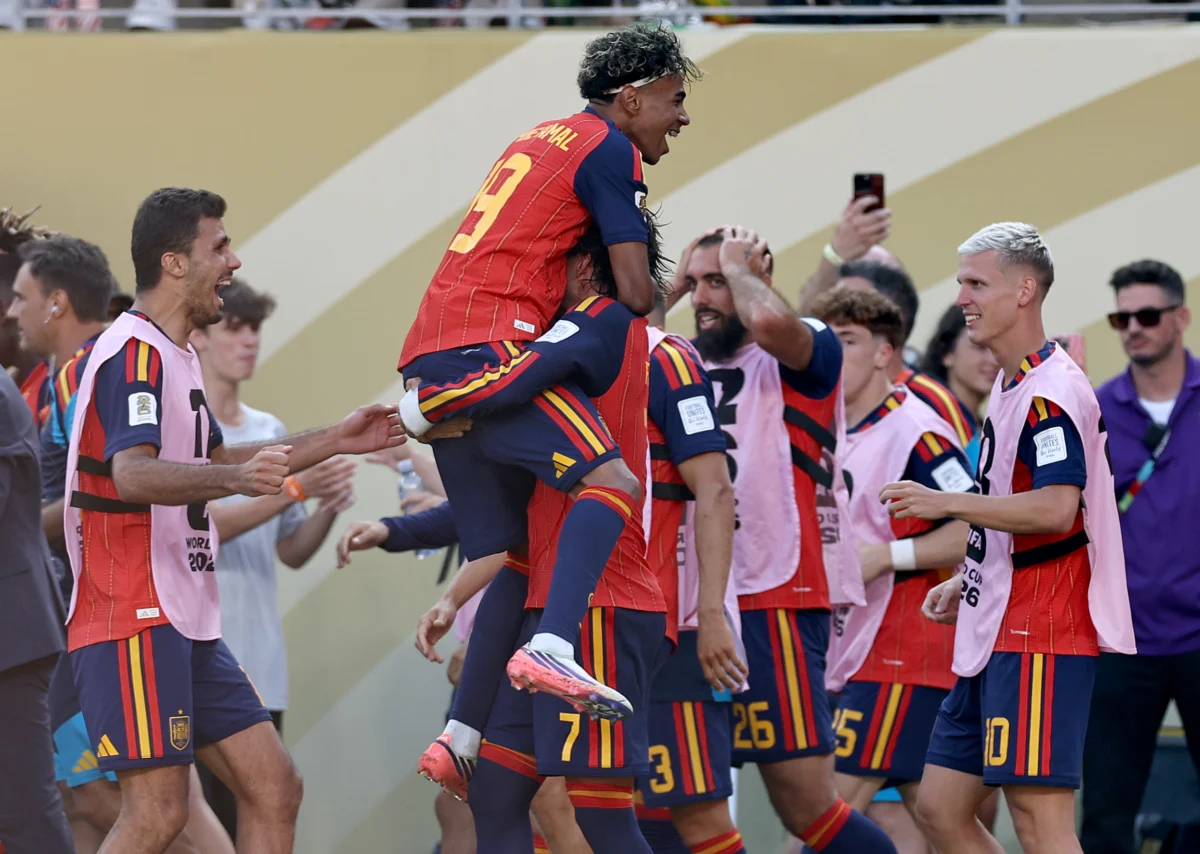
Spain has been crowned champions of the 2026 FIFA World Cup, securing their second-ever title in a nail-biting final against Argentina. The decisive match, held on Sunday, saw Spain triumph 1-0 after a grueling extra-time period, with Ferran Torres netting the lone, history-making goal. This victory adds a significant chapter to Spain’s footballing legacy, mirroring their maiden triumph in 2010 when they also defeated the Netherlands by the same narrow margin.
A Tense Encounter Culminates in Spanish Glory
The atmosphere at MetLife Stadium, designated as New York New Jersey Stadium for the tournament, was electric as two footballing titans clashed. The 2026 FIFA World Cup final was a testament to the sport’s global appeal and the intense rivalry that characterizes international football. For 90 minutes, neither Spain nor Argentina could break the deadlock, pushing the match into a tense extra-time period. It was in these additional 30 minutes that the decisive moment arrived. Ferran Torres, a pivotal figure in Spain’s campaign, found the back of the net, sending the Spanish contingent of fans into raptures and etching his name into World Cup history. The goal, a moment of individual brilliance and team cohesion, ultimately proved to be the difference between the two formidable sides.
Historical Significance of Spain’s Triumph
Spain’s victory in the 2026 FIFA World Cup holds considerable historical weight. This marks only the second time the European nation has lifted the coveted trophy, their first being in 2010 in South Africa. That earlier triumph, under the captaincy of Iker Casillas and with Vicente del Bosque at the helm, is remembered for its defensive solidity and clinical finishing. The current victory, achieved in North America, suggests a new era of dominance for Spanish football, built on a foundation of emerging talent and sustained strategic development. The nation’s football federation, the Royal Spanish Football Federation (RFEF), will undoubtedly celebrate this achievement as a testament to the nation’s enduring passion for the sport.
Argentina’s Unfulfilled Ambition and Messi’s Final Frontier
For Argentina, the defeat marks a poignant end to their 2026 World Cup journey. The Albiceleste, led by the legendary Lionel Messi, entered the final with immense pressure and the hopes of a nation on their shoulders. This was Messi’s third appearance in a World Cup final, a remarkable feat that underscores his extraordinary longevity and influence on the global stage. He remains the only player in history to have started in three FIFA World Cup finals, a statistic that speaks volumes about his unparalleled career. Despite his best efforts and the team’s valiant performance, the ultimate prize eluded them once again. The disappointment will be palpable in Argentina, where football is more than just a sport; it’s a way of life.
A Landmark Tournament for Host Nations
The 2026 FIFA World Cup was a tournament marked by its unprecedented scale and geographical distribution. Co-hosted by the United States, Mexico, and Canada, it was the first time in the history of the competition that three nations shared hosting duties. This collaborative approach aimed to leverage the vast infrastructure and fan bases across North America, creating a truly continental celebration of football. The tournament’s opening matches were spread across multiple venues, showcasing the diverse sporting cultures of the participating countries.
The United States, as a major host, reached the Round of 16, a respectable performance that highlighted the growing strength of their national team. However, their World Cup aspirations were cut short by a decisive 4-1 defeat at the hands of Belgium, a testament to the competitive nature of the knockout stages. Mexico and Canada also played significant roles in hosting, contributing to the logistical and cultural tapestry of the event.
A Glimpse into the Future of World Cup Hosting
The 2026 tournament’s multi-nation hosting model appears to be setting a precedent for future editions. The upcoming 2030 FIFA World Cup is already slated to be a groundbreaking event, with Morocco, Portugal, and Spain set to co-host. This will not only be a multi-nation affair but will also span three continents, a truly unprecedented move. The opening three matches are scheduled to take place in Uruguay, Argentina, and Paraguay, underscoring a global vision for the tournament. This expansion of hosting responsibilities reflects FIFA’s commitment to broadening the sport’s reach and accessibility across the globe.
MetLife Stadium: A Stage for Global Footballing Drama
The grand finale of the 2026 FIFA World Cup unfolded at MetLife Stadium in East Rutherford, New Jersey. Renamed New York New Jersey Stadium for the duration of the tournament, this iconic venue, home to the NFL’s New York Giants and New York Jets, provided a fittingly grand stage for the climax of the world’s most prestigious football competition. The stadium’s capacity and state-of-the-art facilities ensured a memorable experience for the tens of thousands of fans in attendance and millions more watching worldwide. The selection of this venue underscored the tournament’s presence in a major North American metropolitan area, drawing in a diverse and passionate audience.
Global Reach of Broadcast Coverage
The thrilling encounter between Spain and Argentina, along with the entirety of the 2026 FIFA World Cup, reached a massive global audience through extensive broadcast partnerships. In the United States, the final was televised on Fox and Telemundo, ensuring comprehensive coverage for both English and Spanish-speaking viewers. This dual-language broadcasting strategy is a common practice for major sporting events in the US, reflecting the country’s diverse demographic and its significant Hispanic population, a community with a deep-rooted passion for football. The wide dissemination of the matches through these networks amplified the tournament’s impact and cemented its place in global sports culture.
The Road to the Final: A Chronological Perspective
The journey to the 2026 FIFA World Cup final was a months-long saga, beginning with qualifying campaigns that spanned continents and culminating in the group stages and knockout rounds.
- Qualifying Rounds (2023-2025): National teams from all six FIFA confederations competed for their berths in the 2026 tournament. These matches, often played with fervent nationalistic pride, whittled down the field of hopefuls.
- Group Stage (June 2026): The 48 participating teams were divided into groups, with the top teams advancing to the knockout phase. This stage often produces surprises and establishes early favorites.
- Knockout Rounds (July 2026): The intensity escalated as teams entered the single-elimination bracket. Matches in the Round of 16, Quarter-finals, and Semi-finals delivered dramatic upsets and heroic performances. The United States’ journey ended here, falling to Belgium.
- Third-Place Play-off (Late July 2026): The two semi-final losers competed for the bronze medal, offering a final chance for silverware and national pride.
- The Final (Late July 2026): Spain and Argentina, having navigated the challenging knockout stages, met at MetLife Stadium to determine the 2026 FIFA World Cup champions. The match extended into extra time, with Spain ultimately prevailing 1-0.
Data and Statistics: A Deeper Dive into the Tournament
While specific tournament-wide statistics for the 2026 FIFA World Cup will be compiled and analyzed extensively in the coming weeks and months, general trends from previous tournaments offer context. FIFA World Cups typically see an average of 2.5 to 3 goals per game, though finals can often be tighter affairs due to the immense pressure. The 2010 final, also a 1-0 scoreline, is a prime example. The 2026 tournament, with its expanded format of 48 teams, was expected to see a higher overall number of goals scored across the competition, but the final itself proved to be a defensive masterclass.
Player statistics, such as goals scored, assists, and saves, will highlight individual performances. Ferran Torres’s winning goal will undoubtedly be a highlight in his personal tournament statistics, and he will be a strong contender for individual accolades if his overall performance warrants it. Lionel Messi’s presence in the final, regardless of the outcome, ensures his continued statistical relevance in the annals of World Cup history.
Expert Analysis and Future Implications
The implications of Spain’s victory extend beyond immediate celebrations. It solidifies their position as a global footballing powerhouse and provides a strong platform for their youth development programs. The success of their current generation of players, coupled with the promise of future talent, suggests that Spain will remain a force to be reckoned with in international football for years to come.
For Argentina, the sting of defeat in another final will undoubtedly fuel their determination to rebound. The aging of some key players, including Lionel Messi, raises questions about their immediate future, but the passion for football in Argentina ensures a continuous pipeline of talent. The development of emerging Argentine stars will be closely watched.
The 2026 FIFA World Cup’s success, particularly its multi-host model and its expansive reach, is likely to influence future tournament bids and organizational structures. The precedent set by the United States, Mexico, and Canada, and the forthcoming model for 2030, points towards a more globalized and collaborative approach to hosting football’s biggest spectacle. This could lead to greater accessibility for fans and increased investment in football infrastructure worldwide. The tournament has once again demonstrated the unifying power of sport, bringing nations together in a shared celebration of athletic achievement and global camaraderie.