
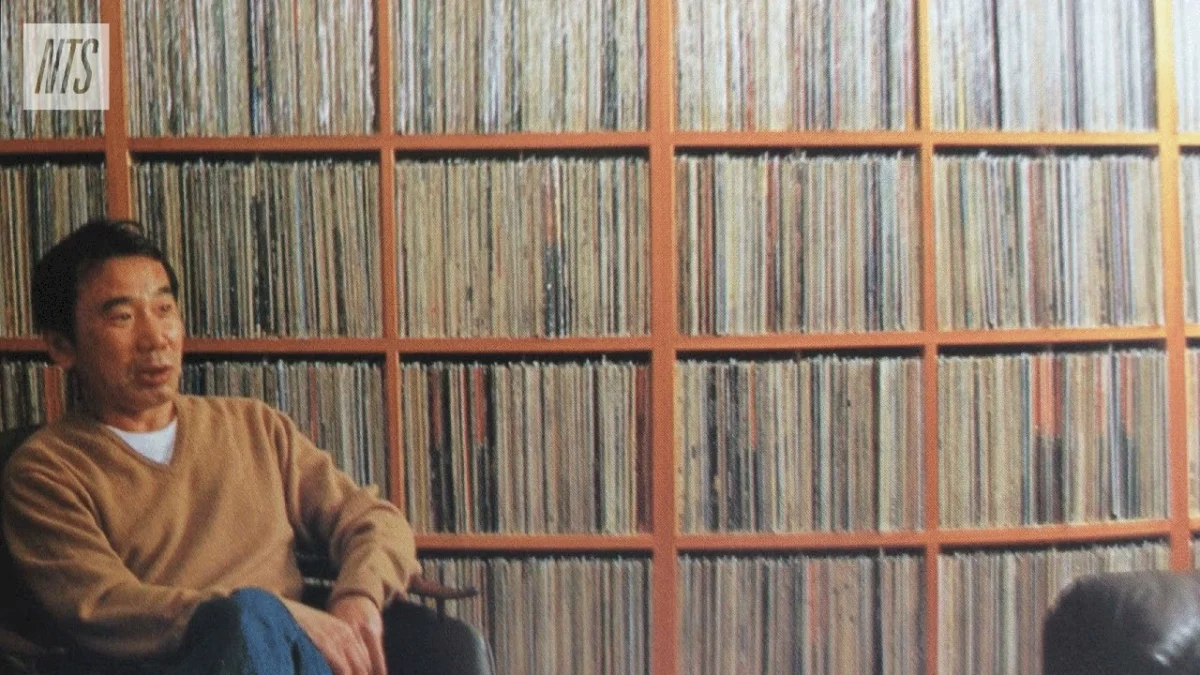
Long before he achieved global acclaim as one of Japan’s most celebrated contemporary novelists, Haruki Murakami spent his formative adult years immersed in the vibrant, smoky atmosphere of Tokyo’s nightlife. From 1974 to 1981, Murakami and his wife, Yoko, managed Peter Cat, a subterranean jazz bar located in the bustling Sendagaya and later Kokubunji districts of Tokyo. This foundational chapter in the author’s life did more than simply pay the bills; it cemented a lifelong synthesis between prose and melody that would come to define his entire literary oeuvre. Today, music functions not merely as decorative background noise in Murakami’s best-selling novels, but as a structural pillar, an emotional compass, and a thematic language that guides characters through surreal landscapes and melancholic introspection.
In a recent cultural development that bridges the gap between auditory art and literature, NTS Radio has curated an expansive, nearly five-hour musical compendium. This dual-playlist release meticulously catalogues the vast array of jazz standards and classical masterpieces explicitly referenced across Murakami’s extensive bibliography. For devoted readers and audiophiles alike, this digital archive offers a rare opportunity to experience the author’s fictional universes through the exact auditory frequencies that inspired them, featuring legendary jazz innovators alongside monumental classical composers.
The Genesis of a Musical Ear: From Peter Cat to the Printed Page
To fully understand the profound integration of music in Murakami’s writing, one must examine his pre-literary career. Running Peter Cat required Murakami to listen to jazz continuously, booking live acts and managing the daily operations of a venue dedicated to the genre. During this period, he absorbed thousands of hours of improvisation, syncopation, and harmonic progression.
When Murakami unexpectedly began writing his debut novel, Hear the Wind Sing (1979), at the age of 29 while sitting at his kitchen table late at night, this musical sensibility naturally bled onto the page. He has frequently noted in interviews that his transition from jazz bar proprietor to novelist fundamentally shaped his prose style. Murakami views writing through the lens of rhythm and cadence, purposefully utilizing short sentences, repetitive motifs, and smooth transitions that mimic the swing of a jazz arrangement or the sustained tension of a classical sonata.
As his bibliography expanded to include globally renowned works such as Norwegian Wood, The Wind-Up Bird Chronicle, Kafka on the Shore, and Killing Commendatore, musical references evolved from casual background mentions into crucial narrative devices. Characters frequently retreat to quiet rooms to spin vinyl records on high-end turntables, using the ritual of listening to process grief, alienation, and memory.
Inside the NTS Radio Curated Playlists
The newly released NTS Radio playlists provide a comprehensive sonic roadmap through Murakami’s fictional worlds, broken down across nearly five hours of carefully selected tracks. The jazz component of the curation dips deep into the mid-century American jazz canon, pulling from artists who frequently populate the smoky lounges and solitary apartments of the author’s stories. Listeners will encounter the modal explorations of John Coltrane, the delicate, introspective voicings of pianist Bill Evans, and the idiosyncratic, avant-garde genius of Thelonious Monk.
Parallel to these jazz standards, the classical curation captures the sweeping, often elegiac European compositions that serve as touchstones for Murakami’s more solemn narratives. Works by Franz Schubert, Franz Liszt, and Wolfgang Amadeus Mozart feature prominently. Notably, the Beatles’ iconic track Norwegian Wood—which famously serves as the structural and emotional anchor for Murakami’s 1987 breakthrough novel of the same name—hovers over the entire collection as a reminder of the intersection between popular song and high literature.
Cultural critics and literary scholars have long analyzed the specific functions of these musical interludes. In Murakami’s narratives, music often acts as a bridge between the conscious and subconscious mind, allowing characters to navigate the uncanny, magical realist realms that frequently disrupt their ordinary lives. By compiling these specific recordings, NTS Radio has successfully externalized the internal soundscape shared by millions of readers worldwide.
Chronology of Murakami’s Musical and Literary Milestones
The intertwining of music and literature in Murakami’s life follows a distinct chronological progression that spans over half a century:
- 1974: Haruki and Yoko Murakami open Peter Cat, a jazz bar in Tokyo, immersing the future author in nightly performances and an extensive vinyl collection.
- 1979: Murakami publishes his debut novel, Hear the Wind Sing, which wins the Gunzo Prize for New Writers and establishes his rhythm-driven prose style.
- 1981: The Murakamis sell Peter Cat to focus entirely on writing, though the atmosphere and ethos of the jazz bar remain central to his subsequent works.
- 1987: Norwegian Wood is published in Japan, becoming a massive cultural phenomenon and cementing the role of specific musical titles as thematic focal points.
- 2002–2003: The publication of Kafka on the Shore further incorporates classical music, specifically Beethoven’s Archduke Trio and Schubert piano sonatas, into complex narrative puzzles.
- Present Day: Digital platforms like NTS Radio archive and contextualize the author’s musical references, creating immersive cross-media experiences for contemporary readers.
Analytical Perspective: The Implications of Cross-Media Curation
The release of the NTS Radio playlists arrives at a time when consumer appetite for cross-media literary companions is at an all-time high. Modern readers increasingly seek out immersive environments that extend beyond the physical boundaries of the printed page. By pairing literature with curated soundtracks, digital platforms are shifting the reading experience from a solitary, silent act into a multisensory engagement.
From an analytical standpoint, Murakami’s work is uniquely suited to this type of auditory accompaniment. Unlike authors who use music as mere period-dressing, Murakami employs specific musical pieces to denote psychological states. For instance, the recurring appearance of Franz Schubert’s piano sonatas in Kafka on the Shore signals a descent into deep, unresolved psychological processing. When readers listen to these exact pieces via the newly available playlists while engaging with the text, they are participating in a synchronized aesthetic experience designed to mirror the author’s exact creative vision.
Furthermore, this curation serves an educational and archival purpose for younger generations of readers. As physical media formats like vinyl and compact discs experience cyclical resurgences, digital radio platforms act as cultural curators, translating historical artistic references into accessible, streamable formats. This encourages a deeper engagement with both the classic jazz and classical repertoires that might otherwise remain undiscovered by modern audiences.
Broader Impact on Global Literary Culture
The reception of the NTS Radio playlists underscores the enduring global reach of Haruki Murakami’s literary universe. Translated into more than fifty languages, Murakami’s works have cultivated a fiercely dedicated international readership that transcends linguistic and cultural barriers. Music functions as a universal second language within this global fandom, providing a shared cultural touchstone that unites readers from Tokyo to New York, Paris, and beyond.
As digital media platforms continue to experiment with ways to intersect literature, music, and ambient culture, projects like the Murakami jazz and classical playlists set a high standard for thoughtful curation. They demonstrate that literary adaptation need not be restricted to film or television screens; rather, it can exist in the invisible, evocative space between a reader’s eyes and the notes playing softly in the background.
For those looking to engage with this cross-disciplinary phenomenon, cultural critics recommend a simple approach: secure a physical copy of a Murakami novel—whether it be South of the Border, West of the Sun, After Dark, or The Wind-Up Bird Chronicle—queue up the NTS Radio playlists, and allow the confluence of jazz improvisation and classical harmony to illuminate the literary page.









Leave a Reply