
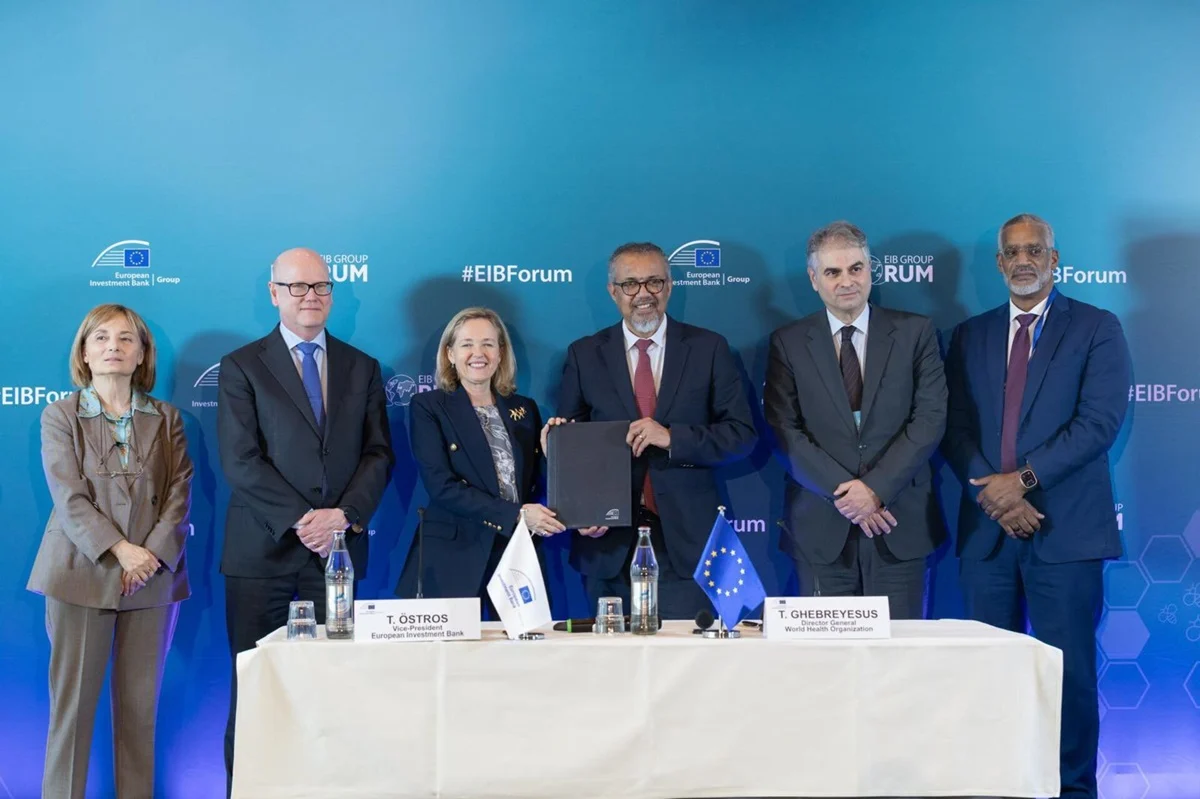
On March 6, 2025, a critical partnership was officially forged at the European Investment Bank Group Forum held in Luxembourg, marking a significant milestone for humanitarian aid and healthcare resilience in the Middle East. Dr. Tedros Adhanom Ghebreyesus, Director-General of the World Health Organization (WHO), met with Thomas Östros, Vice-President of the European Investment Bank (EIB Global), to finalize and sign a landmark financial agreement. The accord commits a €10 million grant dedicated entirely to reinforcing, modernizing, and securing the fractured public health infrastructure across Lebanon.
This vital financial injection arrives at a time when the Lebanese healthcare system is operating under unprecedented strain, caught in the crosshairs of prolonged economic collapse, regional instability, and a massive influx of vulnerable populations. The collaborative initiative between the WHO and EIB Global is strategically designed to address both immediate life-saving medical needs and long-term institutional recovery. At the core of the agreement are two primary objectives: the complete re-establishment and modernization of Lebanon’s Central Public Health Laboratory, and the sustained provision of essential medications and clinical support to more than 50,000 individuals suffering from severe, non-communicable chronic diseases such as diabetes, cardiovascular conditions, and cancer.
The Main Facts of the Agreement
The €10 million grant represents a targeted intervention aimed at arresting the decline of Lebanon’s medical sector. Years of compounding financial crises have rendered basic healthcare unaffordable and inaccessible for a vast majority of the population residing within the country’s borders. By channeling funds directly through the operational apparatus of the World Health Organization, EIB Global ensures that the capital is utilized with high transparency and administrative efficiency.
The scope of the project is divided into two distinct yet deeply interconnected pillars. The first pillar focuses on epidemiological security and diagnostic sovereignty through the revival of the Central Public Health Laboratory. Before its degradation, this laboratory served as the ultimate national authority for disease surveillance, food safety testing, water quality control, and outbreak verification. Rebuilding this facility ensures that Lebanon regains its independent capacity to detect, monitor, and respond to biological threats and infectious disease outbreaks without relying entirely on ad-hoc external diagnostic processing.
The second pillar directly targets human welfare by safeguarding continuity of care for over 50,000 patients diagnosed with high-risk chronic diseases. In a nation where hyperinflation has priced vital pharmaceutical drugs beyond the reach of ordinary citizens, interruptions in medication regimens for conditions like hypertension, diabetes, and oncology diagnoses carry fatal consequences. This initiative guarantees a steady, reliable pipeline of specialized pharmaceuticals and medical consumables, shielding vulnerable patients from the catastrophic out-of-pocket health expenditures that currently drive families deeper into poverty.
Chronology and Background Context of the Crisis
To fully comprehend the weight of the March 6, 2025 agreement, it is essential to examine the deteriorating timeline of Lebanon’s healthcare ecosystem over the past half-decade. The crisis did not materialize overnight; rather, it represents the cumulative toll of an economic downturn described by the World Bank as one of the most severe globally since the mid-nineteenth century.
In late 2019, Lebanon entered a catastrophic financial depression triggered by unsustainable sovereign debt, systemic banking sector failures, and rampant political corruption. The national currency, the Lebanese Pound (LBP), rapidly lost over 90% of its value against the United States dollar. This currency devaluation decimated the purchasing power of the state, public institutions, and private households alike.
By 2020, the situation was further exacerbated by the devastating Beirut Port explosion, which obliterated medical warehouses, destroyed several major hospitals, and injured thousands. The COVID-19 pandemic immediately followed, pushing an already buckling healthcare infrastructure to the absolute brink of collapse. Medical professionals—including highly trained doctors, specialized nurses, and laboratory technicians—faced plummeting real wages, prompting a mass exodus of healthcare talent. Thousands of physicians and medical workers emigrated to Europe, the Gulf states, and North America, leaving public and private hospitals severely understaffed.
Concurrently, the removal of government subsidies on essential goods, including pharmaceutical products, caused medication prices to skyrocket by several thousand percent overnight. Essential drugs for chronic illnesses vanished from pharmacy shelves, and public hospitals struggled to procure basic anesthetic agents, IV fluids, and dialysis supplies. Throughout 2023 and 2024, regional geopolitical escalations further strained the country’s resources, causing internal displacement and compounding the vulnerabilities of both local Lebanese communities and the hundreds of thousands of refugees hosted within the nation. It is within this prolonged historical trajectory of compounding crises that the EIB Global and WHO partnership emerges as an essential stabilizing lifeline.
Supporting Data and Healthcare Metrics
Quantitative data compiled by international humanitarian agencies and public health monitors illustrate the sheer scale of the emergency that the €10 million grant seeks to mitigate. According to WHO assessments, prior to the economic collapse, Lebanon’s healthcare system was widely regarded as one of the most advanced in the Middle East, characterized by a robust private medical sector and a functional public safety net. However, the subsequent years erased decades of development.
Recent estimates indicate that over 80% of the Lebanese population now lives below the poverty line, forcing households to make agonizing trade-offs between purchasing food and securing necessary medical treatments. Chronic non-communicable diseases (NCDs) account for more than 80% of total premature deaths in Lebanon. Cardiovascular diseases, cancers, chronic respiratory conditions, and diabetes represent the leading causes of mortality. For the 50,000-plus individuals targeted by the WHO-EIB initiative, an interruption in medication is not merely a setback; it is an immediate health emergency. Diabetics requiring daily insulin, hypertensive patients at risk of strokes, and oncology patients undergoing active chemotherapy regimens cannot endure prolonged medication stockouts without suffering irreversible physiological damage or death.
Furthermore, the operational paralysis of the Central Public Health Laboratory created a dangerous blind spot in national health security. In an era marked by post-pandemic vigilance and the constant threat of emerging zoonotic and antimicrobial-resistant pathogens, operating without a functioning national reference laboratory leaves a country blind to epidemiological shifts. The re-establishment of this laboratory will restore vital diagnostic capabilities, ensuring compliance with International Health Regulations and enabling swift data sharing with global health authorities.
Official Responses and Stakeholder Perspectives
The signing ceremony in Luxembourg drew notable attention from international diplomats, financial leaders, and public health advocates, all of whom emphasized the urgency and strategic value of the collaboration.
Dr. Tedros Adhanom Ghebreyesus, speaking on behalf of the World Health Organization, underscored the moral and practical imperative of sustaining health services in fragile settings. "Health is a fundamental human right, yet millions of people in Lebanon are currently denied this right simply because they cannot afford basic life-saving medicines or access functioning diagnostic facilities," Dr. Tedros stated. He commended the European Investment Bank for its steadfast solidarity, emphasizing that the €10 million grant is a direct investment in human dignity and regional stability. "By rebuilding the Central Public Health Laboratory and securing uninterrupted care for tens of thousands of chronic disease patients, we are not only treating illnesses; we are restoring resilience to a healthcare system that has endured unimaginable shocks."
Echoing these sentiments, Thomas Östros, Vice-President of EIB Global, highlighted the bank’s evolving role as a pillar of sustainable development and humanitarian support outside the borders of the European Union. "EIB Global is committed to fostering resilient societies and supporting communities facing acute crises," Östros remarked during the forum. "Our partnership with the World Health Organization in Lebanon reflects our shared dedication to human security. A robust public health infrastructure is the bedrock of economic recovery and social stability. Through this targeted financing, we aim to ensure that vulnerable individuals—particularly those battling severe chronic illnesses—do not pay the ultimate price for macroeconomic instability. We are proud to stand with Lebanon during this critical juncture."
Public health experts and regional analysts have also weighed in on the agreement, universally praising the dual-focus approach. While immediate pharmaceutical distribution provides vital short-term relief, the structural investment in laboratory infrastructure ensures that the intervention leaves a lasting, sustainable footprint rather than acting merely as a temporary band-aid.
Broader Impact and Strategic Implications
The implications of the €10 million EIB Global and WHO initiative extend far beyond the immediate beneficiaries, carrying profound weight for regional health security, economic recovery, and the future architecture of international humanitarian finance.
From an epidemiological perspective, the revival of Lebanon’s Central Public Health Laboratory fortifies the entire Eastern Mediterranean region against cross-border health threats. In a globally interconnected world, local diagnostic blind spots pose international risks. By equipping Lebanon with advanced laboratory infrastructure, the project enhances genomic sequencing, food safety standards, and early-warning systems for infectious diseases, effectively creating a shield that protects both local citizens and neighboring populations.
From a socioeconomic standpoint, protecting chronic disease patients from catastrophic health expenditures prevents families from falling into generational poverty. When breadwinners or family members are struck down by manageable chronic conditions due to a lack of medication, the economic productivity of entire households collapses. Ensuring that these 50,000 individuals remain healthy and functional helps stabilize household economies and reduces the overwhelming burden currently placed on emergency rooms and tertiary care facilities, which have previously been forced to turn away patients due to lack of capacity.
Moreover, this partnership sets a compelling precedent for future collaborations between multilateral development banks and specialized United Nations agencies. Historically, financial institutions like the European Investment Bank focused primarily on heavy infrastructure projects, such as transport, energy, and water grids. However, the convergence of multiple global crises—ranging from pandemics to economic collapses—has demonstrated that human capital and public health are foundational economic assets. Without a healthy population, infrastructural investments fail to yield sustainable returns. The Lebanon agreement serves as a blueprint for how development finance can be effectively deployed to bridge the gap between humanitarian relief and long-term structural development in fragile states.
Conclusion
The signing of the €10 million grant agreement on March 6, 2025, represents a vital turning point for Lebanon’s beleaguered health sector. Through the concerted efforts of the World Health Organization and EIB Global, tangible relief is on the horizon for tens of thousands of vulnerable patients, while the nation’s institutional capacity for disease surveillance is set to be restored. As the project rolls out in the coming months, its success will depend on sustained cooperation, transparent implementation, and continued international solidarity. Ultimately, this initiative serves as an essential beacon of hope, proving that even amidst profound adversity, coordinated global action can safeguard human life and lay the groundwork for a healthier, more resilient future.






Leave a Reply