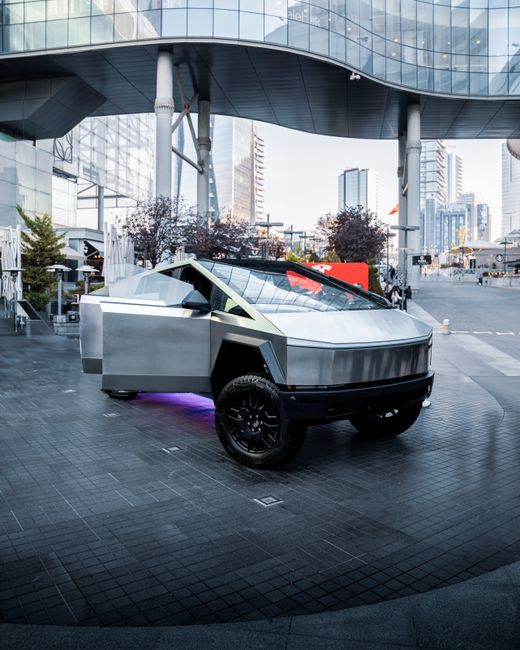
Tesla Cybertruck: A Definitive Deep Dive into the Electric Revolution’s Unconventional Utility Vehicle
The Tesla Cybertruck, unveiled to the world with a dramatic flair, represents a radical departure from conventional automotive design and engineering. It’s not merely an electric pickup truck; it’s a statement piece, a technologically advanced workhorse, and a potentially disruptive force in the utility vehicle segment. At its core, the Cybertruck is built around an exoskeleton made of ultra-hard 30X cold-rolled stainless steel, a material chosen for its exceptional strength, durability, and resistance to dents and corrosion. This structural approach eliminates the need for a traditional body-on-frame construction, contributing to the vehicle’s impressive rigidity and safety. The angular, geometric design, often described as brutalist or futuristic, is a direct consequence of this material choice and the manufacturing processes employed. This unconventional aesthetic, while polarizing, is meticulously engineered for aerodynamic efficiency and structural integrity. Beyond its striking exterior, the Cybertruck embodies Tesla’s commitment to performance, range, and advanced technology, aiming to redefine what a pickup truck can be.
The powertrain options for the Cybertruck are designed to deliver both brute force and impressive efficiency. Tesla offers three distinct configurations: Rear-Wheel Drive (RWD), All-Wheel Drive (AWD), and the flagship Cyberbeast. The RWD model, expected to be the entry-level option, promises a substantial towing capacity and a respectable estimated range. The AWD variant enhances its off-road and towing capabilities with the power and traction of dual motors. The Cyberbeast, the top-tier offering, boasts a tri-motor setup, delivering mind-bending acceleration comparable to many sports cars and an even more substantial towing capacity. All Cybertruck models are equipped with Tesla’s advanced battery technology, which not only provides extended driving range on a single charge but also enables fast charging at Tesla’s Supercharger network, a crucial factor for utility vehicle practicality. The precise battery size and energy density will vary across the configurations, but the overarching goal is to provide a compelling electric alternative for those who require significant payload and towing capabilities without compromising on performance or environmental consciousness.
A cornerstone of the Cybertruck’s utility is its exceptional towing and payload capacity. Tesla has consistently emphasized its ability to outperform traditional gasoline-powered trucks in these critical areas. The Cybertruck’s robust stainless steel exoskeleton, coupled with its powerful electric motors, allows for substantial towing weights, measured in thousands of pounds. This makes it a viable option for hauling boats, trailers, and heavy equipment. Similarly, the payload capacity, referring to the weight the truck bed can carry, is also designed to be class-leading. The truck bed itself, crafted from durable composite materials, is engineered to withstand the rigors of heavy-duty use. The integrated tonneau cover, a powered retractable unit, provides security and aerodynamics when closed, further enhancing the vehicle’s versatility. Furthermore, the Cybertruck’s adjustable air suspension system plays a pivotal role in its utility. It allows the driver to raise or lower the vehicle for improved ground clearance during off-road excursions or easier loading and unloading. This adaptive suspension also contributes to a more comfortable ride, a notable achievement given the truck’s robust construction.
The interior of the Tesla Cybertruck is a testament to minimalist design and cutting-edge technology, mirroring the ethos found in other Tesla models. The cabin is spacious and airy, featuring a panoramic glass roof that floods the interior with natural light, contributing to a sense of openness. The centerpiece of the interior is a large, landscape-oriented touchscreen display that controls virtually all vehicle functions, from climate control and navigation to entertainment and driving settings. This central display eliminates the need for a traditional dashboard cluttered with physical buttons and gauges, creating a clean and uncluttered environment. The steering wheel, a yoke-style design on initial unveilings, further emphasizes the futuristic aesthetic, though a more conventional round steering wheel option is likely to be available. Seating is designed for comfort and durability, with materials chosen for their resilience and ease of cleaning, suitable for a vehicle intended for demanding work or adventure. The integration of Tesla’s renowned Autopilot and Full Self-Driving (FSD) capabilities promises a high level of driver assistance and, eventually, autonomous driving functionality, setting a new benchmark for driver-assist technology in the pickup truck segment.
The technological innovations within the Cybertruck extend far beyond its powertrain and interior interface. The vehicle is equipped with a suite of advanced sensors, cameras, and radar systems that contribute to its safety features and advanced driving capabilities. These systems are integral to Autopilot and FSD, enabling functions like adaptive cruise control, lane keeping, automatic emergency braking, and even automated parking. The Cybertruck’s onboard computer is powerful enough to process the vast amounts of data generated by these sensors, allowing for real-time decision-making and continuous software updates that will improve its performance and introduce new features over time. The stainless steel exoskeleton itself is a technological marvel, offering unparalleled protection in the event of a collision. Its hardness and deformation resistance are designed to absorb and dissipate impact energy, providing a significantly safer environment for occupants. The glass used for the windows, referred to as "Armor Glass," is also engineered for enhanced durability and shatter resistance, although early demonstrations highlighted its susceptibility to cracking under specific impact conditions.
The Cybertruck’s charging infrastructure and range are crucial considerations for any electric vehicle, especially one designed for utilitarian purposes. Tesla’s Supercharger network provides a significant advantage, offering fast and reliable charging solutions across major travel routes. The Cybertruck is expected to support the latest charging standards, allowing for rapid replenishment of its battery. The estimated range figures, varying across the different configurations, are designed to be competitive within the electric truck market, aiming to alleviate range anxiety for daily commuting and longer journeys. For owners who wish to charge at home, the Cybertruck will be compatible with Tesla’s Wall Connector, providing a convenient overnight charging solution. The truck’s ability to act as a mobile power source is another groundbreaking feature. With its substantial battery capacity, the Cybertruck can potentially power tools, appliances, and even other electric vehicles, making it an invaluable asset for job sites, campsites, or emergency situations. This bidirectional charging capability, often referred to as “PowerShare,” significantly expands its utility beyond simply transportation.
The manufacturing process for the Cybertruck is as innovative as the vehicle itself. Tesla’s commitment to vertical integration and advanced manufacturing techniques is evident in the Cybertruck’s production. The use of large-format stamping and robotic assembly is crucial for shaping the complex angles of the stainless steel exoskeleton. The company has invested heavily in new factories and production lines specifically designed to handle the unique challenges of manufacturing a vehicle with such unconventional materials and design. The precision required to weld and assemble the ultra-hard stainless steel demands specialized equipment and highly skilled labor. This meticulous approach to manufacturing is essential for ensuring the structural integrity, safety, and aesthetic consistency of each Cybertruck produced. The elimination of traditional paint processes, due to the inherent finish of the stainless steel, is another manufacturing advantage, contributing to a more streamlined and environmentally friendly production cycle.
The target market for the Tesla Cybertruck is broad, encompassing individuals and businesses seeking a capable and technologically advanced utility vehicle. It appeals to those who prioritize performance and cutting-edge technology, as well as those who require the ruggedness and hauling capabilities of a pickup truck. The early adopter demographic is likely to be attracted to its futuristic design and innovative features, while commercial users may find its durability, electric powertrain, and potential for lower operating costs compelling. The Cybertruck has the potential to disrupt established segments of the pickup truck market, attracting buyers who may not have previously considered an electric vehicle. Its ability to combine performance, utility, and a unique aesthetic positions it as a distinct offering in a traditionally conservative market. The ongoing advancements in battery technology and charging infrastructure will further broaden its appeal and practicality for a wider range of users.
The safety features integrated into the Cybertruck are paramount, building upon Tesla’s existing safety philosophies. The ultra-hard stainless steel exoskeleton provides a robust protective cage for occupants. Advanced airbag systems, designed to deploy strategically in various impact scenarios, further enhance occupant safety. The vehicle’s sophisticated sensor suite contributes to active safety systems, such as automatic emergency braking, which can detect potential collisions and apply the brakes autonomously to mitigate or avoid them. Lane departure warning and lane keeping assist help drivers stay within their lane, reducing the risk of unintended lane changes. The panoramic camera system provides drivers with a 360-degree view around the vehicle, aiding in maneuvering in tight spaces and improving overall situational awareness. The integration of Full Self-Driving capabilities, while still under development and subject to regulatory approval, promises to usher in a new era of vehicle safety by reducing human error, which is a leading cause of accidents.
The environmental impact and sustainability considerations are central to Tesla’s mission, and the Cybertruck is a reflection of this commitment. By utilizing an all-electric powertrain, the Cybertruck eliminates tailpipe emissions, contributing to cleaner air quality in urban environments and reducing the overall carbon footprint of transportation. The stainless steel construction, while energy-intensive to produce, offers exceptional durability and longevity, reducing the need for frequent replacements and minimizing waste over the vehicle’s lifespan. Furthermore, the ability to power homes and businesses with the Cybertruck’s battery, through its PowerShare feature, can support the integration of renewable energy sources and reduce reliance on fossil fuels. As battery recycling technologies advance, the environmental impact of battery production and disposal will continue to be addressed, further enhancing the sustainability credentials of electric vehicles like the Cybertruck.
The Cybertruck’s unique design and material choices have presented engineering challenges and opportunities. The cold-rolled stainless steel, while incredibly strong, is notoriously difficult to bend and form into complex curves. Tesla’s manufacturing innovations, including specialized tooling and techniques, are crucial for overcoming these hurdles. The rigidity of the exoskeleton contributes to a distinct driving experience; the suspension system is designed to manage road imperfections effectively and provide a comfortable ride despite the truck’s robust structure. The integration of adaptive air suspension is key to balancing the demands of work and comfort, allowing for adjustable ride height and damping characteristics. The truck’s aerodynamics, despite its unconventional shape, have been meticulously engineered to optimize efficiency and reduce wind noise. The flat panels and sharp angles, while visually striking, have been designed with airflow in mind.
The future of the Cybertruck, and indeed the electric pickup truck segment, looks dynamic. As Tesla refines its production processes and expands its manufacturing capacity, the Cybertruck is poised to become more accessible to a wider audience. The continuous development of battery technology will likely lead to increased range and faster charging times, further enhancing its practicality. The evolution of Full Self-Driving capabilities will also play a significant role in its long-term adoption and appeal. The Cybertruck’s disruptive design and engineering are likely to inspire further innovation within the automotive industry, pushing competitors to explore new materials, manufacturing methods, and powertrain technologies. Its success will be a testament to Tesla’s ability to challenge conventional wisdom and redefine the future of transportation, proving that utility vehicles can be both incredibly capable and undeniably revolutionary. The ongoing software updates and feature additions will ensure the Cybertruck remains at the forefront of automotive technology, adapting to user needs and evolving with the digital landscape.