The much-anticipated inaugural halftime show of the FIFA World Cup Final, held at the newly christened New York/New Jersey Stadium, delivered a dizzying spectacle of global music and pop culture, albeit one characterized by an ambitious scope that bordered on chaotic. For the first time in the tournament’s 96-year history, FIFA extended the halftime break to a full 30 minutes, a decision necessitated by the unprecedented lineup of international superstars and the intricate production demands. The event, produced by Global Citizen, aimed not only to entertain but also to spotlight the FIFA Global Citizen Education Fund, a significant initiative seeking to broaden access to education and football for children worldwide.
A Star-Studded Lineup Takes the Stage
The stage was set for a historic performance as a constellation of musical titans converged. The show commenced with the Queen of Pop, Madonna, who launched into a vibrant medley of her hits "Music" and "Danceteria." Her set was elevated by the presence of Brazilian football legends Ronaldinho and Ronaldo, adding a touch of soccer royalty to the high-energy, nightclub-themed segment. This electrifying opening immediately set a high bar for the subsequent acts.
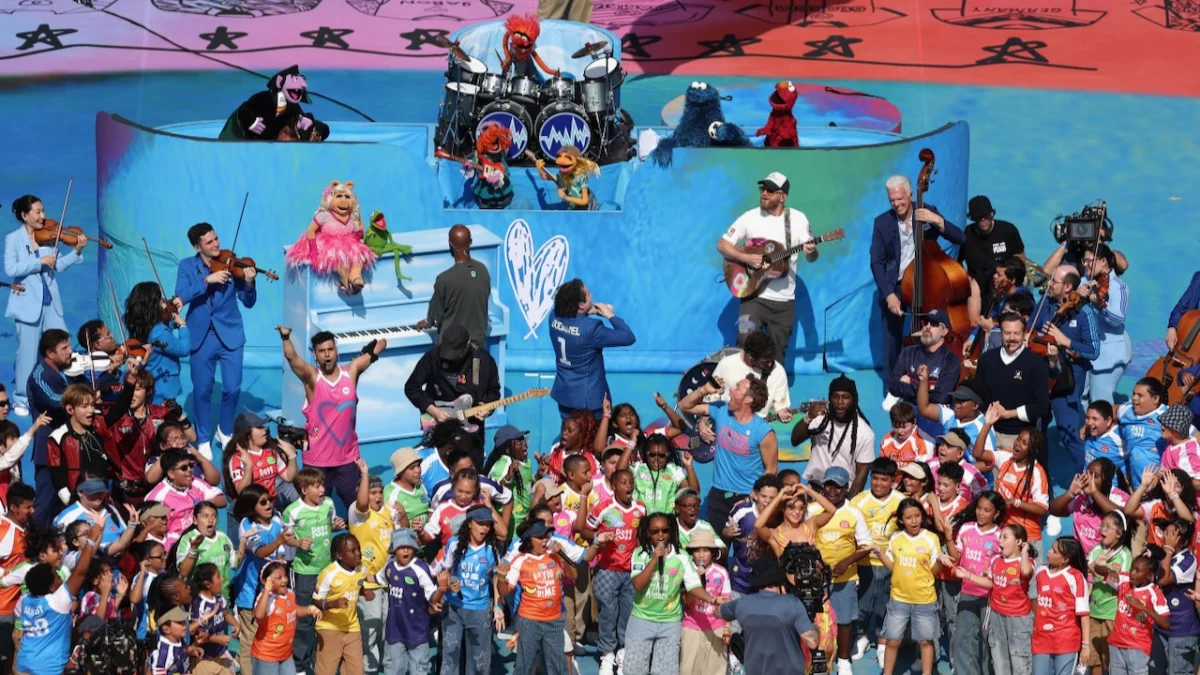
Following Madonna’s performance, the production shifted gears with a globally-inspired orchestral arrangement. Renowned conductor Gustavo Dudamel led an ambitious rendition of The White Stripes’ iconic anthem "Seven Nation Army." This segment featured a diverse ensemble, including Iranian vocalist Bijan Mortazavi, the whimsical Dr. Teeth and the Electric Mayhem (from The Muppets), the venerable New York Philharmonic, and the vibrant Simón Bolívar Symphony Orchestra of Venezuela. The sheer ambition of uniting such disparate musical forces underscored the event’s global aspirations.
The K-pop phenomenon BTS then injected their signature infectious energy into the stadium with a powerful performance of their chart-topping hit "Dynamite." Their dedicated fanbase, known as ARMY, likely contributed to the palpable excitement that surged through the crowd during their segment.
A Moment of Calm and a Swift Revival
In a notable tonal shift, Hollywood actor Jason Sudeikis, alongside fellow Ted Lasso cast member Brendan Hunt, introduced pop superstar Justin Bieber. Bieber opted for a more intimate and introspective moment, delivering a subdued acoustic rendition of his song "Everything Hallelujah." This marked a significant departure from the preceding high-octane performances, momentarily bringing the stadium’s momentum to a near standstill. While intended as a moment of reflection, the transition proved jarring for some viewers, highlighting the challenges of weaving such diverse artistic expressions into a cohesive narrative.
The energy was swiftly reignited by the dynamic duo of Shakira and Nigerian Afrobeats sensation Burna Boy. They performed "Dai Dai," the official anthem of the 2026 World Cup. This collaboration proved to be one of the show’s most successful and impactful moments, blending Shakira’s signature rhythm and Burna Boy’s commanding presence with a song intrinsically tied to the tournament’s spirit. The infectious beat and synchronized choreography captured the essence of global unity that the World Cup aims to embody.
A Grand Finale and Lingering Questions
The grand finale saw the PS22 Chorus, a group of young singers, take center stage with their original composition, "We Dance." This segment was a testament to collaborative artistry, featuring an eclectic mix of performers including members of the band Coldplay, Shakira once again, beloved Muppet characters Kermit the Frog and Miss Piggy, and the re-emergent Dr. Teeth and the Electric Mayhem. The seemingly endless procession of musicians and characters underscored the ambitious scale of the production, aiming to leave a lasting impression of unity and celebration.
In total, the halftime show packed an extraordinary amount of spectacle into approximately 11 minutes of performance time. While the sheer ambition and star power were undeniable, the rapid-fire transitions and stylistic shifts created a sense of disarray for some. The juxtaposition between BTS’s explosive energy and Bieber’s introspective ballad, for instance, presented a notable instance of tonal whiplash. Despite these perceived shortcomings in coherence, moments of genuine joy and artistic brilliance shone through, particularly in the performances by BTS and Shakira. The sheer scale of the production, featuring a global cast of artists and orchestral ensembles, was a feat in itself, fitting for the world’s most-watched sporting event. While it may not have achieved the seamless polish often associated with NFL Super Bowl halftime shows, it undoubtedly lived up to its billing as a halftime spectacle for the ultimate global sporting stage.
The Philanthropic Underpinning: A Cause for Celebration
Beyond the dazzling performances, the halftime show carried a significant philanthropic mission. Produced in partnership with Global Citizen, the event served as a crucial platform to raise awareness and funds for the FIFA Global Citizen Education Fund. This joint initiative aims to mobilize $100 million to enhance educational opportunities and expand access to football for children across the globe. According to reports from the organizations involved, over $50 million has already been committed to the fund. A key component of this fundraising strategy is the commitment of $1 from every ticket sold for a FIFA World Cup 2026 match to contribute to the campaign throughout the tournament. This integration of a charitable cause into a high-profile entertainment event highlights a growing trend in global event planning, aiming to leverage massive audiences for positive social impact.
A Timeline of Star Power and Recent Activity
The inclusion of Justin Bieber in the halftime show was a late addition, confirmed only 11 days prior to the final. This rapid inclusion followed a particularly active period for the pop sensation. In April 2026, Bieber headlined the Coachella Valley Music and Arts Festival, delivering a series of surprise performances that generated considerable buzz. Furthermore, in June, he released a new live album, "SWAG LIVE FROM COACHELLA (WEEKEND I)," showcasing his continued engagement with his music and fanbase.
Madonna, a perennial icon, also recently released her new album, "Confessions II," in July 2026, further cementing her enduring presence in the music industry. Her performance at the World Cup halftime show served as a powerful testament to her sustained relevance and ability to captivate audiences across generations.
On the other side of the globe, BTS, having recently reunited, were gearing up for the next leg of their ambitious "ARIRANG World Tour." This tour was slated to include 16 shows across the United States and Canada, demonstrating the group’s immense global reach and dedicated following. Similarly, Shakira was in the midst of the final North American leg of her "Las Mujeres Ya No Lloran World Tour," a testament to the continued demand for her electrifying live performances. The convergence of these artists, each at different but significant points in their careers, contributed to the multifaceted appeal of the halftime show.
Broader Implications and Future Considerations
The introduction of a formal halftime show for the FIFA World Cup marks a significant evolution for the tournament’s entertainment strategy. Historically, the World Cup has relied on opening and closing ceremonies, but the integration of a mid-game musical spectacle aligns it more closely with other major global sporting events like the Super Bowl. This shift suggests a deliberate effort by FIFA to enhance the overall fan experience, extending the excitement beyond the 90 minutes of regulation play and attracting a broader, more diverse audience.
The success, or perceived success, of this inaugural halftime show will undoubtedly influence future iterations. The challenge for FIFA and its partners will be to strike a delicate balance between showcasing a wide array of talent and maintaining a cohesive, engaging narrative. The logistical complexities of coordinating such a large-scale production, involving international artists, orchestras, and technical crews, are immense. However, the potential rewards – increased viewership, enhanced global appeal, and the ability to amplify significant social causes – are substantial.
The inclusion of the FIFA Global Citizen Education Fund also sets a precedent for how major sporting events can effectively integrate social responsibility. By weaving a philanthropic message into the fabric of a highly visible entertainment segment, FIFA and Global Citizen have demonstrated a powerful model for harnessing the influence of sport and music to drive positive change. The ongoing commitment to raising $100 million underscores a long-term vision that extends beyond a single performance, aiming to leave a lasting legacy for children worldwide. As the world continues to connect through sport and culture, the FIFA World Cup halftime show, despite its initial chaotic charm, has firmly established itself as a significant fixture in the global entertainment landscape.