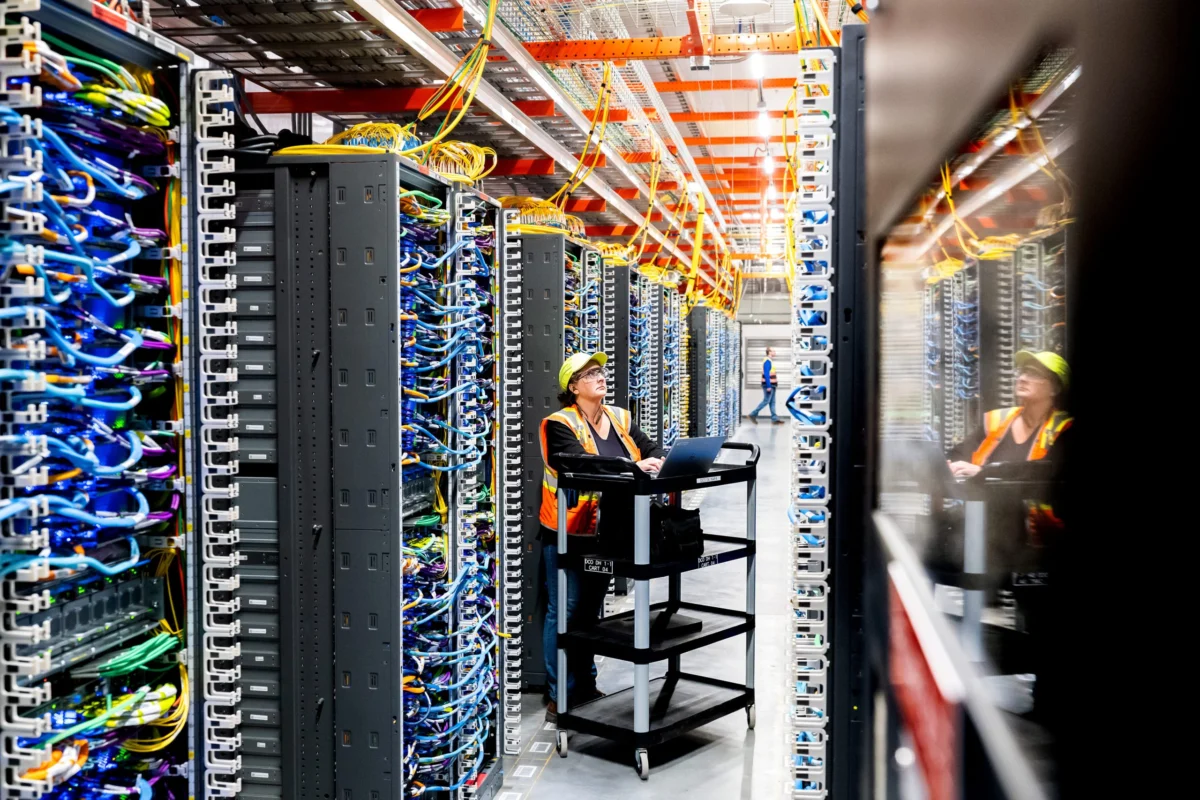
The rapid expansion of artificial intelligence infrastructure is fundamentally altering the landscape of American industrial development. As sprawling data centers emerge from the earth across the United States—driven by the insatiable demand for computing power to support generative AI and cloud services—a secondary industry is forming in their wake: the localized, highly specialized training of a new class of digital blue-collar workers. This transition, which replaces the short-term economic surge of construction with the long-term, quieter hum of server operations, has prompted a strategic alignment between global technology giants and regional community colleges.
The Economic Transition from Steel to Silicon
For years, the construction sector has enjoyed a windfall from the data center boom. Projects requiring massive capital expenditure have brought thousands of short-term jobs to counties in states like Virginia, Ohio, and Oregon. However, once the concrete is poured and the fiber-optic lines are laid, the employment profile of a site changes dramatically. A facility that required 2,000 workers during the building phase may only sustain a few hundred, or even fewer, permanent operational roles.
This reality has vexed county planners and local economists who must determine whether these massive investments provide a lasting net benefit to their regions. While the tax base may swell, the long-term workforce impact depends entirely on the ability of the local population to secure the specialized roles required to maintain the hardware, cooling systems, and power grids within these facilities.
A Chronology of the Data Center Expansion
The surge in data center development is not a sudden occurrence but the culmination of nearly two decades of cloud computing growth, now accelerated by the "AI race."
- 2006: Amazon Web Services launches, effectively beginning the modern era of cloud-based storage and computing.
- 2016–2023: According to U.S. Census Bureau data, employment within data center operations increases by more than 60 percent, signaling a structural shift in the tech labor market.
- 2024: The global market for data centers reaches a critical tipping point as the demand for high-density computing to train Large Language Models (LLMs) outstrips existing infrastructure capacity.
- 2025–2026: A wave of institutional partnerships between hyperscalers—such as Microsoft, Google, Oracle, and Amazon—and higher education institutions formalizes, creating standardized certificate programs designed to feed the industry’s hunger for talent.
The Skill Gap and the Rise of the "Digital Trade"
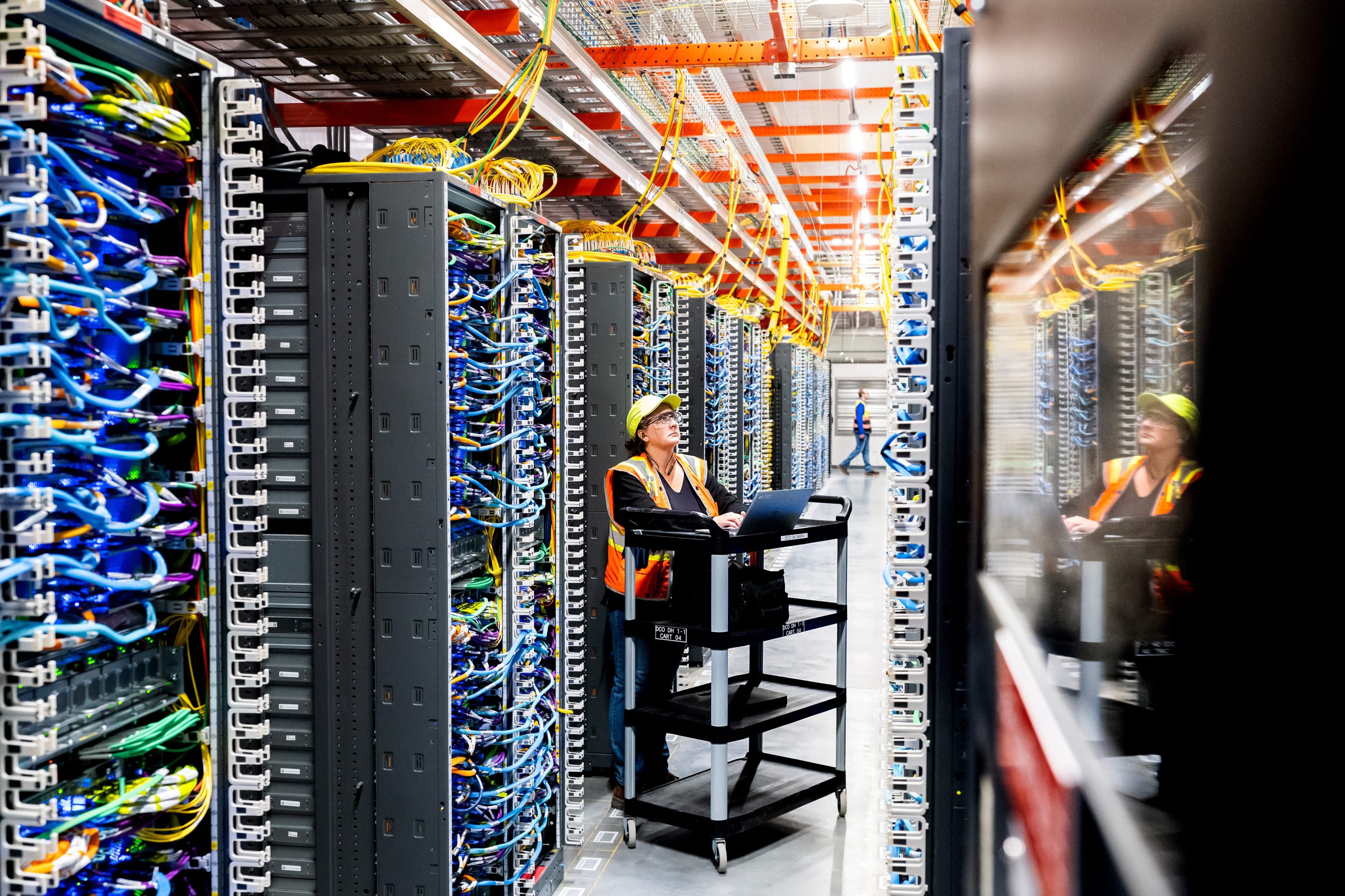
The nature of the work inside these facilities is evolving. It is no longer purely the domain of software engineers or data scientists. Instead, it involves a hybrid of traditional trades—electrical, mechanical, and HVAC—integrated with sophisticated IT hardware management.
"Those mid-level jobs—the server technicians, the hardware technicians, those that have to maintain the infrastructure—are essential," explains Scott Adams, a professor of economics at the University of Wisconsin-Milwaukee. "There are hundreds of those jobs that are necessary, and they require explicit training because, in a sense, nobody has done this exact type of job before."
The curriculum at institutions like Gateway Technical College in Wisconsin or Blue Mountain Community College in Oregon reflects this necessity. Students are trained not in theoretical computer science, but in the physical anatomy of the data center. They learn to replace modular hardware, troubleshoot cooling failures, and manage high-voltage electrical distribution. This "hands-on" approach is designed to bridge the gap between high school graduates—or those seeking a career pivot—and the high-paying, middle-skill positions that tech companies desperately need to fill.

Corporate-Academic Partnerships: A New Model for Workforce Development
Major tech companies are increasingly serving as the primary architects of technical education. By partnering with community colleges, these companies can influence curriculum in real-time, ensuring that students are trained on current hardware and protocols rather than outdated textbooks.
For instance, the Microsoft Datacenter Academy, now active in various locations including Racine County, Wisconsin, provides a template for this model. The program focuses on four core pillars: IT tech skills, hardware and software support, server technologies, and data center operations. Microsoft, alongside Amazon Web Services and Oracle, often funds scholarships to lower the barrier to entry for local residents, covering tuition and materials that might otherwise deter potential students.
However, these partnerships are not without their critics. While the companies argue they are investing in community well-being, the lack of public transparency regarding these agreements has led to friction. In several regions, local residents have pushed back against the construction of data centers, citing concerns over power consumption, water usage for cooling, and noise pollution. The workforce training programs are, in some cases, the "sweetener" used to make these projects more palatable to local governments.
The Portability of Skills and AI Resilience
A central concern for educators and policymakers is whether these specialized certificates provide long-term career security. If the hardware inside a data center changes every three years, is the technician’s knowledge rendered obsolete?

Chad Knights, chief academic officer at Northern Virginia Community College, argues that the training is inherently resilient because it is rooted in multiple physical trades. "Even if the role becomes subject to some level of automation, those individuals have their hand in no less than four different trades: plumbing, HVAC, electrical, and fiber," Knights notes.
This multidisciplinary foundation is key to the "new-collar" career path. By combining these manual trades with digital literacy, technicians are becoming versatile infrastructure managers. The average wage for a data center technician—often hovering around $32 per hour or $66,000 annually—positions these roles as a viable, sustainable alternative to the traditional four-year degree, which carries the burden of significant student debt.
Strategic Implications for Regional Economies
The Brookings Institution recently highlighted the importance of moving beyond the initial construction boom. In a report published earlier this year, analysts argued that local governments should negotiate more aggressively with tech firms, demanding that infrastructure deals include mandatory, robust investments in long-term workforce pipelines.
"We’ve seen workforce training pop up organically in the wild," says Mark Muro, a senior fellow at Brookings. "The next step is for this to become a standard part of economic development negotiations."

As the semiconductor and data center industries grow, the model of community colleges acting as a localized training arm for global tech giants is likely to become the standard. This shift offers a glimpse into a future where economic prosperity is tied not to the presence of a factory, but to the presence of a skilled, technical workforce capable of maintaining the digital backbone of the global economy.
Looking Ahead: A Modern Trade
For individuals like Louis Maxcy, a 30-year-old technician in Umatilla, Oregon, these programs represent a fundamental change in the social contract of rural America. In his hometown, where the economy has historically been tied to agriculture and state-run institutions, the arrival of an Amazon Web Services data center provided an unexpected professional ladder.
"There’s always been a stigma in this area that if you want to be successful, you need to leave," Maxcy says. By obtaining a certificate through Blue Mountain Community College, he was able to secure a role that allows him to remain in his community while participating in the global technology sector.
As more than 4,700 data center locations continue to operate and expand across the U.S., the necessity of these training programs will only increase. Whether this model can scale to meet the future demands of an AI-driven economy remains to be seen. However, the current trajectory suggests that the "digital trade" is quickly becoming a foundational pillar of the American labor market, proving that while the machines may change, the need for the human hand to build, maintain, and adapt remains as critical as ever. The race is no longer just about who can build the most servers, but who can cultivate the workforce capable of keeping the world’s information humming.