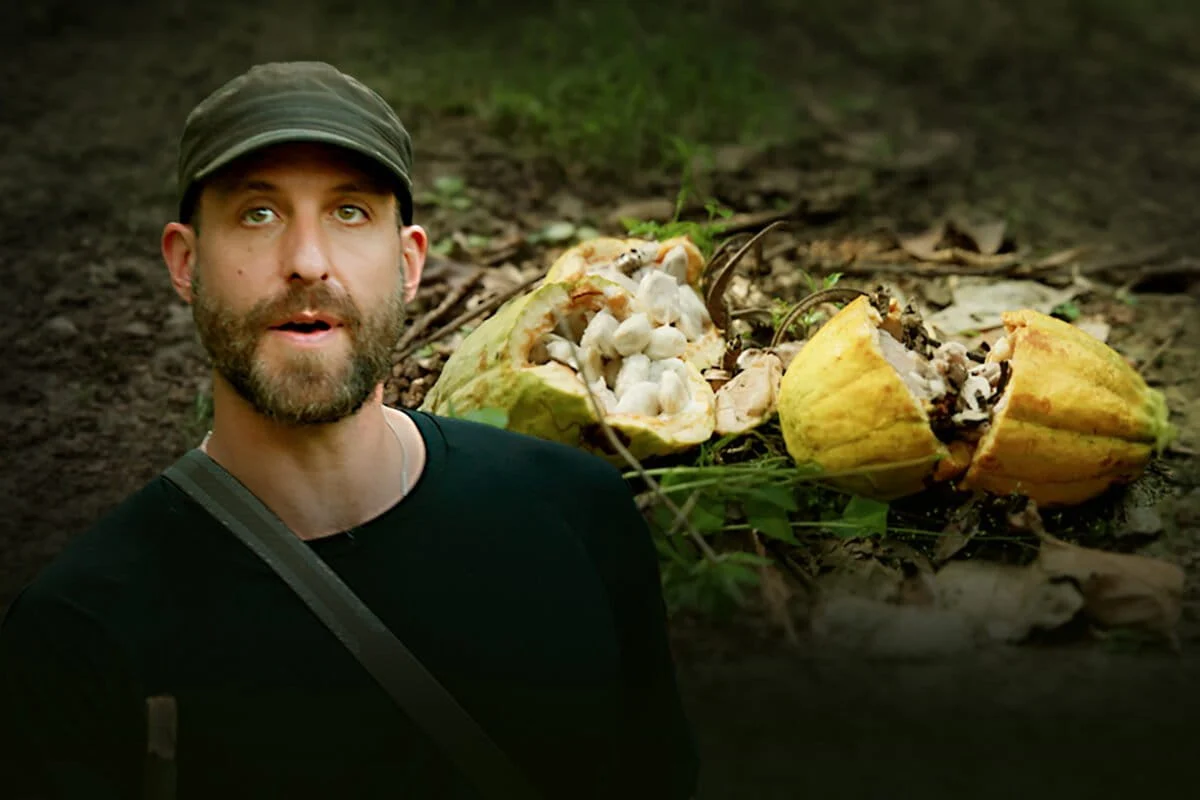
In the dense, humid interior of Grand Gedeh County, a transformative and destructive phenomenon is unfolding, driven by the world’s insatiable craving for chocolate. For over a century, the Upper Guinean rainforest—a lush belt of biodiversity that once stretched across West Africa—has been systematically dismantled by commercial agriculture, infrastructure projects, and industrial logging. Today, Liberia stands as the final guardian of this ancient ecosystem, holding more than half of the region’s remaining forest cover. However, a new and aggressive threat has emerged: the rapid, unregulated expansion of cacao production. Often referred to by locals as "brown gold," cocoa has become the primary driver of a modern-day land rush that threatens to erase Liberia’s last wild frontiers.
The transition from pristine wilderness to agricultural landscape is occurring at a staggering pace. Satellite data analyzed by environmental monitors reveals massive swaths of forest loss concentrated in southeastern Liberia. This environmental degradation is not merely a byproduct of subsistence farming but the result of a complex network of migrant labor, local land deals, and global supply chains that capitalize on the lack of oversight in Liberia’s remote interior. As the industry expands, the very survival of the Upper Guinean rainforest hangs in the balance, caught between the desperate economic needs of local communities and the conservation mandates of the international community.
The Epicenter of the Cocoa Rush
Grand Gedeh County has become the front line of this ecological battle. The region is currently gripped by what many describe as "cocoa fever." This economic surge involves everyone from local villagers and government officials to influential figures living outside the county. The allure of cocoa lies in its perceived ability to lift families out of generational poverty. In a country where economic opportunities are scarce, the prospect of a cash crop that can be sold into global markets is a powerful motivator.
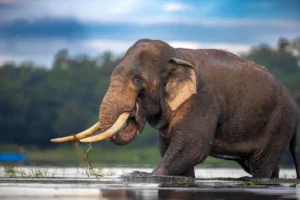
George, a dedicated ranger with the Wild Chimpanzee Foundation, spends his days patrolling the fringes of proposed protected areas, attempting to stem the tide of illegal encroachment. His mission is to protect a landscape that is globally unique, home to species found nowhere else on Earth. The Western chimpanzee, the forest elephant, and the pygmy hippopotamus all rely on these contiguous forest canopies for survival. Yet, George admits that spotting these animals is becoming increasingly difficult. The noise of chainsaws and the smoke from clearing fires have driven wildlife deeper into the shrinking interior, or worse, led to their displacement as their habitats are converted into monoculture plantations.
The scale of the destruction is often underestimated until seen from the ground. In areas designated as proposed national parks, investigators have discovered cocoa farms spanning over 100 hectares. These are not small family plots but significant industrial-scale operations. Many of these farms are less than a year old, indicating that the "cocoa rush" is a very recent and rapidly accelerating phenomenon. When forest rangers enter these illegal sites, they often find workers—many of them migrants—fleeing into the brush to avoid arrest, leaving behind evidence of a burgeoning industry that operates in the shadows of the law.
The Human Cost and the Migrant Labor Cycle
The expansion of the cocoa industry in Liberia is heavily dependent on a specific labor dynamic involving migrant workers, particularly from Burkina Faso. These workers, often referred to as "Burkinabe," are frequently invited by Liberian community members and landowners to clear the forest and establish plantations. For the migrants, Liberia represents a "greener pasture" and an escape from the land scarcity and economic instability of their home countries.
However, this arrangement is fraught with legal and ethical complexities. Many of these workers, including children who should be in school, are exposed to the risk of arrest and exploitation. When rangers confront these workers, the tragedy of the situation becomes clear: the people performing the backbreaking labor are often the ones with the least power and the most to lose. They are caught between the local landowners who profit from the land and the forest rangers tasked with upholding conservation laws.
From the perspective of the local Liberian communities, the trade-off is simple. Five years ago, many of these towns consisted of basic huts and lacked any form of modern infrastructure. Today, the profits from cocoa have transformed lives. Concrete houses are replacing traditional dwellings, and a sense of upward mobility is palpable. For a villager living on the edge of survival, the long-term value of a "proposed national park" is abstract compared to the immediate, tangible benefits of a cocoa harvest. This tension between conservation and development is the central challenge facing Liberia’s environmental future.
Brokers and the Global Supply Chain
As the cocoa moves from the forest floor to the market, it enters a sophisticated supply chain where its origins become increasingly obscured. In Zleh City, the hub of the regional cocoa trade, brokers run the show. These middlemen are the primary beneficiaries of the industry’s growth. While the farmers take the risks and perform the labor, the brokers manage the logistics and capture a significant portion of the value as the price of the "brown gold" rises at every step of the journey.
Lincoln, a prominent broker in the region, exemplifies the success of this trade. His business has grown exponentially alongside the cocoa production in Grand Gedeh. To Lincoln and his peers, the industry is a success story of local empowerment. However, there is a profound disconnect between the local production and the global destination. Most brokers and farmers have no idea which multinational corporations eventually purchase their beans or whether their product ends up on a shelf in London, Paris, or New York.
"We are just here because we were living in poverty," one local distributor noted. "We see the cocoa bringing a little money to us, but we are blind to where it goes after it leaves our hands."
This lack of traceability is a critical issue. Most of Liberia’s cocoa is sent to exporters in the capital, Monrovia, where more than half of it is shipped to the European Union (EU), Liberia’s largest customer. Because the supply chain is so opaque, cocoa grown on illegally deforested land in a protected chimpanzee habitat can easily be mixed with legally produced beans, eventually finding its way into the products of major global chocolate brands.
The EU Deforestation Regulation: A Looming Hurdle
In response to global deforestation, the European Union has passed the landmark EU Deforestation Regulation (EUDR). This law is designed to ensure that products sold on the European market—including cocoa, coffee, soy, and timber—are not linked to deforestation or forest degradation. Under the EUDR, companies must provide precise geographic coordinates for the land where their products were produced to prove they were not grown on land deforested after December 31, 2020.
For Liberia, the EUDR represents both a threat and an opportunity. If enforced strictly, much of the cocoa currently being produced in Grand Gedeh would be barred from the European market because it is grown on recently cleared forest land. This could potentially derail the Liberian cocoa trade, stripping away the newfound livelihoods of thousands of farmers.
However, EU legislators argue that the regulation is necessary to stop the "one-sided exploitation of resources" and to encourage sustainable agricultural practices. By setting high standards for the world’s largest market, the EU hopes to force producing nations to implement better land-use planning and forest protection.
The implementation of the EUDR has not been without controversy. Initially set to go into force in late 2024, the regulation has faced significant pushback from both industry groups and producing nations, leading to delays. Critics argue that the technical requirements for traceability are too burdensome for smallholder farmers, while proponents of the law insist that any further delays only provide more time for forests to be destroyed.
Lessons from Côte d’Ivoire and the Path Forward
The situation in Liberia is a haunting echo of what occurred in neighboring Côte d’Ivoire. Once home to vast rainforests, Côte d’Ivoire has lost approximately 90% of its forest cover over the last several decades, with the cocoa industry being the primary driver. The country is now the world’s largest cocoa producer, but it has paid a devastating ecological price.
Liberia currently stands at a crossroads. It can follow the path of its neighbor, sacrificing its biodiversity for short-term economic gain, or it can attempt to pioneer a new model of "deforestation-free" development. This would require significant international support, improved governance, and a commitment to providing local communities with economic alternatives that do not involve clearing the rainforest.
The "brown gold" of Grand Gedeh has brought houses and hope to a neglected region, but it has also brought the chainsaw and the loss of a heritage that can never be replaced. As the world continues to demand more chocolate, the fate of Liberia’s forests will depend on whether global markets are willing to pay the true price of sustainability—or if they will continue to look the other way as the last of the Upper Guinean rainforest disappears into the cocoa sacks of Grand Gedeh.