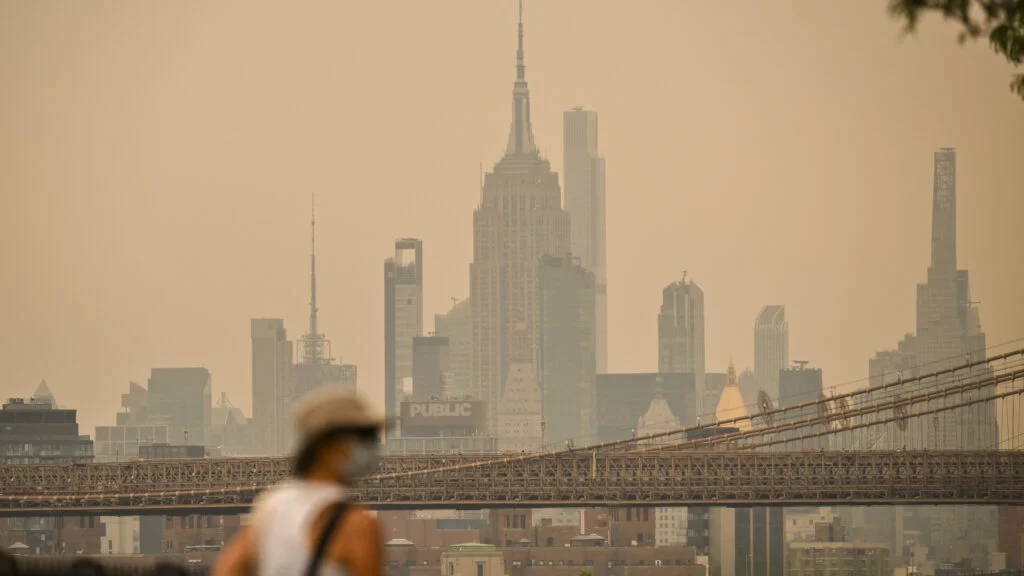
As millions of acres continue to burn across Canada, a thick pall of smoke has descended upon cities throughout the United States, pushing air quality to alarming, unhealthy levels. In New York City, the immediate health toll was starkly evident. By the end of the first day of the smoke’s most intense impact, emergency room visits for asthma exacerbations surged by a significant 31%, according to city health data. This public health challenge arrived at a particularly vulnerable moment, coinciding with the second major heat wave of the season, amplifying the risks for an already strained population.
These extreme weather events are not isolated incidents but rather potent manifestations of a cyclical and compounding relationship between fossil fuel combustion, a rapidly warming climate, the resultant natural disasters, and the cascade of associated human illnesses. While some may view these compounding crises as evidence that the climate crisis has become an insurmountable foe, history offers a crucial lesson: environmental health crises, however devastating, can serve as catalysts for meaningful change. The past offers a compelling parallel in the fight against air pollution, demonstrating how public health emergencies, when met with decisive action, can lead to transformative policy and improved environmental conditions.
Echoes of the Past: The Great Smog and the Dawn of Air Quality Regulation
In the post-World War II era, long before the specter of a warming planet entered the popular consciousness, industrialized nations grappled with a pervasive and overwhelming environmental challenge: air pollution. At that time, regulations governing air quality were virtually nonexistent. The practice of incinerating garbage rather than transporting it to landfills, coupled with the widespread proliferation of automobiles and the heavy reliance on coal as an energy source, created a toxic cocktail of pollutants in urban environments. The absence of meaningful emission standards meant that air became dangerously polluted, with smoke and soot becoming ubiquitous, settling on cars and windowsills like a constant reminder of the environmental degradation.
Scientific understanding of the specific health risks posed by various components of air pollution was nascent but growing. Researchers identified key culprits – carbon monoxide, particulate matter, ground-level ozone, sulfur dioxide, and nitrogen dioxide – which are now formally recognized by the World Health Organization as "classical air pollutants" and by the U.S. Environmental Protection Agency as "criteria air pollutants." Each of these substances, owing to their distinct chemical properties, was understood to carry specific health risks. Despite this growing body of knowledge, effective regulatory frameworks remained elusive for decades, a testament to the inertia that often accompanies entrenched industrial practices.
The critical turning point for the implementation of meaningful air quality regulations was not gradual scientific consensus, but rather a series of devastating smog events that choked cities worldwide. Under stagnant atmospheric conditions, these pollutants became trapped, leading to unprecedented levels of air contamination. The sky would take on a bronzed hue, and significant portions of urban populations would fall acutely ill, often succumbing to lung or heart conditions. The Great Smog of London in 1952 stands as a grim landmark in this history. Lasting for five days, it resulted in tens of thousands of illnesses and an estimated 12,000 premature deaths. This catastrophic event directly spurred the passage of the Clean Air Act of 1956 in the United Kingdom, a landmark piece of legislation that began to curb industrial emissions.
New York City’s Crucible: A Smog Event and a Call to Action
In the United States, a similar, though perhaps less globally recognized, event galvanized public and legislative action. In November 1966, New York City experienced its most alarming smog episode on record. As concentrations of sulfur dioxide and carbon monoxide soared to dangerous levels, municipal authorities were forced to take unprecedented steps. For the first time, emergency public service announcements directly appealed to citizens via television, radio, and print media, urging them to reduce energy consumption and automobile use. Individuals with pre-existing heart or lung conditions were strongly advised to remain indoors. The shutdown of municipal incineration services during the event led to the unsightly and unsanitary accumulation of garbage throughout the city. The irritating and inflammatory nature of the smog caused hundreds of thousands of New Yorkers to experience shortness of breath or to suffer exacerbations of underlying heart disease. Tragically, an estimated 200 people lost their lives during this period.
This potent combination of public health crisis and visible environmental degradation served as a powerful catalyst. The tragedy galvanized public demand for environmental stewardship, and the legislative response was swift and decisive. Within a month of the smog event, New York City’s administrative code was updated to expand air pollution surveillance capabilities and implement measures to stifle emissions. The extensive media coverage of the event resonated deeply with vulnerable urban populations across the nation, raising awareness of the profound health consequences of unchecked air pollution.
The ripple effect of the New York City smog event extended to the highest levels of government. Just two months later, in January 1967, President Lyndon B. Johnson delivered a landmark special message to Congress titled "Protecting Our National Heritage." He specifically referenced the New York smog event and advocated for the passage of the Air Quality Act of 1967, which established procedures for air pollution abatement. This act was subsequently passed, paving the way for more comprehensive federal legislation. This momentum culminated in the passage of the Clean Air Act in 1970, a foundational piece of environmental legislation that established National Ambient Air Quality Standards for smog- and illness-inducing criteria air pollutants. The impact of this legislation and its subsequent amendments has been profound. By 2020, collective criteria pollutant levels had dropped by a remarkable 78% from 1970 levels, with individual pollutant levels declining by as much as 91%. As a direct result, local emissions no longer trigger widespread smog events in the U.S., a testament to the power of informed policy driven by public health imperatives.
The Intertwined Threat: Greenhouse Gases and the Climate Crisis
While the legacy of the Clean Air Acts is one of significant public health improvement, it is crucial to understand the distinct yet inextricably linked nature of criteria air pollutants and greenhouse gases. Both classes of substances originate from the combustion processes that are integral to modern industrial and societal functioning. However, the pathways through which they pose risks to human health and the environment differ significantly.
Criteria air pollutants, such as sulfur dioxide and particulate matter, exert their detrimental effects directly. Their physical properties interact with the human body, leading to immediate illnesses like sinus inflammation, lung and heart disease, cancers, and premature death. These are the pollutants that historically caused the acute health crises seen during smog events.
Greenhouse gases, on the other hand – including carbon dioxide, methane, nitrous oxide, and tropospheric ozone – contribute to climate change through a less direct, albeit more pervasive and long-term, mechanism. By trapping heat in the atmosphere, they drive a warming planet, which in turn precipitates a cascade of environmental and health consequences. A warming climate exacerbates existing health vulnerabilities and creates new ones in numerous ways. These include increased injuries from extreme weather events such as hurricanes and floods, the proliferation of allergen-inducing pollen contributing to respiratory issues, and the increased frequency and intensity of wildfires, which directly release harmful particulate matter into the atmosphere. Furthermore, a changing climate creates more favorable conditions for the emergence and spread of infectious diseases, as evidenced by the growing concern over vector-borne illnesses and zoonotic threats.
The Current Confluence: Wildfires, Heat, and a Palpable Threat
More than half a century after the passage of the landmark Clean Air Acts, the nation and the world are confronting another pressing environmental crisis that is now impossible to ignore. Much like the smog events of the last century brought the dangers of local air pollution into stark relief, the escalating frequency and severity of natural disasters – wildfires, hurricanes, floods, heat waves, and droughts – have transformed climate change from an abstract scientific concept into a tangible, life-altering phenomenon for hundreds of millions of people. Even for those not directly impacted by these catastrophic events, the indirect effects are becoming increasingly palpable. The migrating haze from Canadian wildfires blanketing major U.S. metropolises serves as a potent and visible example of this interconnectedness.
The scientific evidence overwhelmingly supports this shift in public perception and understanding. Pew Research Center data indicates that a significant majority of individuals across 25 countries, approximately 67%, now view climate change as a major threat. This awareness is even more pronounced among those who directly experience the impacts of extreme weather. More than 80% of individuals who have personally endured extreme weather events recognize climate change as a contributing factor. Research further substantiates this correlation: individuals who personally face extreme weather events are more than twice as likely to perceive climate change as a crisis compared to those who have not experienced such events.
A Call for Urgent and Unified Action
The current confluence of extreme weather events and their clear linkage to climate change presents a critical juncture. Every extreme weather event, and importantly, its true underlying root cause – human-induced climate change – must be brought to the forefront of public discourse. Highlighting the direct health risks associated with these events and their associated economic and societal costs offers a particularly potent opportunity to engage and motivate individuals who may be skeptical of climate science. The undeniable link between these environmental phenomena and human health must be articulated clearly, efficiently, and without apology. This message needs to be delivered consistently and emphatically.
If a collective commitment is made and followed through on, this historical moment, marked by alarming escalations in climate-fueled environmental disasters, could also be remembered for the decisive actions taken to secure a sustainable future. The lessons learned from past environmental health crises, particularly the fight against air pollution, offer a roadmap. By drawing parallels between historical public health emergencies and the current climate crisis, and by emphasizing the tangible health impacts, a powerful impetus for change can be generated. This includes not only individual behavioral shifts but also, crucially, robust policy interventions, investments in renewable energy, and global cooperation to mitigate greenhouse gas emissions and build resilience to the unavoidable impacts of a changing climate. The health of our planet and the well-being of its inhabitants depend on our ability to learn from the past and act decisively in the present.
The authors, Rebecca Florsheim, an environmental health physician at the NYU Grossman School of Medicine; Neil Vora, a physician and executive director of Preventing Pandemics at the Source; Peter J. Winch, M.D., M.P.H., who develops and evaluates interventions to promote health behaviors for water, sanitation, infectious diseases, and environmental sustainability; and Connie Hoe, a public health researcher and endowed division head for policy and implementation research at the German Cancer Research Center and adjunct associate professor at the Johns Hopkins Bloomberg School of Public Health, bring a wealth of expertise in public health, environmental science, and policy to this analysis. Their collective insights underscore the urgency of the current environmental challenges and the critical need for informed, evidence-based action.