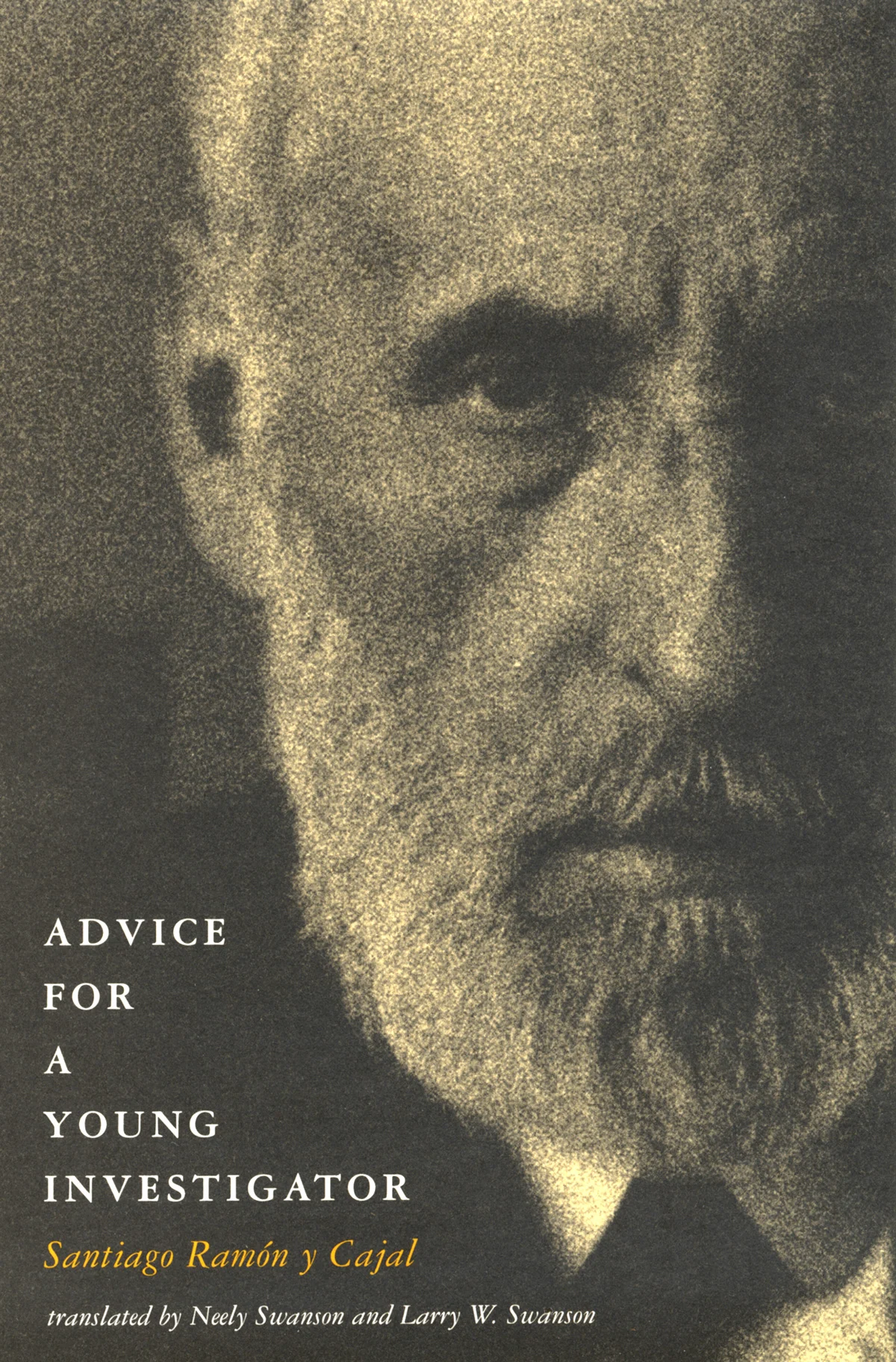
The legacy of Santiago Ramón y Cajal, often heralded as the father of modern neuroscience, extends far beyond his foundational discovery of the neuron doctrine. His seminal work, Advice for a Young Investigator, remains a cornerstone of scientific literature, providing a philosophical framework that bridges the gap between raw talent and institutional achievement. While contemporary thinkers like Rachel Carson and Carl Sagan have long championed the necessity of science in safeguarding democracy and national prosperity, Cajal articulated these imperatives over a century ago. By examining his life and his prescriptions for the scientific mind, one gains a clearer understanding of how the interplay between societal support and solitary contemplation dictates the trajectory of human progress.
A Historical Context of Scientific Inquiry
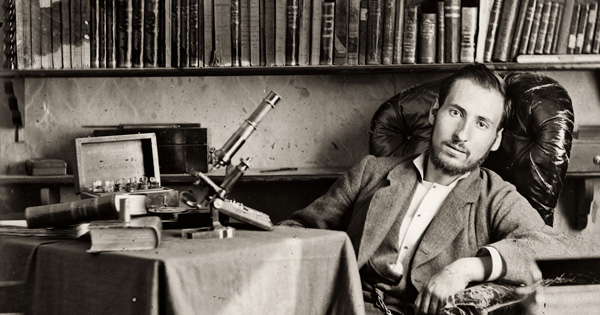
Santiago Ramón y Cajal (1852–1934) lived during a period of profound transformation in European medicine and biology. As a Spanish pathologist, histologist, and neuroscientist, his work coincided with the late 19th-century boom in laboratory-based research. Unlike many of his contemporaries who relied on theoretical frameworks, Cajal’s approach was rooted in the rigorous observation of cellular architecture. His mastery of the Golgi staining method allowed him to visualize the structure of the nervous system with unprecedented clarity, ultimately proving that neurons were distinct, individual cells rather than a continuous, diffuse network.
Cajal’s life serves as a longitudinal case study in the necessity of perseverance. Born in Petilla de Aragón, Spain, he faced significant institutional resistance throughout his early career. At the time, Spanish science was considered peripheral compared to the centers of excellence in Germany, France, and Britain. Despite these geographic and academic limitations, Cajal’s commitment to self-discipline and the "cultivation of the brain" elevated him to the status of a Nobel laureate in Physiology or Medicine in 1906. His book, Advice for a Young Investigator, was written not as a dry manual, but as a mentorship guide meant to shepherd aspiring researchers through the "diseases of the will"—a taxonomy of psychological hurdles that frequently derail promising scientific careers.
The Macroeconomic Value of Scientific Pursuit
Cajal’s philosophy regarding the state’s role in science mirrors the modern discourse on national infrastructure and innovation. He argued that the greatness of a nation is not merely a product of its legislative stability or its administrative prowess, but rather its investment in the scientific enterprise.
In contemporary terms, this is often quantified as Gross Domestic Expenditure on Research and Development (GERD). Economists generally agree that nations with higher percentages of GDP dedicated to basic research show significantly higher long-term growth rates. Cajal’s observation that "justice, order, and good laws are important but secondary factors" underscores a radical, yet statistically supported, view: that the primary engine of national prosperity is the cultivation of knowledge. His argument posits that a nation failing to support its "delicate plants"—the researchers—will eventually suffer from a brain drain or a stagnation of innovation.
The Ecology of the Laboratory: Environmental Factors
Cajal posited that a scientist’s output is inextricably linked to their environment. He famously compared the researcher to a "delicate plant," suggesting that society’s role is to provide the "soil" of cultural esteem and material support. This concept of the "ideal environment" has been the subject of extensive study in the sociology of science.
Modern research on innovation hubs—such as Silicon Valley or the various Max Planck Institutes—corroborates Cajal’s theory. These environments are characterized by two distinct features: high-density intellectual exchange and a cultural ethos that prizes risk-taking over administrative compliance. When society provides the resources for failure—that is, the ability for a researcher to test a hypothesis that may ultimately prove null—it creates a fertile ground for the "heroic" breakthroughs that shift paradigms. Without this support, only the most stubborn or financially independent individuals can pursue science, which effectively limits the talent pool to a narrow demographic, stripping society of potential advancements.

The Role of Solitude in Creative Synthesis
Perhaps the most enduring element of Cajal’s advice is his emphasis on solitude. In an age characterized by constant digital connectivity and the pressure for rapid publication, his focus on the "private laboratory" feels increasingly relevant.
Cajal argued that original thought requires a gestation period that is often interrupted by the demands of academic administration or social performance. His advocacy for the "long winter evenings" spent in quiet contemplation aligns with modern cognitive psychology, which distinguishes between "focused mode" thinking and "diffuse mode" thinking. Breakthroughs often occur when the mind is allowed to wander, freed from the immediate pressures of task-oriented execution. By retreating into solitude, the researcher refines their powers of observation and develops the internal resilience necessary to withstand the inevitable criticisms of their peers.
Chronology of Influence and Intellectual Legacy
- 1852: Santiago Ramón y Cajal is born in Spain.
- 1887: Cajal masters the Golgi staining method, leading to his fundamental discoveries regarding the neuron.
- 1906: He is awarded the Nobel Prize in Physiology or Medicine, sharing it with Camillo Golgi.
- 1923: Advice for a Young Investigator is published, distilling his decades of research experience into a guide for the next generation.
- 1934: Cajal passes away, leaving behind a massive archive of histological drawings and philosophical writings that continue to be studied by neuroscientists and historians of science today.
Analysis of Implications for Modern Science
The contemporary scientific landscape faces challenges that Cajal could not have foreseen, such as the hyper-specialization of fields, the "publish or perish" culture, and the increasing reliance on massive, collaborative data sets. However, the core principles of his advice remain applicable.
- Talent Maturation: Cajal noted that the most expensive instrument is not the microscope, but the "maturing of talent." Modern institutions often focus on funding expensive equipment while neglecting the psychological and professional development of the human capital using that equipment.
- Scientific Integrity: By warning against "poorly thought-out improvisations," Cajal was an early advocate for the rigorous reproducibility that currently sits at the center of the modern replication crisis in psychology and medicine.
- Societal Responsibility: His call for a "noble patriotism" is not a jingoistic appeal but a suggestion that scientists should view their work as a contribution to the public good. When science is divorced from the public, it risks being perceived as an elitist pursuit, which in turn leads to the erosion of funding and public trust.
Conclusion: The Future of the Investigator
The relevance of Advice for a Young Investigator lies in its insistence that science is a human endeavor. Technology evolves, and the tools of the trade—from Cajal’s hand-drawn sketches to modern fMRI imaging—change, but the fundamental requirements for discovery remain constant: a curious mind, a supportive environment, and the courage to seek truth in solitude.

As society navigates an increasingly complex world defined by climate change, artificial intelligence, and global health crises, the need for the "scientific way of thinking" has never been greater. If, as Cajal argued, the greatness of a nation depends on the vitality of its scientific community, then the responsibility of current policymakers is clear: to cultivate the soil in which the next generation of researchers can grow. By prioritizing the mental, physical, and intellectual well-being of scientists, society ensures that the "delicate plants" of human knowledge will continue to bear fruit for generations to come. The legacy of Cajal serves as a timeless reminder that while the instruments of discovery are vital, it is the disciplined, solitary, and ambitious human spirit that remains the ultimate architect of our future.