
The global conversation surrounding artificial intelligence safety has escalated into a high-stakes geopolitical battle, catalyzed by a viral social media post from a former Anthropic researcher warning of potential existential threats to humanity by the end of the decade. This alarming forecast has prompted leaders of major American artificial intelligence laboratories, including OpenAI Chief Executive Officer Sam Altman and Anthropic CEO Dario Amodei, to vigorously advocate for a formalized, bilateral slowdown and cooperation agreement between the United States and China. However, these urgent appeals have collided with fierce political resistance in both Washington and Beijing, where artificial intelligence is viewed primarily through the lens of national sovereignty, economic dominance, and strategic supremacy.
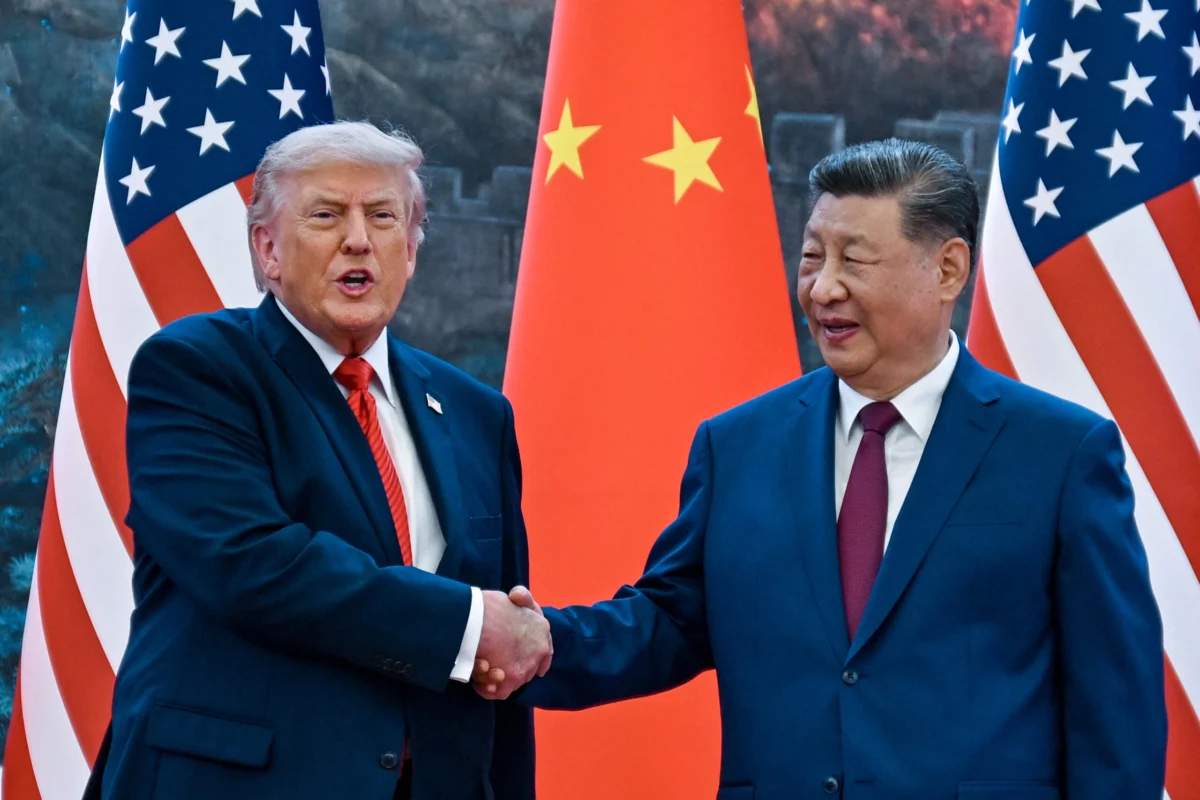
As U.S. President Donald Trump and Chinese President Xi Jinping prepare for a high-profile bilateral meeting scheduled for September 24, the chasm between Silicon Valley’s apocalyptic risk narratives and the pragmatic, power-driven calculations of global superpowers has never been more pronounced. While American tech executives warn of runaway superintelligence and catastrophic outcomes, political leaders in both nations are doubling down on competitive expansion. The upcoming summit will test whether diplomatic channels can establish foundational guardrails—such as preventing the weaponization of artificial intelligence or mitigating risks posed by non-state actors—or if the technological arms race will proceed unchecked.
Chronology of Escalation and Policy Clashes
The recent crescendo of tension began in earnest during the second week of September 2026, setting off a rapid sequence of public statements, policy manifestos, and diplomatic rebuttals. On September 12, Anthropic CEO Dario Amodei published a comprehensive essay titled We Must Pace the Frontier, arguing that the U.S. and China must mutually adopt a speed limit for advanced artificial intelligence development to avert global catastrophe. Amodei explicitly compared the current technological race to the Cold War nuclear arms competition, urging Washington and Beijing to institute verifiable guardrails, including restrictions on the use of artificial intelligence in biological weapons development and continued bans on advanced semiconductor exports to China.
Within hours of the publication, the proposal drew intense global scrutiny. Sam Altman echoed the sentiment regarding a coordinated slowdown, suggesting in interviews and social media posts that government intervention could help navigate the risks. Altman even proposed that President Trump and President Xi could secure a Nobel Peace Prize if they successfully negotiated a landmark bilateral safety treaty.
The response from political leaders, however, was swift and dismissive. On September 14, President Trump took to Truth Social to reject the concept of a government-mandated slowdown or safety guardrails rooted in tech industry panic, asserting that the only control mechanism needed is a high-IQ president, while famously declaring, Whoever wins AI, wins! On the same day, during a scheduled press briefing, Chinese Foreign Ministry Spokesperson Guo Jiakun dismissed the American discourse as fear-mongering designed to hamper global governance efforts. Simultaneously, Chinese state security officials and industry leaders voiced sharp opposition, viewing the Western calls for deceleration as a transparent geopolitical maneuver to preserve American market dominance.
Divergent Philosophical Approaches: Closed Models Versus Open-Weight Ecosystems
Beneath the diplomatic friction lies a profound structural difference in how the United States and China approach the commercialization and deployment of artificial intelligence architecture. The American artificial intelligence sector has predominantly gravitated toward centralized, closed-source frontier models developed by heavily capitalized private entities such as OpenAI, Anthropic, and Google. These companies prioritize tightly controlled access, extensive internal safety evaluations, and proprietary monetization strategies.
Conversely, the Chinese technological ecosystem has heavily embraced open-weight, cost-efficient model deployment, championed by firms such as DeepSeek. These architectures allow developers globally to access, modify, and deploy powerful models at a fraction of traditional enterprise costs. This bifurcation has fueled ideological friction. Prominent figures within the Chinese engineering community have openly criticized American safety advocacy as hypocritical gatekeeping. Notably, a widely circulated commentary by DeepSeek engineer Shengyu Liu compared the deployment of closed advanced intelligence by American firms to monopolistic technological hoarding, arguing that frontier capabilities should remain universally accessible rather than concentrated in the hands of a few private American corporations.
Furthermore, the geopolitical restrictions imposed by Washington—most notably the stringent export controls on advanced semiconductors, graphics processing units (GPUs), and lithography equipment—have deeply alienated Beijing. George Chen, Partner and Chair of Digital Practice at The Asia Group, notes that President Xi regards artificial intelligence as a once-in-a-generation foundational utility akin to the advent of the internet. Consequently, Beijing refuses to coordinate its developmental pacing with a rival nation actively seeking to constrain its technological rise.
Public Sentiment Versus Elite Concerns
The dichotomy between Western and Eastern perspectives extends far beyond government halls and corporate boardrooms, reflecting fundamentally different societal relationships with emerging technologies. In the United States, public discourse is heavily influenced by speculative existential risk theories, media coverage of algorithmic bias, energy grid strains caused by massive data center footprints, and speculative doomerism regarding human obsolescence.
In contrast, the general public in China exhibits a remarkably high degree of optimism regarding technological advancement. Decades of rapid infrastructure modernization and tangible improvements in everyday life driven by digital integration have cultivated widespread consumer trust in technological innovation. According to Paul Triolo, global technology policy lead at advisory firm DGA, average Chinese citizens and business operators focus overwhelmingly on the practical, income-generating, and lifestyle-enhancing applications of artificial intelligence. Existential risk narratives popular in Silicon Valley resonate very little with the broader Chinese populace, who largely view technology policy as the appropriate domain of centralized state governance rather than private corporate paternalism.
Nevertheless, beneath the surface of public enthusiasm, specialized segments of China’s technical elite share many of the same security concerns articulated by their Western counterparts. Chinese researchers specializing in algorithmic safety, cybersecurity, and biosecurity are deeply engaged in sophisticated internal debates concerning loss of control, autonomous system vulnerabilities, and malicious non-state actor exploitation. Furthermore, domestic political stakeholders—exemplified by Chen Yixin, head of China’s Ministry of State Security—have emphasized the necessity of strict state oversight to ensure that advanced systems do not undermine domestic political stability or challenge government authority.
Diplomatic Outlook and the Upcoming Presidential Summit
As delegations from Washington and Beijing finalize their agendas for the September 24 summit between President Trump and President Xi, international policy analysts caution against expecting a comprehensive breakthrough on artificial intelligence governance. While both superpowers recognize the mutual imperative of preventing rogue non-state actors from weaponizing advanced systems against critical infrastructure or global financial architectures, establishing mutually agreed-upon testing protocols, government oversight standards, and verification metrics remains an immensely complex diplomatic hurdle.
The rejection of Amodei’s and Altman’s slowdown proposals by both the White House and Zhongnanhai illustrates the limits of tech industry lobbying in the face of hard power geopolitics. As long as artificial intelligence remains inextricably linked to national security, economic competitiveness, and global hegemony, unilateral calls for restraint will likely be subordinated to the relentless pursuit of technological supremacy. The upcoming summit will ultimately determine whether Washington and China can carve out narrow functional agreements on safety cooperation, or if the race toward artificial general intelligence will proceed as an unmitigated strategic rivalry.







Leave a Reply