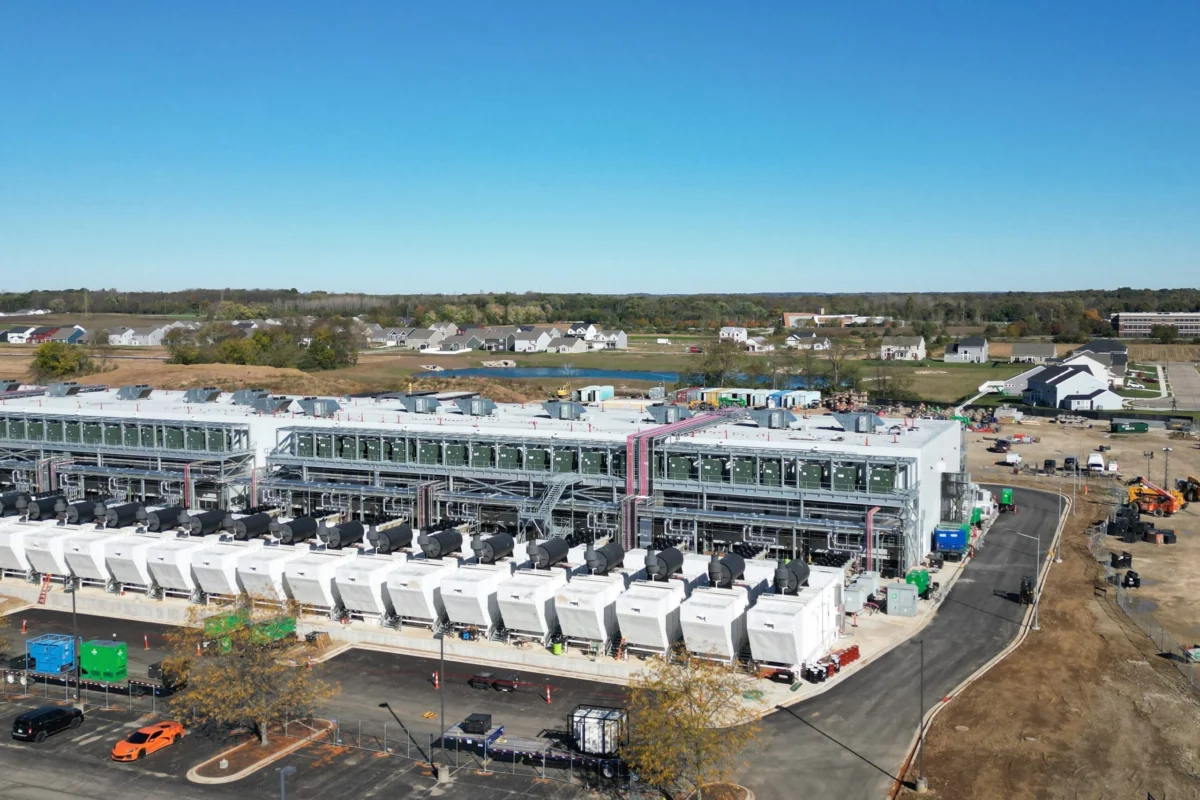
The artificial intelligence boom, which has dominated global markets and driven historic capital expenditure cycles over the past few years, is facing a severe reality check. Torsten Slok, Chief Economist at Apollo Global Management, unleashed a scathing critique of the sector in a rapid-fire series of economic notes released over the course of a single week. As Wall Street investors retreat from high-flying technology equities, Slok’s warnings highlight mounting concerns regarding the foundational economic viability of generative AI, the slowing growth of compute demand, and the heavy reliance on circular financing models across the technology landscape.
Slok’s sobering assessments arrive at a delicate inflection point for global markets. For months, major technology corporations—collectively known as the "Magnificent Seven" and various prominent hyperscalers—have poured staggering sums of capital into building data centers, securing energy supplies, and acquiring advanced semiconductor chips. However, according to Apollo’s research, the astronomical financial outlays are increasingly decoupled from actual enterprise productivity gains, creating a perilous gap between corporate expenditure and tangible bottom-line returns.
The Core Economic Flaw: Compute Costs Versus Marginal Benefits
The foundational argument presented by Apollo’s chief economist centers on basic microeconomics: the relationship between the marginal cost of producing compute and the marginal benefit it delivers to end users. According to data highlighted by Slok on Tuesday regarding token spending growth, the broader demand curve for compute is proving to be remarkably flat and highly sensitive to price adjustments.
Unlike traditional software upgrades that historically yielded immediate operational efficiencies or cost reductions, artificial intelligence infrastructure requires massive, ongoing investments in electrical power, specialized hardware, and continuous maintenance. Yet, the vast majority of corporations outside of the core technology sector have struggled to translate these complex tools into significant productivity metrics. Consequently, AI is frequently functioning as an expensive corporate cost center rather than a primary driver of top-line revenue growth.
“The core economic flaw in the AI bull case is that the marginal cost of producing compute exceeds the marginal benefit it delivers to users, raising questions about claims of unlimited demand for data centers,” Slok explained in his note. “How much compute and how many data centers are needed depends on the returns firms are able to generate with that compute. So far, the AI payoff for firms has been slow to materialize, implying a growing reluctance to pay for AI services.”
In traditional infrastructure models, physical capacity and power supply constraints are treated as the primary bottlenecks for expansion. However, Slok argues that the true determinant moving forward will be the actual price that enterprise users are willing to pay for compute capacity. Unless these services can consistently demonstrate measurable impacts on revenue growth, profit margins, or substantial operational savings at scale, the appetite for continued investment among mainstream corporate buyers may rapidly evaporate.
A Chronology of Warnings: From Token Spend to Circular Financing
The sequence of warnings issued by Apollo’s economics team unfolded systematically over several days, offering a multi-faceted critique of the tech-driven market rally.
On Tuesday, the focus centered on slowing token spending and the elasticity of compute demand, questioning the assumption of perpetual, inelastic growth in data center utilization.
By Thursday, the discourse shifted toward the controversial mechanics of "circularity" within the artificial intelligence ecosystem. Regulators and financial analysts have grown increasingly wary of transactions where leading AI developers provide direct capital, equity investments, or debt guarantees to smaller client firms that subsequently turn around and spend those exact funds on the developer’s cloud services. Slok expanded this critique to the venture capital ecosystem, pointing out that approximately 80% of the top one percent of artificial intelligence spenders are heavily backed by venture capital firms. This dynamic suggests that many startups are effectively funding their massive compute bills using investor capital rather than organic, sustainable business earnings.
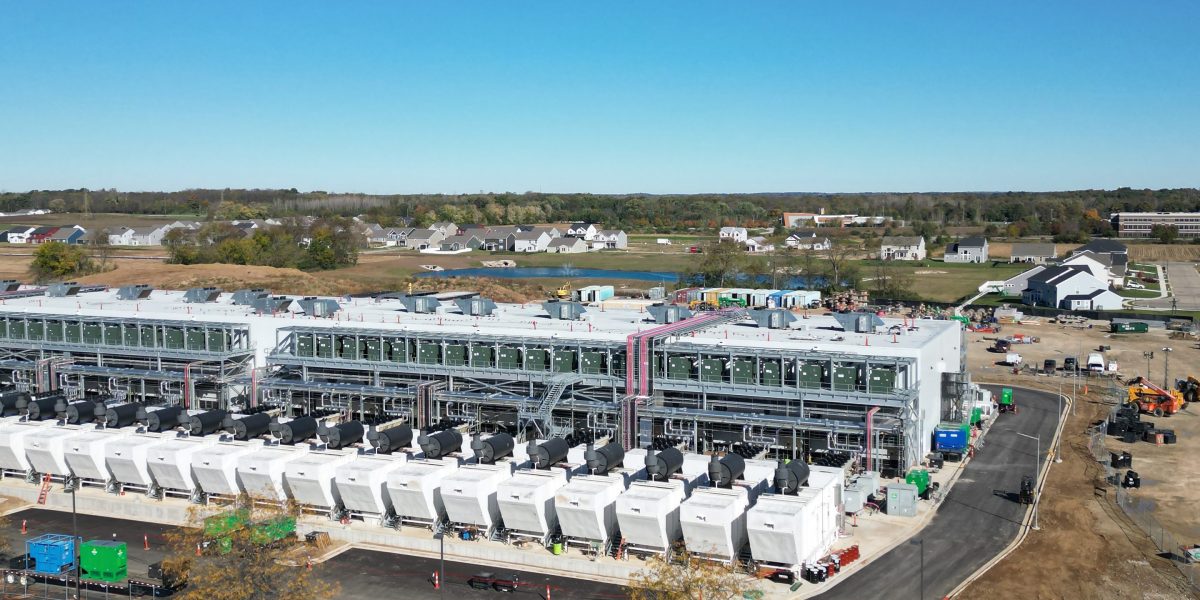
The culmination of this analytical series arrived on Saturday, when Slok declared that artificial intelligence had delivered virtually zero measurable financial payoff to corporate entities operating outside of the premier technology conglomerates. While the largest players enjoy expanding profit margins and rising revenue per worker, the broader S&P 500 index has exhibited no corresponding financial uplift.
“AI may be a great calculator, but in business, intelligence is mostly judgment,” Slok wrote, underscoring the limitations of current models. “Judgment depends on context, and the answer varies with which human or which model you ask. Perhaps most importantly, AI does not understand accountability, trust, culture, unwritten rules, ethical trade-offs or fairness, all of which shape reputational risk and ultimately drive revenue growth and profit margins.”
Capital Expenditure Supercycle Meets Balance Sheet Pressures
These analytical notes coincided with a broader market correction, as technology stocks—particularly semiconductor manufacturers and infrastructure providers—suffered notable declines. Investors are increasingly questioning the sustainability of an investment cycle that sees a handful of major hyperscalers projected to spend an estimated $800 billion over the course of the year, with capital expenditures for the following year expected to cross the staggering $1-trillion threshold.
Raising trillions of dollars to finance this infrastructure is encountering fresh headwinds as corporate balance sheets absorb the strain. Meta Platforms, for example, has engaged in substantial debt issuance and recently announced plans to introduce a new class of shares, a move partially attributed to managing executive financial obligations. With Meta projecting annual capital expenditures between $135 billion and $145 billion, the cost of insuring the company’s corporate debt against default has experienced upward pressure. On Thursday, five-year credit default swaps for Meta widened by 7.6 basis points to reach a record high of 114.79 basis points.
Smaller participants in the AI supply chain, often referred to as "neoclouds," are experiencing even sharper market corrections. CoreWeave, a prominent cloud provider specializing in high-performance compute for artificial intelligence workloads, saw its stock price decline by more than 30% over a single month, accompanied by a dramatic surge in its five-year credit default swaps to 1,145 basis points.
Hidden Liabilities and Interconnected Financing Structures
Compounding the financial anxiety surrounding the sector are warnings from global credit rating agencies regarding opaque financial arrangements. Mark Habib, Global Head for Digital Infrastructure at S&P Global, spoke at a roundtable event in London to highlight the risks posed by interconnected financing structures linking major hyperscalers, specialized data center projects, and smaller artificial intelligence vendors.
“It is safe to assume that there is more debt out there that we are not seeing,” Habib stated, as reported by Reuters. He emphasized that if complex financing transactions and contingent liabilities are not formally disclosed in corporate reporting or subjected to credit rating agency evaluations, the broader financial community operates with a dangerous lack of visibility regarding total sector leverage.
Implications for the Broader Economy and Financial Markets
The friction between aggressive capital expenditure plans and sluggish enterprise adoption carries profound implications for the global economy. For equity markets, the divergence between the Magnificent Seven and the remaining constituents of the S&P 500 signals potential vulnerability if the earnings growth of the primary technology giants slows down or fails to justify their elevated valuations.
For corporate leaders, the mandate is shifting rapidly from experimentation to accountability. As economic commentators like Torsten Slok continue to challenge the narrative of unmitigated demand, chief information officers and financial executives are under mounting pressure to demonstrate tangible return on investment for every dollar allocated to artificial intelligence initiatives. Whether mainstream enterprises will eventually unlock the structural efficiencies promised by AI advocates or whether the sector faces a prolonged period of consolidation and capacity rationalization remains one of the defining questions for the global financial landscape.