
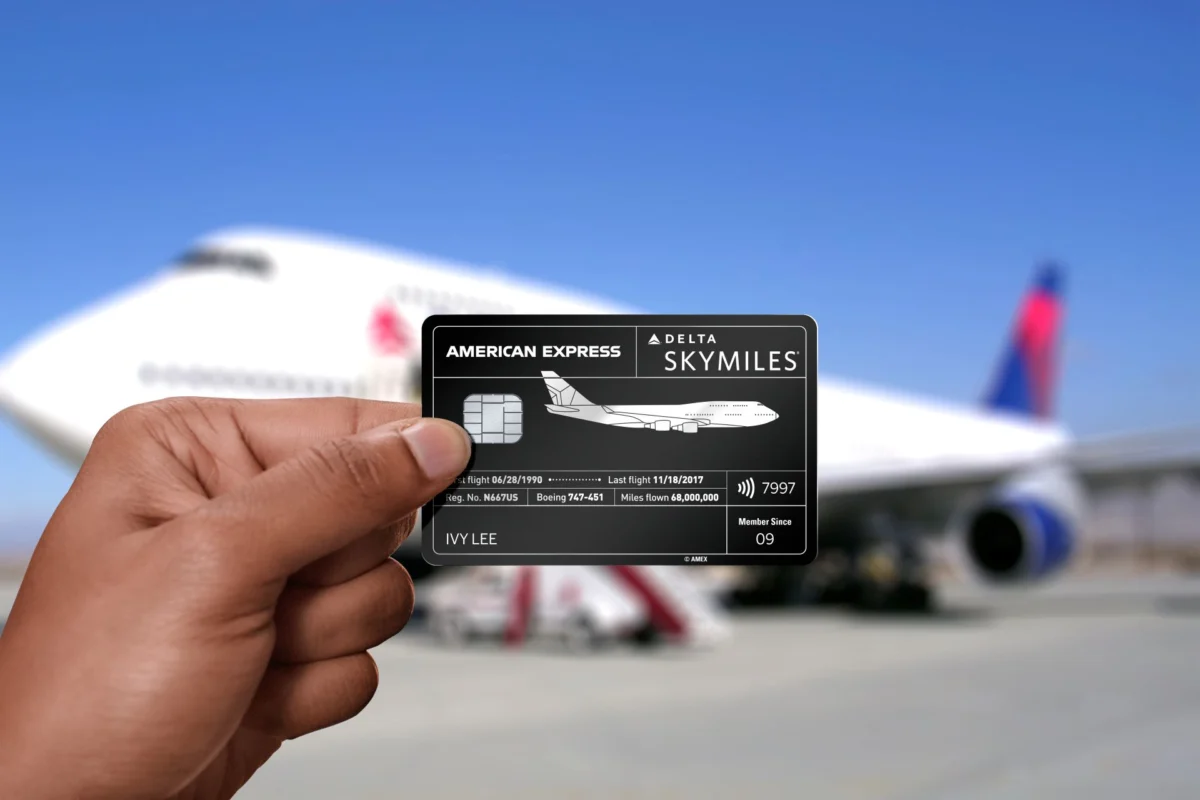
The financial relationship between Delta Air Lines and American Express has reached a historic milestone, with the credit card giant paying the airline $8.2 billion in 2025. This figure, derived from Delta’s most recent annual financial disclosures, highlights a sophisticated, multi-layered economic ecosystem that extends far beyond the simple purchase of loyalty miles. By analyzing this remuneration against the backdrop of total billed business, analysts have determined that American Express is paying roughly $38 for every $1,000 charged to Delta-branded credit cards. This transaction represents a profound shift in how airlines and financial institutions view the value of customer loyalty, moving away from simple transactional rewards toward a comprehensive strategy of data access, branding, and consumer debt management.
The Anatomy of a Multi-Billion Dollar Agreement
There is a long-standing public misconception that credit card issuers purchase airline miles at a deep discount, similar to how consumers might buy them during promotional sales for 1.2 to 1.8 cents apiece. However, the reality is significantly more complex. When American Express pays Delta, the payment is not merely for the miles that cardholders earn. It is a comprehensive business-to-business transaction that includes the right to brand the card, access to Delta’s massive customer database, the provision of premium travel benefits like lounge access and priority boarding, and sophisticated marketing channels.
The sheer scale of this partnership is difficult to overstate. In 2025, American Express reported a total worldwide billed business volume of $1.6698 trillion. Delta-branded cards accounted for approximately 13% of that total, representing an estimated $217.1 billion in annual consumer and business spending. When measured against the total U.S. economic output for the same year, spending on Delta cards accounted for roughly 0.71% of the entire American economy. This places the Delta-Amex alliance at the center of the domestic financial system, serving as a primary driver for both airline revenue and bank interest income.
Chronology and Evolution of the Co-Brand Model
The evolution of the co-brand card has transformed from a niche loyalty tool into a core component of airline profitability. Historically, airline loyalty programs were secondary to the actual business of flying passengers. Today, they are often the primary driver of airline valuation.

- The Early Era: Initially, co-branded cards were simple marketing vehicles. Banks provided a credit line, and airlines provided flight vouchers. The economic exchange was straightforward and relatively low-volume.
- The Digital Transformation (2010–2020): As data analytics matured, airlines realized that their customer databases—specifically the spending habits of their flyers—were as valuable as their aircraft. The partnership models expanded to include tiered rewards and proprietary access to passenger profiles.
- The Financialization Period (2020–Present): Following the global pandemic, airlines faced significant liquidity challenges. During this time, major carriers leveraged their loyalty programs as collateral for massive loans. This solidified the "bank-as-partner" model, where the airline’s survival became intrinsically linked to the bank’s ability to generate interest from cardholder debt.
Data-Driven Analysis of Remuneration
To understand why American Express is willing to pay such a high premium, one must look at how the revenue is structured. The $8.2 billion figure is not a flat cost-per-mile calculation. Instead, Delta’s accounting categories include brand licensing, access to the SkyMiles customer database, and the provision of "ancillary" benefits that are not directly tied to the mileage issuance itself.
Furthermore, the relationship extends to operational expenses. Delta utilizes American Express purchasing cards for high-volume operational needs, such as jet fuel and crude oil procurement. Reports indicate that Delta holds a credit limit of $1.1 billion on its internal Amex purchasing card, making it one of the largest single credit accounts globally.
When analysts attempt to calculate the "true" price of a mile, they often arrive at a figure near 2.5 cents. This accounts for accelerated earning categories—where a cardholder might earn three or four times the standard mileage for specific purchases—and the overhead costs of the partnership. It is clear that merchant swipe fees alone do not cover these costs; rather, the program is heavily subsidized by the interest collected on revolving cardholder debt. In 2025, data suggested that Delta-branded cards represented nearly 21% of American Express’s worldwide cardmember loans, highlighting that the bank is effectively betting on the consumer’s tendency to carry a balance.
Comparative Industry Standards
The complexity of the Delta-Amex deal becomes even more apparent when compared to smaller airline contracts. The 2026 SeatMaps.com Yearbook of Ancillary Revenue provides a rare look into the contractual nuances of smaller carriers. For instance, an older agreement between Sun Country Airlines and First National Bank of Omaha revealed a tiered payment structure based on the category of purchase.
In that model, the bank paid the airline $1.78 for every $100 spent on ordinary purchases, but that figure jumped to $3.00 for purchases made directly with the airline. This tiered system incentivizes the airline to push cardholders toward direct-booking channels, which reduces the middleman costs for the airline while simultaneously driving high-margin revenue for the bank.

United Airlines, in its 2020 MileagePlus financing presentations, offered a rare window into its own internal projections. In one scenario, a customer spending $10,000 earned 15,000 miles, with the bank paying the airline $300. This equates to 2 cents per mile, or 3% of the total spend. While these figures fluctuate based on the specific contract and the maturity of the program, the trend is clear: major airlines are commanding higher percentages of consumer spend from their banking partners than ever before.
Broader Implications for the Travel Industry
The strategy employed by Delta and American Express has significant implications for how airlines plan their route expansions and market presence. For example, Delta’s aggressive growth in hubs like Los Angeles, Austin, and Raleigh is not solely dictated by passenger demand. Instead, these expansions are strategic maneuvers to capture local credit card spending. By dominating a specific geographic market with more flight options, the airline increases the "relevance" of its card, encouraging residents to use the Delta-Amex card for daily expenses like groceries and dining.
This "wallet-share" strategy turns every flight route into a potential point of sale for financial products. When a traveler chooses Delta, they are not just buying a seat; they are being funneled into a financial ecosystem that tracks their habits, subsidizes their travel through high-interest debt, and provides the airline with a recurring revenue stream that is often more stable than the volatile market for airline tickets.
Conclusion: The Future of Loyalty Economics
The $8.2 billion figure paid by American Express to Delta in 2025 represents the zenith of the modern airline-bank partnership. It is a marriage of convenience and capital that has fundamentally altered the travel industry. As long as consumers continue to prioritize rewards and airlines continue to leverage their brand loyalty to capture broader financial spending, these partnerships will remain the backbone of the industry. However, as regulatory scrutiny on swipe fees and credit card lending practices continues to mount, the sustainability of this model remains a critical point of interest for investors and policymakers alike. The partnership is no longer just about flying; it is about controlling the consumer’s wallet in an increasingly digital and credit-dependent economy.









Leave a Reply