
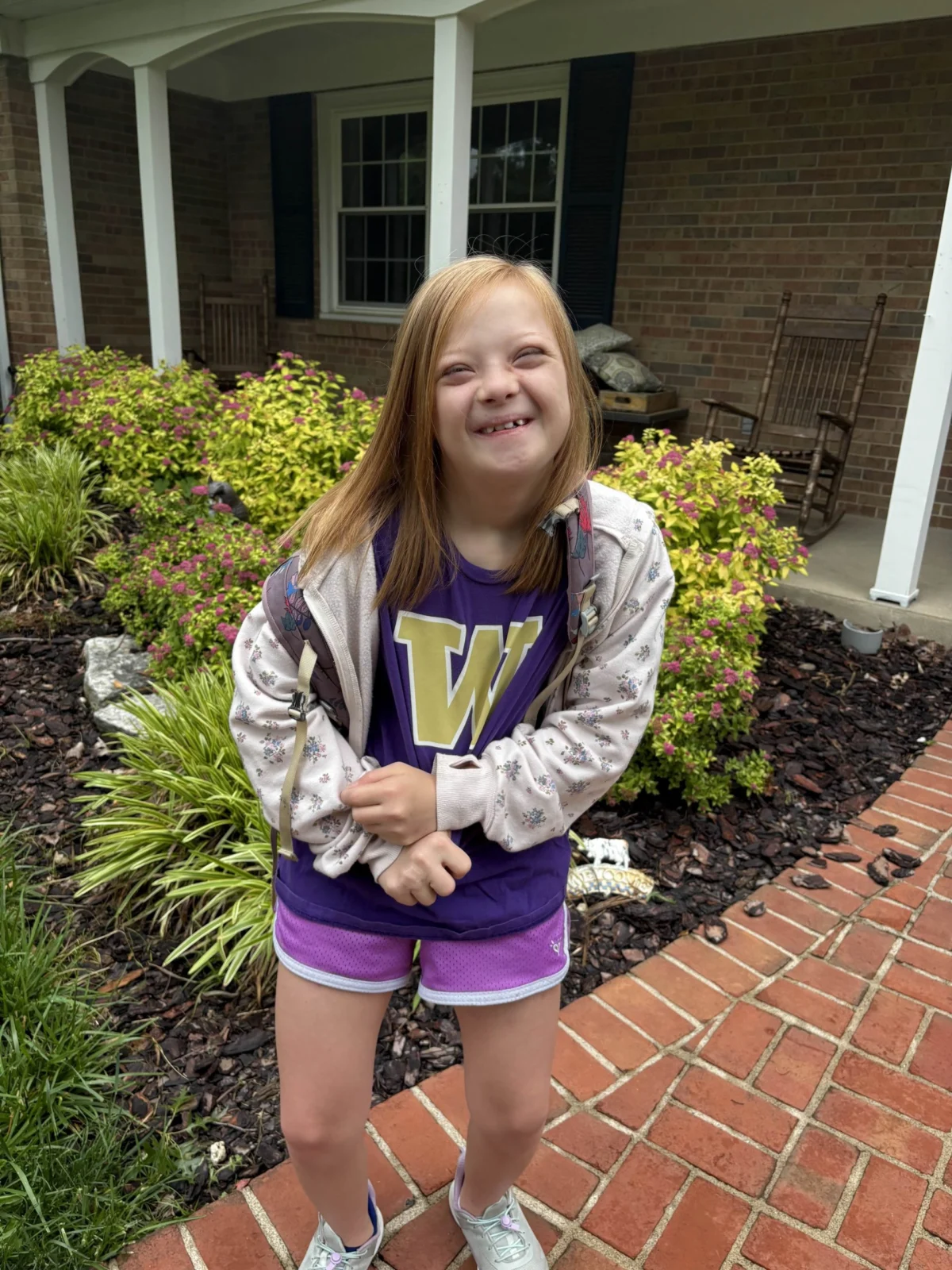
The meeting at Cincinnati Christian Schools (CCS) began with a prayer, a moment of solemnity that quickly shifted into a life-altering ultimatum for Mike Grimmer and Linda Kelly. After enrolling their 15-year-old granddaughter, Annabelle, in an academic support program tailored for students with developmental needs just three months earlier, the couple was informed that the school could no longer accommodate her. Annabelle, who lives with Rett syndrome—a complex genetic disorder causing significant cognitive and developmental delays—had been thriving in what her grandparents believed was a nurturing, faith-based environment. However, school administrators delivered a blunt assessment: Annabelle’s needs were now deemed too extensive for the existing program. The family was presented with a choice: withdraw her or provide an additional $25,000 annually to fund a mandatory one-on-one aide, a cost far exceeding the $29,750 voucher they had received through Ohio’s Jon Peterson Special Needs Scholarship.
This incident is not an isolated clerical error but a symptom of a growing structural friction in American education. As state-level voucher programs proliferate and a new federal voucher initiative takes hold, thousands of families are navigating a complex transition that often leaves their most vulnerable children without the legal safeguards they took for granted in the public school system.
The Disconnect Between Voucher Funding and Legal Rights
The fundamental issue lies in the interpretation of the Individuals with Disabilities Education Act (IDEA), the landmark 1975 federal law that guarantees a "free appropriate public education" (FAPE) for children with disabilities. Under the IDEA, public school districts are legally mandated to collaborate with parents to develop an Individualized Education Program (IEP). This document serves as a binding contract, outlining specific learning goals, specialized instruction, and necessary accommodations.
When a student leaves the public system for a private school, however, the legal landscape changes entirely. Students using private school vouchers are legally categorized as "parentally placed," a designation that strips them of the core protections afforded by the IDEA. Private schools receiving public funds through vouchers are not obligated to adhere to IEPs, nor are they required to provide the same level of accessibility or specialized services that public schools must legally maintain.
Disability rights advocates, including the Council of Parent Attorneys and Advocates (COPAA), have long warned that this "choice" often comes at the cost of civil rights. Chris Roe, director of state policy at COPAA, argues that the current system is fundamentally deceptive. "If there are public funds being spent, public protections need to be afforded," Roe stated. "At the very least, states that provide voucher programs should be required to inform parents of the rights they are giving up."

A Timeline of Growing Disparities
The rise of these programs has been swift. In the 2025-26 academic year alone, more than 200,000 students nationwide were utilizing vouchers specifically for students with disabilities or were enrolled in the nation’s largest voucher programs, a significant increase from the 180,000 reported the previous year.
The timeline for families often follows a predictable, albeit painful, pattern:
- Initial Enrollment: Families, frustrated by the bureaucratic hurdles of public school special education, seek alternatives. They provide medical records and IEPs to private institutions, often receiving assurances that the school is a "good fit."
- The Honeymoon Phase: Students settle in, often benefiting from smaller class sizes or specific religious or community values.
- The Assessment Crisis: As the student’s needs become clearer—or as school budgets tighten—administrators notify the family that the student is "not a match" for the program, or that additional, exorbitant fees are required for continued enrollment.
- The Pivot: Families are forced to either absorb the cost, find another private institution, or return to the public system, often losing months of academic momentum in the process.
Case Studies in Institutional Barriers
The experience of Nicole White, whose daughter Kate has Down syndrome, highlights the volatility of private education for students with disabilities. After enrolling Kate at the St. Rita School for the Deaf with the help of a Jon Peterson scholarship, White initially found the environment "phenomenal." However, when the school eliminated occupational and physical therapy services due to budget cuts, the "choice" vanished.
"I was looking at the students ahead of her… and there were four students in the graduating class," White said. "I didn’t want that for Kate, but I wanted the support that St. Rita’s gave its students. So what do I do? Where do I go?"
St. Rita’s administration, in response to inquiries, noted that the scholarship rarely covers the full cost of specialized education, effectively offloading the burden of therapy and support onto the families themselves. For many, this renders the voucher program a mere subsidy rather than a comprehensive solution for a child’s educational needs.
Data and Regulatory Oversight: A Void of Accountability
Data from the Ohio Department of Education and Workforce suggests that the churn in these programs is high. Of the 8,680 students who received a Jon Peterson scholarship in 2025, just over half had remained in the program for three or more years. While turnover is expected in any educational setting, the lack of transparency regarding why these students leave—and whether they are pushed out due to their disabilities—remains a critical concern for policymakers.

While some states have attempted to bake accountability into their programs, these measures are often toothless. Ohio’s program, for example, requires schools to provide a written reason if a student is denied admission, and expects staff to have special education training. Yet, there are no meaningful consequences listed for institutions that fail to meet these expectations or that provide inadequate support for a student’s IEP goals.
The Federal Implications
The recent introduction of a federal voucher program has amplified these concerns. Disability rights groups lobbied extensively to include language that would require participating private schools to comply with IDEA protections. Those efforts were largely unsuccessful.
The resulting reality is that as federal and state governments pour billions of dollars into school choice, they are simultaneously creating a two-tiered system. In one tier, students with disabilities are protected by federal civil rights law; in the other, they are subject to the private discretion of institutions that may prioritize fiscal stability over the educational rights of the individual.
Moving Toward an Uncertain Future
For families like Linda Kelly’s, the path back to the public school system was ultimately the only viable option. After months of uncertainty, Annabelle enrolled at Princeton High School. To her grandmother’s surprise, the public system, which Kelly had initially feared would be rigid and exclusionary, provided a supportive environment. Annabelle is now making progress on her IEP goals, participating in gym classes with a diverse student body, and, for the first time in a long time, feels like she is "where she needs to be."
However, the question remains for the thousands of other families currently weighing the allure of vouchers against the security of the public system. As the debate over school choice continues to dominate national education policy, the experiences of students like Annabelle and Kate serve as a sobering reminder: without strict, federally mandated protections, the "freedom" promised by school choice may be nothing more than a dangerous gamble for families of children with disabilities. The future of inclusive education in America will depend not just on the volume of funding, but on the enforcement of the fundamental rights that allow every student to learn, grow, and belong.





Leave a Reply