The aviation industry operates under a unique set of market dynamics that often blur the lines between aggressive competitive strategy and illicit collusion. While federal antitrust regulations explicitly prohibit agreements between competitors to fix prices or restrict capacity, industry veterans suggest that the mechanisms of influence have evolved far beyond the crude, direct phone calls of the 1980s. Former American Airlines CEO Doug Parker recently ignited a debate regarding these practices, asserting that while formal collusion is nonexistent in the modern era, the industry relies on a complex, systemic form of communication that utilizes financial analysts and public earnings calls to achieve similar strategic outcomes.
The Evolution of Strategic Signaling
For decades, the airline industry has been scrutinized by regulators for its pricing behaviors. The core of the current discussion revolves around how major carriers influence one another without ever entering a room together. According to Parker, in an appearance on the Airlines Confidential podcast, the suggestion that executives signal to competitors is a fallacy. However, his subsequent admission—that executives often coach Wall Street analysts to question rival management teams about their expansion plans or pricing decisions—reveals a calculated, if indirect, method of pressure.
By prompting analysts to ask pointed questions during quarterly earnings calls, a CEO can effectively broadcast a threat to a competitor. When an analyst asks, "Why are you expanding into a market that your competitor has already saturated?" the implicit message to the rival is that such growth will be met with a retaliatory, expensive response. This allows the dominant airline to maintain its market share and pricing power without needing to coordinate directly with its rivals.
A Chronology of Antitrust Scrutiny
The history of airline competition is littered with high-profile legal challenges that highlight the industry’s ongoing tension with federal oversight.
- 1982: The infamous "Crandall-Putnam" incident occurred when Robert Crandall, then-CEO of American Airlines, called Howard Putnam of Braniff Airways. Crandall famously suggested, "Raise your goddamn fares twenty percent. I’ll raise mine the next morning." Putnam recorded the call, leading to a landmark attempted-monopolization case that reinforced the legal threshold for anticompetitive conduct.
- 2010: During the lead-up to the American Airlines and US Airways merger, an email chain emerged involving Doug Parker. The correspondence reflected frustration over Delta Air Lines’ aggressive capacity growth. Parker allegedly shared his concerns about market profitability with Delta’s then-CEO, Richard Anderson, creating an internal record that would later be cited by the Department of Justice during its merger investigation.
- 2015–2018: A private antitrust class action alleged that major U.S. carriers conspired to limit capacity to keep airfares artificially high. In 2018, American Airlines agreed to a $45 million settlement to resolve the litigation. While the airline denied any wrongdoing, the settlement underscored the immense legal and financial risks associated with capacity management.
The Role of Financial Intermediaries
The modern airline business model relies heavily on public filings and analyst consensus. The Airline Tariff Publishing Company (ATPCO) serves as the industry’s central clearinghouse for fare data. While this system is designed for transparency and consumer protection, it also functions as a real-time monitor for competing airlines. When one carrier adjusts a fare, its competitors can see it almost instantly.
This transparency is amplified by the financial sector. Analysts covering the airline industry often track capacity metrics, such as Available Seat Miles (ASM), with extreme precision. When an executive hints that a specific route expansion by a rival is "irrational" or "unprofitable," analysts—seeking to protect their own reputations for accuracy and to satisfy investor concerns—often adopt this narrative. This creates a feedback loop where the market itself penalizes the carrier that chooses to compete aggressively, effectively discouraging the competition that regulators strive to protect.
Recent Examples: The Chicago O’Hare Conflict
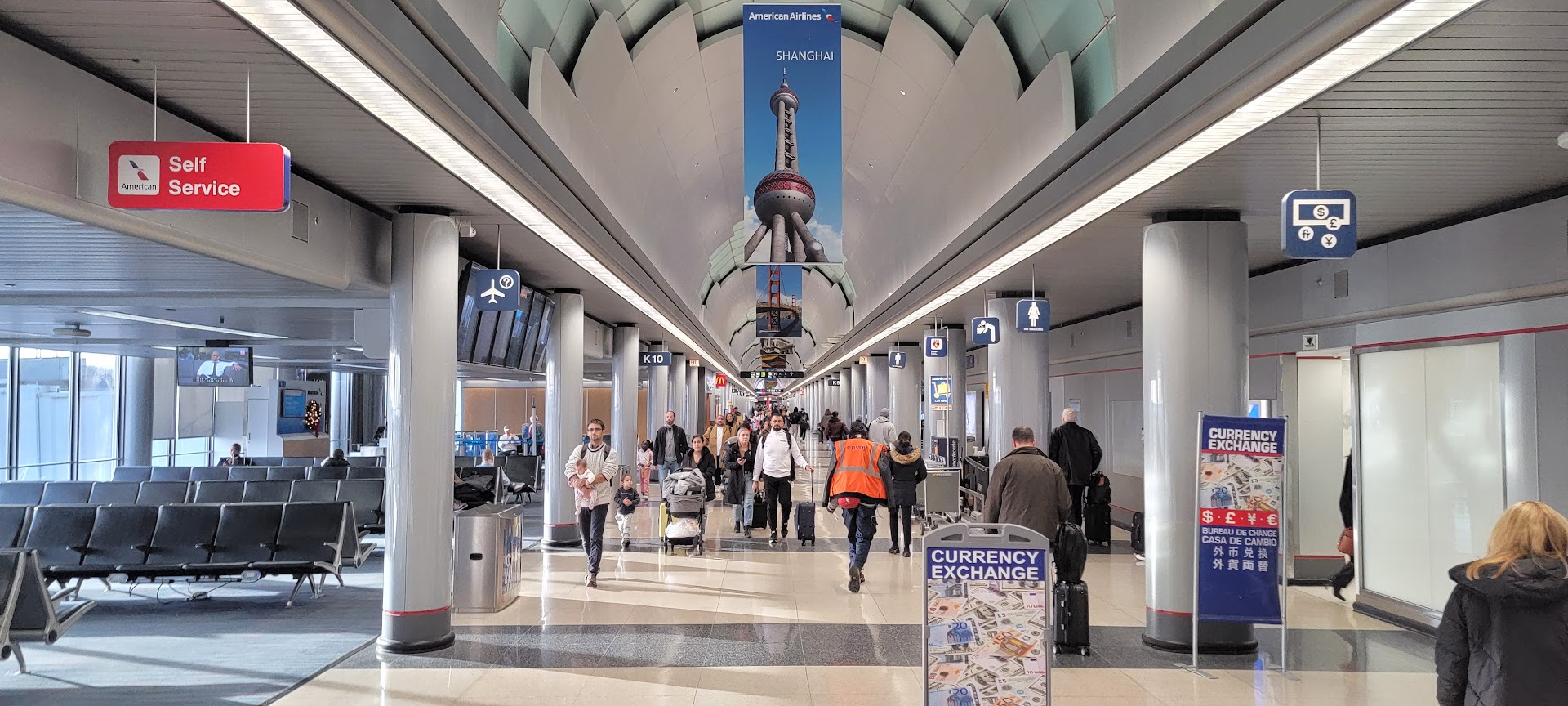
The recent strategic maneuvering in Chicago, a critical hub for both United Airlines and American Airlines, provides a contemporary case study. Earlier this year, United CEO Scott Kirby utilized an earnings call to openly discuss American Airlines’ growth at O’Hare. Kirby’s framing of the situation—suggesting that American’s expansion was an unnecessary provocation that would lead to a broader, costly conflict—was not merely a critique of American’s strategy. It was a clear signal to the market.
By framing American’s growth as a "bad investment," Kirby incentivized analysts to pressure American’s management. If American retreats, United maintains its dominance in Chicago without the need to actually increase its own flight frequency or lower its own fares. This illustrates the "line in the sand" strategy: by publicly predicting a negative outcome for a competitor’s expansion, the incumbent creates a self-fulfilling prophecy where the market discourages the challenger from proceeding.
The Legal and Economic Implications
From a legal standpoint, the difficulty lies in proving "agreement." Antitrust law, specifically the Sherman Act, requires evidence of an agreement to restrain trade. Sending a message through a third-party analyst or adjusting fares in response to a competitor’s public statement does not necessarily meet the standard for collusion. This has created a "gray zone" in the industry.
Economists note that while this behavior may not be criminal under current interpretations of antitrust law, it has significant impacts on the consumer. Reduced competition often leads to higher ticket prices, less frequent service on secondary routes, and less incentive for innovation. The consolidation of the U.S. airline market into four major carriers—American, United, Delta, and Southwest—has further concentrated this power, making it easier for these firms to monitor each other’s behavior.
Responses and Industry Stance
Industry representatives maintain that their actions are purely driven by competitive necessity and fiduciary responsibility to shareholders. When executives criticize a rival’s expansion, they argue they are simply offering a rational market assessment. They contend that any pricing parallels are merely the result of independent actors reacting to the same economic data, such as rising fuel costs or changes in passenger demand.
However, consumer advocacy groups and legal experts continue to call for stricter oversight. The Department of Justice’s antitrust division has signaled an increased interest in how algorithmic pricing and public signaling affect market outcomes. As the industry recovers from the post-pandemic landscape, the pressure on regulators to define the boundary between "rational competitive response" and "coordinated market influence" will only intensify.
Broader Impact on the Aviation Ecosystem
The ripple effects of this signaling extend to corporate travel contracts and loyalty programs. Because airlines like American and United rely on massive credit card partnerships and corporate travel agreements, the stakes of winning a hub are astronomical. A carrier that successfully deters a rival through analyst-backed signaling protects not just its flight revenue, but the entire ecosystem of ancillary income that defines its modern profitability.
As the industry moves forward, the reliance on these indirect communication channels suggests that the "gentleman’s agreement" culture has not disappeared; it has simply been outsourced to the financial markets. For the traveling public, the outcome remains the same: a market where aggressive, price-disrupting competition is increasingly rare, and where the prevailing status quo is guarded not by secret handshakes, but by the public discourse of the boardroom and the analyst desk.
Ultimately, the tension between American’s growth ambitions and United’s defense of its Chicago hub—and the resulting commentary from Wall Street—serves as a template for how the industry will continue to navigate the thin, high-altitude line between aggressive competition and systemic collusion in the coming decade. Whether this behavior warrants a regulatory overhaul remains one of the most pressing questions in American transport policy.