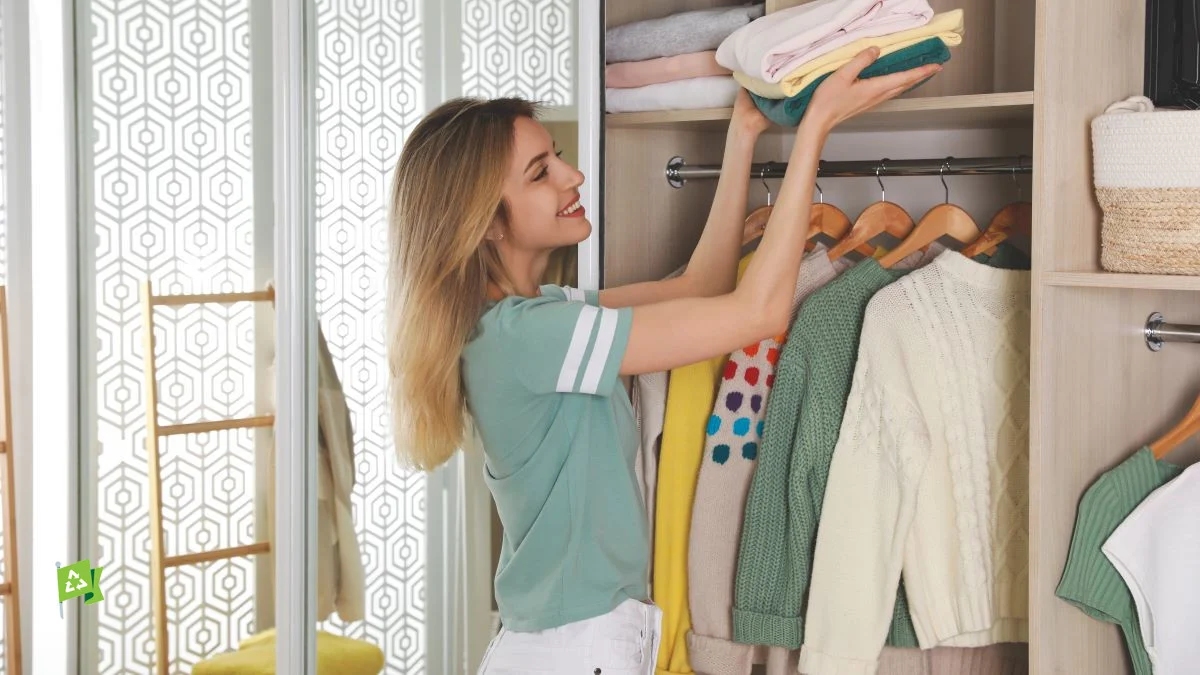
The Pareto Principle, an economic theory suggesting that 80% of consequences come from 20% of causes, has found a visible and troubling home in the modern American closet. For the average consumer, roughly 20% of their wardrobe accounts for 80% of their daily wear, leaving a vast majority of garments to collect dust on hangers. This inefficiency is not merely a matter of disorganized home life; it is the driving force behind a global environmental crisis. As the fashion industry’s carbon and waste footprint continues to expand, a growing movement toward the "capsule wardrobe"—a curated collection of versatile, high-quality essentials—is being framed by environmentalists and industry analysts as a critical tool for sustainability.
The concept of the capsule wardrobe, which prioritizes longevity and versatility over the rapid turnover of trends, has transitioned from a niche minimalist philosophy into a mainstream environmental strategy. This shift comes at a pivotal moment. According to recent data from the United Nations Environment Programme (UNEP), the textile and fashion sector is responsible for between 2% and 8% of global greenhouse gas emissions. While these figures vary depending on the metrics used, even the conservative estimates place the industry’s impact above that of international flights and maritime shipping combined.
The Escalating Environmental Crisis in Apparel
The urgency of the shift toward minimalist consumption is underscored by a recent report from the Apparel Impact Institute, which revealed a 7.5% spike in apparel-related emissions in 2023. This marked the first significant annual increase since the institute began tracking the sector, a trend largely attributed to a resurgence in overproduction and a continued reliance on polyester and other synthetic, petroleum-based fibers.
Fast fashion—a business model characterized by the rapid production of inexpensive clothing to meet fleeting trends—has exacerbated the problem. By shortening the lifecycle of a garment, companies have conditioned consumers to view clothing as disposable. The Environmental Protection Agency (EPA) reports that Americans generated approximately 17 million tons of textile waste in the most recent accounting period. Of that staggering total, 11.3 million tons were sent directly to landfills. Despite the rise of textile recycling programs, the EPA notes that less than 15% of textiles are actually recycled, largely due to the complexity of blended fabrics which are difficult to separate and re-process.
Beyond emissions and waste, the industry’s water consumption is a point of significant concern. Producing a single cotton t-shirt requires approximately 2,700 liters of water—enough to meet the drinking needs of one person for two and a half years. When these factors are aggregated, the case for reducing new garment production becomes an environmental necessity rather than a lifestyle choice.
The Evolution of the Capsule Wardrobe
The term "capsule wardrobe" was originally coined in the 1970s by Susie Faux, owner of the London boutique Wardrobe, and later popularized by designer Donna Karan in the 1980s. Initially, the concept was marketed as a way for professional women to simplify their morning routines. However, in the 2020s, the philosophy has been reclaimed by the sustainability movement.
The modern capsule wardrobe is built on the principle of the "lowest-impact garment," which experts define as the one already hanging in a consumer’s closet. By selecting a small set of clothes that can be mixed and matched into dozens of outfits, consumers can significantly reduce their "cost-per-wear" and decrease the demand for new manufacturing. Analysts suggest that if the average life of a garment were extended by just nine months, its carbon, water, and waste footprints would each be reduced by approximately 20% to 30%.
Industry experts warn that building a sustainable wardrobe should not be an excuse for a new shopping spree. The internet is currently saturated with "capsule shopping lists" that often encourage the purchase of specific "staples" like trench coats or blazers. However, experts argue that a functional capsule must be built around an individual’s actual lifestyle, climate, and existing inventory rather than a generic template.
The Explosive Growth of the Secondhand Market
When gaps in a wardrobe do appear, consumers are increasingly turning to the resale market rather than traditional retail. The 2026 Resale Report from ThredUp valued the global secondhand apparel market at approximately $393 billion. This figure represents roughly 10% of total global apparel spending, signaling a massive shift in consumer sentiment.
The growth of the resale sector is being driven almost entirely by younger demographics. Gen Z and Millennials are projected to drive more than 70% of the market’s growth through 2030. For these consumers, the "stigma" of used clothing has vanished, replaced by a preference for unique vintage pieces and a desire to avoid the environmental guilt associated with fast fashion.
Social media has played a transformative role in this transition. Nearly half of all secondhand shoppers now discover pieces through social feeds and peer-to-peer marketplaces rather than traditional brick-and-mortar thrift stores. Platforms such as Poshmark, Depop, and eBay have democratized the resale process, allowing consumers to act as both buyers and sellers in a burgeoning circular economy.
Corporate Responses and the Risk of "Circular Washing"
In response to the shifting market, major brands have begun implementing their own trade-in and buyback programs. Companies like Patagonia and The North Face have long been leaders in this space, offering repair services and "re-commerce" platforms where customers can buy vetted, pre-owned gear.
However, the rise of brand-led resale has brought new scrutiny. A report by Sourcing Journal highlighted the emergence of what some call "circular washing." Some programs marketed as "take-back" or "pre-loved" initiatives are actually glorified return streams. In these cases, brands resell lightly handled returns as pre-owned items. While this does keep inventory out of landfills, critics argue it is a "revenue play" designed to capture a share of the resale market rather than a genuine attempt to foster a circular economy that reduces overall production.
True circularity, according to environmental analysts, requires a "decoupling" of profit from the production of new goods. This includes investment in repair services. Extending the life of a garment through professional tailoring or manufacturer repair programs is considered the highest-impact move a consumer can make. Several high-end outdoor brands now offer lifetime repair warranties, a model that proponents hope will spread to the broader fashion industry.
Broader Implications and the Future of Fashion
The move toward capsule wardrobes and resale is more than a trend; it represents a fundamental challenge to the "growth at all costs" model of the fashion industry. If the capsule wardrobe movement continues to gain momentum, it could force a contraction in the fast fashion sector, which relies on high volume and low margins.
Furthermore, the rise of rental services for occasional wear—such as Nuuly and Rent the Runway—offers a solution for the "single-use" outfit problem. Weddings, interviews, and formal events are often the primary drivers of impulse purchases. By shifting these needs to a rental model, the industry can satisfy consumer desire for novelty without the associated waste of permanent ownership.
The cumulative effect of these changes is a "quiet, durable win for the planet," as one environmental advocate described it. The transition to a sustainable wardrobe is an investment in quality over quantity, requiring a shift in mindset from "consumer" to "custodian."
Chronology of the Sustainable Fashion Movement
- 1970s: Susie Faux coins the term "capsule wardrobe" in London, focusing on high-quality essentials for working women.
- 1985: Donna Karan releases her "Seven Easy Pieces" collection, bringing the capsule concept to the American mainstream.
- 1990s–2000s: The rise of "Fast Fashion" giants like Zara and H&M shifts the industry toward a high-volume, disposable model.
- 2013: The Rana Plaza garment factory collapse in Bangladesh kills over 1,100 workers, sparking global outrage and the "Fashion Revolution" movement for transparency.
- 2018: The UN Fashion Industry Charter for Climate Action is launched at COP24, aiming for net-zero emissions by 2050.
- 2023: The Apparel Impact Institute reports a 7.5% spike in emissions, highlighting the failure of current industry efforts to curb overproduction.
- 2024–2026: The global resale market surges toward $400 billion, led by Gen Z and the normalization of secondhand luxury and streetwear.
As the fashion industry stands at a crossroads, the data suggests that the most effective path forward is a return to the past—a time when clothing was an investment, repairs were commonplace, and a closet was defined by what was worn, not by what was merely owned. The time spent eliminating waste from clothing choices is increasingly viewed not just as a personal organizational win, but as a significant contribution to global climate goals.