
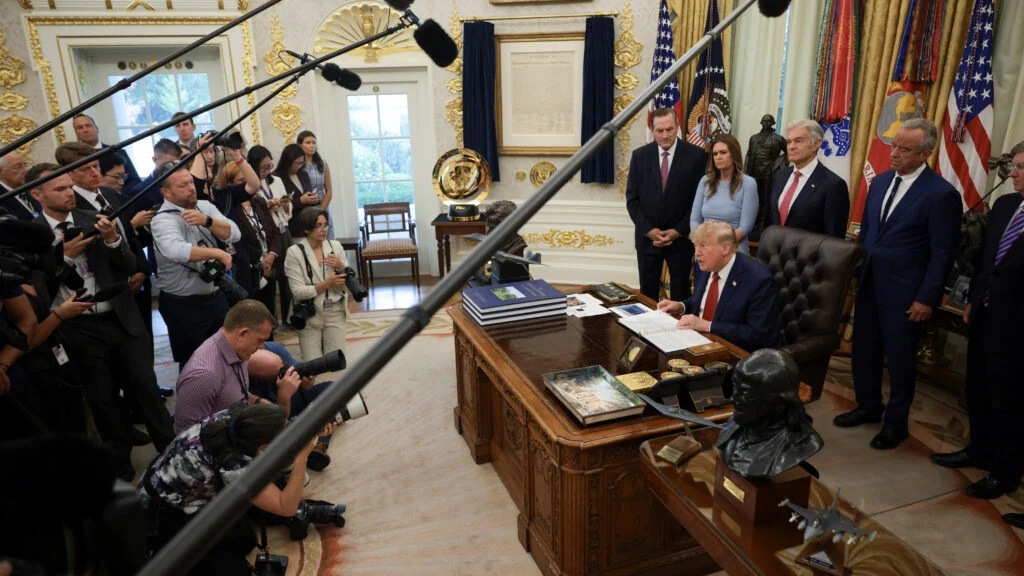
The Trump administration formally announced the launch of the GENEROUS model, an ambitious federal initiative designed to fundamentally restructure how Medicaid programs procure and pay for prescription medications. While President Trump framed the policy as a cornerstone of his broader platform to curb rising pharmaceutical costs, the rollout has been met with a mix of political optimism and logistical skepticism. The initiative seeks to leverage the collective purchasing power of state Medicaid programs to drive down costs, yet officials and industry analysts remain cautious regarding the long-term mechanics of the program and its potential impact on patient access.
The announcement, delivered by the President on Friday, claimed universal participation across all 50 states, the District of Columbia, and Puerto Rico. However, internal data released shortly thereafter by the Centers for Medicare and Medicaid Services (CMS) provided a more nuanced picture of the program’s current standing. According to CMS, 40 states and Puerto Rico have finalized formal participation agreements, while the remaining jurisdictions are in the active application phase. States have been given a strict deadline at the end of the month to execute their agreements, a timeline that some health policy experts suggest is highly aggressive given the complex regulatory hurdles involved in Medicaid administration.
The Mechanism of the GENEROUS Model
At its core, the GENEROUS model represents a departure from the traditional, fragmented approach to Medicaid drug rebates and pricing. Historically, Medicaid programs have operated under a complex web of state-specific negotiations and federal rebate requirements. The GENEROUS initiative aims to consolidate these efforts, potentially creating a unified framework that incentivizes pharmaceutical manufacturers to offer more competitive pricing in exchange for greater stability and streamlined access to the Medicaid population—a group that currently accounts for a significant portion of national drug expenditures.
The objective is to move away from a model where individual states struggle with disparate drug formularies and pricing structures. By standardizing the procurement process, the administration hopes to eliminate the "hidden" costs associated with opaque rebate agreements between pharmacy benefit managers (PBMs) and drug manufacturers. If successful, the model could lead to significant savings for state budgets, which have been increasingly strained by the rising costs of specialty drugs and high-priced biologics.
A Chronology of Pharmaceutical Cost Containment Efforts
The GENEROUS model is the latest in a multi-year series of efforts by federal regulators to address the affordability of prescription drugs. The trajectory of these policy interventions can be traced back to the early days of the Trump administration’s focus on the "drug pricing roadmap."
- 2017: The administration initiates a series of executive meetings with pharmaceutical executives, emphasizing the need for lower list prices and increased transparency.
- 2018: The "American Patients First" blueprint is released, outlining a broad strategy to encourage competition and lower out-of-pocket costs for Medicare and Medicaid beneficiaries.
- 2019: CMS begins exploring value-based purchasing arrangements, allowing states to experiment with different payment models for high-cost therapies.
- 2020-2021: Legislative discussions intensify around the role of PBMs and their influence on the net price of medications, setting the stage for the structural changes proposed in the GENEROUS model.
- 2024: Formal rollout of the GENEROUS model, requiring states to transition toward a centralized procurement and payment framework.
Data and Financial Context
The urgency behind the GENEROUS model is supported by stark fiscal data. According to the Medicaid and CHIP Payment and Access Commission (MACPAC), total Medicaid spending on prescription drugs has climbed steadily over the last decade, even after accounting for manufacturer rebates. In recent fiscal years, spending on specialty drugs—those that treat complex, chronic, or rare conditions—has become a primary driver of cost growth.
For many states, prescription drug spending represents the second or third largest category of Medicaid expenditure, trailing only inpatient hospital services. Analysts note that while the federal government provides matching funds for Medicaid, the burden of rising drug prices directly impacts state tax revenues. The promise of the GENEROUS model lies in its potential to flatten the growth curve of these expenditures, though critics argue that the federal government’s role in setting prices could inadvertently stifle innovation if not managed with precise regulatory care.

Industry and Stakeholder Reactions
The reaction to the GENEROUS model has been polarized. Patient advocacy groups generally welcomed the prospect of lower costs, hoping that the savings would be passed down to consumers in the form of lower co-pays or broader access to medications that are currently restricted by stringent prior authorization requirements.
Conversely, the pharmaceutical industry has expressed concerns regarding the potential for price controls. Representatives from major biopharma trade groups have cautioned that while the goal of lowering costs is noble, the methods employed by the GENEROUS model could undermine the market-based incentives that fuel research and development. There is a palpable fear among manufacturers that a centralized Medicaid model could become a "de facto" price-setting mechanism that ripples across the entire commercial insurance market.
State Medicaid directors, meanwhile, are focused on the operational reality. Implementing the GENEROUS model requires a significant overhaul of state information technology systems and a renegotiation of existing contracts with managed care organizations. Many state officials have privately expressed concern that the timeline for full implementation is insufficient, noting that the "end-of-month" deadline for signing agreements leaves little room for the rigorous legal and administrative reviews required at the state level.
Analysis: Implications for the Healthcare Ecosystem
The implementation of the GENEROUS model carries significant implications for the future of the U.S. healthcare system. If the model succeeds, it could set a precedent for a more centralized federal role in drug pricing, effectively shifting power away from state-level contractors and back toward federal oversight. This would mark a significant pivot in the philosophy of the Medicaid program, which has traditionally been characterized by its state-led, flexible design.
However, the "unanswered questions" noted by observers remain critical. Specifically, the administration has not yet clarified how it intends to handle potential legal challenges from pharmaceutical companies or how it will address the potential for supply chain disruptions if manufacturers choose to exit the Medicaid market due to unfavorable pricing. Furthermore, the interplay between the GENEROUS model and existing PBM contracts remains an area of ambiguity. PBMs act as intermediaries that manage drug benefits, and their revenue models are deeply tied to the current system of rebates. A transition to the GENEROUS model could disrupt this industry, leading to a complex legal and financial standoff.
The success of this initiative will ultimately depend on the administration’s ability to maintain high levels of state participation while navigating the complex litigation environment surrounding drug pricing. As the month-end deadline approaches, the attention of the industry will be fixed on the remaining ten states that have yet to sign their agreements. Their decision—and the eventual performance of the model in the 40 participating states—will likely serve as a litmus test for whether the federal government can effectively intervene in the pharmaceutical market without compromising the quality and availability of care.
In the final assessment, the GENEROUS model represents a bold, if untested, attempt to solve a systemic problem. While the political messaging surrounding the program is clear, the technical and legal realities are significantly more opaque. Whether this initiative becomes a landmark success in curbing pharmaceutical costs or another administrative hurdle in an already overburdened healthcare system remains to be seen. As the rollout progresses, policymakers, patients, and providers alike will be watching closely to see if the reality of the program can live up to the expectations set by the President’s announcement.









Leave a Reply