In the United States, the K-12 education system faces a significant environmental and logistical challenge: approximately 40 percent of the food served in schools—totaling roughly 530,000 tons annually—is discarded before it is ever consumed. This massive volume of waste contributes to approximately 1.9 million metric tons of greenhouse gas emissions each year, as decomposing food in landfills releases methane, a potent greenhouse gas. However, innovative programs, such as those championed by the World Wildlife Fund (WWF) and implemented at schools like Lovin Elementary in Gwinnett County, Georgia, are demonstrating that a data-driven, student-led approach can drastically reduce this footprint while simultaneously fostering educational growth.
The scale of the issue is difficult to overstate. When schools order food, they are balancing tight budgets, supply chain constraints, and the notoriously fickle appetites of children. Often, this results in unopened milk cartons, sealed juice containers, and untouched fruit being sent directly to the trash. The environmental consequences extend beyond the cafeteria, impacting local waste management systems and contributing to the global climate crisis. By addressing these inefficiencies, schools are not only saving money but are also providing students with tangible, hands-on experience in sustainability, mathematics, and environmental science.
A Chronology of Change: The Lovin Elementary Model
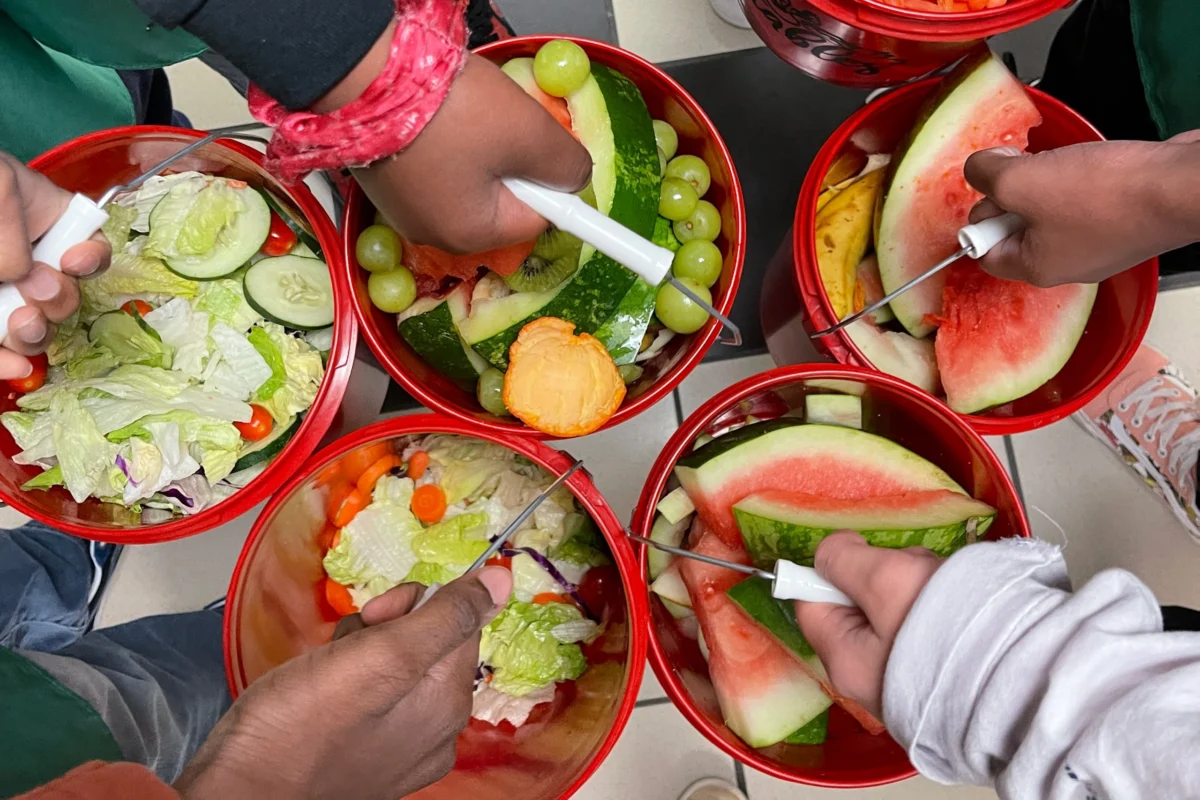
The journey toward waste reduction at Lovin Elementary serves as a blueprint for institutional change. In late 2018, the school took its first decisive step by conducting a "food audit" in partnership with the Green & Healthy Schools program. This process involved collecting and weighing every scrap of food waste generated during lunch hours to identify exactly what was being thrown away.
The results of that initial audit were jarring. On a single day—which happened to be "Taco Day"—students collected 589 pounds of food waste. Perhaps most significantly, 120 pounds of that total were categorized as "recoverable," meaning they consisted of perfectly sealed items like milk, carrots, and apples that had never been touched. Confronted with this data, the school shifted its strategy.
In early 2019, students began brainstorming solutions, leading to the introduction of a "share table" where students could place unopened items for others to take, and the integration of food scraps from the staff salad bar to feed the school’s garden chickens. By March 2019, a follow-up audit showed a significant decline in waste, with total lunch waste dropping to 435 pounds and 108 pounds of food being successfully diverted to the share table.
The program continued to evolve through the fall of 2021, when the school received a composting grant from the Food Well Alliance. By the 2023-2024 academic year, the program had achieved a 70 percent reduction in food waste. The school’s capacity to handle waste eventually grew so large that it began partnering with a local church to manage the overflow in the church’s community garden, demonstrating how school-based initiatives can create positive ripple effects within the surrounding neighborhood.
Data-Driven Education: Cafeterias as Laboratories
The success at Lovin Elementary is rooted in the "cafeteria as a classroom" philosophy. Instead of treating waste management as a janitorial task, the school treats it as a multidisciplinary educational opportunity. Fourth-grade students, for instance, rotate the responsibility of weighing food waste and recording the data in a ledger. This exercise allows them to practice math skills, including working with decimals and tracking variables over time.
Furthermore, students learn about the science of decomposition by monitoring the temperature of compost bins, turning a chore into a chemistry and biology lesson. Third-grade students often lead these initiatives, developing presentations, original songs, and skits to educate younger students on the importance of sustainability. This peer-to-peer teaching model has proven highly effective; kindergarteners who receive instruction from third graders show better retention of waste-reduction practices than those who learn through traditional lecture methods.
The school has also experimented with cutting-edge technology to refine its approach. In January 2025, the school piloted an AI-powered system called Raccoon Eyes, which captured images of trays to analyze food consumption patterns. By identifying that students were consistently discarding specific items—such as rolls that lacked a popular garlic sauce—the school could make small, data-backed adjustments to meal offerings. While the future of this specific technology remains uncertain due to corporate acquisitions, the experiment proved that granular data can lead to more efficient procurement and less wasted taxpayer money.
Official Responses and the Role of Nonprofits
The World Wildlife Fund has been a central architect in this shift, providing the framework for the Food Waste Warriors program. By offering schools the necessary equipment—buckets, scales, and signage—and helping them navigate the bureaucratic hurdles of institutional change, the WWF has enabled a growing network of schools to replicate the Lovin model.
Educational experts note that the primary barrier to these programs is often not a lack of interest, but a lack of administrative flexibility. At Lovin Elementary, the presence of a "fully released" teacher—a staff member dedicated to overseeing these projects without the burden of a standard homeroom class—has been essential. This role allows for the consistent supervision required to ensure that share tables are managed safely and that students are engaged in meaningful, supervised learning rather than just busy work.
Broader Implications for the K-12 Sector
The implications of these programs extend far beyond the Gwinnett County school district. As schools across the country face increasing pressure to address their environmental impact, the model of "waste auditing" offers a scalable, low-cost solution. The environmental benefits of diverting thousands of pounds of organic matter from landfills are clear, but the long-term impact on student development may be even more profound.
When students participate in food waste reduction, they develop critical thinking and problem-solving skills that are increasingly relevant in a changing climate. They learn to view food as a resource rather than a disposable commodity. Furthermore, the collaboration between administrators, custodial staff, and teachers creates a cohesive school culture centered around shared responsibility.
However, challenges remain. Logistic hurdles, such as inclement weather that prevents outdoor composting, and the rigid nature of district-level food procurement contracts, often limit how far individual schools can go. Changing the menu to better match student preferences often requires navigating complex vendor agreements that are beyond the control of individual school administrators.
Despite these obstacles, the success at Lovin Elementary serves as a compelling proof-of-concept. By treating food waste not as an inevitable byproduct of school lunch but as a data-driven educational challenge, schools can significantly reduce their environmental footprint. As awareness of the climate impact of food waste continues to grow, it is likely that more districts will look to integrate these practices into their standard operating procedures, transforming the daily ritual of lunch into a masterclass in sustainability.
The evidence suggests that when children are empowered with data and given the tools to solve real-world problems, they are not only capable of changing their environment but also of shifting the culture of their institutions. The transition from a "throwaway" society to a circular one, it seems, can start in the school cafeteria.