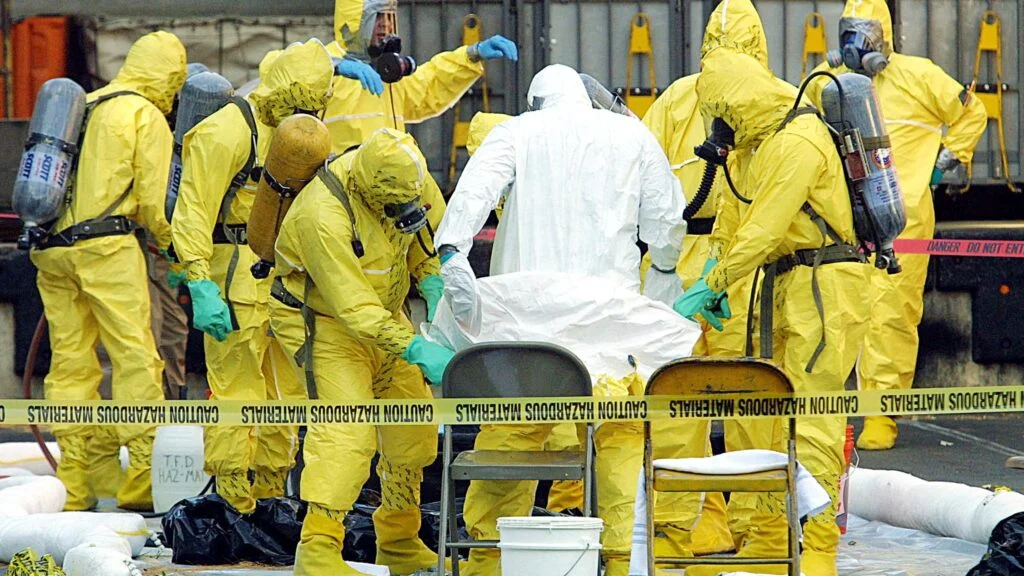
The fall of 2001 remains etched in the collective American consciousness not only for the geopolitical trauma of the September 11 terrorist attacks but for the subsequent, insidious biological assault that unfolded via the U.S. postal system. Twenty-five years later, the anthrax letter attacks—a series of mailings that infected 22 people and resulted in five deaths—stand as a pivotal case study in public health crisis management. As the nation reflects on this anniversary, experts argue that the incident offers a blueprint for navigating modern biological threats, including those potentially facilitated by emerging technologies like artificial intelligence.
A Chronology of the 2001 Attacks
The crisis began in the shadow of the 9/11 attacks, creating a climate of profound national vulnerability. On September 18, 2001, the first batch of anthrax-laden envelopes was mailed from New Jersey. These letters, directed toward prominent media outlets and congressional offices, contained what investigators would later categorize as "crunchy" anthrax—a clumped, coarse formulation. This initial wave resulted primarily in cutaneous (skin) infections, as the particles were less easily aerosolized.
However, the nature of the threat shifted dramatically on October 9, 2001, with a second wave of mailings. This batch contained a highly refined, "fine powder" anthrax, which was significantly more lethal and capable of being aerosolized. This iteration was responsible for the more severe inhalational anthrax cases, which claimed the lives of postal workers who had handled the letters along the mail-processing pathway. By the time the investigation concluded, the impact had been felt across multiple states, triggering a massive public health response that necessitated the administration of antimicrobial prophylaxis to approximately 32,000 individuals.
The Investigative Pivot
The initial response by the Centers for Disease Control and Prevention (CDC) was characterized by "shoe-leather epidemiology"—the traditional, meticulous process of contact tracing and environmental assessment. When the first patient, a photo editor at American Media Incorporated (AMI) in Florida, was diagnosed, clinicians were initially perplexed. It was only through the astute observation of a spinal tap specimen that anthrax was suspected, leading to the involvement of the CDC’s newly established Laboratory Response Network.
As the investigation expanded, molecular testing—a technology still in its infancy for broad field application at the time—proved instrumental. Scientists were able to establish that the isolates recovered from patients, envelopes, and environmental surfaces were genetically indistinguishable. This confirmed a common source and allowed investigators to trace the dissemination pathway. The discovery that the two mailings utilized different physical formulations of the Bacillus anthracis spores suggested a deliberate, evolving threat, causing intense alarm among federal officials who feared the commencement of a larger, coordinated campaign.
Data and Public Health Outcomes
The economic and psychological toll of the attacks was immense. Beyond the direct medical costs and the loss of five lives, the "white powder" episodes that followed the initial attacks disrupted the American postal system, paralyzed government functions, and necessitated billions of dollars in decontamination efforts.
The clinical data from the event provided critical, albeit harrowing, insights into the nature of biological warfare. The CDC’s findings underscored that the route of exposure and the physical properties of the agent directly dictated the clinical outcomes. The "fine powder" mailings demonstrated that standard assumptions regarding the risk of re-aerosolization were dangerously inadequate. At the time, official guidance was heavily focused on the immediate vicinity of the opened mail; however, the infection of postal workers necessitated a rapid recalibration of public health policy. This shift in understanding proved life-saving, as the prophylaxis program successfully prevented further cases among those at suspected exposure sites.
The Evolving Threat Landscape
In the two and a half decades since the 2001 attacks, the infrastructure for detecting and mitigating biological threats has undergone significant modernization. Mail screening protocols have been revolutionized, and the volume of physical mail processed has decreased significantly, reducing the potential reach of such dissemination methods. Furthermore, stringent "select-agent" regulations have tightened controls over the possession and handling of dangerous pathogens, making it substantially more difficult for individuals to gain unauthorized access to biological agents.
Despite these advancements, experts warn that the nation’s biological defense posture is currently at a crossroads. A recent report from the Center for Strategic and International Studies (CSIS) explicitly stated that Americans face greater risks from biological threats today than at any point in the 21st century. This assessment is driven by a convergence of factors: the increasing globalization of biological research, the degradation of certain civilian and military biodefense programs, and the emergence of artificial intelligence.
The Bipartisan Commission on Biodefense has noted that AI fundamentally transforms the biological threat landscape by potentially lowering the barriers to the design and generation of pathogens. As these risks grow, the ability of public health agencies to respond effectively is hampered by staffing shortages and budget constraints. The CDC, for instance, has seen its scientific workforce capacity decline compared to 2024 levels, leading to a loss of institutional knowledge and specialized expertise.
Lessons for the Future
As the public health community looks back on the 2001 response, three core lessons emerge for current policymakers and health officials:
- Detection and Rapid Interpretation: The speed of response is contingent upon the ability to rapidly synthesize data. There is a growing concern that current political climates, which have seen a rise in skepticism toward evidence-based decision-making, could delay the necessary coordination between federal, state, and local governments during an active biothreat incident.
- Managing Uncertainty: Preparedness requires an organizational culture that is resilient and open to "course correction." The anthrax investigation demonstrated that initial assumptions are frequently proven wrong. Leadership must foster an environment where dissenting scientific dialogue is encouraged rather than suppressed, ensuring that policies can be updated as new evidence accumulates.
- Institutional Capability: Advanced technology cannot replace human expertise. A functioning, robust network of public health professionals is the bedrock of national security. With recent large-scale outbreaks of diverse pathogens—from Ebola and hantavirus to measles—the pressure on public health institutions is at an all-time high. Strengthening these institutions through consistent funding and the recruitment of subject matter experts is essential to maintaining the "muscle memory" required for emergency response.
Ultimately, the 2001 anthrax attacks serve as a reminder that the first signal of a biological event is rarely the full picture. The effectiveness of any future response will depend not merely on the technological sophistication of the tools at hand, but on the strength of the institutions and the people who manage them. As the nation faces a new era of global health challenges, the lessons of the past remain the most vital tools for protecting the future.