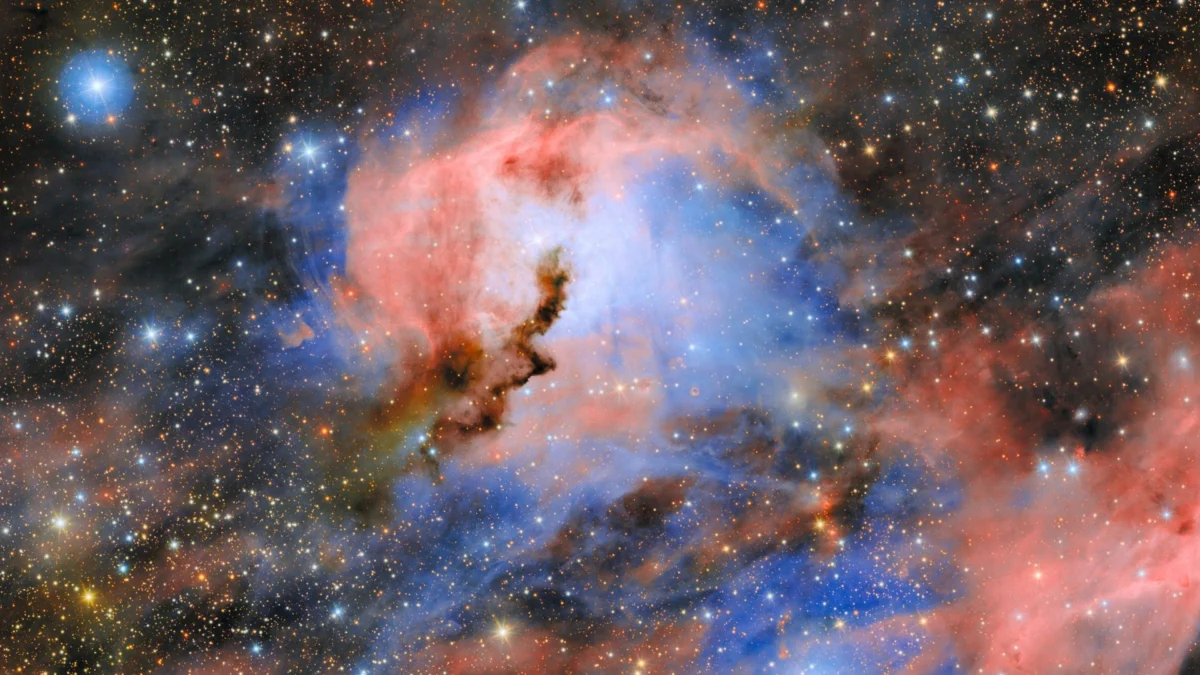
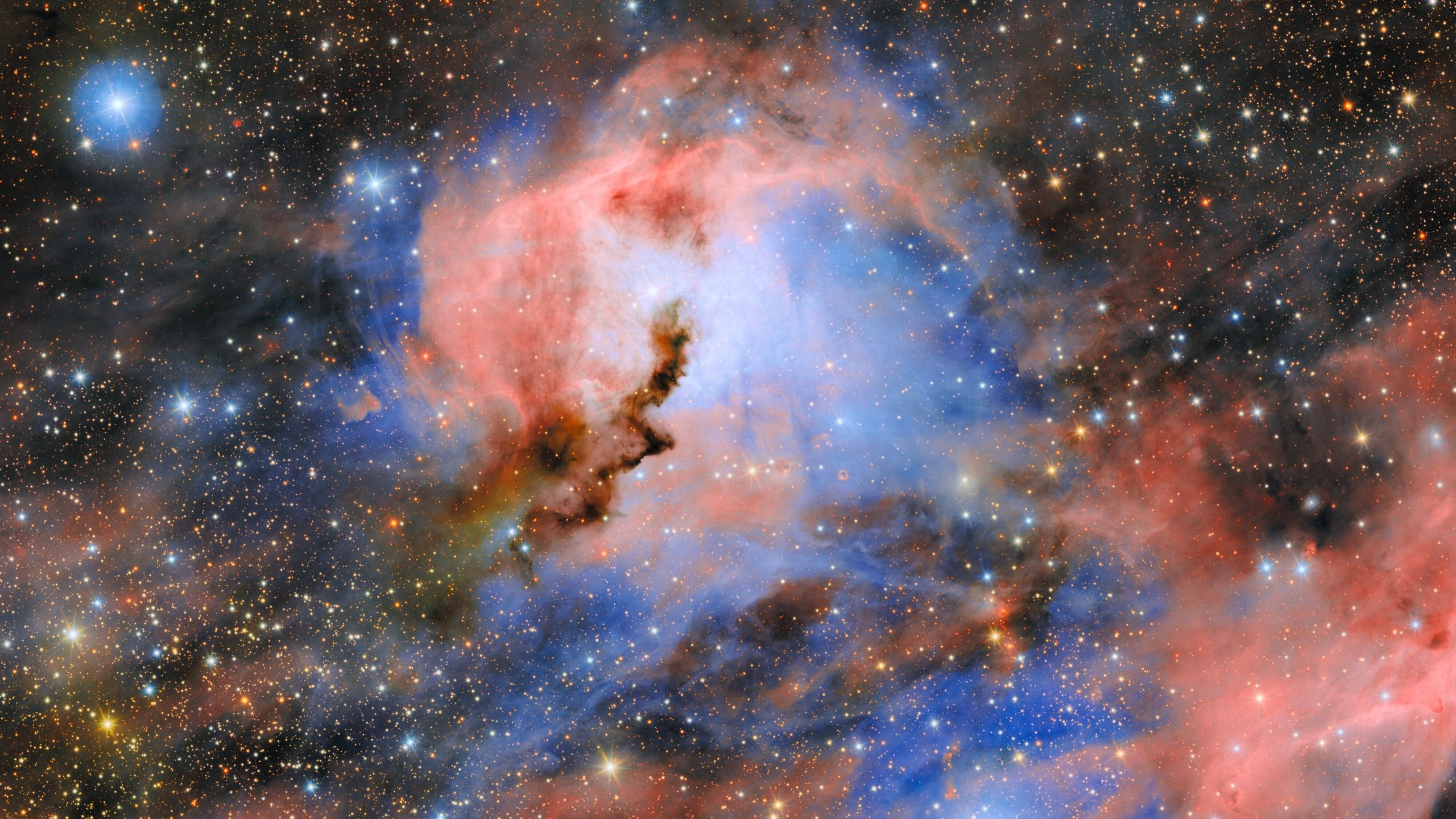
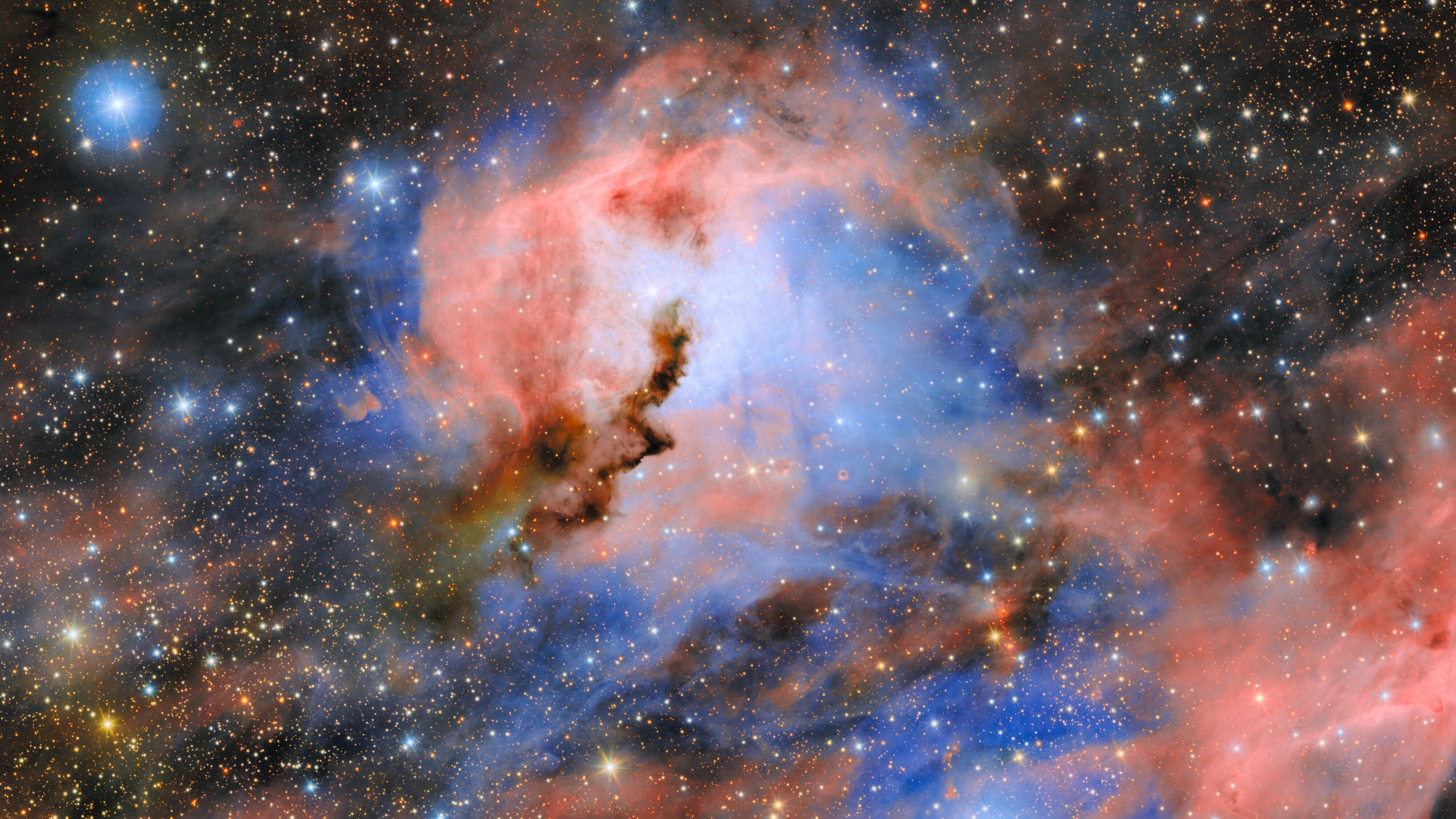
The Vera C. Rubin Observatory has once again captured the imagination of astronomers and space enthusiasts alike, releasing a breathtaking early test image featuring the celestial expanse known as the Seagull Nebula. Specifically highlighting IC 2177—often referred to as the "head" of the larger nebula complex—the image showcases the striking, jewel-toned blue eye of the cosmic bird staring down toward Earth from thousands of light-years away. While this initial view served as a technical evaluation of the observatory’s optical systems, it offers a compelling glimpse into the unprecedented capabilities of a facility poised to revolutionize modern astronomy.
Situated approximately 3,700 light-years away from Earth, the Seagull Nebula spans the border between the constellations Monoceros (the Unicorn) and Canis Major (the Greater Dog). The portion captured in this milestone release, cataloged scientifically as IC 2177, is a vast region of gas, dust, and stellar nursery activity. The glowing blue highlights and intricate filamentary structures revealed in the NSF–DOE Vera C. Rubin Observatory test image demonstrate the profound sensitivity of the facility’s imaging apparatus, signaling a massive leap forward in ground-based optical astronomy.
Main Facts and Target Profile
The newly shared test image, made public on October 22, 2026, focuses on the distinct, avian features of IC 2177, a complex of emission nebulae and reflection nebulae. The glowing features resemble the piercing gaze of a seagull, an optical illusion created by energetic stellar winds and ultraviolet radiation carving through vast interstellar clouds of hydrogen and interstellar dust.
Key parameters of the observation include:
- Target: IC 2177, commonly known as the head of the Seagull Nebula.
- Cosmic Location: Situated along the celestial boundary dividing the constellations Monoceros and Canis Major.
- Distance from Earth: Roughly 3,700 light-years.
- Origin of Image Release: NSF–DOE Vera C. Rubin Observatory, in collaboration with NOIRLab, SLAC National Accelerator Laboratory, and AURA.
Despite the remarkable clarity and rich color palette of the Seagull Nebula’s eye, this test image represents only a preliminary phase of the observatory’s calibration process. Engineers and astronomers have since transitioned the facility to an even more powerful configuration, integrating a revolutionary camera equipped with a field of view 20 times greater than the one utilized for this specific capture.
Chronology and Development of the Rubin Observatory
The journey toward capturing high-resolution cosmic phenomena like the Seagull Nebula has been decades in the making. The Vera C. Rubin Observatory, formerly known as the Large Synoptic Survey Telescope (LSST), represents a collaborative effort between the National Science Foundation (NSF) and the Department of Energy (DOE). Construction on the facility, perched atop the El Cerro Pachón ridge in Chile, began with site leveling in 2011, followed by formal construction authorization in 2015.
The timeline of the observatory’s operational milestones highlights the meticulous nature of modern astronomical instrumentation:
- 2011–2015: Initial site preparation, civil engineering, and infrastructure development at the Cerro Pachón site in Chile.
- 2015–2020: Telescope mount assembly, mirror fabrication, and testing of primary optics. The 8.4-meter primary-tertiary mirror was successfully completed and polished to exacting standards.
- 2021–2024: Integration of support facilities, dome completion, and preparation for camera integration amidst global supply chain adjustments.
- 2025–2026: Commissioning phase, capturing early optical test images—including the iconic Seagull Nebula view shared in late October 2026—followed by continuous hardware upgrades and wide-field camera integration.
During the early testing window, engineers utilized preliminary optical setups to stress-test the tracking accuracy, thermal control systems, and data pipelines of the telescope. The release of the IC 2177 image served as both a technological validation and a public demonstration of the observatory’s potential to resolve complex stellar environments with unprecedented fidelity.
Supporting Data and Technical Architecture
The Vera C. Rubin Observatory is fundamentally distinct from traditional astronomical telescopes due to its unprecedented survey speed and enormous field of view. While instruments like the Hubble Space Telescope and the James Webb Space Telescope specialize in deep-field imaging of narrow cosmic windows, the Rubin Observatory is designed to scan the entire southern sky repeatedly over a ten-year period, a monumental project known as the Legacy Survey of Space and Time (LSST).
The facility relies on several core architectural features:
- The Simonyi Survey Telescope: An 8.4-meter-diameter primary mirror uniquely cast as a single piece of glass, paired with a 3.5-meter secondary mirror to optimize light collection.
- A Three-Mirror Anastigmat Design: This optical configuration minimizes aberrations across a very wide field of view, allowing the telescope to capture sharp images over large swathes of the night sky simultaneously.
- The LSST Camera: Weighing roughly 3 metric tons and roughly the size of a small car, the digital camera houses a 3,200-megapixel focal plane array. It is the largest digital camera ever constructed for astronomy.
- Data Processing Infrastructure: The observatory will generate approximately 20 terabytes of data every single night, requiring massive automated data pipelines hosted by the U.S. Data Facility and the Science Platform to instantly flag transient events, moving objects, and variable stars.
The image of the Seagull Nebula’s eye provides tangible evidence of how these optical components synergize. By capturing both narrow-band emission lines and broadband stellar light, the telescope resolves the complex ionization fronts where newborn stars interact with their natal molecular clouds.
Official Responses and Scientific Perspectives
The astronomical community has met the steady stream of calibration data from the Rubin Observatory with intense enthusiasm. Project scientists and institutional leaders emphasize that test images like the one of IC 2177 are critical not just for public engagement, but for validating the complex software algorithms required to process petabytes of incoming data.
"Test images allow our teams to push the hardware and software to their absolute limits before the official commencement of full-scale survey operations," noted a spokesperson associated with the NOIRLab commissioning team. "When you see the intricate details carved into the dust lanes of nebulae thousands of light-years away using only an interim configuration, it underscores just how transformative the fully integrated 20-times-larger field-of-view camera will be."
Astrophysicists analyzing the data point out that regions like the Seagull Nebula serve as natural laboratories for understanding stellar feedback. The massive blue stars residing near the center of IC 2177 emit intense ultraviolet radiation that ionizes surrounding hydrogen gas, causing it to glow, while stellar winds sculpt cavities within the dust. Documenting these processes across millions of stars will help researchers refine models of galactic evolution and star formation efficiency.
Broader Impact and Implications for Astronomy
The operational readiness of the Vera C. Rubin Observatory marks the dawn of a new era in time-domain astronomy. Historically, telescopes either looked deeply into specific, small patches of the sky or broadly mapped the heavens over long periods with lower sensitivity. The Rubin Observatory bridges this gap by combining immense light-gathering power with a rapid, wide-angle survey strategy.
The broader implications of the observatory’s mission extend across several key scientific domains:
- Mapping the Solar System: The LSST is expected to discover millions of new asteroids, Kuiper Belt objects, and comets, significantly improving our catalog of potentially hazardous near-Earth objects (NEOs).
- Probing Dark Matter and Dark Energy: By measuring the subtle distortions in the shapes of billions of distant galaxies—a phenomenon known as weak gravitational lensing—astronomers can map the distribution of invisible dark matter throughout the universe and constrain the properties of dark energy accelerating cosmic expansion.
- Capturing Transient Events: The observatory’s rapid cadence will enable the real-time detection of supernovae, gamma-ray burst aftershocks, tidal disruption events, and other transient cosmic phenomena, immediately alerting global follow-up networks.
As the Vera C. Rubin Observatory completes its final system calibrations and transitions to full survey mode with its upgraded, ultra-wide-field camera, early captures like the "blue eye" of the Seagull Nebula serve as a promising prologue. They demonstrate that humanity is on the brink of witnessing the dynamic, ever-changing universe with a clarity, speed, and depth never before achieved in the history of science.