
Apple Vision Pro News: A Deep Dive into visionOS and the Spatial Computing Revolution
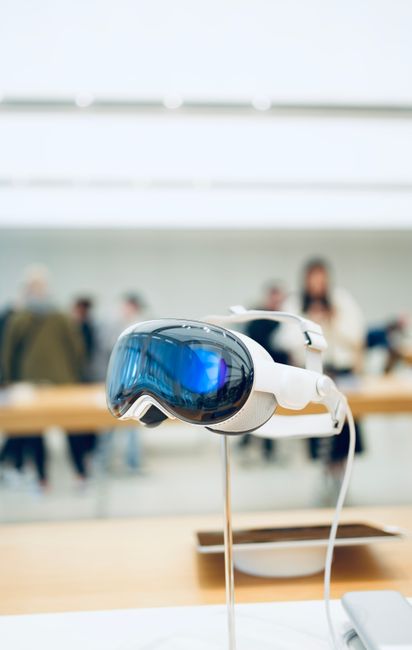
Apple’s foray into spatial computing with the Vision Pro headset has ignited a surge of interest in its proprietary operating system, visionOS. This article provides a comprehensive overview of the latest Vision Pro news, focusing on the capabilities and implications of visionOS, and its role in shaping the future of human-computer interaction. We will explore the core features of visionOS, its development environment, the applications emerging on the platform, and the potential impact of this new paradigm on various industries. The Vision Pro is not merely a VR headset; it represents Apple’s ambition to redefine how we interact with digital content and the physical world, and visionOS is the engine driving this transformative experience.
Understanding visionOS: The Foundation of Spatial Computing
At its heart, visionOS is a brand-new operating system built from the ground up to power spatial computing. Unlike traditional operating systems designed for flat screens, visionOS is optimized for a three-dimensional environment. It seamlessly blends digital content with the user’s physical surroundings, creating an immersive and intuitive experience. The core design philosophy revolves around a concept Apple calls "spatial computing," where digital information and applications are no longer confined to a screen but exist within and interact with the user’s real-world space. This necessitates a fundamental shift in how user interfaces are designed and how applications are developed. visionOS leverages a gesture-based input system, primarily driven by eye tracking and hand movements, eliminating the need for traditional controllers in many scenarios. Users can interact with elements by looking at them and performing subtle hand gestures like pinching or flicking. This "eyes as a cursor" and "hands as controllers" paradigm is a cornerstone of visionOS and a key differentiator from existing VR/AR platforms. Furthermore, visionOS integrates deeply with the Apple ecosystem, allowing for seamless integration with existing Apple devices and services. This means users can expect familiar interfaces and functionalities, along with the ability to transfer content and experiences across their Apple devices. The operating system’s architecture is designed to handle the complex rendering and processing demands of high-fidelity augmented and virtual reality, ensuring a smooth and responsive user experience.
Key Features and Capabilities of visionOS
visionOS boasts a suite of innovative features that define the spatial computing experience. Environment Blending is paramount, allowing users to choose how much of their physical surroundings they want to see. This ranges from fully immersive virtual environments to augmented reality where digital elements are overlaid onto the real world with varying degrees of opacity. The Home View acts as the central hub, presenting a tiled arrangement of apps that users can gaze at to select and interact with. This is a departure from traditional app drawers and signifies a move towards a more contextual and spatially aware application launcher. Passthrough Technology is another critical component, enabling the Vision Pro to display a real-time video feed of the user’s surroundings. This is crucial for both safety and for enabling mixed-reality experiences where virtual objects can interact with physical ones. The Eye Tracking and Hand Gesture Input system is sophisticated, allowing for precise control without physical peripherals. This naturalistic interaction model is designed to reduce cognitive load and make the experience feel more intuitive. Spatial Audio further enhances immersion, providing a realistic soundscape that adapts to the user’s head movements and the virtual environment. This creates a sense of presence and depth that is crucial for believable mixed-reality experiences. Persistent Apps mean that applications can remain in the user’s environment even after they are closed, allowing for quick re-engagement. This builds upon the idea of digital content being a permanent fixture within one’s spatial workspace. Finally, Advanced Rendering and Processing are underpinned by Apple’s custom silicon, the R1 chip, specifically designed to minimize latency and deliver high-fidelity graphics, essential for a comfortable and convincing spatial computing experience.
The Development Landscape: Building for visionOS
Developing for visionOS presents a new frontier for application creators. Apple has provided developers with a comprehensive toolkit, the SwiftUI framework, which has been extended to support 3D environments and spatial interactions. This familiar programming language and declarative UI paradigm aims to ease the transition for existing iOS and macOS developers. The RealityKit framework is specifically designed for creating and integrating 3D content into AR experiences, enabling developers to build visually rich and interactive applications. Developers can import 3D models, create animations, and define how virtual objects behave within the spatial environment. The Reality Composer Pro tool simplifies the process of creating and preparing 3D assets for use in visionOS applications, allowing for scene manipulation, material editing, and animation preview. For those familiar with 3D development, Unity and Unreal Engine also offer support for developing visionOS applications, broadening the development ecosystem and allowing for the creation of more complex and graphically intensive experiences. The Simulator within Xcode allows developers to test their visionOS applications on their Mac, significantly speeding up the development cycle. This virtual testing environment replicates the functionality of the Vision Pro headset, enabling developers to iterate and refine their applications before deploying them to the actual hardware. The platform also emphasizes performance optimization, given the demanding nature of spatial computing. Developers are encouraged to focus on efficient rendering, resource management, and minimizing latency to ensure a fluid user experience. Security and privacy are also key considerations, with visionOS incorporating Apple’s robust privacy frameworks to protect user data.
Early Applications and Use Cases of visionOS
The initial wave of visionOS applications showcases the diverse potential of spatial computing. Productivity and Collaboration are prime areas, with apps like Microsoft Teams and Zoom offering spatial meeting experiences where participants can appear as realistic avatars in a shared virtual space. Productivity suites are also being reimagined, with the ability to open multiple app windows in a user’s physical space, creating a dynamic and customizable workspace. Entertainment and Media Consumption are significantly enhanced. Users can watch movies on a virtual screen that appears as large as they desire, or experience immersive 3D content that places them within the narrative. Gaming is poised for a revolution, with games that can extend into the real world or create entirely new virtual playgrounds. The integration of physical and virtual elements opens up novel gameplay mechanics. Education and Training will benefit from hands-on, immersive learning experiences. Imagine dissecting a virtual frog in a biology class or practicing complex surgical procedures in a simulated environment. Design and Architecture professionals can visualize and interact with 3D models of buildings and products in a realistic scale, facilitating better design decisions and client presentations. Art and Creativity tools are being explored, allowing for sculpting and painting in 3D space, pushing the boundaries of artistic expression. The Photos app on Vision Pro allows users to relive memories in spatial audio and video, offering an unprecedented level of immersion. Even simple tasks like browsing the web are transformed, with websites rendered as interactive, three-dimensional entities that can be arranged and resized within one’s workspace. The early app ecosystem, while still nascent, demonstrates the profound implications of visionOS for how we work, play, learn, and create.
The Future of Spatial Computing with visionOS
The launch of Apple Vision Pro and visionOS marks a pivotal moment in the evolution of computing. The long-term implications of this spatial computing paradigm are vast and far-reaching. As developers continue to innovate and the hardware becomes more accessible, we can anticipate a fundamental shift in how we interact with technology. The lines between the physical and digital worlds will blur further, leading to entirely new forms of communication, commerce, and entertainment. The widespread adoption of visionOS could necessitate a reimagining of physical workspaces, with digital overlays and virtual environments becoming commonplace. The impact on industries such as healthcare, manufacturing, and retail is likely to be profound, driving efficiency, innovation, and new business models. The development of more sophisticated AI integration within visionOS will further enhance its capabilities, enabling more personalized and context-aware experiences. The future of visionOS lies in its ability to seamlessly integrate technology into our lives in a way that feels natural and intuitive, augmenting our abilities and expanding our horizons. The ongoing advancements in display technology, sensor accuracy, and processing power will undoubtedly lead to even more compelling and immersive experiences in the years to come, solidifying visionOS as a foundational operating system for the next era of computing. The ecosystem surrounding visionOS will likely grow exponentially, fostering a new wave of innovation and application development that we are only beginning to imagine.





Leave a Reply