
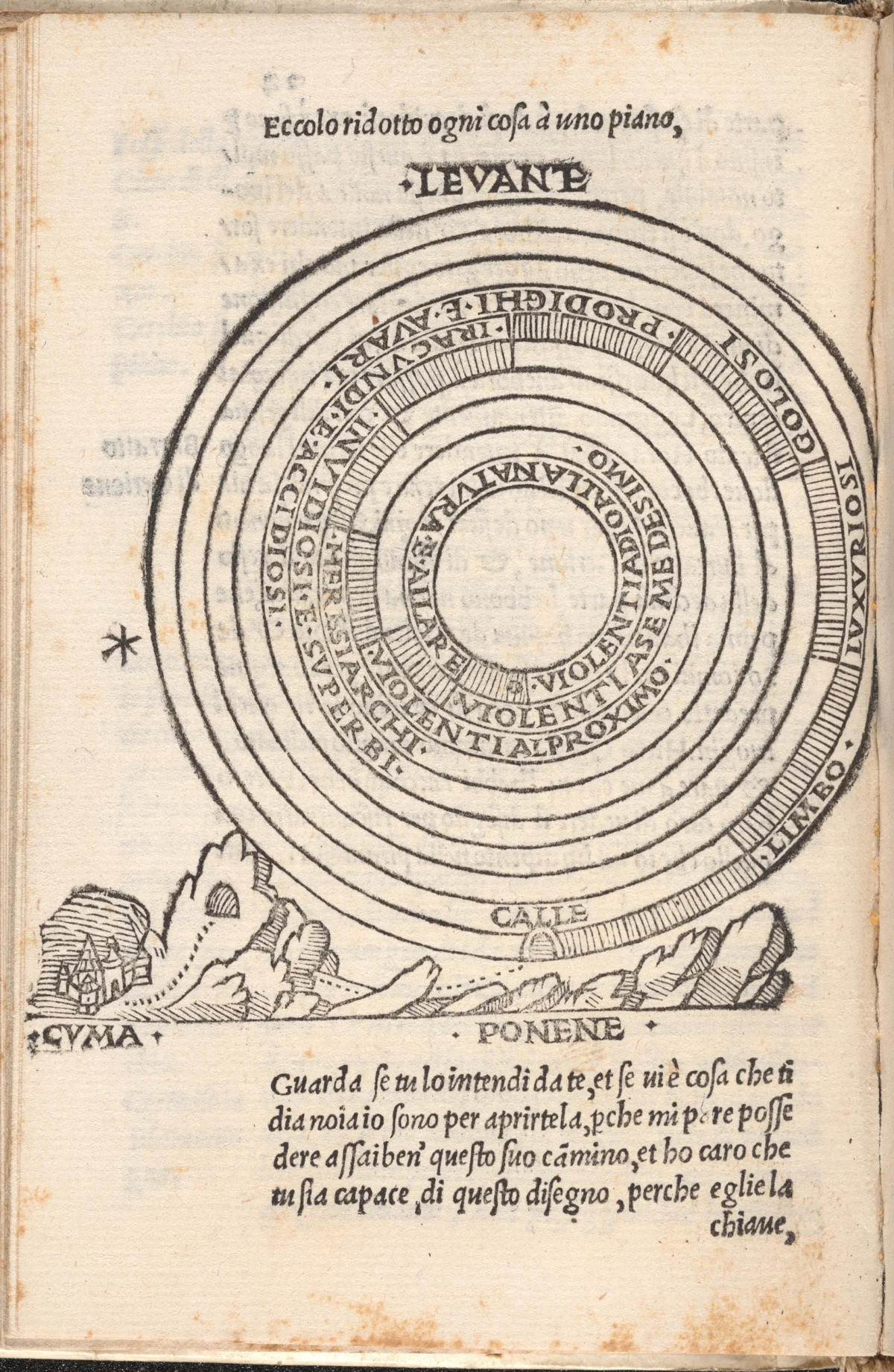
Long before Galileo Galilei became a defining martyr of the scientific revolution—best remembered for his defiant championing of heliocentrism and his subsequent clashes with the Roman Inquisition—he was a young, ambitious scholar navigating the complex academic hierarchies of late 16th-century Italy. Around 1588, at the outset of what would become a legendary career, Galileo accepted an unexpected commission from the prestigious Florentine Academy. His task was not yet to map the celestial mechanics of the solar system, but rather to calculate the precise architectural and topographical dimensions of Hell, as meticulously described by Dante Alighieri in his seminal 14th-century epic, the Divine Comedy.
This early endeavor, merging vernacular literary masterpiece with rigorous geometry, offers a fascinating glimpse into a transitional era where the rigid lines dividing theology, literature, and nascent physics had not yet been drawn.
Main Facts and the Architectural Blueprint of the Underworld
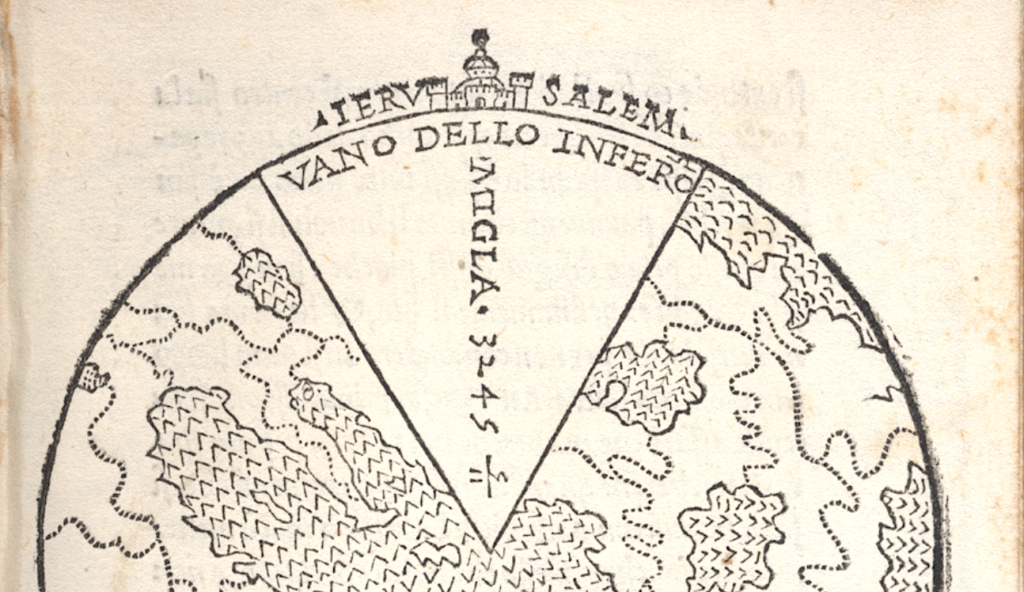
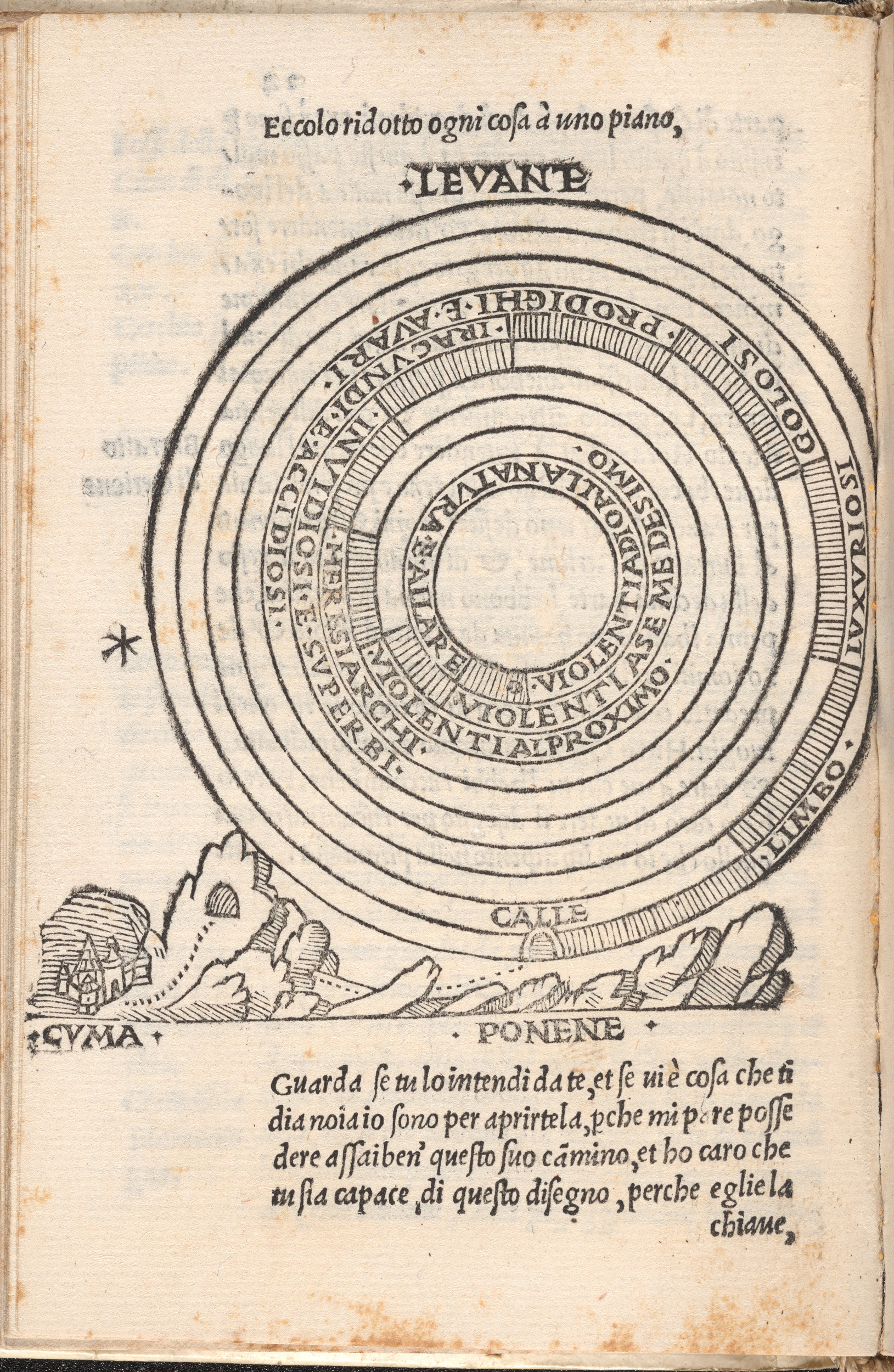
Tasked with translating Dante’s poetic underworld into concrete measurements, Galileo approached the challenge with rigorous geometric methodology rather than casual speculation. Based on his calculations presented to the Florentine Academy, the roof of the underworld was centered directly beneath Jerusalem. Furthermore, Galileo determined that this subterranean expanse possessed a radius equal to that of the entire Earth, with an upper crust or roof measuring no less than 600 kilometers in thickness.
To conceptualize and validate these staggering dimensions, Galileo drew inspiration from monumental human engineering. He famously looked to Filippo Brunelleschi’s revolutionary dome crowning the Florence Cathedral (Duomo), which had dominated the city’s skyline for a century and a half. By utilizing architectural proportions already established by Renaissance engineering feats, Galileo attempted to construct a physical model that could structurally support the vast subterranean weight dictated by Dante’s theology.
In doing so, Galileo entered a fierce academic and regional debate regarding the geography of damnation. His calculations directly refuted an earlier model proposed by the scholar Alessandro Vellutello, who hailed from Florence’s long-standing geopolitical rival, Lucca. Instead, Galileo’s mathematical findings heavily supported a competing topographical model developed by the Florentine architect and mathematician Antonio Manetti. The choice to champion Manetti’s model was emblematic of the intense civic pride and scholarly rivalries that characterized Renaissance Italy.
Chronology of the Scholarly Inquiry
To understand the trajectory of Galileo’s early career and his foray into literary topography, it is helpful to examine the chronological framework of 16th-century Italian academia:
- 1320: Dante Alighieri completes the Divine Comedy, leaving behind a vivid, highly structured, yet geometrically ambiguous vision of the afterlife, Purgatory, and Paradise.
- Late 15th to Early 16th Century: Renaissance humanists and architects, including Antonio Manetti and later Alessandro Vellutello, attempt to map Dante’s Inferno, sparking intense debates over the exact coordinates, volume, and structural integrity of hell.
- Circa 1588: A young Galileo Galilei, seeking institutional recognition and academic posts, delivers a series of lectures at the Florentine Academy focused on the physical and mathematical dimensions of Dante’s underworld.
- Post-1588: Backed by the intellectual visibility gained from his Florentine Academy lectures, Galileo secures a prestigious appointment as a mathematics lecturer at the University of Pisa.
- 17th Century: Galileo shifts his focus upward, utilizing the telescope to make groundbreaking astronomical observations that ultimately bring him into direct conflict with the Catholic Church.
Supporting Data and the Convergence of Theology with Objectivity
The intellectual culture of the Middle Ages and the Renaissance was defined by an earnest, systematic attempt to reconcile sacred scripture and canonical literature with empirical observation. While modern readers might view the calculation of Hell’s dimensions as an exercise in absurdity, contemporary intellectuals viewed it as a legitimate problem of natural philosophy.
Mathematics and science historian Mark Peterson has extensively analyzed these early lectures, arguing that Galileo’s rigorous engagement with Dante’s non-Euclidean, topology-curved universe provided an unintentional training ground for his later physical breakthroughs. When Galileo was forced to grapple with the spatial distortions, gravitational centers, and volumetric constraints of Dante’s funnel-shaped Hell, he was unwittingly exercising the spatial reasoning and geometric problem-solving that would later characterize his studies on motion, kinematics, and astronomy.
The endeavor demonstrates a broader historical reality: pre-modern scientists did not operate in a secular vacuum. Their inquiries were deeply intertwined with the religious and literary frameworks of their societies. For Galileo, the ability to successfully parse a complex theological-literary text through the lens of Euclidean geometry was not merely an academic exercise; it was a career-defining stepping stone.
Academic Reception and Institutional Implications
At the time of his Florentine Academy lectures, Galileo was an unestablished scholar seeking financial and professional stability. The cultural weight of Dante in Florence cannot be overstated; the city viewed the poet as a civic prophet, and interpreting his work accurately was a matter of intense public interest.
By delivering a mathematically sound defense of Manetti’s architectural model of Hell, Galileo achieved precisely what he needed: institutional validation. The lectures served as his calling card to the broader academic community of the Italian peninsula, directly resulting in his appointment at the University of Pisa.
However, this early episode also imparted a pragmatic lesson in institutional survival. Historians note that navigating the delicate intersection of authority, established dogma, and emerging empirical methods required immense political dexterity. The young Galileo learned early on how to balance traditional cultural expectations with innovative analytical techniques—a skill he would rely upon heavily decades later when forced to weigh the presentation of his astronomical discoveries against the doctrinal sensitivities of the Counter-Reformation.
Broader Impact and Historical Legacy
The intersection of Galileo’s early work on Dante with his later scientific revolution underscores a continuity in his intellectual evolution. While popular history often portrays Galileo as an isolated genius at war with medieval ignorance, his formative years reveal a scholar deeply embedded in the humanist tradition of the Italian Renaissance.
The analytical frameworks used to dissect the Inferno—treating a literary construct as an object of physical law—foreshadowed the very methods Galileo would later apply to the physical cosmos. By treating imaginary spaces with real-world mathematical rigor, he helped forge the analytical tools that would eventually dismantle the old geocentric universe altogether.
Ultimately, Galileo’s calculation of Hell’s dimensions stands as a monument to the historical friction between imagination and measurement. It illustrates how the intellectual giants of the past built their revolutionary worldviews using the raw materials of their cultural heritage, transforming literary myth into the early scaffolding of modern mathematical physics.










Leave a Reply