
The Director-General of the World Health Organization (WHO), Dr Tedros Adhanom Ghebreyesus, successfully concluded the first day of a critical two-day State visit to the Hashemite Kingdom of Jordan today. The high-profile diplomatic mission serves to underscore the robust, enduring partnership between the global health body and the Jordanian government across several key pillars, including universal health coverage (UHC), mental health integration, and humanitarian health action in a volatile geopolitical region.
The primary objective of the visit is to examine firsthand Jordan’s exemplary role as a regional healthcare and humanitarian hub, particularly in absorbing and providing medical care to millions of displaced individuals and refugees, while coordinating vital emergency medical evacuations from conflict zones such as Gaza and Syria.
High-Level Engagements and Royal Audience
A central milestone of Dr Tedros’s itinerary was a formal audience with His Majesty King Abdullah II of Jordan. The high-level meeting underscored the deep strategic alignment between the WHO and the Jordanian monarchy in advancing health as both a national imperative and a global public good.
Discussions between the WHO chief and the Jordanian monarch focused intensively on reinforcing national health systems, expanding equitable access to primary care, and sustaining international financial and logistical support for emergency health responses across the Middle East. Particular attention was devoted to the plight of the Palestinian people, specifically the ongoing medical evacuation of critically ill and injured patients from Gaza to Jordanian hospitals, alongside the millions of refugees currently residing within Jordan’s borders.
Following the meeting, Dr Tedros publicly commended the Jordanian leadership. "I wish to express my appreciation to His Majesty King Abdullah II for his commitment to advancing universal health coverage," Dr Tedros stated. "I also extend my thanks to His Majesty and the people of Jordan for their solidarity and generosity in providing health services to more than three million refugees, primarily from Gaza and Syria, who are living in the country."
The WHO Director-General further praised Jordan’s expansive humanitarian footprint, highlighting His Majesty’s pioneering Medical Corridor initiative. This critical operational pipeline ensures that severely ill and injured children from the Gaza Strip receive specialized, life-saving medical interventions that are otherwise unavailable locally due to the collapse of regional medical infrastructure. "Jordan continues to show the world what it truly means to put health and humanity first," Dr Tedros added.
Witnessing Frontline Care: Hospital Visits and Medical Evacuations
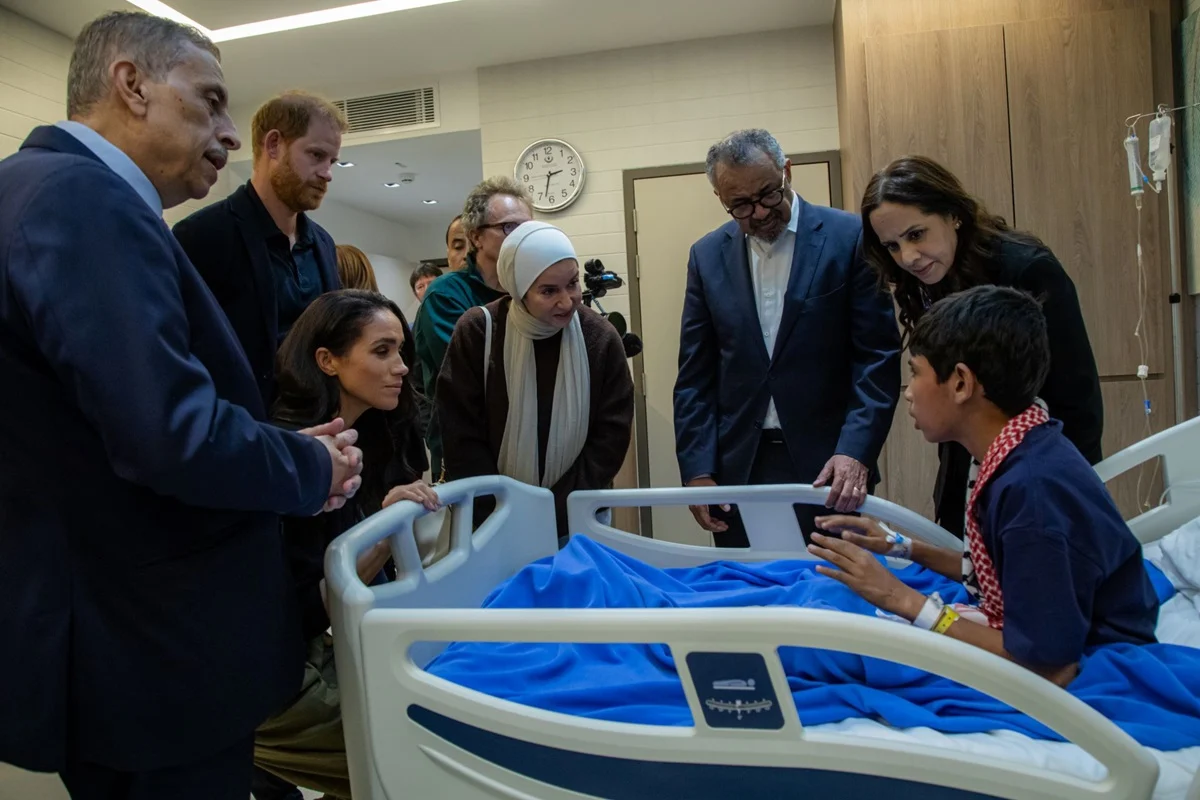
Moving from high-level diplomacy to on-the-ground operational review, Dr Tedros spent a significant portion of the day touring a specialized, WHO-supported hospital facility dedicated to treating pediatric patients evacuated directly from Gaza.
During the hospital tour, the WHO Director-General engaged directly with young patients, their families, and the multidisciplinary teams of frontline health workers. These medical professionals operate under immense pressure to deliver life-saving treatments for severe traumatic injuries, advanced oncological conditions, and other life-threatening medical ailments stemming from ongoing regional conflicts.
The visit powerfully illustrated the logistical complexity and absolute necessity of the medical evacuation corridor established through Jordan. Public health experts accompanying the delegation emphasized that sustained international financial backing and unhindered logistical pathways are vital to ensuring that vulnerable pediatric patients and other critical cases can continue to cross borders to access definitive, specialized care.
Mobilizing Resources: High-Level Donor and Partner Consultation
In an effort to secure long-term financial commitments for the region’s beleaguered health architecture, Dr Tedros convened a strategic high-level meeting with international health partners, donor governments, United Nations agencies, and prominent philanthropic foundations.
The roundtable discussions centered on identifying and addressing critical financing priorities necessary for strengthening Jordan’s national health system. Furthermore, participants evaluated ongoing humanitarian health actions, focusing heavily on scaling up community-level mental health services and alleviating the fiscal and operational pressures borne by nations hosting exceptionally large refugee populations.
Dr Tedros welcomed the robust collaboration demonstrated by international stakeholders, noting that continued investment in Jordan’s health sector yields stability and resilience not just domestically, but across the entire Eastern Mediterranean region.
Advancing Universal Health Coverage and Mental Health Integration
Earlier in the day, Dr Tedros held bilateral talks with Jordan’s Minister of Health. The substantive dialogue concentrated on domestic health system reforms designed to accelerate the nation’s trajectory toward comprehensive universal health coverage.
Public health analysts note that Jordan has emerged as a global leader in institutionalizing a primary health care-oriented approach to achieving UHC. Notably, the Jordanian health sector has successfully integrated mental health services directly into routine primary care clinics. This integration ensures that patients can access psychiatric and psychological support seamlessly alongside physical healthcare, effectively reducing societal stigma and broadening access.
This progressive integration is actively supported by the WHO through the Director-General’s Special Initiative for Mental Health, a flagship global program aimed at expanding access to quality mental healthcare in underserved and crisis-affected nations.
High-Profile Philanthropic Partnership: The Role of Archewell Philanthropies
Adding a notable international philanthropic dimension to the diplomatic mission, Dr Tedros was accompanied during several key engagements by Prince Harry, The Duke of Sussex, and Meghan, The Duchess of Sussex. The royal couple participated in their official capacities as the founders of Archewell Philanthropies and long-standing strategic partners of the World Health Organization.
Archewell Philanthropies has previously provided vital support to a diverse array of WHO-led global health initiatives, ranging from advocacy and resource mobilization for equitable COVID-19 vaccine distribution to specialized medical evacuation and mental health support programs in crisis zones.
During the visit, Prince Harry participated actively as a leading global advocate for the WHO’s mental health agenda. He underscored the critical importance of prioritizing mental health investments across all communities, with a particular focus on marginalized demographics, emergency settings, and vulnerable populations including men, adolescents, and children.
Expressing gratitude for their continued advocacy, Dr Tedros remarked, "I want to thank our partners, including Prince Harry, Duke of Sussex and Meghan, Duchess of Sussex, whose commitment to mental health and humanitarian action has helped bring visibility, resources and hope to some of the world’s most vulnerable communities. Their collaboration is helping to advance WHO’s mission to ensure health for all."
Reflecting on the mission, Prince Harry shared his perspective on the ground realities observed in Jordan. "It is an honour to join the Director-General of the World Health Organization in Jordan, a country that is leading by example in compassion, resilience and innovation," the Duke of Sussex stated.
"Through our work with Archewell Philanthropies, my wife and I have seen first-hand the impact of WHO’s efforts to support mental health and deliver life-saving care in emergencies. We remain deeply committed to advancing awareness, reducing stigma and expanding access to mental health support for all those affected by conflict and crisis. Mental health is fundamental to recovery, dignity and long-term peace, and we are proud to stand with WHO and partners around the world to make it a global priority."
Background Context and Regional Implications
The Hashemite Kingdom of Jordan occupies a uniquely challenging yet strategically vital position within the Middle East’s geopolitical and humanitarian landscape. Despite navigating severe domestic economic constraints, scarce natural water resources, and recurring regional shocks, Jordan has historically maintained an open-door policy for individuals fleeing persecution and armed conflict.
According to data compiled by international bodies, Jordan hosts over 1.3 million Syrian refugees, hundreds of thousands of Palestinian refugees registered with UNRWA, and substantial populations from Iraq, Yemen, and Sudan. Managing the healthcare needs of this demographic influx places immense strain on public infrastructure, making international partnerships, such as the one maintained with the WHO, indispensable for maintaining operational capacity.
The integration of refugees into the national health insurance framework and public hospital system has been widely studied by global health economists as a benchmark for refugee-hosting nations. However, chronic underfunding of international appeals has persistently threatened the sustainability of these services, underscoring why high-level advocacy missions led by figures like Dr Tedros and supported by global philanthropies remain critical for mobilizing donor funds.
Chronology of the State Visit: Day Two Agenda
As the two-day diplomatic mission moves into its final phase, Dr Tedros’s itinerary features several targeted site visits designed to showcase specialized Jordanian institutions:
- National Center for Rehabilitation of Addicts: The WHO chief will inspect this specialized facility, which receives ongoing technical and operational support from the WHO. The center is recognized for delivering integrated medical, psychological, and social rehabilitation services to individuals struggling with substance use disorders.
- Community and Civil Society Engagements: Dr Tedros is scheduled to meet with prominent community leaders and local women’s advocacy organizations, including representatives from the Jordanian Hashemite Fund for Human Development (JOHUD), to discuss grassroots resilience and community-led health initiatives.
- King Hussein Cancer Center (KHCC): The delegation will tour the renowned facility to examine advancements in regional oncological care, discuss specialized training programs for regional physicians, and explore pathways for expanded cross-border oncology cooperation.
- Humanitarian Logistics Hubs: The State visit will conclude with final strategic consultations involving key operational partners supporting humanitarian logistics, reinforcing Jordan’s irreplaceable status as an international medical evacuation nexus, emergency response staging ground, and pillar of regional health security.
Fact-Based Analysis of Broader Implications
The high-level engagement between the WHO and the Jordanian government carries several broad implications for international public health policy and humanitarian governance:
- Validation of Refugee Health Inclusion: By highlighting Jordan’s inclusive health policies, the WHO aims to establish a normative global standard demonstrating that incorporating displaced populations into national health systems is not only a moral imperative but a practical epidemiological necessity that safeguards regional and global health security.
- Operationalizing the Humanitarian Nexus: The seamless coordination between political leadership, military medical assets (such as those facilitating the Gaza medical evacuation corridor), and international agencies like the WHO serves as a blueprint for responding to complex, multi-layered humanitarian crises in fragile states.
- Elevating Mental Health in Emergencies: The joint advocacy efforts by Dr Tedros and Archewell Philanthropies help institutionalize the understanding that psychosocial support and psychiatric care must be delivered concurrently with trauma surgery and infectious disease management during acute humanitarian emergencies.
- Sustaining Donor Engagement: In an era characterized by donor fatigue and competing global geopolitical crises, high-visibility diplomatic missions are vital for keeping protracted regional crises in the focus of international policy-makers and multilateral financial institutions.
As the mission concludes tomorrow, international observers will be closely monitoring the outcomes of the partner roundtables to determine whether the renewed financial and political commitments will successfully translate into long-term systemic stability for Jordan’s healthcare infrastructure and the millions of vulnerable individuals who depend upon it.









Leave a Reply