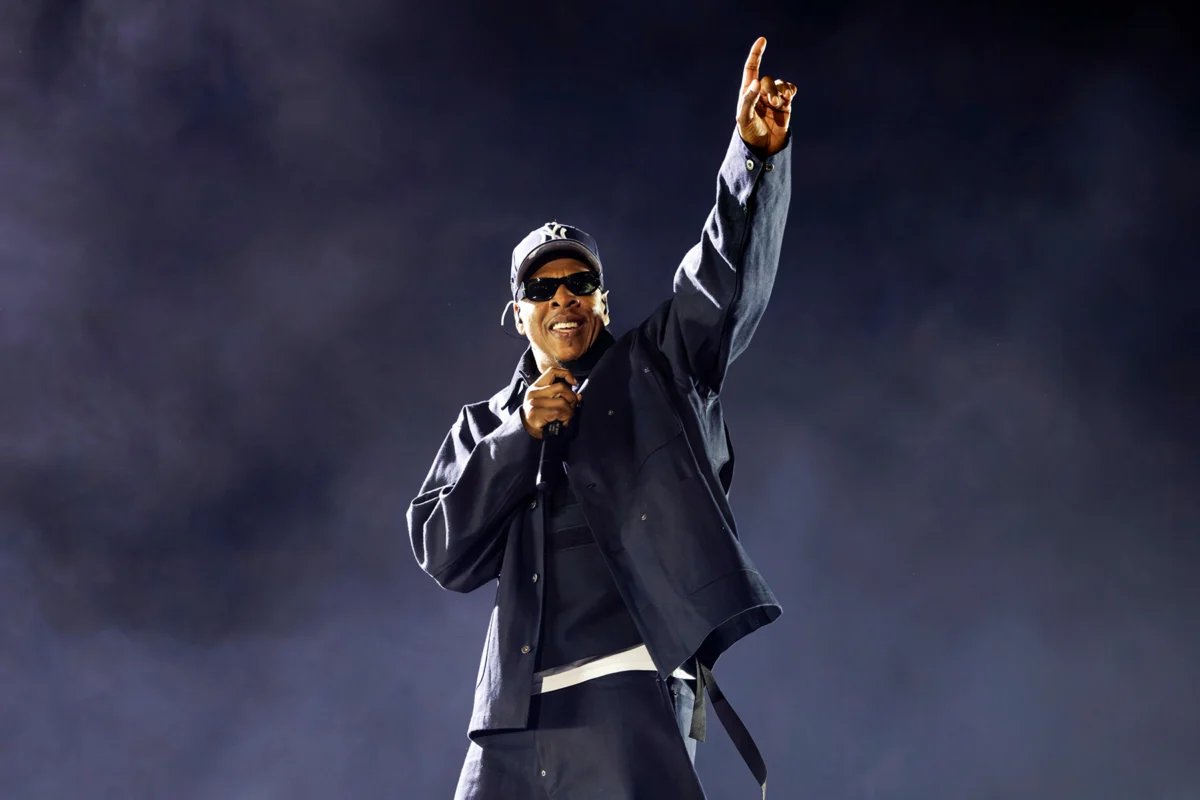
The announcement that hip-hop icon and billionaire mogul Jay-Z is slated to headline the 2027 Super Bowl Halftime Show at SoFi Stadium has ignited a widespread debate across the music industry, sports media, and pop culture commentary circles. While the selection of one of rap’s most commercially successful and critically revered artists might seem like a natural fit for the world’s most-watched musical stage, the unique circumstances surrounding his appointment—specifically his dual role as head of Roc Nation, the entertainment agency that has produced the halftime show since 2019—have drawn both sharp criticism and staunch defense from industry observers.
Main Facts of the 2027 Halftime Show Announcement
The controversy centers on the intersection of corporate governance and artistic merit. Jay-Z, whose legal name is Shawn Carter, holds a pivotal partnership with the National Football League (NFL) through his entertainment company, Roc Nation. Since taking over the production of the Super Bowl Halftime Show, Roc Nation has been responsible for curating high-profile performances, including landmark showcases featuring Dr. Dre, Snoop Dogg, Eminem, Mary J. Blige, and Kendrick Lamar.
When reports surfaced that Carter himself would take center stage for the 2027 event, critics immediately pointed to an inherent conflict of interest. Commentators and industry peers questioned the optics of an executive selecting his own enterprise for a multi-million-viewer broadcast, drawing comparisons to political appointments and questioning whether other top-tier pop acts were sidelined in the process. Despite the procedural friction, supporters emphasize that Carter’s extensive catalog, decades of stadium-level performance experience, and undeniable cultural footprint make him uniquely qualified for the assignment.
Chronology of Roc Nation’s NFL Partnership and Halftime Evolutions
To understand the current backlash, it is necessary to examine the trajectory of the NFL and Roc Nation partnership, which officially began in August 2019.
In 2019, the NFL and Roc Nation entered a long-term entertainment consulting partnership aimed at enhancing the league’s live music experiences and amplifying social justice initiatives through the NFL’s "Inspire Change" program. The agreement immediately faced skepticism from activists and fans who remembered the league’s blacklisting of Colin Kaepernick. However, over the subsequent years, Roc Nation successfully rebranded the Super Bowl Halftime Show into a celebration of hip-hop, R&B, and pop royalty.
The timeline of headliners curated under the Roc Nation banner highlights a deliberate shift toward culturally diverse and genre-defining acts:
- 2020: Shakira and Jennifer Lopez (Miami, FL)
- 2021: The Weeknd (Tampa, FL)
- 2022: Dr. Dre, Snoop Dogg, Eminem, Mary J. Blige, and Kendrick Lamar (Inglewood, CA) – widely praised as a watershed moment for hip-hop on the corporate stage.
- 2023: Rihanna (Glendale, AZ) – marking her triumphant return to the stage and a historic pregnancy announcement.
- 2024: Usher (Las Vegas, NV) – a masterclass in classic R&B choreography and guest curation.
- 2025/2026: Continued announcements cementing the partnership’s focus on contemporary generational talent.
- 2027 (Upcoming): Jay-Z headlining at SoFi Stadium in Inglewood, California.
Supporting Data and Live Performance Credentials
Critics of the booking often overlook Jay-Z’s formidable touring data and live performance portfolio. In an era where legacy acts struggle to maintain stadium-level relevance, Carter has continually demonstrated his commercial viability as a live draw.
During the summer preceding the announcement, Jay-Z completed a heavily publicized run of shows, including a three-night residency at Yankee Stadium that drew critical acclaim and massive ticket sales. Furthermore, his recent performances at SoFi Stadium—the exact venue designated for the 2027 Super Bowl—proved his capability to command massive open-air venues using little more than lyrical dexterity, minimal reliance on cheap visual gimmicks, and a deep catalogue of multi-platinum hits spanning three decades.
With over 14 Billboard 200 number-one albums—the most by any solo artist in chart history—and 24 Grammy Awards, Carter’s statistical credentials are peerless. Financial analyses of his past tours indicate consistent sell-out metrics, affirming that consumer demand for his live performances remains remarkably high.
Official Responses and Industry Reactions
The announcement generated polarized reactions across media platforms, ranging from lighthearted ribbing to pointed industry commentary.
Prominent media figures were quick to mock the insular nature of the selection. Matthew Belloni of Puck took to social media to liken the booking to political self-appointment, while veteran rap artists Cam’ron and Ma$e used their digital platform to question why other marquee names reported to be in consideration were purportedly passed over in favor of the executive producer. Reports from entertainment outlets like TMZ had previously floated mainstream pop figures such as Harry Styles and Justin Bieber as initial frontrunners, intensifying the curiosity surrounding how the selection process ultimately pivoted to Carter.
Conversely, defenders of the decision have rallied around Carter’s status as a foundational pillar of modern American music. Industry defenders argue that equating a cultural icon’s decision to perform on a stage he helped revitalize to bureaucratic overreach is a fundamental misunderstanding of artistic entitlement. Proponents emphasize that artists of Carter’s caliber do not merely compete for slots; they create the platforms that make such slots culturally significant in the first place.
Broader Impact and Industry Implications
The implications of Jay-Z headlining the 2027 Super Bowl extend far beyond a standard 15-minute television broadcast. It represents a watershed moment for executive autonomy within corporate sports and entertainment sponsorships.
For decades, major network television events maintained strict separation between corporate curation and personal participation, largely to avoid antitrust scrutiny or accusations of nepotism. By crossing this line, Roc Nation and the NFL are establishing a new precedent: that absolute creative control can extend to self-representation if the commercial and artistic value justifies the arrangement.
Moreover, the booking reinforces the enduring commercial dominance of hip-hop within mainstream American culture. Once marginalized by corporate sponsors and sports leagues, hip-hop artists now dictate the terms of their engagement with institutions as monolithic as the NFL. Whether viewed as an exercise in executive overreach or the ultimate culmination of a self-made mogul’s career, Jay-Z’s presence on the SoFi Stadium stage in February 2027 will undeniably command global attention, proving once again that the rapper’s business acumen and artistic legacy remain inextricably linked.