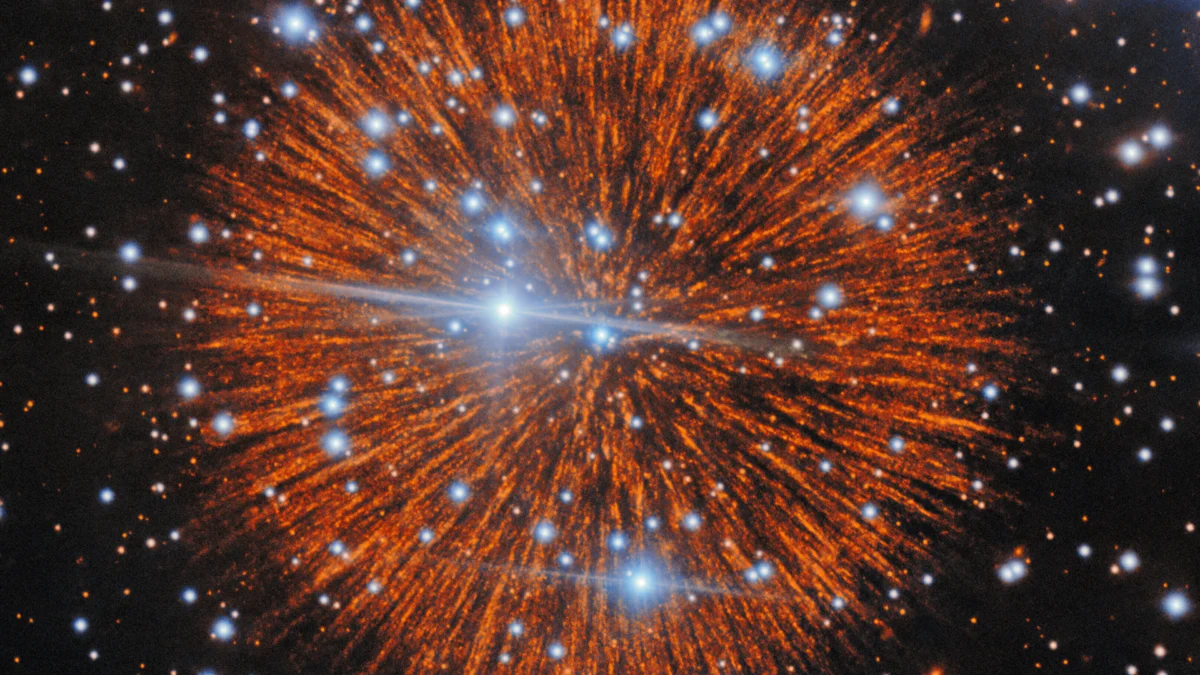
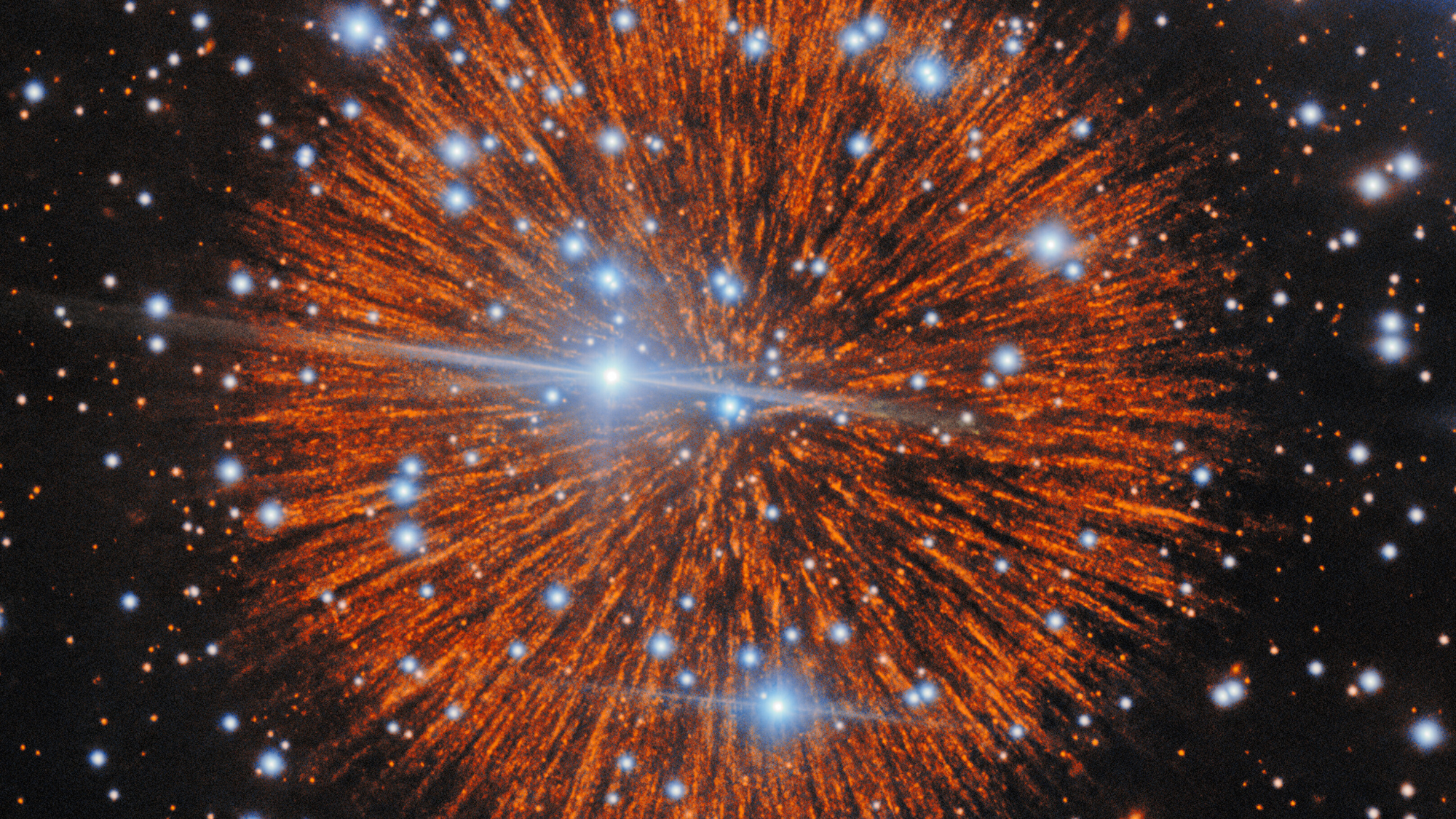
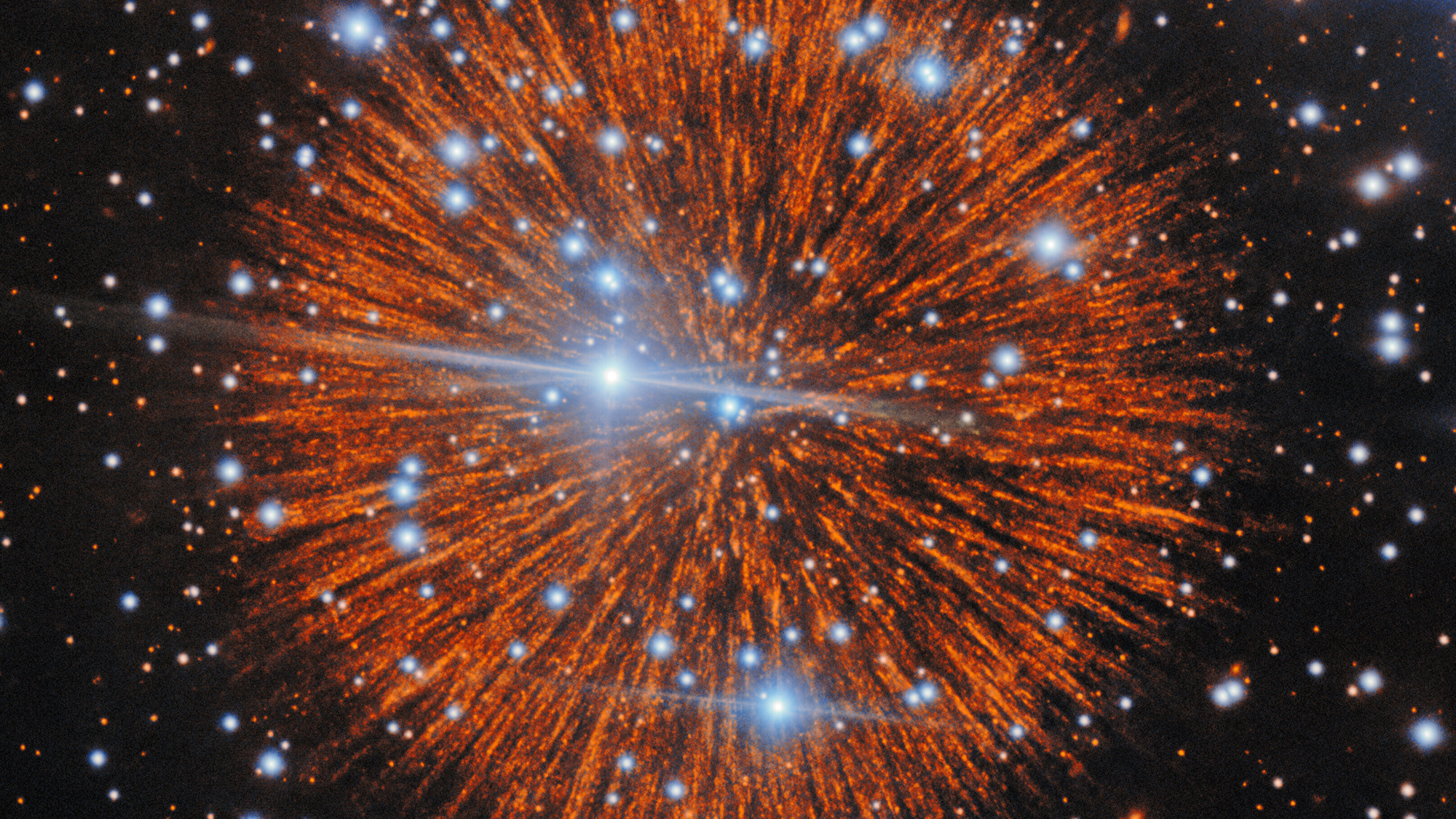
The silent, expanding debris field known as Pa 30 serves as a bridge between medieval history and modern astrophysics. Located approximately 7,500 light-years from Earth, this supernova remnant is the only object of its kind in the Milky Way, housing a rare, surviving "zombie star" at its core. Recent high-resolution observations conducted by the Gemini North telescope have provided scientists with an unprecedented look at the intricate, dandelion-like filaments of gas and dust that were ejected during a violent thermonuclear event recorded by observers centuries ago. This discovery not only clarifies the mechanics of rare stellar explosions but also provides a roadmap for identifying other hidden relics within our galaxy.
Historical Context: A Star Born in 1181
The celestial event that birthed Pa 30 was not invisible to humanity; it was witnessed and meticulously documented. In the year 1181, astronomers across East Asia and the Middle East recorded the appearance of a "guest star" that remained visible in the constellation Cassiopeia for approximately six months. Historical chronicles from Japan, China, and the Arab world provide the foundational data that allowed modern researchers to link this ancient observation to the physical remnant identified today.
For centuries, the identity of this guest star remained a subject of intense debate among astronomers. It was not until 2013 that a citizen scientist formally identified the nebula Pa 30, subsequently leading researchers to correlate the object with the 1181 event. This places Pa 30 among a select group of only five supernova remnants within the Milky Way that were observed prior to the invention of the telescope. The ability to cross-reference historical records with modern spectral analysis allows researchers to calculate the precise age of the remnant and study its expansion over an 850-year period, a rare luxury in the field of stellar evolution.
The Anatomy of a Type Iax Supernova
To understand the significance of Pa 30, one must understand the violent life cycle of a white dwarf star. In a typical Type Ia supernova, a white dwarf—the dense, Earth-sized core of a dead sun—accretes matter from a companion star. This "vampiric" consumption continues until the white dwarf reaches the Chandrasekhar limit, a critical mass threshold that triggers a runaway thermonuclear explosion. In most instances, this process results in the total annihilation of the white dwarf.
However, Pa 30 represents the distinct and rare Type Iax supernova. In these events, the explosion is fundamentally incomplete. Instead of being vaporized, the white dwarf is partially shattered but survives the blast, left in a state of suspended evolution. This "zombie star" remains at the center of the debris, emitting intense heat and powerful winds. The presence of this stellar survivor is what differentiates Pa 30 from the vast majority of other supernova remnants, where the progenitor star is entirely consumed.
Solar System-Sized Pearls and Symmetrical Expansion
The recent study, led by researchers including Ilaria Caiazzo of the Institute of Science and Technology Austria (ISTA), utilized the Gemini North telescope to resolve the structure of the gas filaments radiating from the center of the explosion. The images reveal a series of distinct, knot-like structures distributed along these strands, creating a formation that scientists have described as a "string of pearls."
The sheer scale of these structures is difficult to fathom. According to the research team, each of these knots is large enough to encompass the orbit of Neptune—the outermost major planet in our solar system—ten times over. The uniformity of these knots suggests a highly organized, symmetrical mechanism during the initial explosion.
Furthermore, the placement of the zombie star is highly revealing. If the explosion had been asymmetrical, the resulting force would have propelled the surviving star away from the center of the blast at a high velocity. Instead, the zombie star sits almost perfectly at the geometric center of the remnant. This indicates that the initial detonation was remarkably balanced, imparting only a minimal "kick" to the surviving core. Measurements taken by the research team confirm that the star’s transverse velocity is negligible, reinforcing the theory that the explosion occurred in a relatively uniform manner across the stellar surface.
Scientific Implications and Future Research
The study of Pa 30 offers significant implications for our understanding of stellar physics. By providing a detailed, localized laboratory for studying a Type Iax event, astronomers can better model the complex dynamics of white dwarf systems. The data gathered from Pa 30 will serve as a template for future surveys of the Milky Way, helping researchers identify similar, perhaps older or more obscured, remnants that have gone unnoticed.
"While we can see Type Iax supernovas in distant galaxies as point sources of light, resolving the remnants of such explosions is only possible in our own galaxy and in very few nearby ones," noted Ilaria Caiazzo. The proximity of Pa 30—at 7,500 light-years, it is significantly closer than the galactic center—allows for a level of detail that is otherwise impossible to achieve. The team’s next objective is to utilize the unique spectroscopic signatures and morphological patterns identified in Pa 30 to scan the wider galactic neighborhood for "zombie" remnants that may have escaped detection.
The Role of Technological Advancement
The success of this investigation highlights the critical importance of modern ground-based observatories. The Gemini North telescope, part of the International Gemini Observatory, enabled the team to resolve fine structures that were previously blurred by distance. As telescope technology continues to advance, the ability to map the three-dimensional structure of such nebulae will likely yield further insights into the chemical composition of the ejected material. Understanding the chemical "fingerprint" of the debris can reveal the nucleosynthesis processes that occurred during the explosion, shedding light on the heavy elements seeded into the interstellar medium.
Broader Impact on Astronomy
The synthesis of historical accounts and modern computational physics represents a burgeoning field of "cosmic archeology." By respecting the observations of pre-telescopic astronomers and applying contemporary analytical techniques, researchers are effectively expanding the time-horizon of galactic observations. This approach serves as a reminder that the human record is an essential component of scientific inquiry.
As the scientific community continues to analyze the findings published in The Astrophysical Journal, the "string of pearls" in Pa 30 remains a focal point for understanding the limits of stellar destruction. It challenges existing models of white dwarf stability and provides a compelling case for the diversity of supernova outcomes. While Pa 30 is currently unique in our observations, the search for its counterparts is already underway. Every new discovery of a remnant similar to Pa 30 will help refine our understanding of the Milky Way’s volatile history and the ongoing cycle of death and rebirth that defines the evolution of our galaxy.
The story of Pa 30 is far from concluded. As observers continue to refine the modeling of the gas knots and the surrounding nebula, the "living dead" star at the center of the dandelion-like structure will likely remain a centerpiece of stellar research for years to come. Through this object, we gain a rare glimpse into the mechanics of the universe’s most extreme events, bridging the gap between the ancient skies watched by our ancestors and the high-precision data harvested by the astronomers of today.