By unlocking the genetic secrets preserved within ancient bones, an international team of researchers has reshaped our understanding of human migration and social connection during the Last Glacial Maximum. By successfully sequencing the genomes of three Late Stone Age individuals who roamed Europe approximately 30,000 years ago, scientists have uncovered biological ties far closer than previously assumed. This groundbreaking genetic analysis suggests that specific geographic regions—most notably southwestern France—acted as critical cultural and demographic hubs during one of the most hostile climatic periods in human history.
The findings offer a rare window into a pivotal era of human prehistory, bridging a significant gap in the archaeological and genetic record of Ice Age Europe. As researchers continue to extract viable DNA from fragile remains, the emerging picture is one of a surprisingly interconnected continent, where human groups maintained biological and cultural networks despite the crushing pressures of advancing glaciers.
Unraveling the Gravettian Enigma
The individuals whose genomes were successfully sequenced belonged to the Gravettian culture, an advanced Upper Paleolithic society that flourished across Europe shortly after the disappearance of Neanderthals. Spanning roughly from 34,000 to 25,000 years ago, the Gravettian people are renowned for their remarkable technological and artistic achievements. Archaeological excavations throughout Europe have yielded sophisticated stone tools, elaborate burials, and iconic portable art, most notably the stylized female sculptures known as "Venus figurines."
Despite the widespread distribution of these artifacts—stretching from the Atlantic coast of Europe across the vast plains of Eastern Europe—our understanding of the people behind the culture has historically been limited. Ancient DNA is notoriously difficult to retrieve from skeletal remains dating back tens of thousands of years. Warm temperatures, soil acidity, and microbial activity rapidly degrade genetic material. Consequently, prior to this recent study, usable ancient DNA had been successfully recovered from only about two dozen human skeletons associated with the entire Gravettian period.
This scarcity of genetic data left monumental questions unanswered. Anthropologists and geneticists debated whether the widespread similarities in Gravettian art and technology were the result of a single, highly interconnected population diffusing across the continent, or whether they represented distinct, isolated groups sharing ideas through sporadic trade and cultural exchange. The newly sequenced genomes provide definitive genetic data that helps resolve this long-standing debate, demonstrating that biological kinship spanned vast geographic distances.
A Chronology of Survival: Europe During the Last Ice Age
To fully appreciate the significance of these genetic findings, historians and scientists must examine the extreme environmental context in which these ancient humans lived. The period between 34,000 and 25,000 years ago coincided with the onset of the Last Glacial Maximum (LGM), the peak of the most recent ice age.
During this era, massive ice sheets blanketed Scandinavia, the British Isles, and northern continental Europe. Alpine glaciers expanded dramatically, rendering vast swaths of the continent uninhabitable tundra or bitterly cold steppe. Human populations were forced to retreat toward southern refugia, finding shelter in milder microclimates along the Mediterranean coast, the Iberian Peninsula, and southwestern France.
- 34,000 Years Ago: The emergence of the Gravettian culture across Europe, marked by distinct blade-tool technologies and the earliest widespread production of figurative art.
- 30,000 Years Ago: The timeframe represented by the newly sequenced genomes. During this period, climatic conditions were deteriorating rapidly as global temperatures plummeted, driving human populations into tighter, more concentrated geographic zones.
- 26,000 to 20,000 Years Ago: The absolute peak of the Last Glacial Maximum. Sea levels dropped precipitously, and northern European populations faced extreme demographic bottlenecks, leading to significant genetic shifts across the continent.
- 25,000 Years Ago: The gradual decline and transformation of the classic Gravettian culture, giving rise to subsequent Upper Paleolithic cultures such as the Solutrean and Magdalenian as the climate eventually began to warm and ice sheets receded.
Mapping the Genetic Landscape of the Ice Age
The recent genomic sequencing effort involved meticulous laboratory techniques designed to isolate endogenous human DNA from ancient bone powder, typically extracted from the dense petrous bone of the skull. Once sequenced, the genetic profiles of the three individuals were compared against existing databases of ancient and modern human genomes.
The results stunned researchers. Despite being separated by hundreds of kilometers and distinct local environmental pressures, the individuals displayed a high degree of genetic affinity. This close biological relationship indicates that human groups in Pleistocene Europe were not completely isolated in regional pockets. Instead, they maintained active mating networks and social alliances across formidable geographic barriers.
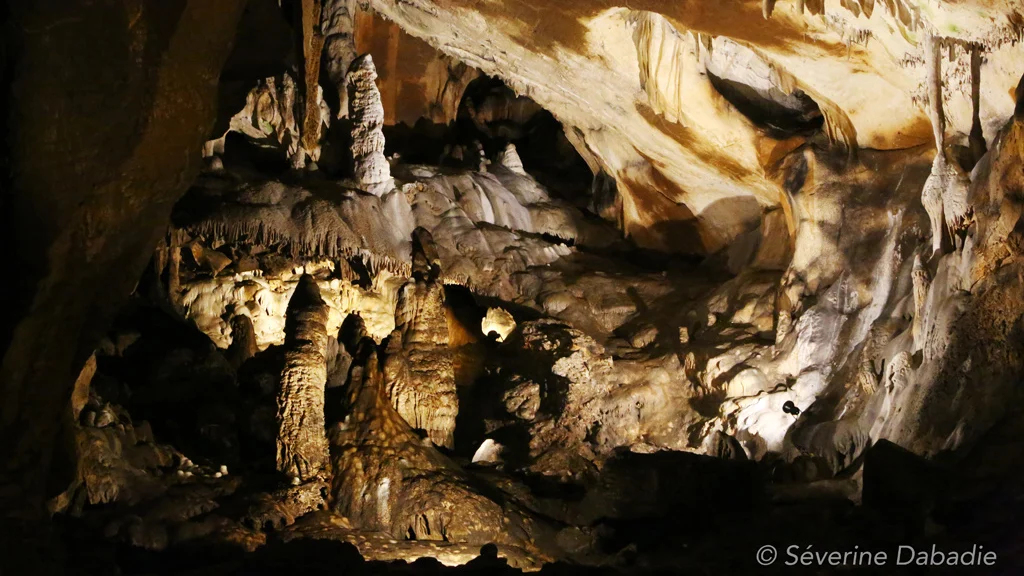
Furthermore, the genetic data strongly supports the hypothesis that regions like southwestern France served as crucial population reservoirs. As harsh glacial conditions gripped northern and central Europe, southwestern France likely acted as a safe haven where human populations could weather the worst of the cold. From these refugia, groups could periodically expand outward, carrying their genes, technologies, and cultural traditions back into re-opened territories as the climate fluctuated.
Expert Analysis and Scientific Implications
Archaeologists and geneticists not directly involved in the sequencing effort have praised the study for its precision and its ability to bridge disparate scientific disciplines. For decades, archaeologists relied exclusively on material culture—such as stone tool typologies and art styles—to infer human migration and interaction. However, material culture can easily diffuse through trade or cultural mimicry without any actual movement of people.
The integration of ancient DNA provides an empirical check on archaeological theories. By demonstrating that biological relatedness mirrored the spread of Gravettian cultural markers, the new study validates long-held archaeological assumptions about pan-European communication networks during the Upper Paleolithic.
"This study exemplifies the power of combining paleogenomics with high-resolution archaeology," noted a leading researcher in human evolution during a recent academic briefing. "We are moving away from broad generalizations about Ice Age populations and toward a high-definition map of human history, where we can track specific lineages, social structures, and demographic responses to climate change in real time."
Moreover, the findings have profound implications for understanding human resilience. The Last Glacial Maximum was one of the most severe environmental bottlenecks our species has ever faced. The ability of these ancient groups to maintain extensive social and genetic networks across vast distances likely played a critical role in preventing inbreeding depression and ensuring the survival of modern humans in Europe through the coldest millennia of the Pleistocene.
Broader Impacts on Modern Human Ancestry
The sequencing of these three Gravettian genomes also contributes to the broader narrative of modern human migration and population replacement in prehistoric Eurasia. Genetic studies over the past decade have revealed a complex history of successive population turnovers in Europe, driven by climate shifts and subsequent migrations from the Near East and the Pontic-Caspian steppe.
By establishing a clearer baseline of the genetic makeup of Western hunter-gatherers during the peak of the last ice age, scientists can better trace how these ancient populations contributed to the ancestry of later European groups. The lineage represented by the Gravettian individuals did not vanish entirely; rather, they form an foundational layer of the European genetic heritage, weathering the ice age in southern refugia before re-expanding and mixing with subsequent migrant waves.
As laboratory methodologies continue to advance—allowing for the extraction of reliable DNA from increasingly degraded or minute samples—the scientific community anticipates a flood of new data from the Paleolithic era. Researchers are already turning their attention to other under-sampled regions and time periods, hoping to fill remaining gaps in the genetic family tree of our ancient ancestors.
Ultimately, these three newly sequenced genomes do much more than add data points to a genetic database. They offer a poignant reminder of the tenacity of early humans. Facing miles-thick ice sheets and temperatures that defy modern imagination, these people did not merely survive in isolation; they built expansive networks of kinship and culture, leaving behind art and a genetic legacy that endures to this day.