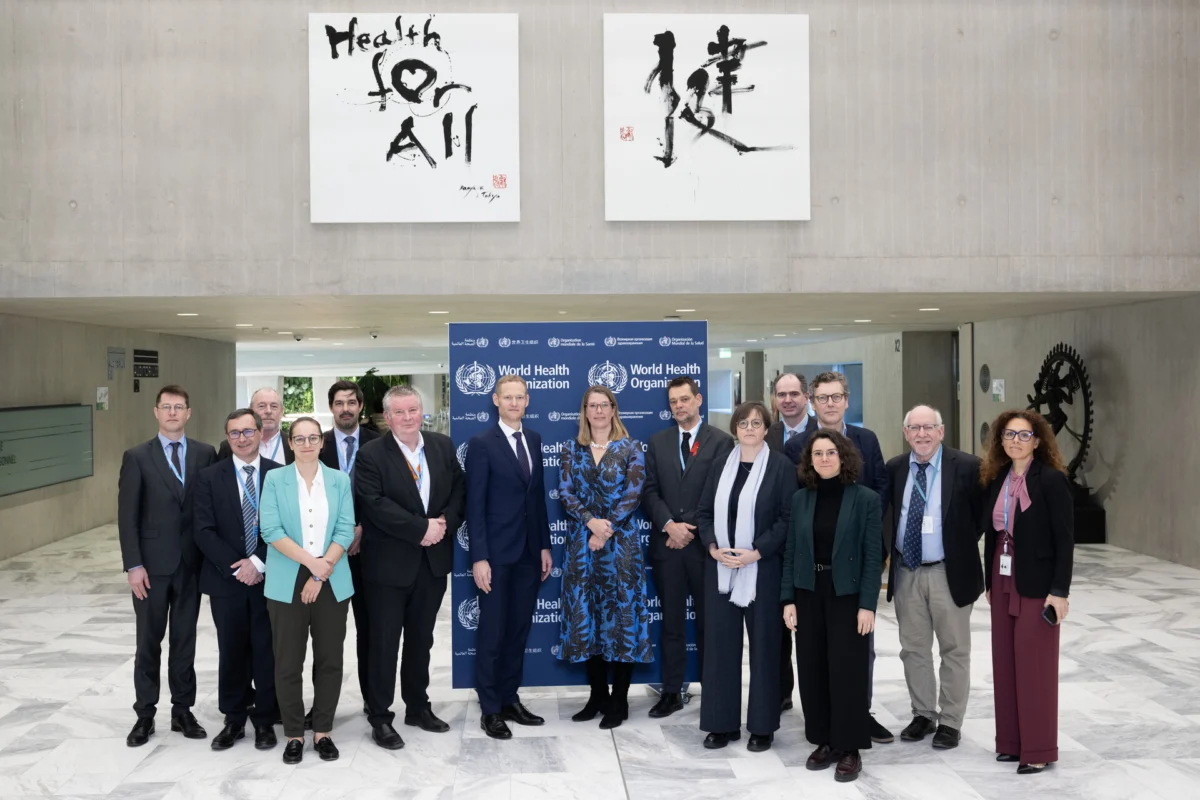
GENEVA — In a comprehensive three-day strategic dialogue held from March 2 to March 5, 2025, representatives from the Kingdom of Belgium and the World Health Organization (WHO) convened to evaluate their long-standing partnership, review past achievements, and chart an ambitious course for future collaboration. The high-level talks, which took place in Geneva, focused heavily on reinforcing universal health coverage (UHC), strengthening fragile health systems, and ensuring equitable access to essential vaccines, medicines, and medical technologies across the globe.
The Belgian delegation, representing a unified front of federal, Flemish, and Walloon government bodies, was led by His Excellency Christophe Payot, Ambassador and Permanent Representative of Belgium to the United Nations and other international organizations in Geneva. They engaged in extensive deliberations with WHO leadership and technical experts from headquarters as well as the Regional Offices for Africa and Europe. The summit served as a critical platform to align Belgium’s international development cooperation priorities with the overarching strategic directives of the WHO, particularly as the international community navigates a rapidly shifting and increasingly complex global health landscape marked by emerging biological threats and protracted humanitarian crises.
Comprehensive Chronology and Context of the Strategic Dialogue
The structured dialogue between Belgium and the WHO is part of an ongoing, multi-year framework designed to maximize the impact of Belgian voluntary contributions and core funding to the United Nations health agency. The groundwork for the March 2025 meetings was laid during a period of heightened multilateral activity, notably building upon the health priorities championed by Belgium during its presidency of the Council of the European Union in the first half of 2024. Throughout its EU presidency, Belgium placed global health security, equitable access to medical countermeasures, and workforce protection at the forefront of European policy discussions.
Over the course of the three-day engagement in Geneva, the discussions were categorized into thematic sessions mirroring the core pillars of the WHO’s Fourteenth General Programme of Work (GPW14). Day one focused primarily on health emergencies, pandemic prevention, preparedness, and response, alongside localized emergency operations. Day two transitioned into deep dives concerning universal health coverage, primary health care, and specific disease programs such as neglected tropical diseases and sexual and reproductive health and rights. The final day consolidated these findings, mapping out the renewed WHO-Belgium Country Cooperation Strategy and setting financial and operational targets for the upcoming multi-year funding cycle.
Accelerating Equitable Access to Vaccines, Medicines, and Health Technologies
A cornerstone of the bilateral discussions was the review of the Access to Medicines programme, a vital initiative generously funded by the Belgian government. The program aims to bridge the persistent gap in pharmaceutical availability and affordability in low- and middle-income countries.
During the session, WHO technical experts presented tangible results achieved through the initiative, highlighting country-level implementation challenges and successes in nations such as Senegal. The dialogue underscored the critical importance of market-shaping strategies to guarantee the long-term sustainability of the Access to Medicines initiative. Both delegations agreed that supply chain resilience and local manufacturing capacity in developing regions are paramount to preventing the severe supply bottlenecks witnessed during previous global health emergencies. By fostering regional manufacturing hubs and encouraging technology transfer, Belgium and the WHO aim to empower nations to independently manage their essential medicine supplies.
Navigating Health Emergencies and Reinforcing Global Health Security
The imperative of robust health emergency prevention, preparedness, and response (PPR) formed another critical pillar of the Geneva dialogues. Participants reviewed the WHO’s evolving role in strengthening the global health architecture, paying close attention to ongoing intergovernmental negotiations regarding the global pandemic agreement and the operationalization of the One Health approach—an integrated framework recognizing the interconnection between human, animal, and environmental health.
To ground these policy discussions in operational reality, WHO officials presented briefings on active field responses, with a particular focus on the exceptionally challenging humanitarian conditions in Gaza. Experts detailed the delivery of emergency trauma care, the prevention of infectious disease outbreaks in displaced populations, and the logistical nightmares of operating in active conflict zones.
Furthermore, the delegations addressed mounting biological risks, including the acceleration of zoonotic spillover events and antimicrobial resistance (AMR). They evaluated ongoing WHO risk-mitigation strategies and discussed how Belgian scientific and financial backing can further fortify early warning systems and rapid response teams worldwide.
Advancing Universal Health Coverage and Primary Care
Universal health coverage remains the bedrock of sustainable development, and the review of the UHC-Partnership for the 2021–2024 period highlighted significant strides made possible through Belgian support. Representatives analyzed data from partner countries, focusing heavily on implementation models, successes, and ongoing bottlenecks in nations such as the Democratic Republic of Congo (DRC).

The discussions explored avenues for deepening collaboration at the country level, specifically by better aligning WHO country office programs with Belgium’s bilateral development cooperation strategies. By synchronizing their efforts, both entities aim to reduce administrative duplication and maximize resource efficiency on the ground.
Mental health integration within primary health care systems also featured prominently on the agenda. Recognizing that mental health is an often-neglected component of universal healthcare, the participants reviewed WHO’s latest normative guidance and operational strategies designed to integrate mental health services into routine community-level medical care.
In addition to primary health care and UHC, the partners evaluated progress in targeted thematic programs supported by Belgium, including efforts to eliminate neglected tropical diseases (NTDs) and protect sexual and reproductive health and rights (SRHR). Both parties reaffirmed their commitment to evidence-based interventions in these domains, noting that marginalization in these sectors directly undermines broader societal resilience and economic development.
Official Statements and Multilateral Perspectives
The inclusive nature of the Belgian delegation—incorporating representatives from the federal government as well as the Flemish and Walloon regional authorities—was widely praised by WHO leadership as a model of cohesive national engagement in international public health.
"We thank you for your support, honesty, and strong engagement for global health," stated Dr. Catharina Boehme, WHO Assistant Director-General for External Relations and Governing Bodies. "Your efforts in supporting our work in Mozambique and Senegal are clear examples of the crucial work we accomplish together. Listening to the leadership and technical experts of the WHO has provided us with a clearer view of how the organization navigates these challenging times."
Belgian officials echoed this sentiment, emphasizing the mutual trust that underpins the partnership.
"We recognize WHO as a trustworthy partner in global health. We felt proud hearing how crucial our support is to the Organization and how it is having a positive impact at country, regional, and global levels," remarked Mr. Dirk Brems, Director of Thematic and Multilateral Cooperation at the Directorate-General for Development Cooperation and Humanitarian Aid. "It is important we continue these discussions as we tread uncharted territories, and we look forward to working together for strong and sustained multilateralism."
Echoing his colleague’s perspective, Mr. Koen Van Acoleyen, Minister Counselor at the Permanent Representation of Belgium to the UN, added: "After listening to the leaders and experts of the WHO, we now better understand how they are navigating these challenging times. We are honoured that we can walk this road together."
Broader Impact, Strategic Implications, and the Future Outlook
The conclusion of the three-day strategic dialogue marks a pivotal moment for both Belgium and the WHO as they finalize a renewed multi-year cooperation framework and Country Cooperation Strategy. This enhanced partnership is strategically designed to feed directly into the execution of the WHO’s 14th General Programme of Work (GPW14).
By placing universal health coverage and health-systems strengthening at the heart of the GPW14 ambitions, the WHO, backed by steadfast donors like Belgium, aims to shift the global health paradigm from reactive crisis management to proactive, resilient community care. Analysts observe that predictable, flexible funding from member states such as Belgium is vital for the WHO to maintain its normative independence and rapidly deploy technical assistance where it is most urgently needed.
As the international community continues to grapple with climate-induced health threats, geopolitical instability, and persistent economic inequalities, the renewed Belgium-WHO alliance stands out as a robust example of effective multilateral cooperation. The alignment of bilateral development priorities with global health strategies ensures that financial investments translate into measurable, sustainable improvements in health outcomes for millions of vulnerable individuals worldwide.