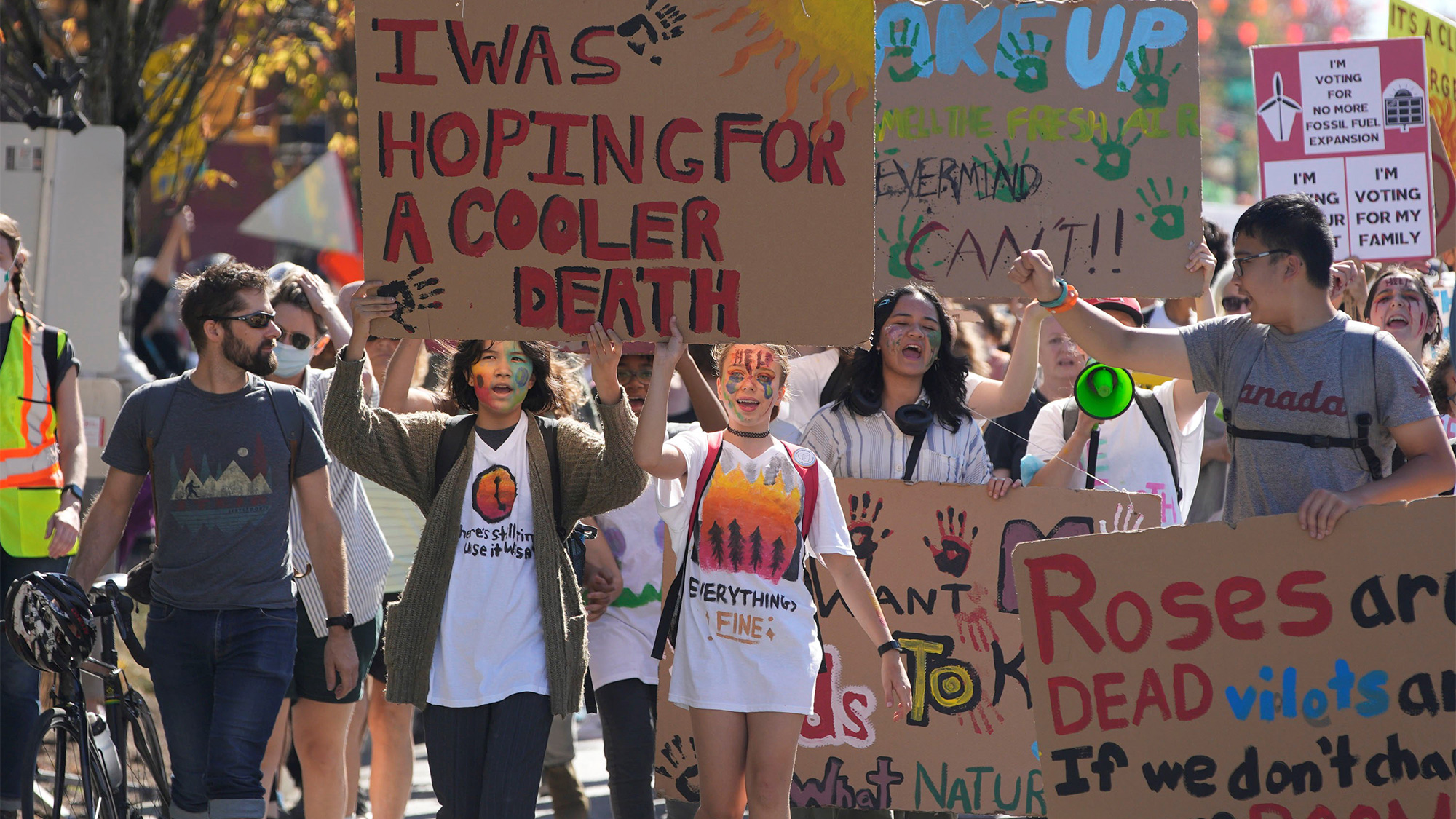
Fifteen young Canadians stepped into a Vancouver courtroom to confront the federal government in a historic trial that tests whether inadequate climate action constitutes a direct violation of constitutional rights. The case, formally known as La Rose v. His Majesty the King, represents a critical milestone in global environmental jurisprudence. While thousands of climate-related lawsuits have been filed globally over the past few decades, very few have successfully navigated preliminary legal hurdles to reach an actual trial. Legal scholars and civil rights experts note that this five-week proceeding is arguably the most consequential climate trial to reach a courtroom in Canadian history.
The plaintiffs, who ranged in ages from 10 to 19 when the litigation was first initiated in 2019, are arguing that federal policies allowing high levels of greenhouse gas emissions breach their fundamental human rights. Six of the youth plaintiffs identify as Indigenous, bringing a perspective rooted in generational stewardship and the disproportionate cultural and territorial impacts of global warming. Backed by the environmental nonprofit Our Children’s Trust, the young plaintiffs are seeking to establish that elected officials and government bodies have a legal obligation to protect younger and future generations from the catastrophic impacts of climate change.
Chronology and Legal Evolution of the Case
The path to the Vancouver courtroom has been arduous, defined by years of legal maneuvering, motions to dismiss, and strategic amendments. Understanding the longevity of La Rose v. His Majesty the King requires examining the timeline of events that brought the youth and the federal government before a judge:
- October 2019: The 15 youth plaintiffs officially file their lawsuit against the federal government, alleging that Canada’s contributions to climate change violate Sections 7 and 15 of the Canadian Charter of Rights and Freedoms.
- November 2020: A federal judge dismisses the lawsuit without a trial, agreeing with government arguments that the claims were overly broad and improperly asked the judiciary to encroach upon political matters.
- 2021: Parliament passes the Canadian Net-Zero Emissions Accountability Act, establishing a statutory framework committing the country to achieving net-zero emissions by 2050 alongside intermediate targets for 2030.
- 2023: The Federal Court of Appeal upholds the dismissal of the Section 15 equality claims but reverses the lower court regarding Section 7. The appellate court rules that the youth can proceed with their life, liberty, and security arguments, provided they tie their grievances to specific government conduct.
- Post-2023 Amendments: The legal team amends the complaint, focusing squarely on the adequacy of the Canadian Net-Zero Emissions Accountability Act of 2021 and its accompanying 2030 emissions reduction plan, asserting that these legislative instruments fail to adequately protect their constitutional rights.
- Present Day: The trial commences in Vancouver, slated to last for five weeks with testimony from the plaintiffs, climate scientists, economists, and children’s health experts, with closing arguments anticipated in February and a formal ruling expected sometime in 2027.
Constitutional Arguments and Statutory Focus
At the heart of the plaintiffs’ legal strategy is Section 7 of the Canadian Charter of Rights and Freedoms, which guarantees every individual the right to life, liberty, and security of the person, and the right not to be deprived thereof except in accordance with the principles of fundamental justice. The youth argue that by implementing weak emissions targets, repeatedly failing to meet even those modest benchmarks, and continuing to subsidize and support fossil fuel development, the federal government is actively compromising their physical safety, psychological well-being, and future survival.
Initially, the lawsuit also invoked Section 15 of the charter, which guarantees equality before and under the law and the right to equal protection and benefit of the law without discrimination. The plaintiffs argued that children and youth represent a distinct demographic group that will bear the disproportionate, compounding burdens of ecological degradation over their lifetimes, while being entirely disenfranchised from the political processes that produced the crisis. Although the Federal Court of Appeal ultimately struck down the Section 15 claim in 2023, the survival of the Section 7 argument opened the narrow legal doorway necessary to bring the matter to trial.
Following the appellate court’s guidance, the plaintiffs restructured their case around tangible legislative actions rather than generalized grievances. They are targeting the Canadian Net-Zero Emissions Accountability Act of 2021 and the federal government’s 2030 emissions reduction plan. The core assertion is that while the government acknowledged the existential threat of climate change by passing the net-zero law, the actual metrics, timelines, and enforcement mechanisms embedded within the legislation fall drastically short of what empirical science dictates is necessary to avert catastrophic warming, thereby violating the constitutional rights of the young citizens.
Government Defense and Institutional Position
The federal government has maintained a complex legal posture throughout the litigation. Notably, Department of Justice representatives have not challenged the underlying scientific consensus regarding the reality, severity, and anthropogenic causes of climate change. Instead, the government’s defense has centered primarily on institutional boundaries and the separation of powers.
Government lawyers have argued that setting national climate policy, balancing economic interests with environmental protection, and managing energy transitions are responsibilities exclusively vested in the legislative and executive branches of government. They contend that the judiciary is an inappropriate forum to resolve broad political and macroeconomic disputes, and that courts should not dictate the pace or specifics of environmental legislation.
When approached for comment regarding the trial, the Canadian Department of Justice directed inquiries to Environment and Climate Change Canada. The department declined an interview request but provided an official written statement emphasizing the government’s ongoing dedication to its environmental agenda.
"Our commitment to net-zero by 2050 has not wavered, and we are implementing an ambitious climate agenda," wrote Samantha Bayard, a spokesperson for Environment and Climate Change Canada, in an email statement. "The Government of Canada respects the role of the courts, the right of Canadians to bring matters before the courts, and the important role that an independent judiciary plays in our democracy."
Despite these assurances, environmental lawyers and civil rights advocates argue that when legislative bodies fail to protect citizens from existential threats, the judiciary must serve as a vital constitutional backstop.
The Global Landscape of Youth Climate Litigation
La Rose v. His Majesty the King does not exist in a legal vacuum. It is part of a massive, coordinated international wave of climate litigation spearheaded by young people leveraging constitutional and human rights law to compel state action. According to environmental law experts, more than 3,000 climate-related legal actions have been filed globally over the past several decades. However, the vast majority of these cases have been dismissed on procedural grounds, rendering actual trials a rare exception.
Notable milestones across the globe highlight the shifting legal terrain:
- Juliana v. the United States: Filed in 2015 by 21 young Americans arguing that the U.S. government’s promotion of a fossil-fuel-based energy system violated their constitutional rights, the high-profile case faced years of procedural hurdles before being ultimately dismissed without a full trial, with the U.S. Supreme Court declining to intervene.
- Held v. Montana (United States): In a historic victory for youth plaintiffs, a Montana state district court ruled in 2023 following a seven-day trial that state energy permitting policies violated the plaintiffs’ constitutional right to a clean and healthful environment. The Montana Supreme Court overwhelmingly upheld that landmark decision in 2024, providing a blueprint for state-level accountability.
- Navahine F. v. Hawaiʻi Department of Transportation: Thirteen young people in Hawaii secured a landmark settlement forcing the state Department of Transportation to legally commit to achieving zero emissions across the transportation sector by 2045, proving that negotiated settlements can yield binding state action.
Legal scholars suggest that while foreign rulings do not establish direct legal precedents within the Canadian judicial system, they exert a powerful persuasive influence across international borders, particularly within Commonwealth nations and jurisdictions with similar constitutional frameworks.
Broader Implications and Expected Timeline
The proceedings in Vancouver are scheduled to span five weeks, featuring direct testimony from all 15 youth plaintiffs alongside a multidisciplinary roster of expert witnesses, including leading climate scientists, energy transition specialists, pediatric health professionals, and ecological economists. Closing arguments are officially scheduled to take place in February, with a formal judicial decision anticipated sometime in 2027. Legal analysts widely expect that whichever side loses the initial judgment will mount an appeal, meaning a final, definitive resolution could take several additional years.
Nevertheless, experts emphasize that the cultural and systemic significance of the trial extends far beyond its ultimate legal verdict. James May, an environmental law professor at Washburn University who is not directly involved in the litigation, noted that the mere fact that the trial is taking place represents a paradigm shift in how environmental degradation is adjudicated.
"Seldom has climate been put on trial," May observed. Even if the plaintiffs do not secure a definitive judicial order compelling specific legislative rewrites, the trial establishes an operational blueprint for youth-led climate litigation worldwide, proving that determined legal teams can pierce institutional defenses to place ecological survival squarely within the domain of constitutional rights.
As the courtroom doors open in Vancouver and the young plaintiffs take the stand, the eyes of the international legal community remain fixed on Canada. Whether La Rose v. His Majesty the King ultimately results in a binding mandate for accelerated government action or serves as an inspirational catalyst for future generations of litigation, the trial has already permanently altered the discourse surrounding governmental accountability, intergenerational justice, and the fundamental right to a stable climate future.