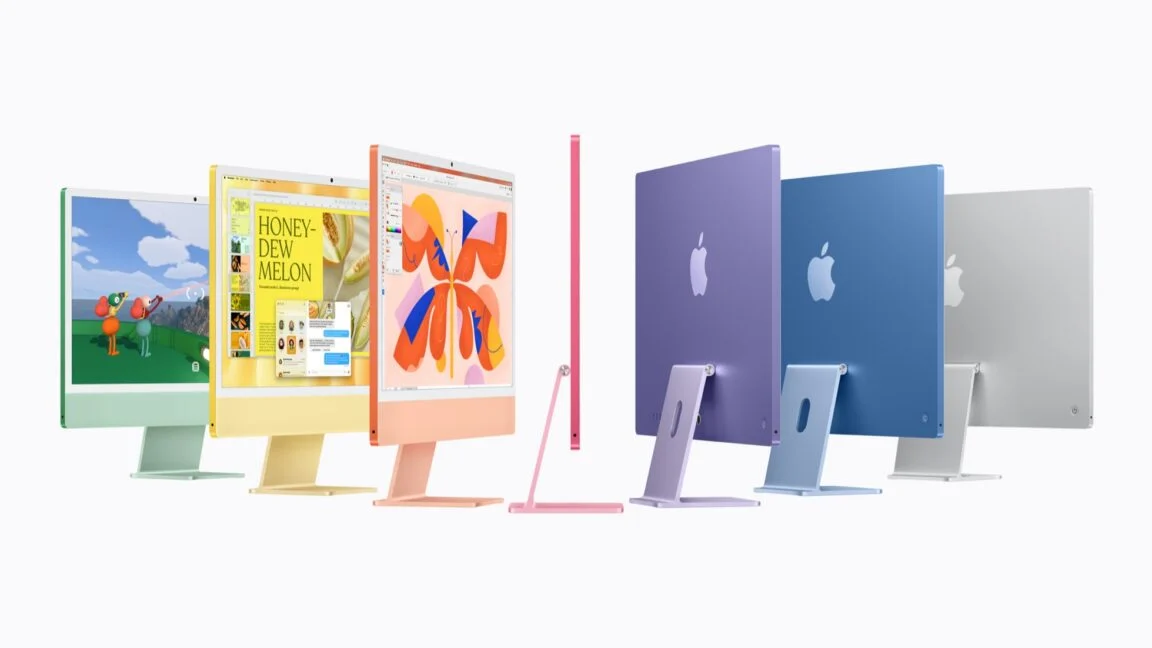
Apple has officially announced sweeping hardware updates to two of its most popular desktop and portable computing systems, bringing its latest proprietary silicon architecture to the iMac and the entry-level 14-inch MacBook Pro. Following the initial rollout of the M6 chip inside the redesigned Mac mini several weeks prior, Cupertino is aggressively expanding its cutting-edge processor lineup across its broader consumer and professional hardware ecosystems. This latest refresh bridges the gap between Apple’s compact desktop solutions and its mainstream all-in-one and portable workstation offerings, promising substantial leaps in raw computational throughput, energy efficiency, and on-device machine learning capabilities.
The newly announced systems demonstrate Apple’s ongoing commitment to custom silicon dominance. By integrating the M6 generation into the iconic all-in-one iMac and the foundational 14-inch MacBook Pro, the company is standardizing high-end performance tiers for both creative professionals and general enterprise users. However, the hardware configurations and tier limitations reveal distinct segmentation strategies across the product lines, particularly regarding port availability, memory scaling, and core binning configurations.
Chronology of the M6 Architecture Rollout
The deployment of the M6 processor family follows a carefully calculated release schedule that began earlier in the autumn hardware cycle. Apple first introduced the M6 silicon architecture to the market with a major refresh of the Mac mini. That initial launch caught industry analysts somewhat by surprise due to both the rapid cadence of silicon iterations and associated regional pricing adjustments.
Following the Mac mini’s debut, supply chain indicators and regulatory filings heavily hinted that Apple would quickly pivot its focus toward refreshing its flagship desktop and entry-level portable devices ahead of the crucial fourth-quarter holiday shopping season. By bypassing intermediate generational iterations for the iMac—which previously utilized the M4 chip—Apple has synchronized its desktop and laptop lineups onto a unified technological foundation. This condensed timeline underscores the efficiency of Apple’s custom silicon design methodologies, which allow the company to scale architectural improvements across diverse form factors with minimal lag between product announcements.
Detailed Hardware Configurations: The New iMac Lineup
The iMac receives the most visually and structurally significant internal overhaul in this hardware cycle, given that Apple skipped the M5 generation entirely for its desktop all-in-one. Users upgrading from an M4-equipped iMac will experience a dramatically altered performance profile.
Apple has segmented the M6 iMac into two distinct configuration tiers based on input/output (I/O) capabilities and core silicon binning:
- The Two-Port Configuration: Selecting the entry-level "M6 chip with two Thunderbolt ports" option equips the iMac with a 10-core CPU and a 10-core GPU. This tier is architected for standard consumer workloads, home offices, and light creative tasks. It maxes out at 24 GB of unified memory and caps internal solid-state storage at 1TB.
- The Four-Port Configuration: Stepping up to the "M6 chip with four Thunderbolt ports" option unlocks the full potential of the silicon architecture for this form factor, providing a 12-core CPU and a 12-core GPU. This higher-tier model expands maximum hardware specifications to support up to 32 GB of unified memory and up to 2 TB of high-speed internal storage.
Both variations continue to drive the iMac’s signature 4.5K Retina display, maintaining the ultra-slim profile and vibrant colorways that have defined the product line in recent years. The inclusion of expanded Thunderbolt connectivity on the higher-end model directly addresses power users who require robust peripheral daisy-chaining and high-speed data transfer rates.
Detailed Hardware Configurations: The 14-Inch MacBook Pro
In contrast to the granular tiering seen in the iMac lineup, the entry-level 14-inch MacBook Pro features a single, highly streamlined M6 chip option. Apple has configured this portable workstation with a potent 12-core CPU and a 12-core GPU, mirroring the core counts of the top-tier iMac.
While the unified memory ceiling for this entry-level portable mirrors the iMac at a maximum of 32 GB, the MacBook Pro accommodates professional storage demands more generously. Users configuring the new 14-inch laptop can scale internal solid-state drive capacity all the way up to 4 TB, catering to media professionals, photographers, and software developers who need vast local storage pools while on the move.
The decision to offer a single, uncompromising processor tier for the entry-level portable underlines Apple’s strategy to position the baseline 14-inch MacBook Pro as a serious prosumer tool rather than a mere student or casual consumer device.
Supporting Performance Data and Benchmarks
The performance gains promised by Apple for the iMac and MacBook Pro are rooted in the architectural advancements of the M6 silicon. Based on official metrics released during the initial Mac mini launch and corroborated by early hardware testing and lab benchmarks conducted across the industry, the generational leap from the M4 architecture is substantial.
Key performance benchmarks indicate:
- CPU Performance: Users can expect up to a 40 percent increase in raw CPU processing speeds compared to the preceding M4 generation, driven by improved instruction-per-clock (IPC) efficiency and optimized multi-threaded scheduling.
- Graphics Performance: Graphical throughput has seen an even more dramatic enhancement, with up to double the graphics performance in select rendering, gaming, and compute-heavy visualization workloads. This is largely attributed to architectural revisions within the integrated GPU clusters and enhanced memory bandwidth utilization.
- Artificial Intelligence and Machine Learning: On-device AI processing experiences the most pronounced upgrade, registering nearly five times faster execution speeds for localized neural network tasks. This massive acceleration directly benefits applications utilizing Apple Intelligence frameworks, real-time voice transcription, generative image manipulation, and predictive machine learning models.
Independent testing of the M6 architecture in the Mac mini form factor last month demonstrated that these figures are not merely theoretical marketing metrics; they translate reliably into real-world application performance, particularly in sustained multi-core workflows and complex asset management.
Official Responses and Industry Analysis
While Apple has maintained its traditional posture of letting product specifications speak for themselves, statements issued alongside the hardware unveilings emphasize the democratization of high-performance computing. Industry analysts and supply chain observers have weighed in on the strategic implications of skipping the M5 nomenclature for the iMac line and deploying the M6 so rapidly across disparate product categories.
Market observers note that Apple’s silicon strategy is increasingly focused on unifying its software and hardware ecosystems around heavily fortified machine-learning capabilities. By ensuring that both desktop all-in-ones and entry-level pro laptops possess identical baseline neural processing power, Apple provides software developers with a predictable, high-floor target for building advanced AI features into their applications.
Furthermore, financial analysts point out that maintaining aggressive upgrade cadences helps insulate Apple from broader macroeconomic consumer sluggishness. By delivering generational performance leaps—such as doubled graphics and quintupled AI speeds—Apple creates a compelling value proposition for enterprise and consumer upgrade cycles, enticing users currently utilizing M1 or M2 generation hardware to finally make the transition.
Broader Impact and Market Implications
The arrival of the M6 chip in the iMac and the 14-inch MacBook Pro sends a clear signal to the personal computing market. As competitors in the Windows on ARM and x86 spaces scramble to match Apple’s performance-per-watt metrics, Apple continues to tighten its grip on the premium desktop and laptop segments.
For enterprise buyers, the standardized inclusion of advanced neural engines and high-core-count configurations simplifies fleet management and future-proofs institutional IT investments against the rapidly evolving demands of enterprise AI integration. Educational institutions and creative agencies will likewise benefit from the trickle-down of professional-grade graphics and memory options into more accessible price points and form factors.
As these machines arrive on store shelves and reach consumers worldwide, the tech industry will be watching closely to see how software developers leverage the newfound headroom provided by the M6 chip. With a cohesive hardware foundation now established across the Mac mini, iMac, and entry-level MacBook Pro, Apple has set the stage for the next phase of its silicon-driven ecosystem expansion.