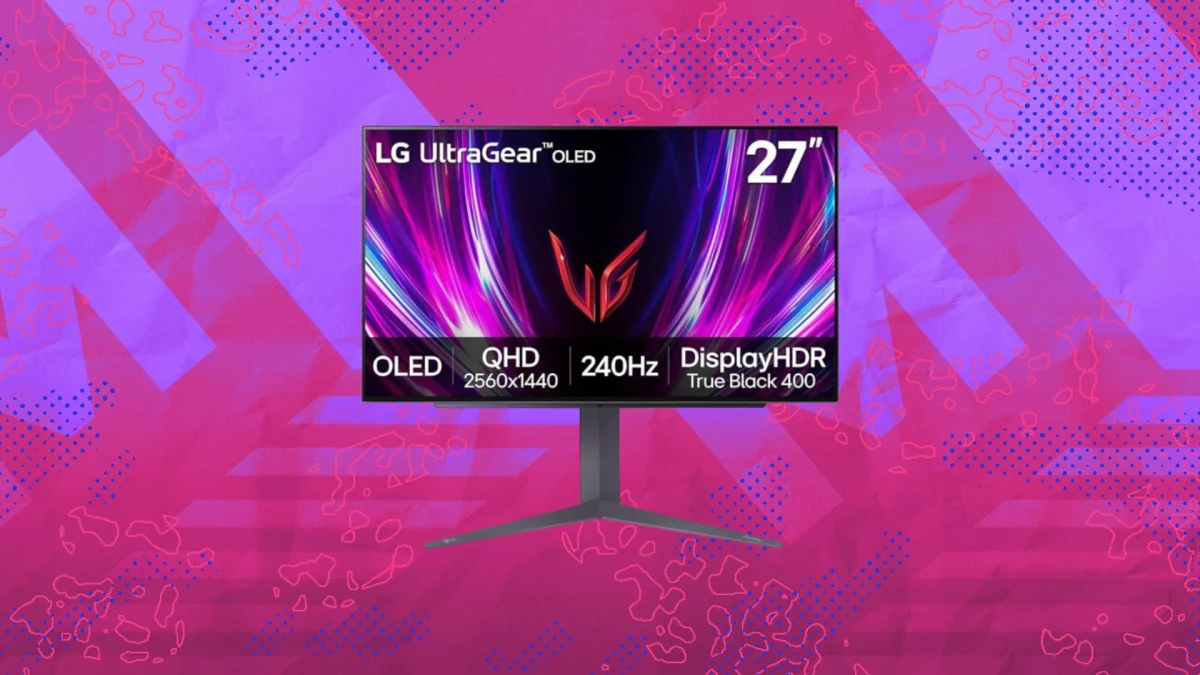
As of October 27, consumers have gained access to a significant pricing milestone in the high-performance display market, as the 27-inch LG UltraGear OLED QHD Gaming Monitor (model 27GS93QE) has been discounted to $499.99 at Amazon. This represents a $400 reduction from the manufacturer’s suggested retail price (MSRP) of $899.99, marking a 44% price drop. Market tracking data indicates that this is the lowest price point ever recorded for this specific unit since its market entry, signaling an aggressive push by retailers to move premium inventory ahead of the end-of-year shopping cycle.
The Evolution of OLED Gaming Technology
The integration of Organic Light-Emitting Diode (OLED) technology into the gaming monitor segment represents a significant paradigm shift in how digital content is rendered. Historically, gamers were forced to choose between the deep contrast ratios of VA panels or the superior color accuracy and response times of IPS panels. OLED technology synthesizes these advantages by utilizing self-lit pixels that can turn off completely, resulting in an infinite contrast ratio and "true" blacks that traditional LED-backlit displays cannot emulate.
LG has been a dominant force in this sector, leveraging its manufacturing prowess to refine OLED panels for desktop use. The 27GS93QE model is a direct result of these efforts, designed specifically to address the needs of competitive gamers who require instantaneous pixel response times. By achieving a 0.03ms Gray-to-Gray (GtG) response time, the monitor effectively eliminates the "ghosting" or "smearing" often observed in fast-paced titles, providing a distinct advantage in competitive esports environments where millisecond latency can determine the outcome of an engagement.
Technical Specifications and Performance Metrics
The technical architecture of the 27GS93QE is engineered to support high-fidelity gaming at 1440p resolution. While 4K displays are gaining popularity, many professional gamers prefer the QHD (2560 x 1440) resolution for its optimal balance between visual sharpness and the ability to maintain the high frame rates necessary to utilize a 240Hz refresh rate.
Key performance metrics include:
- Refresh Rate: 240Hz, ensuring ultra-smooth motion tracking.
- Response Time: 0.03ms GtG, minimizing input lag and motion blur.
- Color Gamut: 98.5% coverage of the DCI-P3 color space, essential for professional-grade color reproduction.
- HDR Capabilities: VESA DisplayHDR True Black 400 certification, which ensures that bright highlights and deep shadows maintain integrity without clipping.
- Sync Technology: Compatibility with both Nvidia G-Sync and AMD FreeSync Premium Pro, which synchronizes the display’s refresh rate with the GPU output to prevent screen tearing.
The Chronology of Price Fluctuations
The journey of the LG UltraGear 27GS93QE from a premium-priced peripheral to a mainstream-accessible unit reflects broader trends in consumer electronics pricing. Upon its initial launch, the monitor was positioned as a high-end investment, catering primarily to early adopters and professional streamers.
Over the past twelve months, the industry has seen a gradual normalization of OLED pricing. Following the release of subsequent models, LG and its retail partners have employed a tiered discounting strategy. Price tracking analytics show that the monitor initially fluctuated between $850 and $900 for the first two quarters of the year. During mid-year promotional events, the price briefly dipped into the $600 range. However, this October 27 reduction to $499.99 is the first instance of the device breaking the $500 threshold, representing a major milestone for potential buyers.
Market Implications and Competitive Landscape
The decision to lower the price to $499.99 has broader implications for the gaming hardware ecosystem. By pricing a high-performance OLED display at this level, LG is placing significant competitive pressure on manufacturers of high-end IPS monitors, which are often priced similarly but lack the contrast benefits of OLED.
Industry analysts suggest that this aggressive pricing strategy is intended to capture market share before the holiday season. As modern gaming consoles like the PlayStation 5 and Xbox Series X, as well as high-end gaming PCs, become more capable of outputting high-frame-rate content, the demand for monitors that can display that content without latency has surged. The inclusion of HDMI 2.1 ports on the 27GS93QE ensures that it remains relevant for console users who need to take advantage of variable refresh rate (VRR) features provided by current-generation hardware.
Design Considerations and Ergonomics
Beyond the panel technology, the physical design of the monitor reflects the changing needs of the modern workstation. The "slim-bezel" design is not merely an aesthetic choice; it facilitates multi-monitor setups, allowing for a seamless transition between displays. The inclusion of a multi-adjustable stand—permitting height, tilt, and pivot adjustments—recognizes that gaming is no longer a static activity. Users frequently pivot their monitors into vertical orientations for streaming, content creation, or coding tasks, making the ergonomic flexibility of the stand a functional necessity rather than a luxury.
Addressing Potential Concerns: Burn-in and Longevity
One of the primary historical concerns regarding OLED technology in a desktop environment is the risk of "burn-in," where static UI elements (like taskbars or game HUDs) can cause permanent image retention. LG has addressed this in the 27GS93QE through proprietary image-protection technologies. These include pixel-shifting algorithms and screen-saver modes that activate during periods of inactivity. Furthermore, the anti-glare coating on the screen is designed to minimize reflections, which in turn reduces the need for the monitor to run at excessively high brightness levels, thereby extending the longevity of the organic compounds within the pixels.
Expert Analysis of the Current Deal
For the average consumer, this price drop represents an optimal entry point into the OLED market. Historically, OLED monitors were relegated to the "enthusiast" category, often costing upwards of $1,000. By reaching the $500 price point, the technology has reached a level of democratization that makes it accessible to a much broader demographic.
Market observers note that while retailers rarely provide comment on specific promotional strategies, such price cuts are generally indicative of healthy inventory levels and a desire to clear stock in anticipation of new product cycles. For the buyer, this creates a unique window of opportunity. It is rare for a product that still sits at the top of its class in terms of performance—particularly regarding its 0.03ms response time—to be offered at a 44% discount.
Conclusion and Future Outlook
As the display industry moves toward higher resolutions and even faster refresh rates, the 27-inch LG UltraGear OLED QHD remains a cornerstone for those seeking a premium visual experience. The convergence of its superior contrast, rapid refresh rate, and the current $400 discount makes it a highly attractive option for both competitive gamers and those who use their systems for a mix of professional creative work and entertainment.
While it is impossible to predict how long this specific promotional pricing will remain in effect, history suggests that such deep discounts are often limited to specific sales windows. Consumers waiting for a high-refresh, OLED upgrade have been presented with a compelling case to upgrade their hardware. As of late October, the market for gaming displays is clearly favoring the consumer, with LG setting a new benchmark for value in the high-end display category. Whether this price point will trigger a similar response from competitors remains to be seen, but for the moment, the LG 27GS93QE stands as a definitive leader in the current retail landscape.