Alaska Airlines has officially confirmed plans to inaugurate nonstop service between Anchorage Ted Stevens International Airport (ANC) and Tokyo Narita International Airport (NRT), a strategic expansion that marks the carrier’s return to the trans-Pacific market. The route is scheduled to commence on May 13, 2027, utilizing the Boeing 737 MAX 8 aircraft. This development represents a significant shift in Alaska Airlines’ operational strategy, as it seeks to leverage its dominant position in the Alaskan market to capture demand for travel between the United States and Japan.
The flight, which spans approximately 3,433 miles, is slated to have an estimated duration of eight hours and 15 minutes. While the route is technically feasible for the 737 MAX 8, it places Alaska Airlines in a select group of carriers utilizing narrowbody aircraft for long-haul international segments. To encourage early adoption, the airline has introduced promotional roundtrip fares starting at $999 for travel originating in Anchorage between May 13 and June 7, 2027, provided tickets are purchased by October 31, 2026.
A Historical Context of the Anchorage-Tokyo Corridor
The Anchorage-Tokyo route has a storied history in commercial aviation. For decades, Anchorage served as a vital technical stopover for flights between North America and Asia, primarily due to the limited range of aircraft in the 1960s, 70s, and 80s. However, as long-range widebody aircraft—such as the Boeing 747-400 and the Boeing 777—became the industry standard, airlines bypassed Anchorage to offer direct point-to-point service between major hubs like Seattle, San Francisco, and Tokyo.

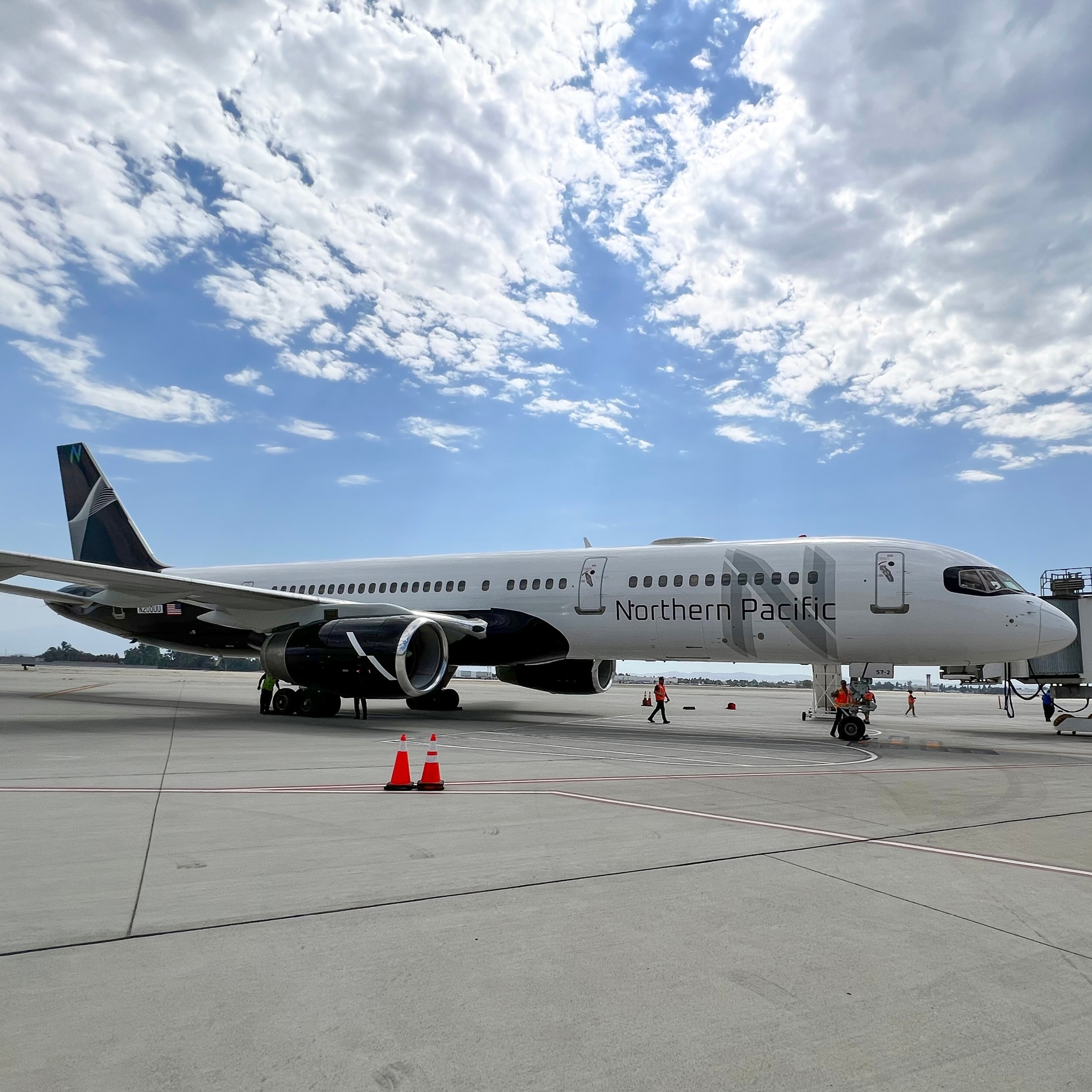
Northwest Airlines, which operated a major hub at Narita, was one of the last major carriers to maintain service on this specific link, ending its Anchorage operations in 1999. Since then, the route has seen sporadic interest from various carriers, but none have managed to sustain a long-term business model. The collapse of the Northern Pacific (later rebranded as New Pacific) airline project serves as a cautionary tale for the industry. That airline had proposed a similar business model—utilizing Anchorage as a connecting hub for trans-Pacific travel—but ultimately failed due to a lack of brand recognition, the high cost of operations, and significant logistical hurdles, including Russian airspace restrictions.
Operational Strategy and Market Viability
Alaska Airlines is approaching this route with a distinct advantage that its predecessors lacked: an existing, robust hub in Anchorage. By tapping into its comprehensive domestic network, the airline can feed passengers from across its system into the Anchorage gateway. The airline’s loyalty program and established brand equity provide a reliable passenger base that a startup airline would have to build from scratch.
Furthermore, the flight path for the Anchorage-Tokyo service has been carefully planned to circumvent the complexities of current geopolitical constraints. While the most direct great-circle route often involves passing through or near Russian airspace, Alaska Airlines plans to utilize a flight path that follows the Aleutian Islands. This trajectory allows the aircraft to remain over the Pacific, south and east of Russian territory, before descending into Japan.
From an engineering perspective, the Boeing 737 MAX 8 is well-suited for this mission under current ETOPS (Extended-range Twin-engine Operations Performance Standards) regulations. The aircraft is certified for 180-minute ETOPS, which provides sufficient diversion capability. Key airports along the route, including Shemya and Adak in the Aleutians, along with New Chitose in Japan, ensure that the aircraft is never too far from an emergency landing site. Calculations indicate that the longest diversion time would be approximately 108 minutes, well within the safety parameters required for oceanic flights.

Financial Incentives and Economic Factors
The launch of the Anchorage-Tokyo service is supported by the Alaska International Airport System’s (AIAS) incentive program. According to publicly available documentation, the program is designed to stimulate international passenger growth by providing financial relief to carriers. This includes a waiver of landing fees, inspection fees, gate and jet bridge fees, and various common-use terminal charges for the first year of operation.
Industry analysts estimate these abatements to be worth approximately $500,000. When distributed across the planned summer schedule of 118 roundtrips—totaling roughly 38,000 seats—the subsidy equates to roughly $13 per seat. This financial cushioning is critical for a new route, as it lowers the break-even threshold for the airline during the initial period of market penetration.
Cabin Experience and Passenger Expectations
The decision to operate the route with a 737 MAX 8 brings into focus the realities of long-haul travel on a single-aisle aircraft. The configuration consists of 161 seats, with 16 dedicated to First Class and 145 in the main cabin. Unlike widebody aircraft typically assigned to trans-Pacific routes, the 737 MAX does not offer lie-flat seating, even in the premium cabin.
Passengers in First Class will be accommodated in standard domestic-style recliner seats. To mitigate the potential discomfort of an eight-hour flight, Alaska Airlines has committed to enhancing the onboard experience. The carrier has announced that it will provide complimentary hot meals for all passengers, regardless of the class of service. First Class passengers will also receive upgraded dining options, as well as premium bedding and amenity kits curated in partnership with Filson. It should be noted that the aircraft is not equipped with seatback entertainment systems, a common trend in domestic narrowbody configurations, placing the onus on passengers to utilize their own personal electronic devices for entertainment.

Competitive Landscape and Comparison
While the Anchorage-Tokyo flight is a significant undertaking for a narrowbody aircraft, it is not the longest flight in the world currently served by this class of plane. Global aviation has seen a trend toward "long and thin" routes—flights that cover vast distances but do not require the high passenger capacity of widebody jets.
For instance, GOL Linhas Aéreas currently operates a route between Orlando and Brasília, spanning roughly 3,780 miles. Similarly, Arajet serves the Santo Domingo-Buenos Aires corridor at approximately 3,750 miles. Alaska Airlines itself operates a Seattle-Keflavik route that covers 3,620 miles. At 3,433 miles, the Anchorage-Tokyo flight falls within the established operational envelope for modern, fuel-efficient narrowbody aircraft like the 737 MAX 8.
The historical precedent of PrivatAir, which once operated a 44-seat Boeing 737-700 on a 4,800-mile route between Stavanger and Houston, demonstrates that narrowbody aircraft can handle such distances comfortably if the configuration is optimized for business class. Alaska Airlines, however, is positioning this as a standard commercial offering rather than a premium, all-business service.
Implications for the Future of Alaska-Japan Travel
The success of the Anchorage-Tokyo route will likely depend on three factors: the airline’s ability to maintain competitive pricing, the performance of the 737 MAX 8 in varying seasonal weather conditions, and the continued strength of the Alaska hub.
If the route proves successful, it could signal a broader trend of "hub-and-spoke" international expansion for Alaska Airlines, potentially opening the door for further secondary city connections between the U.S. and Asia. However, the absence of widebody amenities could limit the demographic of travelers willing to book the flight for long-haul business travel, likely concentrating the passenger base on leisure travelers and those with specific regional destination needs.
As the May 2027 start date approaches, industry observers will be monitoring the booking trends and the airline’s operational efficiency. For the traveling public, the route offers a new, albeit unconventional, option for trans-Pacific travel. Whether this service represents a sustainable new chapter for Alaska Airlines or a temporary experiment remains to be seen, but it is undeniably a bold step into the complexities of international aviation.