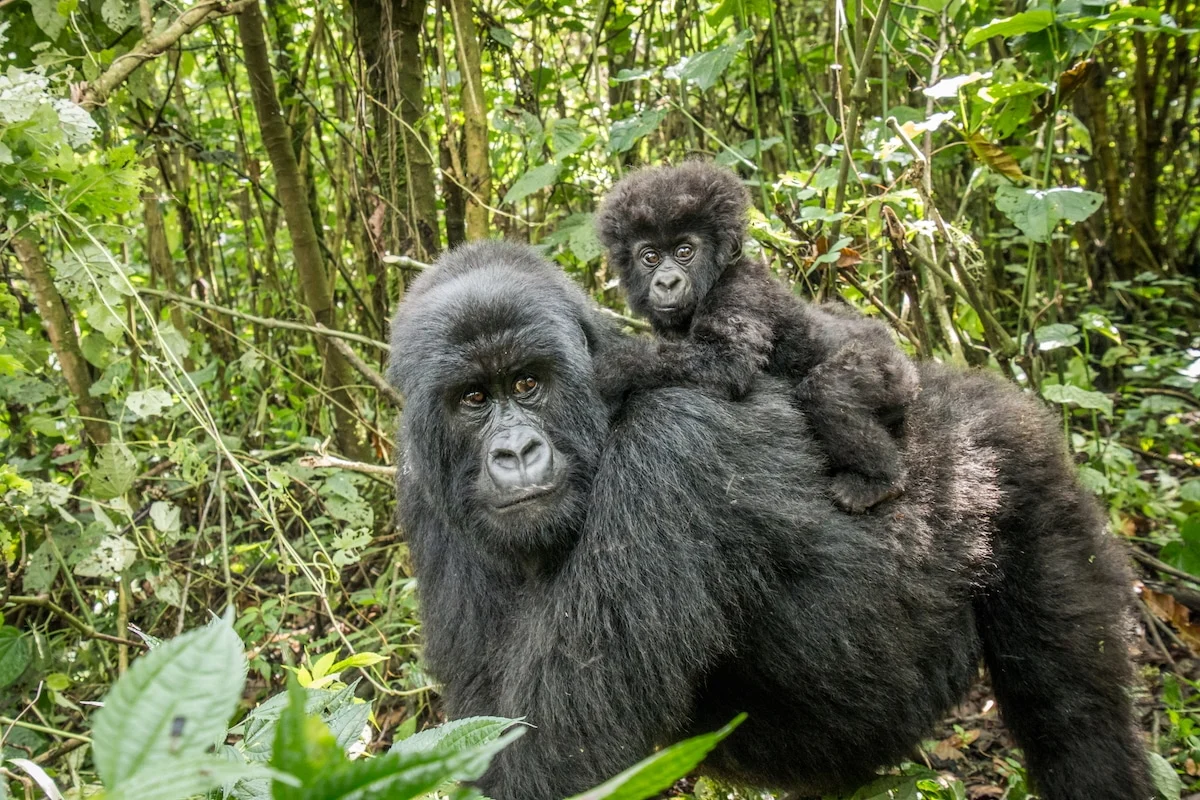
The Democratic Republic of the Congo (DRC) has ignited international concern by advancing an aggressive fossil fuel expansion strategy that places more than half of the nation’s territory under the authority of oil and gas exploration blocks. According to a comprehensive new report titled Forests to Frontlines: Oil Expansion Threats in the DRC, published by Earth Insight in partnership with local and international environmental organizations, the government has launched an auction round for 52 new oil blocks. This follows three blocks previously awarded, bringing the total footprint to an unprecedented scale that threatens 64 percent of the country’s pristine tropical forests, globally vital carbon sinks, and irreplaceable habitats for endangered wildlife, including mountain gorillas, eastern lowland gorillas, and bonobos.
The sweeping land designation encompasses over 306 million acres of intact tropical forest and directly overlaps with 20.5 million acres of officially protected areas, 21.3 million acres of Key Biodiversity Areas, and a staggering 165.1 million acres of continuous forest ecosystems. Furthermore, the initiative jeopardizes the newly established Kivu-Kinshasa Green Corridor, intersecting with 72 percent of the protected ecological pathway. Environmental defenders, indigenous communities, and international conservation networks warn that opening these fragile ecosystems to industrial extractive operations could irreversibly alter the region’s biodiversity, displace millions of people, and release massive stores of greenhouse gases into the atmosphere.
Background and Ecological Significance of the DRC Landscape
The Democratic Republic of the Congo anchors the heart of the Congo Basin, which hosts the second-largest tropical rainforest on Earth, often described as the planet’s second green lung. The DRC’s ecosystems are globally indispensable due to their sheer biological richness and unparalleled capacity for carbon sequestration. Towering rainforest canopies, complex river systems, and endemic flora sustain an astonishing array of wildlife, including elephants, chimpanzees, bonobos, and critically endangered mountain gorillas.
At the center of this ecological network lies the Cuvette Centrale, the largest tropical peatland complex in the world. Spanning across vast swaths of the country, these carbon-rich peatlands store an estimated 30 gigatons of carbon—equivalent to several years of global carbon emissions. Maintaining the integrity of the Cuvette Centrale is widely recognized by climate scientists as a non-negotiable requirement for meeting international climate targets outlined in the Paris Agreement.
Beyond its ecological value, the region serves as a vital homeland and subsistence foundation for an estimated 39 million people. This population includes numerous forest-based and Indigenous communities who rely entirely on the local rivers, soils, and forest resources for their daily survival, cultural identity, and spiritual practices. For these communities, the encroachment of industrial infrastructure represents an existential threat to their traditional ways of life and land sovereignty.
Chronology of Fossil Fuel Expansion in the DRC
The current licensing round represents a dramatic escalation of a controversial policy trajectory initiated several years prior. To understand the gravity of the 2025 developments, it is necessary to examine the timeline of fossil fuel auctions and conservation milestones in the Central African nation:
- April 2021: The DRC government lifts a decade-old moratorium on oil and gas concessions, signaling a policy shift toward the monetization of natural resources beneath protected and forested lands.
- July 2022: Kinshasa officially launches a controversial auction round for 30 oil and gas blocks. The bidding process sparks immediate domestic and international backlash because numerous blocks overlap with Virunga National Park, Salonga National Park, and critical peatland complexes.
- Late 2022 to 2024: Despite strong opposition from civil society groups and international donors, the government moves forward with evaluating bids, occasionally signing preliminary production-sharing contracts while facing mounting scrutiny over inconsistencies between its fossil fuel agenda and international climate finance agreements.
- Late 2024: Authorities conceptualize the Kivu-Kinshasa Green Corridor, a major ecological initiative intended to promote sustainable development, biodiversity conservation, and climate resilience in the eastern and central regions of the country.
- July 2025: Earth Insight, alongside local partners such as the Coalition des Organisations de la Société Civile pour le Suivi des Reformes et de Action Publique (CORAP), Our Land Without Oil, and Rainforest Foundation UK, releases Forests to Frontlines: Oil Expansion Threats in the DRC. The report reveals that the government has expanded its auctioning scope to a total of 55 blocks (52 new blocks plus 3 previously awarded), covering 53 percent of the nation’s total land area.
Supporting Data and Spatial Analysis
The empirical findings compiled in the Earth Insight report illustrate the profound scale of overlap between planned industrial extraction zones and environmentally sensitive terrain. The geospatial analysis underscores several alarming metrics regarding the footprint of the new concessions:
- Total Territory Affected: Over 53 percent of the DRC’s land area is now encumbered by oil and gas blocks.
- Pristine Forests: Approximately 306 million acres of intact tropical forest fall within the boundaries of the newly designated blocks, threatening 64 percent of the country’s primary forest cover.
- Protected Areas: The blocks directly overlap with 20.5 million acres of legally designated conservation zones, violating international standards for protected area management.
- Biodiversity Hotspots: Nearly 21.3 million acres of Key Biodiversity Areas are compromised by potential drilling operations.
- The Green Corridor Conflict: Despite being promoted as a premier ecological and sustainable development initiative, 72 percent of the Kivu-Kinshasa Green Corridor intersects directly with the 2025 oil blocks.
- Peatland Vulnerability: The vast majority of the Cuvette Centrale peatland complex falls within the licensing boundaries, exposing massive subterranean carbon reserves to degradation and industrial disruption.
Local and International Responses
The announcement of the expanded licensing round has triggered swift condemnation from civil society organizations, Indigenous representatives, and international research bodies. Critics argue that the policy reflects a fundamental contradiction in government strategy, pitting the promotion of high-profile ecological corridors against the concurrent wholesale auctioning of those exact same landscapes to extractive industries.

"Imagine: 39 million Congolese people and 64 percent of our forests could be directly affected by the awarding of these oil blocks," stated Pascal Mirindi, campaign coordinator for Notre Terre Sans Pétrole, in statements reported by international media. "And all this while the government is promoting the Kivu-Kinshasa ecological corridor. Where is the logic? Where is the coherence? We are reminding our leaders that the Congolese people are the primary sovereign. We will not remain silent while certain people organise themselves to sell off our future."
International researchers have echoed these domestic concerns, emphasizing that the economic short-term gains of fossil fuel extraction are vastly outweighed by long-term environmental degradation and climate destabilization.
"The ecological health of the DRC is deeply intertwined with the health of the planet, playing an outsized role in regulating the global climate and preserving biodiversity," noted Anna Bebbington, an Earth Insight research manager. "Oil and gas development in these fragile ecosystems would have devastating impacts on biodiversity, communities, land rights, and the global fight against climate change."
Civil society coalitions are demanding immediate remedial actions from both the DRC administration and its international partners. The primary recommendations set forth in the Forests to Frontlines report include:
- Cancellation of the Licensing Round: The immediate termination of the 2025 oil licensing round and a permanent halt to all future hydrocarbon expansion initiatives within the country.
- Protection of Human and Land Rights: The strict enforcement of legal protections safeguarding the customary lands, livelihoods, and consent rights of local communities and Indigenous Peoples.
- Alignment of International Finance: Ensuring that foreign donor support, climate financing, and bilateral assistance are strictly conditioned upon adherence to national and international biodiversity and climate commitments.
- Inclusive Environmental Governance: Guaranteeing meaningful participation, transparency, and oversight roles for local civil society organizations in national environmental decision-making and monitoring processes.
Broader Implications for Global Climate and Conservation Goals
The trajectory of environmental policy in the Democratic Republic of the Congo carries implications that extend far beyond national borders. As one of the world’s premier carbon sinks, the Congo Basin acts as a vital buffer against runaway global heating. The industrialization of these remote rainforests would not only fragment critical wildlife corridors—isolating vulnerable populations of great apes and accelerating biodiversity loss—but also risk breaching critical tipping points in the global carbon cycle.
When forests are cleared for seismic testing, access roads, drilling pads, and associated infrastructure, the immediate loss of biomass is compounded by the drying of underlying peatlands. Once exposed to oxygen, these dried peatlands can rapidly release centuries of accumulated carbon dioxide back into the atmosphere, transforming a crucial carbon sink into a major net emitter of greenhouse gases.
Furthermore, the expansion challenges the credibility of global climate partnerships. Wealthy nations and international institutions have increasingly looked to Central Africa to maintain forest cover as part of global mitigation strategies, frequently pledging financial support in exchange for conservation commitments. The DRC government’s insistence on pursuing fossil fuel development in parallel with accepting conservation aid has created ongoing diplomatic friction, raising questions about the effectiveness of international conservation funding mechanisms in the face of sovereign economic development pressures.
As the debate intensifies, local activists and international conservationists remain steadfast in their campaign to pressure policymakers toward a sustainable, green-economy transition. The coming months will prove critical in determining whether the DRC government chooses to prioritize short-term hydrocarbon revenues or the long-term ecological security of its people, its wildlife, and the global climate.