On October 29, 1991, NASA’s Galileo spacecraft achieved a monumental milestone in space exploration by conducting the first-ever close-range flyby of an asteroid, providing humanity with its first detailed look at a celestial object within the asteroid belt. As the probe traversed the vast, rocky expanse between Mars and Jupiter, it successfully navigated within 990 miles (1,593 kilometers) of the asteroid 951 Gaspra. This encounter was not merely a target of opportunity; it represented a complex engineering feat that paved the way for decades of subsequent asteroid research, sample return missions, and planetary defense initiatives.
The Galileo spacecraft, a flagship mission designed to study the Jovian system, had been launched in October 1989. Its trajectory was intentionally circuitous, utilizing gravity-assist maneuvers around Venus and Earth to build the necessary velocity to reach the outer solar system. By the time it reached the inner edge of the asteroid belt in the autumn of 1991, the probe had already undergone extensive testing of its suite of instruments. The decision to target Gaspra served as a critical operational "dress rehearsal" for the primary mission to Jupiter, proving that the spacecraft could perform high-speed autonomous imaging and data collection on a small, rapidly moving target.
A Technical Achievement in Deep Space Navigation
The flyby was executed with remarkable precision. Galileo zipped past Gaspra at a relative velocity of approximately 5 miles per second (roughly 18,000 mph). To capture clear images at such high speeds, the spacecraft’s camera systems had to be programmed with extreme accuracy, as the "window" of observation was brief.
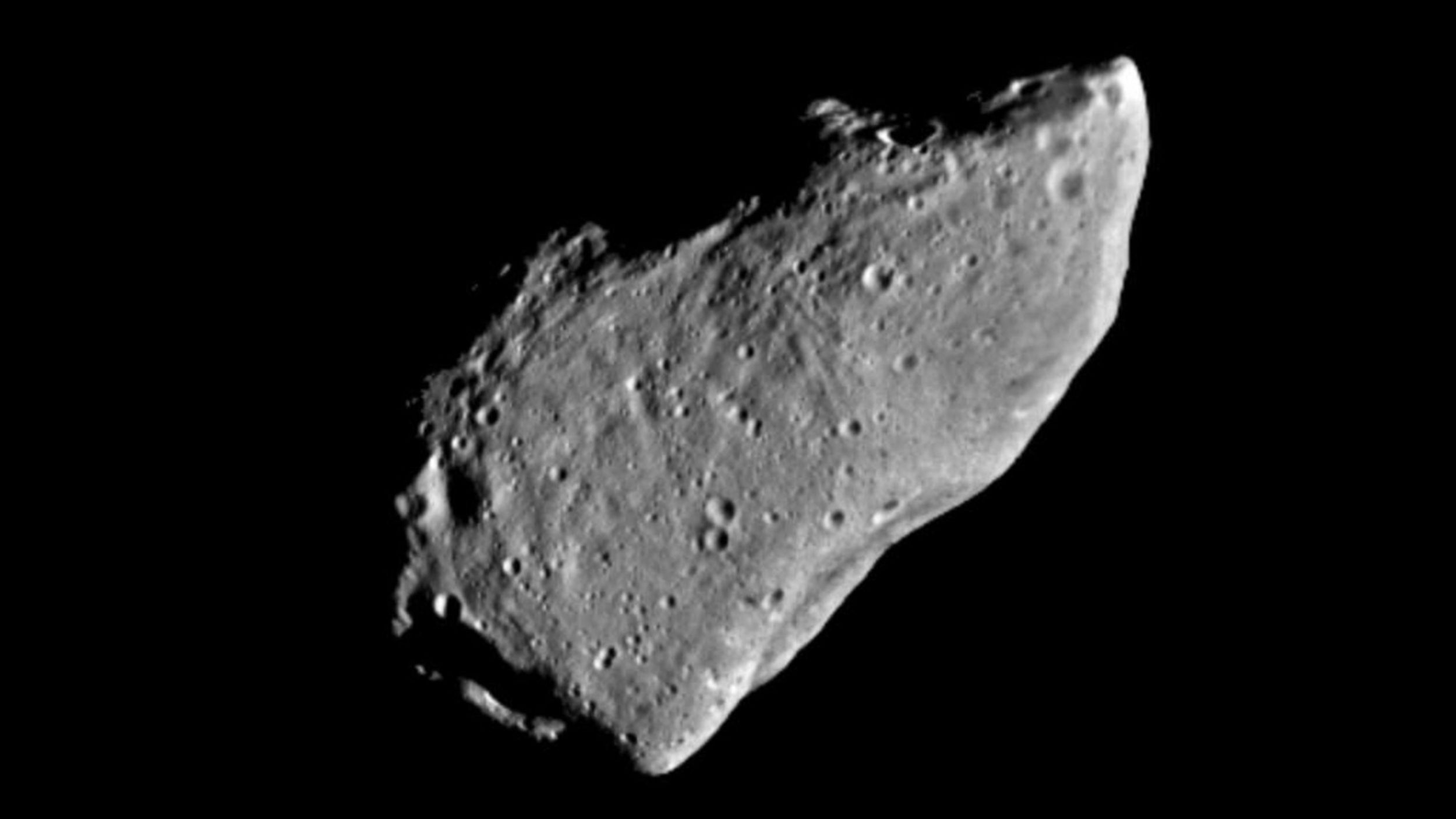
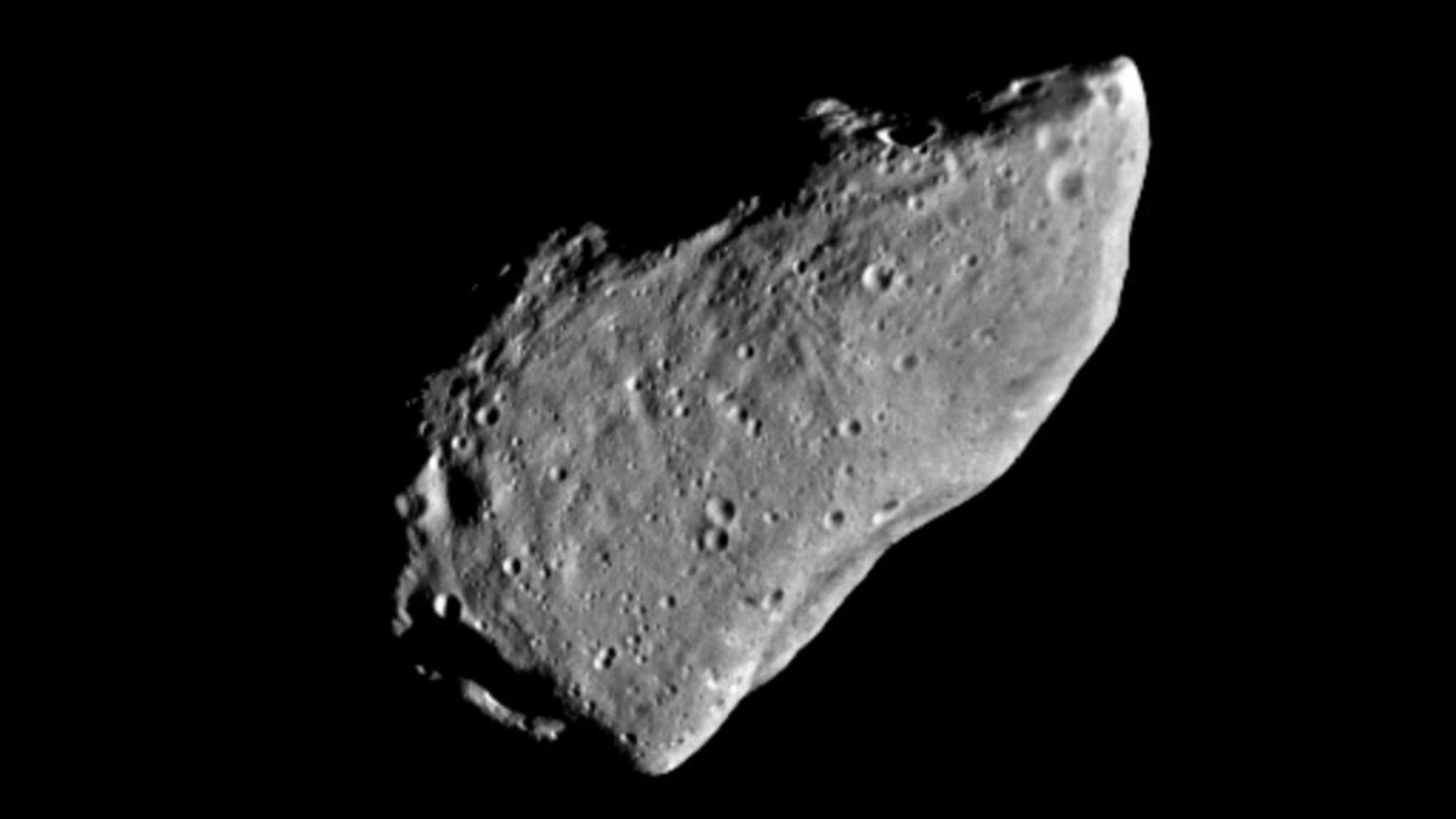
The data transmitted back to Earth following the encounter transformed the scientific community’s understanding of asteroids. Prior to this event, asteroids were largely viewed through the hazy, low-resolution lens of Earth-based telescopes. The close-up images revealed a jagged, irregular body measuring approximately 12 miles (19 kilometers) in length and 7 miles (11 kilometers) in width. The surface was heavily cratered, a testament to the violent history of the asteroid belt. Scientists observed that Gaspra was likely the fragment of a larger parent body, shaped by countless high-velocity impacts over billions of years. The presence of a thin layer of regolith—dust and fragmented rock—further suggested a complex, active history of geological weathering despite the object’s small size.
Scientific Instrumentation and Findings
The Galileo mission carried a sophisticated array of sensors, most notably the Near-Infrared Mapping Spectrometer (NIMS). This instrument allowed researchers to peer beyond the visual spectrum to analyze the mineralogical composition of Gaspra. The data indicated that the asteroid was composed primarily of olivine and pyroxene, minerals commonly found in iron-rich meteorites. This chemical signature provided essential clues regarding the formation of the early solar system, suggesting that Gaspra was a remnant of the differentiated crust or mantle of a much larger primordial object that had been shattered during the chaotic era of planet formation.
Because the probe’s distance was sufficient to minimize the gravitational pull between the two bodies, the flyby did not provide a definitive measurement of Gaspra’s mass. However, the mission team was able to calculate the asteroid’s density based on its shape and size, which helped refine models for the internal structure of S-type asteroids. The sheer volume of data returned by the spacecraft forced a recalibration of existing planetary models, shifting the perception of asteroids from simple, inert "space rocks" to dynamic, geologically significant entities.
A Broader Timeline of the Galileo Mission
The Gaspra encounter was a pivotal chapter in a much longer narrative. The chronology of the mission underscores the audacity of the era’s engineering:
- October 18, 1989: Launch of the Galileo spacecraft via the Space Shuttle Atlantis (STS-34).
- February 1990: Gravity-assist flyby of Venus to gain momentum.
- December 1990: First Earth gravity-assist.
- October 29, 1991: Historic flyby of 951 Gaspra.
- December 1992: Second Earth gravity-assist.
- August 1993: Flyby of 243 Ida, during which the probe discovered the moon Dactyl—the first confirmed moon of an asteroid.
- July 1994: Galileo observes the spectacular impact of Comet Shoemaker-Levy 9 into the atmosphere of Jupiter.
- December 1995: Arrival at the Jovian system, beginning the primary orbital mission.
This timeline demonstrates the versatility of the Galileo platform. By the time it arrived at Jupiter, it had already functioned as an observatory for asteroids, a witness to rare cometary collisions, and a trailblazer for interplanetary navigation.
Institutional Reactions and Scientific Impact
The scientific community greeted the images from Gaspra with excitement, as they confirmed long-standing hypotheses about the collisional evolution of asteroids. Joseph Veverka, a prominent imaging team member, noted at the time that the evidence of craters and fractured terrain painted a picture of a "survivor" of catastrophic events. This assessment was shared widely by the scientific community, as it validated the theory that the asteroid belt was not a collection of primordial matter that failed to form a planet, but rather a graveyard of shattered remnants from an era of planetary instability.
NASA’s success with the Galileo flyby demonstrated that deep-space probes could be repurposed for secondary scientific goals without jeopardizing the primary mission. This proved to be a foundational lesson for subsequent missions. The ability to perform "flyby science" allowed space agencies to maximize the return on investment for incredibly expensive and complex deep-space projects.
The Legacy of the First Asteroid Encounter
The implications of the Gaspra encounter reach far beyond the data itself. By proving that a spacecraft could successfully target and study an asteroid, NASA laid the groundwork for the modern era of asteroid exploration. In the decades following 1991, the focus shifted from simple observation to direct physical interaction.

The NEAR-Shoemaker mission, which landed on the asteroid Eros in 2001, stands as a direct descendant of the knowledge gained during the Galileo flybys. Similarly, the OSIRIS-REx mission and Japan’s Hayabusa series represent the culmination of technologies that began with the basic navigation requirements of 1991. Today, these efforts have evolved into planetary defense programs, such as the DART (Double Asteroid Redirection Test) mission, which successfully altered the orbit of an asteroid moon in 2022. The foundational techniques for approaching, tracking, and imaging these objects were forged in the shadow of the Gaspra flyby.
Moreover, the shift in focus toward "planetary protection" is rooted in the detailed study of asteroids like Gaspra. Understanding the structural integrity, composition, and surface properties of these bodies is essential for developing methods to deflect potential Earth-impacting objects. The scientific data provided by Galileo gave researchers their first look at the "rubble pile" nature of many asteroids, a realization that has fundamentally changed how experts approach the risk of near-Earth objects.
In retrospect, the October 1991 encounter serves as a reminder of the incremental nature of discovery. Galileo was designed to study the king of the planets, but by pausing to inspect a small, rocky bystander, it opened a new frontier. Every sample returned to Earth, every lander deployed, and every impact test conducted since that time owes a debt to the mission that first turned its cameras toward a minor body in the belt and, in doing so, brought the solar system’s complex history into clearer focus. The Gaspra mission remains a testament to the ingenuity of the late 20th-century space program and the enduring value of curiosity-driven exploration in the deep reaches of space.