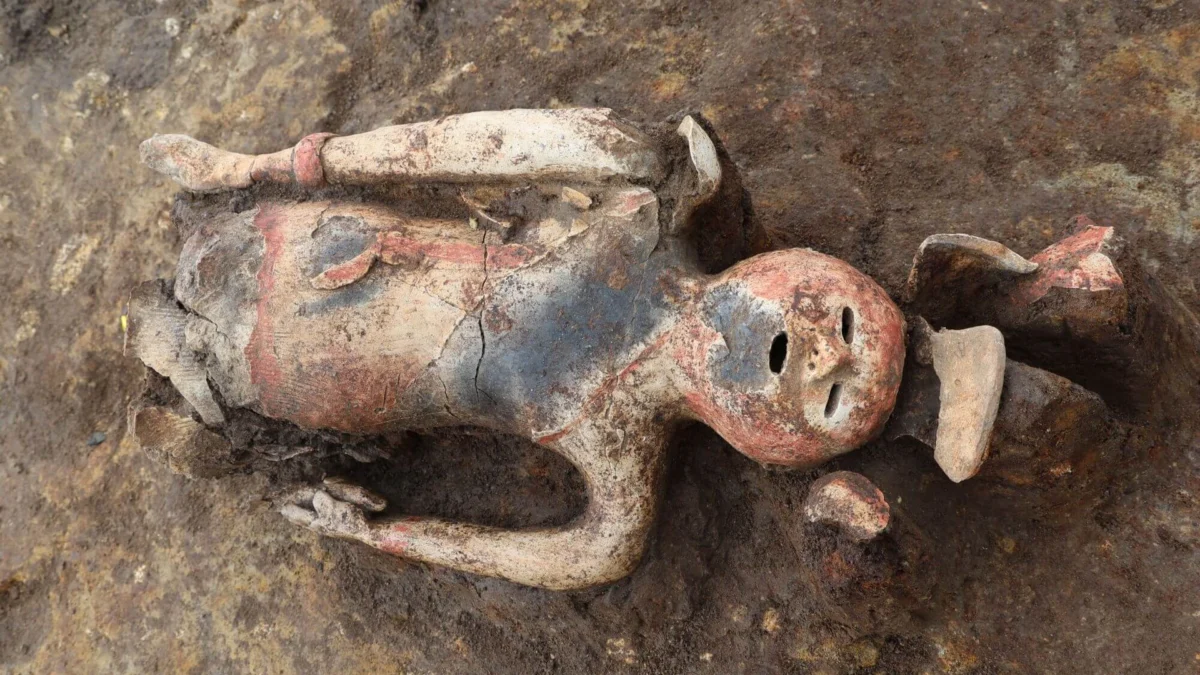
Archaeologists conducting excavations at a fifth-century burial site northwest of Tokyo have unearthed a striking, ghostly human-shaped clay artifact that researchers believe represents an ancient female shaman tasked with guarding the sacred precinct of a tomb. The remarkable discovery was made at the Nishikaminomiya archaeological site located within Gunma Prefecture, adding a significant piece to the puzzle of Japan’s protohistoric Kofun period.
According to an official translated statement released by the Gunma prefectural government, the artifact is an exceptional example of early Japanese funerary art. The figurine, characterized by its ethereal silhouette and distinct stylistic features, was recovered alongside a complex cluster of ancient burial structures that shed new light on the social, political, and spiritual hierarchies of ancient Japan.
The Nishikaminomiya site is part of a broader concentration of archaeological heritage in the Kanto region, famous for its dense distribution of monumental earthen mounds. As researchers continue to analyze the context of the find, the discovery offers profound insights into the religious practices, gender roles, and mortuary customs of a formative era in Japanese history—an era that witnessed the centralization of power and the rise of early state formation.
The Archaeological Context of Nishikaminomiya
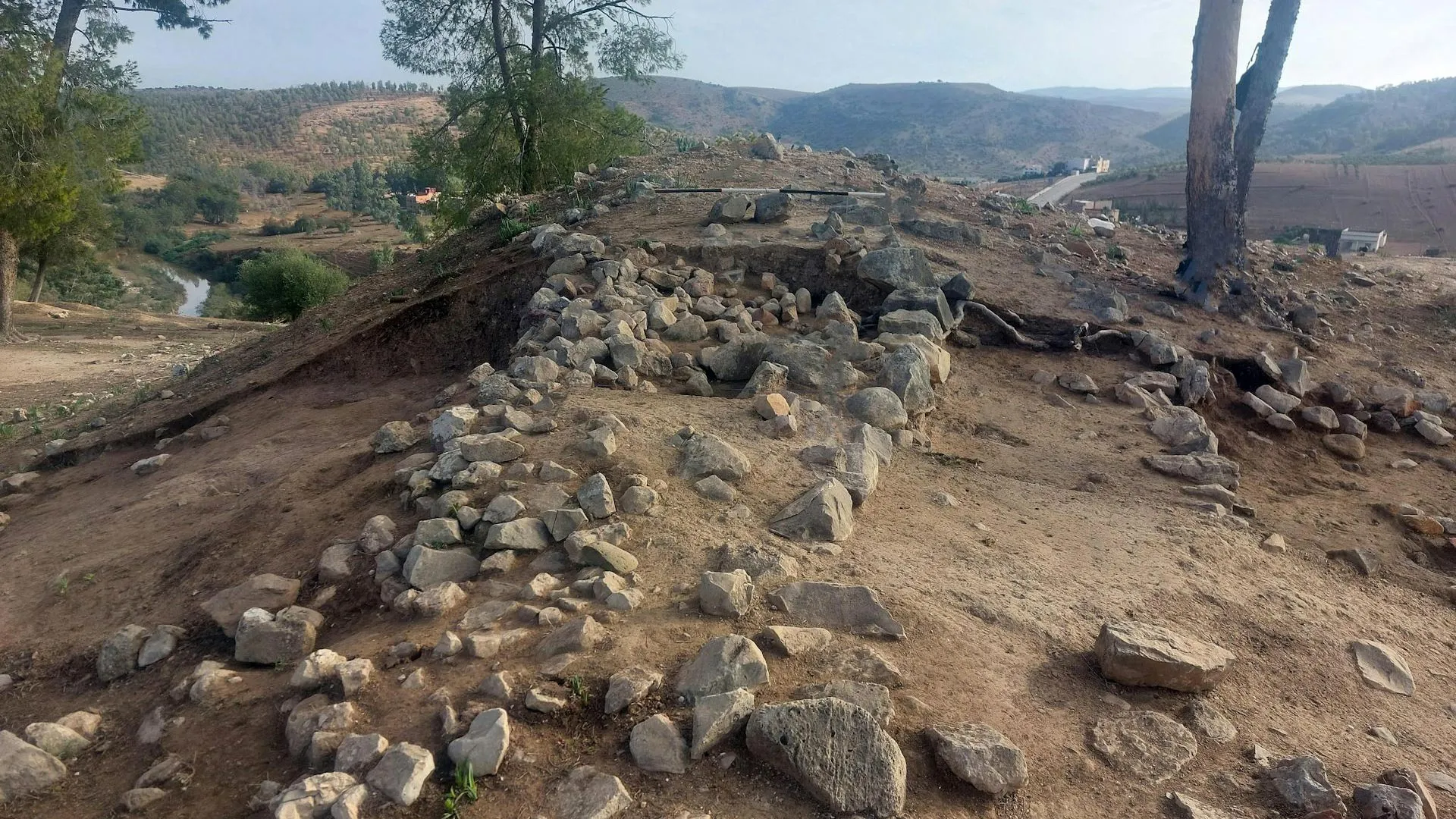
The Nishikaminomiya site, situated in Gunma Prefecture, encompasses a rich landscape of ancient heritage. During recent excavations mandated by local infrastructure and preservation efforts, archaeologists documented nearly a dozen distinct burial mounds, locally referred to as kofun, which translates literally to "old mound." These architectural monuments date primarily to the fifth and sixth centuries CE, a timeframe corresponding to the middle of the Kofun period.
The Kofun period (traditionally spanning from around 250 to 538 CE) is the earliest era of recorded Japanese history that relies heavily on archaeology, as written records from this time are remarkably scarce. It is an epoch defined by the construction of massive, keyhole-shaped, circular, and rectangular burial mounds built for ruling elites. These monumental tombs were frequently adorned with haniwa—terracotta clay cylinders and figurative sculptures arranged on and around the mounds.
The newly discovered figurine stands out even among typical haniwa assemblages due to its remarkably detailed representation of what researchers interpret as a female spiritual leader. Standing as a silent sentinel from the past, the artifact’s ghost-like contours and deliberate artistic styling suggest that it was not merely decorative, but served a vital apotropaic function: spiritually guarding the deceased elite interred within the mound against malevolent forces and unauthorized intruders.
Chronology of the Kofun Period and Mortuary Practices
To fully understand the significance of the Nishikaminomiya figurine, it is necessary to examine the broader chronological framework of the Kofun period and the evolution of its funerary art.
- Early Kofun Period (c. 250–350 CE): Characterized by the initial appearance of large keyhole-shaped mounds (zenpo-koenfun), primarily concentrated in the Yamato basin and later spreading across the Japanese archipelago. Grave goods during this phase often included bronze mirrors, jade or jasper comma-shaped beads (magatama), and early forms of cylindrical haniwa.
- Middle Kofun Period (c. 350–500 CE): This era, during which the Nishikaminomiya mounds were constructed, saw an escalation in the size of the tombs and the militarization of grave goods, including iron weapons and armor. Figurative haniwa (keishiki haniwa), representing humans, animals, houses, and tools, began to proliferate around the mid-fifth century. These sculptures formed elaborate ritual tableaux meant to recreate the worldly power and divine connections of the buried chieftain.
- Late Kofun Period (c. 500–538 CE): Burial practices shifted toward the construction of horizontal stone chamber tombs within the mounds, allowing for multiple interments. The production of haniwa reached its artistic zenith before declining sharply with the introduction of Buddhism to the Japanese islands in the mid-sixth century.
The discovery at Gunma securely places the Nishikaminomiya complex within the vibrant artistic and religious landscape of the middle Kofun period, a time when the societal role of shamans and ritual specialists was deeply intertwined with political authority.
Decoding the Shamanic Imagery
The interpretation of the artifact as a female shaman is rooted in comparative archaeological data from across Japan. In early Japanese society, political and religious authority were frequently distributed in a dual structure or held entirely by spiritual intermediaries who communicated with ancestral deities and nature spirits. Chinese historical texts, such as the Records of the Three Kingdoms (specifically the section concerning the Queen Himiko of Wa), document the immense political and spiritual influence wielded by female shamans in early Japanese polities.
The clay figurine recovered from Nishikaminomiya exhibits specific iconographic markers that support this identification. Its posture, facial features, and the manner in which its garments or ritual regalia are modeled reflect the attributes associated with sacred mediators. Unlike warrior haniwa, which emphasize armor, swords, and quivers, or falconer figures that highlight aristocratic leisure, this artifact emphasizes ritual sanctity.
Experts note that the "ghostly" appearance—characterized by a flowing, monolithic lower body and an austere, stylized facial expression—was a deliberate artistic choice designed to convey otherworldly detachment and spiritual potency. Positioned on the exterior of the burial mound, the figure functioned as a permanent boundary marker between the sacred space of the dead and the profane world of the living, while simultaneously acting as an eternal intercessor for the tomb’s occupant.
Official Responses and Preservation Efforts
Following the excavation, representatives from the Gunma prefectural government and local board of education emphasized the immense cultural and historical value of the Nishikaminomiya site. Local officials noted that the concentration of nearly a dozen well-preserved kofun provides an unprecedented micro-historical view of regional leadership dynamics in the northern Kanto plain during the fifth century.
In official statements, prefectural archaeologists highlighted that the recovery of intact figurative artifacts in such specialized contexts is relatively rare. Many kofun across Japan have suffered from agricultural disruption, urban development, or looting over the centuries. Consequently, finding a dedicated ritual deposit featuring a clearly defined shamanic figure allows researchers to reconstruct ancient funerary rituals with a higher degree of accuracy.
Plans are currently underway by regional heritage authorities to ensure the long-term conservation of the artifact. Specialized conservators are stabilizing the porous terracotta material to prevent degradation, and digital 3D scanning is being employed to create high-resolution archives of the piece. Discussions are also being held regarding future public exhibitions, which would allow visitors to view the ghostly guardian firsthand and learn about Gunma’s rich prehistoric legacy.
Broader Impact and Historical Implications
The unearthing of the Nishikaminomiya female shaman figurine carries profound implications for the study of gender, religion, and state formation in ancient Japan. As researchers continue to analyze the physical properties of the artifact and its exact stratigraphic context within the cluster of burial mounds, several broader themes emerge:
- The Persistence of Female Ritual Authority: The artifact reinforces historical and archaeological models suggesting that women held preeminent positions in religious administration during the formation of the Yamato state, even as political structures became increasingly patriarchal and militarized.
- Regional Diversity in Funerary Art: While much of Kofun period archaeology has historically focused on the central Yamato region (modern-day Nara Prefecture), discoveries in peripheral areas like Gunma demonstrate vibrant local artistic traditions and specialized ritual idioms that adapted central Japanese styles to regional beliefs.
- Advancements in Archaeological Methodology: The meticulous excavation of the Nishikaminomiya complex showcases the efficacy of modern preventative archaeology in Japan, where rapid development pressures are consistently balanced against rigorous scientific documentation and heritage preservation.
Ultimately, this fifth-century clay sentinel bridges a vast chronological divide, offering modern observers a poignant glimpse into the spiritual worldview of ancient Japan. By safeguarding the memory of those who walked the Kanto plain over fifteen hundred years ago, the Nishikaminomiya figurine ensures that the voices of ancient ritual specialists continue to resonate in contemporary historical discourse.