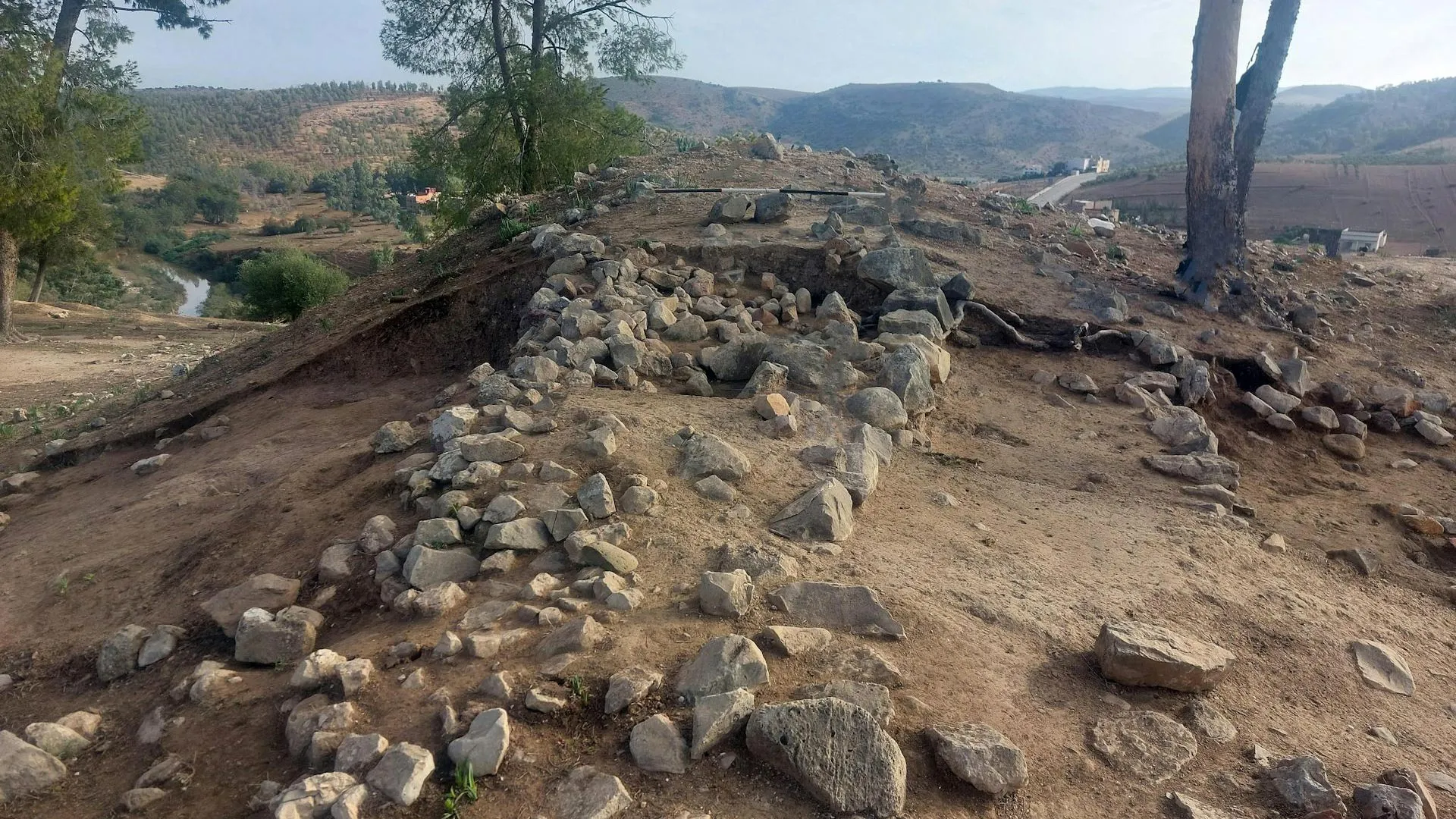
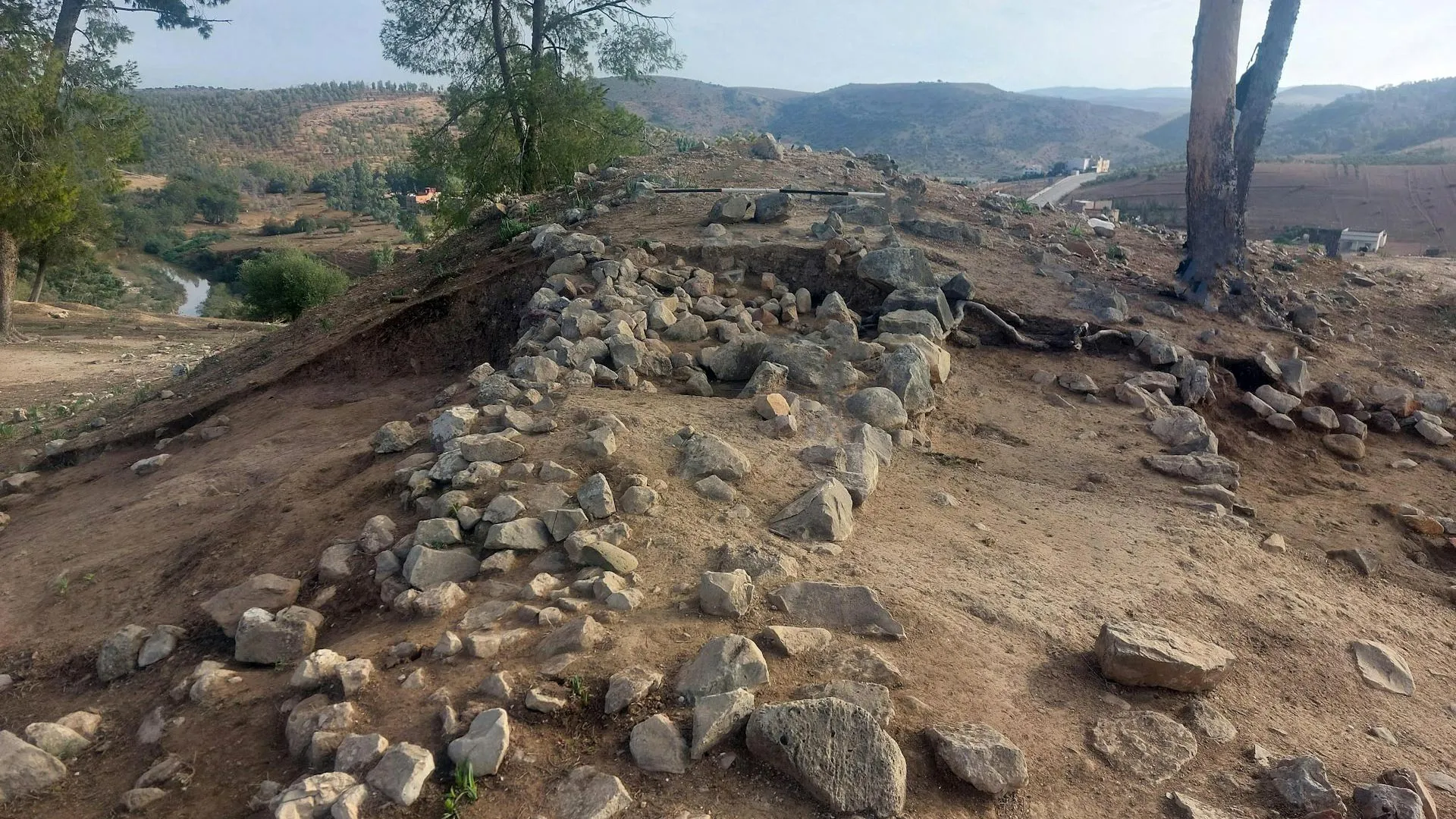
In the rugged hills of north-west Morocco, overlooking the winding river that lends the site its name, the Oued Beht Archaeological Project has unearthed evidence of a sophisticated, complex society that challenges long-held assumptions about the prehistoric Maghreb. Recent excavations have brought to light not only the remnants of an expansive agricultural hub dating back over 5,000 years but also the earliest known large-scale defensive architecture in North Africa outside of the Nile Valley. These findings, detailed in a new study published in the journal Libyan Studies, suggest that North African communities were not isolated peripheries, but rather active participants in the complex socio-political networks of the Mediterranean world during the second millennium BC.
A Chronology of Discovery and Occupation
The site of Oued Beht has long been a subject of interest for archaeologists, with initial surveys dating back to the 1930s. The French archaeologist Armand Ruhlmann first identified a curious configuration of three walls, shielded by the natural topography of a ridge, which he categorized as an éperon barré (barred spur). However, the precise chronological placement and cultural significance of these structures remained obscured by time and a lack of modern investigative techniques.
The recent 2023 excavation season, supported by rigorous radiocarbon dating of organic deposits, has finally provided a definitive timeline for the site’s occupation. The archaeological record at Oued Beht now reveals a multi-layered history:
- Final Neolithic (c. 3500–2900 BC): The earliest major phase of human activity, characterized by extensive farming, the cultivation of wheat and barley, and the production of thousands of polished stone axes and ornate pottery.
- Bronze Age Transition (c. 2000–1500 BC): A significant shift in settlement patterns, marked by the construction of the defensive wall, rampart, and ditch system, indicating a move toward more fortified, strategic living.
- Medieval Period (11th–13th Century AD): The site’s strategic value was rediscovered centuries later, when the ridge was re-occupied, the prehistoric fortifications were rebuilt, and a cemetery and hamlet were established.
Unveiling the Earliest Defensive Architecture
The discovery of a defensive system—comprising a ditch, rampart, and wall across a narrow section of the ridge—is perhaps the most striking revelation of the recent study. Dated to approximately 4,000 to 3,500 years ago, this structure is the oldest confirmed fortification in North Africa outside of Egypt.
The logistical implications of this find are profound. To construct such a system, the society at Oued Beht would have required advanced social organization, the ability to mobilize a substantial labor force, and a centralized authority capable of planning and executing large-scale engineering projects. While the exact nature of the threats these walls were intended to mitigate remains a subject of academic debate, researchers suggest they were likely a response to growing competition over land, resource management, and the control of regional trade routes. Rather than defending against "invaders," these structures likely served as a demonstration of power and a tool for safeguarding strategic assets in an increasingly competitive landscape.
A Hub of Agricultural and Craft Innovation
Before the fortification phase, Oued Beht had already established itself as a significant agricultural center. Covering at least ten hectares, the site provided a sustainable environment for a society that combined crop cultivation with livestock management. The sheer volume of archaeological material—including thousands of stone tools and finely crafted, painted ceramics—indicates that Oued Beht was not merely a subsistence-level hamlet.
It functioned as a center of craft production and likely acted as a regional hub for trade. The diversity of the finds suggests that the community possessed a surplus of resources, allowing for specialization in labor. While researchers are still determining whether the site served as a permanent village or a seasonal gathering point for wider tribal groups, its scale alone makes it the largest agricultural complex discovered in Africa outside the Nile Valley.
Mediterranean Connections and Regional Integration
The historical narrative of the Maghreb has historically been fragmented, often overshadowed by the well-documented civilizations of the eastern Mediterranean and the Argaric culture of the Iberian Peninsula. The new findings at Oued Beht effectively dismantle the "isolationist" theory of North African prehistory.
During the second millennium BC, the western Mediterranean was a theater of intense interaction. Societies in southern Iberia were developing complex social hierarchies, metallurgy, and fortified hilltop settlements. The evidence from Oued Beht confirms that the Maghreb was an integral part of this dynamic, interconnected world. The similarities in defensive strategies and settlement patterns between North Africa and the Iberian Peninsula point to a shared regional process of social evolution. As these societies moved toward more structured forms of leadership and resource management, the exchange of ideas—and perhaps materials—across the Mediterranean likely accelerated, binding these disparate cultures into a larger, coherent historical narrative.
Implications for the History of the Maghreb
The implications of the Oued Beht discoveries extend far beyond the immediate site. For decades, the later prehistory of North Africa has been a "blind spot" in the global history curriculum. By demonstrating that societies in this region were capable of monumental construction and complex social coordination as early as the second millennium BC, the Oued Beht Archaeological Project is forcing a re-evaluation of the region’s contribution to human civilization.
"These findings provide a rare, high-resolution insight into rural communities that have been far too often omitted from the broader history books," says one of the researchers involved in the project. The persistence of human activity at the site—from its prehistoric origins to its medieval resurgence—underscores that Oued Beht was a landscape chosen and re-chosen for its inherent value. It represents a continuous thread of human endeavor that spans millennia, serving as a testament to the resilience and ingenuity of the people who shaped the North African landscape.
Future Research Directions
As excavations continue, the focus will likely shift toward understanding the burial practices and the specific social structures that underpinned these communities. The presence of a medieval cemetery alongside prehistoric remains provides a unique longitudinal view of human life in the region, offering a comparative lens through which researchers can examine how rural societies adapted to changing climates, economies, and political regimes.
The Oued Beht discovery acts as a catalyst for a new era of North African archaeology. It serves as a reminder that the history of the Mediterranean is not merely the history of its northern shores, but a deeply intertwined story that includes the rich, often overlooked civilizations of the Maghreb. As more data is analyzed, the site of Oued Beht is expected to remain the centerpiece for understanding how societies in this region evolved from early farming groups into the complex, structured, and interconnected civilizations that would eventually define the medieval rural world.
In summary, the archaeological record at Oued Beht is not just a collection of walls and pottery; it is the physical evidence of a vibrant, evolving society that was a central player in the ancient Mediterranean. By filling a significant gap in the historical timeline, these discoveries ensure that the contributions of North African peoples are finally receiving the scholarly attention they deserve, rewriting the textbooks to reflect a more inclusive and accurate global history.