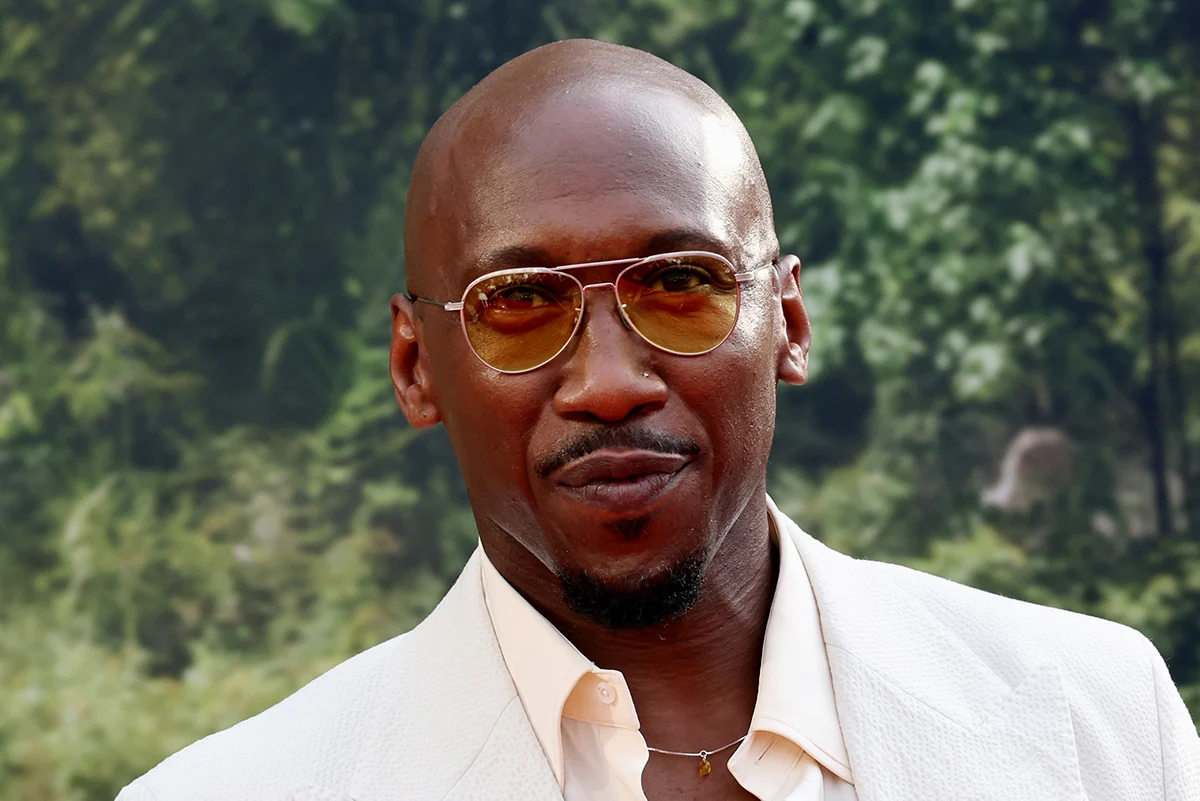
Mahershala Ali, one of the most critically acclaimed actors of his generation, has offered a sobering assessment of the entertainment industry, challenging the long-held belief that an Academy Award serves as a definitive shield against the precarious nature of acting. In a wide-ranging conversation on the "7PM in Brooklyn" podcast hosted by Carmelo Anthony and Kazeem "Kaz" Famuyide, the two-time Oscar winner dismantled the notion that prestigious accolades guarantee a steady stream of high-quality opportunities.
Ali, who secured back-to-back Best Supporting Actor wins for his performances in Barry Jenkins’ Moonlight (2016) and Peter Farrelly’s Green Book (2018), suggested that the industry’s reliance on awards to validate talent often obscures the structural issues inherent in film production. For Ali, the reality of a working actor—even one with two statues on his mantle—remains grounded in the constant search for material that is not only well-written but also specifically tailored to his presence.
The Myth of Oscar-Driven Career Security
The actor’s commentary highlights a disconnect between the perception of an A-list career and the day-to-day reality of casting. "There’s more good actors than there is good material," Ali noted during the podcast. He argued that the prestige of an Oscar does not automatically translate into professional immunity or an endless pipeline of offers. Instead, he emphasized that the vast majority of projects greenlit by major studios simply do not contain roles that align with his sensibilities or demographic profile.
Ali’s perspective touches on a critical frustration within the acting community: the scarcity of roles that go beyond archetypes. Even for a performer who has reached the zenith of the industry’s reward system, the process of finding meaningful work remains arduous. "It doesn’t matter if I got 17 Oscars," he remarked. "If someone is not writing something for you or greenlighting something with you in mind, you’re like everybody else waiting and looking and searching."
This sentiment is echoed by industry analysts who observe that while awards can boost an actor’s visibility, they do not necessarily expand the pool of available roles in a landscape dominated by franchise-driven, tentpole filmmaking. Data from recent industry reports suggest that even as studios tout commitments to diversity, the actual distribution of roles often remains siloed, leaving prominent actors to choose between self-producing—a multi-year endeavor—or waiting for infrequent, high-quality scripts.
The Shadow of the Failed Blade Project
The discussion of career trajectory and the volatility of studio projects naturally led to the elephant in the room: the collapse of Marvel Studios’ Blade reboot. Ali, who was attached to play the titular vampire hunter for several years, recently provided a candid perspective on the project’s dissolution. The film, which went through multiple script revisions and directorial changes, became a symbol of the creative friction between talent and the massive machinery of corporate production.
Bassam Tariq, who was initially tapped to direct the project before departing in 2022, provided further context in an interview with The New Arab. Tariq expressed the immense difficulty of navigating a project that lacked a cohesive creative foundation. "It was funny and strange to start casting and building without a proper script," Tariq revealed. He described the frustration of trying to manage expectations for actors while dealing with a corporate environment that, at the time, lacked the necessary structural readiness to deliver a finished product.
Tariq’s departure underscored a broader lesson about filmmaker integrity. "I learned I was losing credibility with my actors, and it wasn’t a healthy way to operate as a filmmaker," he said. The failure of Blade—a project that Marvel Studios president Kevin Feige famously labeled as a "gigantic loser and failure" for the studio—serves as a cautionary tale for the industry. Ali confirmed his agreement with Feige’s assessment, noting, "To this day, I don’t know why it didn’t happen."
Industry Context and the "Diversity Project" Narrative
Ali also addressed the broader implications of how Black actors are perceived in Hollywood, particularly when it comes to awards and the industry’s focus on diversity initiatives. When asked if an Oscar win serves as a necessary validation for Black talent, Ali was dismissive of the idea that such recognition should dictate a performer’s self-worth.
"It’s kind of just talk," Ali stated. "It doesn’t translate to anything real. You don’t want to find yourself in a situation where, oh, that’s ‘the diversity project.’" His comments point to the subtle but pervasive pressure on actors of color to inhabit roles that are specifically labeled as "important" or "socially conscious," rather than being allowed the creative freedom to explore a wider range of narratives. Ali’s goal, he explained, is to simply engage with excellent material without the weight of being treated as an "exotic other."
Chronology of Recent Career Developments
- 2017: Mahershala Ali wins his first Academy Award for Best Supporting Actor for Moonlight.
- 2019: Ali wins his second Academy Award for Best Supporting Actor for Green Book.
- 2019: Marvel Studios announces that Mahershala Ali will star as the title character in a new Blade film.
- 2022: Director Bassam Tariq exits the Blade project citing creative differences and a lack of a finalized script.
- 2024-2025: The Blade project undergoes several cycles of re-development before the studio confirms it will not proceed in its current iteration.
- September 2025: Ali stars in the film Your Mother Your Mother Your Mother, directed by Bassam Tariq, marking a successful creative reunion between the actor and filmmaker despite their previous Marvel complications.
Broader Implications for the Film Industry
The discourse surrounding Ali’s career serves as a microcosm for a larger debate about the sustainability of the modern film model. As studios lean heavily into intellectual property and established franchises, the space for mid-budget, character-driven dramas has shrunk. For an actor like Ali, whose career was built on the strength of nuanced, dramatic performances, the current climate presents a unique set of challenges.
The "three to five year" lead time required for an actor to produce their own work, as mentioned by Ali, highlights the difficulty of maintaining momentum in a fast-paced industry. When a star of his caliber spends years tethered to a project that ultimately fails to materialize—as was the case with Blade—the opportunity cost is significant.
Furthermore, the industry’s reliance on "diversity projects" as a quick solution to public criticism has, according to Ali, created a narrow corridor for talent. By framing success as a result of institutional validation rather than the inherent quality of the work, the industry risks alienating the very artists it claims to support.
Conclusion: A Shift in Focus
Ultimately, Ali’s comments reflect a desire for a more transparent and artist-centric industry. By acknowledging the failures of his high-profile Marvel experience and expressing skepticism toward the "Oscar industrial complex," Ali is signaling a shift in his own priorities. His recent collaboration with Bassam Tariq on Your Mother Your Mother Your Mother suggests that he is increasingly focused on projects that offer creative control and artistic integrity, rather than those that promise box office dominance or award-season accolades.
As the industry continues to grapple with the fallout of the pandemic-era production shifts and the subsequent cooling of the streaming bubble, the voices of established artists like Ali are becoming increasingly vital. His willingness to speak candidly about the fragility of his position serves as a reminder that in Hollywood, even the most decorated stars are subject to the same systemic pressures, limitations, and creative uncertainties as the rest of the industry. The future of his career, as he suggests, will not be defined by the statues on his shelf, but by the material he chooses to champion in the years to come.