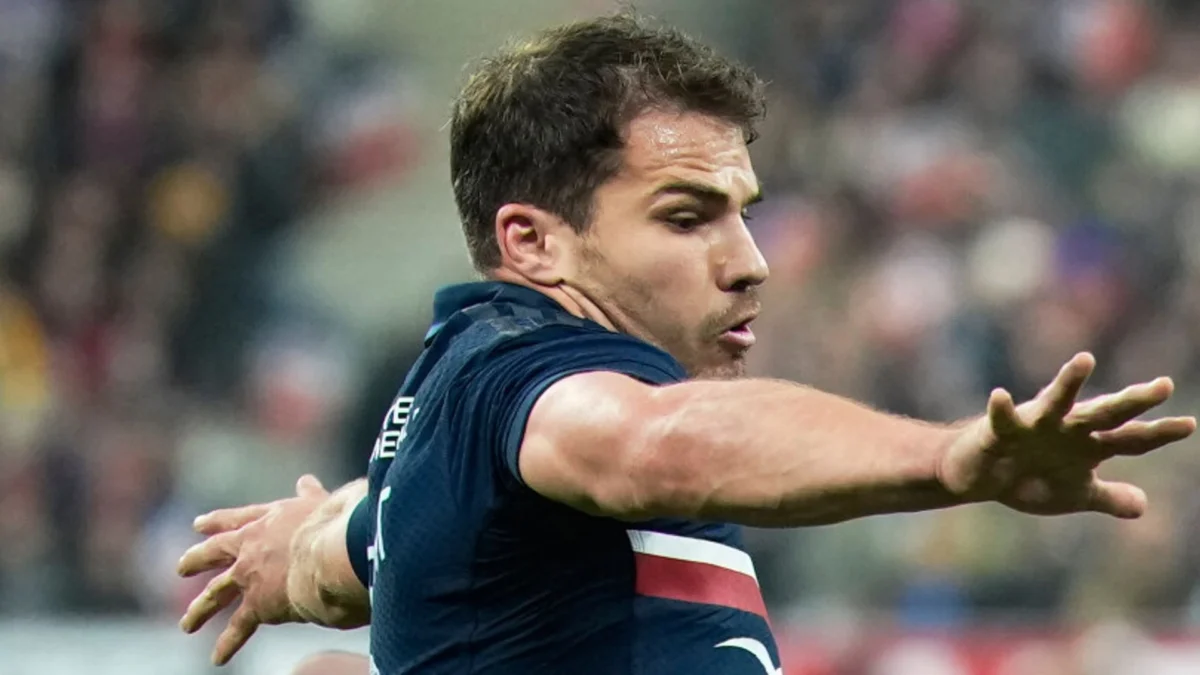
France have secured their place in the inaugural Nations Championship final following a commanding 45-17 victory over Argentina at the Stade de France on Saturday evening. The result was not merely a win but a tactical masterclass that fulfilled the precise criteria required to leapfrog rivals in the tournament standings. With England’s earlier 37-12 success against New Zealand placing immediate pressure on the French side, Les Bleus entered the fixture knowing that anything less than a bonus-point win would see their tournament ambitions extinguished.
The victory sets the stage for a highly anticipated rematch against South Africa at Twickenham on November 29. This encounter will serve as a definitive conclusion to a tournament that has reshaped the landscape of international rugby, pitting the current world powers against one another in a neutral-venue showcase.
A Decisive Performance Under Pressure
The tactical landscape of the match shifted dramatically following the conclusion of the England-New Zealand game. With the pool standings razor-thin, the French coaching staff, led by Fabien Galthié, demanded high-tempo, attacking rugby from the outset.
The match began with a tense exchange of territory, and for a brief window, Argentina looked capable of playing the role of spoilers. The Pumas led 10-7 midway through the first half, following a clinical converted try from center Justo Piccardo and a penalty from fly-half Tomas Albornoz. However, the French response was methodical and relentless. As the first half progressed, the forward pack began to exert dominance at the breakdown, providing the platform for a backline that looked increasingly dangerous.
Lock Mickaël Guillard leveled the momentum before hooker Peato Mauvaka—a standout performer throughout the season—crossed the whitewash to restore a lead that France would never relinquish. By the interval, France had established a 21-10 cushion, but they remained one try short of the bonus point required to guarantee their progression.
The Turning Point: The Second Half Surge
The second half was defined by French clinicality. Shortly after the restart, fly-half Matthieu Jalibert, whose recovery from a significant thigh injury was monitored closely by medical staff all week, demonstrated his vision by orchestrating a sequence that allowed center Kalvin Gourgues to exploit space in the Argentine defense.
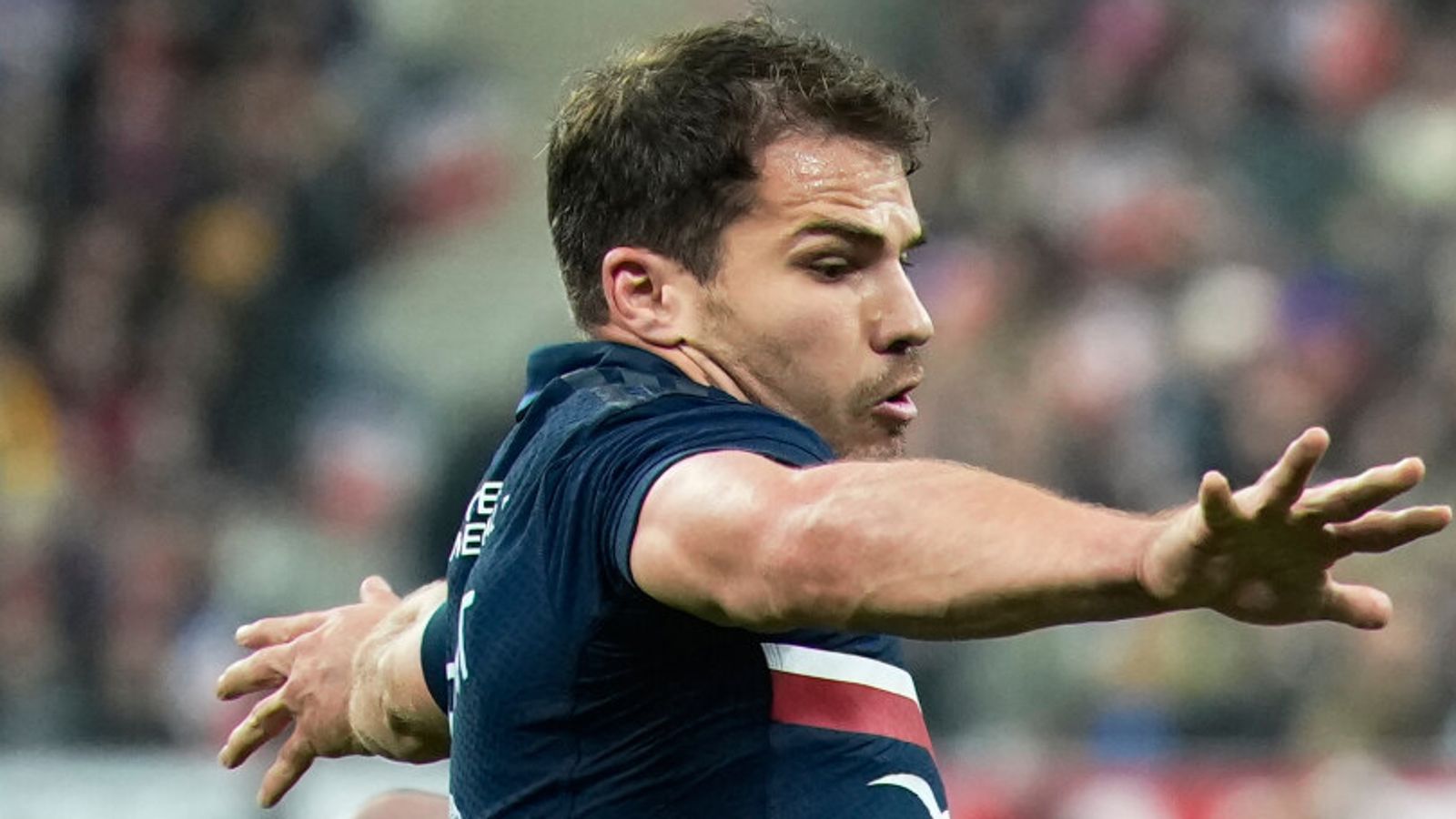
The pivotal moment arrived in the 64th minute. With the pressure mounting on the Argentine defensive line, Emilien Gailleton crossed for the all-important fourth try, securing the necessary bonus point. The situation for Argentina deteriorated further when Pumas prop Mayco Vivas was initially issued a yellow card for a dangerous challenge, which was swiftly upgraded to a red following a review by the TMO (Television Match Official).
With Argentina reduced to 14 men, France exploited the fatigue in the opposition ranks. Tyler Duguid demonstrated immense physicality to power through a defensive wall following a lineout, while Gourgues added his second try of the evening with a blistering sprint from the halfway line. The final blow was delivered by the prolific Louis Bielle-Biarrey, who recorded his 31st try in just 30 international tests, capping a dominant team performance.
Tactical Evolution: The Return of Dupont
The return of Antoine Dupont to the scrum-half position was perhaps the most significant personnel decision for the French side. Having operated as a fly-half in the previous week’s 21-19 victory over the Springboks, Dupont’s return to his natural position provided France with a greater sense of control and tempo.
Dupont’s influence was visible not only in his distribution but in his tactical kicking. His precision kick down the left flank in the closing minutes, which set up Bielle-Biarrey’s final try, highlighted the world-class vision that has made him the focal point of this French generation. Furthermore, with Gourgues assuming the role of the primary goal-kicker in the absence of other specialists, the team’s ability to convert pressure into points remained consistent throughout the 80 minutes.
Chronology of the Nations Championship Final Path
The path to the Twickenham final has been a test of endurance and consistency for both France and South Africa.
- November 15: South Africa defeat Ireland in a physically bruising encounter, securing their spot at the top of the southern hemisphere pool despite a narrow margin of victory.
- November 21 (Afternoon): England’s 37-12 win over New Zealand changes the arithmetic for the evening fixture, leaving France in a "win with a bonus point or go home" scenario.
- November 21 (Evening): France defeats Argentina 45-17, securing the final qualification spot.
- November 29: The Nations Championship Final, France vs. South Africa, scheduled for Twickenham Stadium, London.
Broader Implications and Statistical Context
The significance of this result extends beyond the tournament bracket. France’s ability to defeat the Springboks last week and follow it up with a comprehensive victory over Argentina confirms their status as the form team in Northern Hemisphere rugby.
Statistically, the game was a demonstration of offensive efficiency. France’s seven-try haul highlights a shift in their philosophy toward a more expansive, ball-in-hand game. Defensively, while they conceded early, their ability to stifle the Argentine attack after the 20-minute mark suggests a high level of conditioning and defensive cohesion.

For Argentina, the result is a disappointing end to a campaign that showed moments of brilliance. The red card for Mayco Vivas underscored the disciplinary challenges the team has faced throughout the year. However, the emergence of players like Justo Piccardo suggests a positive trajectory for the Pumas heading into the next World Cup cycle.
Tributes and The Human Element
Beyond the sport, the match served as a moment of reflection. Before the opening whistle, both sides stood for a pre-match tribute to Federico Martín Aramburú, the former Argentina international and Biarritz star who was tragically killed in Paris four years ago. The emotional resonance of the ceremony underscored the deep-seated ties between French and Argentine rugby, providing a somber start to a match that eventually erupted into a high-scoring spectacle.
The Final Preview: France vs. South Africa
The upcoming final at Twickenham on November 29 promises to be the definitive clash of the 2026 season. Last week’s 21-19 win for France was a tight, low-scoring affair defined by attrition and defensive discipline. The final is expected to be a different tactical challenge.
South Africa enters the final as the more physically imposing side, having navigated a group that included Ireland and other high-ranking nations. France, by contrast, enters the final with the momentum of a high-scoring victory and the tactical flexibility of a side that has successfully rotated its playmakers.
Analysts suggest that the game will be won or lost at the set-piece. The South African scrum remains the benchmark of world rugby, and their ability to neutralize the French pack will determine whether the French backline can find the space they exploited against Argentina. Conversely, if France can maintain the speed of ball they generated at the Stade de France, they will test the South African defensive line in ways few teams have managed this year.
As the rugby world turns its eyes to Twickenham, the stakes could not be higher. For France, this is an opportunity to validate their recent rise with a major tournament trophy. For South Africa, it is a chance to reassert their dominance and prove that their loss in Paris last week was an anomaly rather than a shift in the global hierarchy. Both teams have demonstrated that they are currently operating at a level above the rest of the international field, ensuring that the November 29 final will be a fitting conclusion to a historic inaugural tournament.