
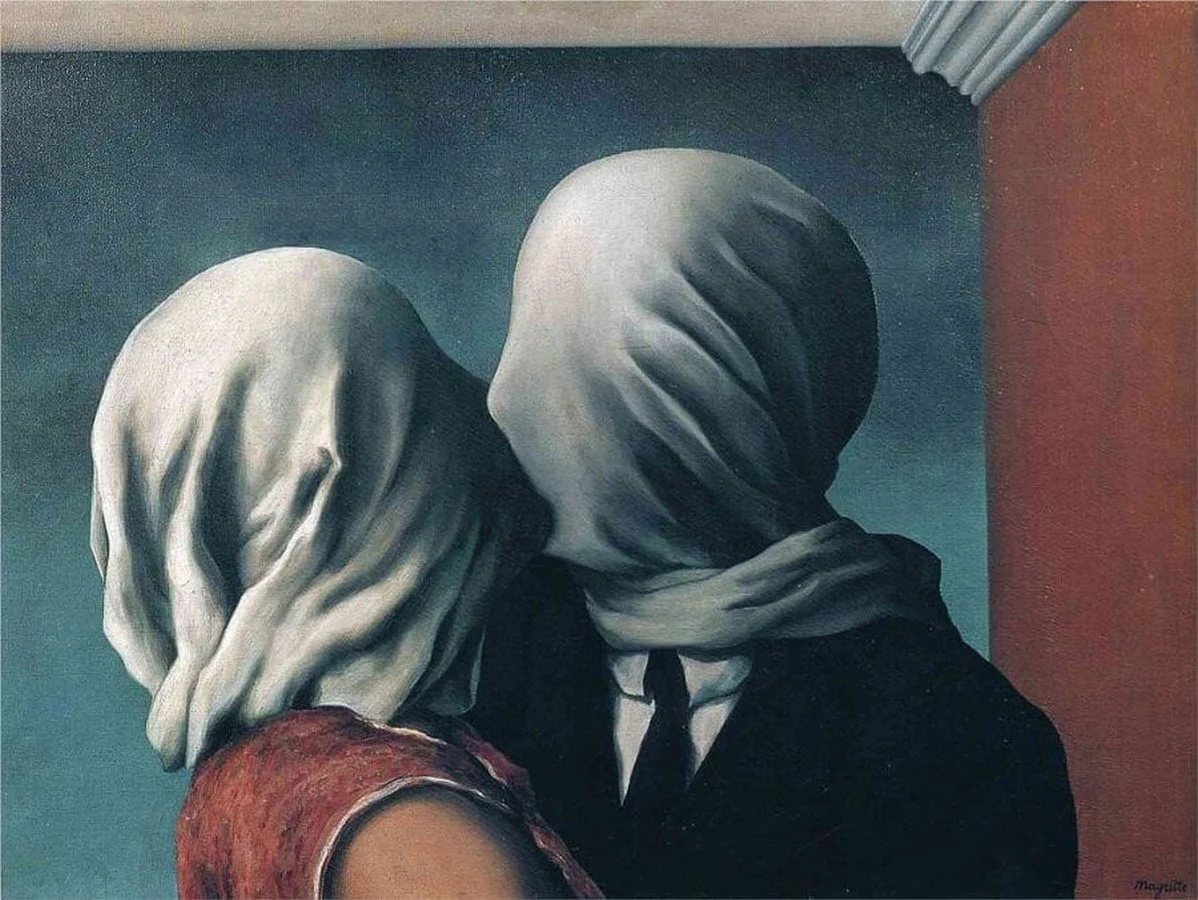
The publication of René Magritte’s collected manifestos, interviews, and letters, titled Selected Writings, marks a significant milestone in the study of Surrealism and the psychological underpinnings of 20th-century art. Translated into English through the efforts of scholar Kathleen Rooney, these documents provide a rigorous intellectual framework for understanding Magritte’s creative output not merely as a collection of visual puzzles, but as a deliberate philosophical "counter-offensive" against the pervasive cynicism of the modern era. While Magritte is globally recognized for his iconic imagery—the bowler-hatted men, the floating green apples, and the pipe that is not a pipe—his written records reveal a man deeply concerned with the moral imperative of joy. In a world frequently defined by geopolitical conflict and social fragmentation, Magritte argued that the cultivation of enchantment is an act of resistance, a necessary psychological armor against what he termed the "banality of pessimism."
The Biographical Context: Tragedy as a Catalyst for Transformation
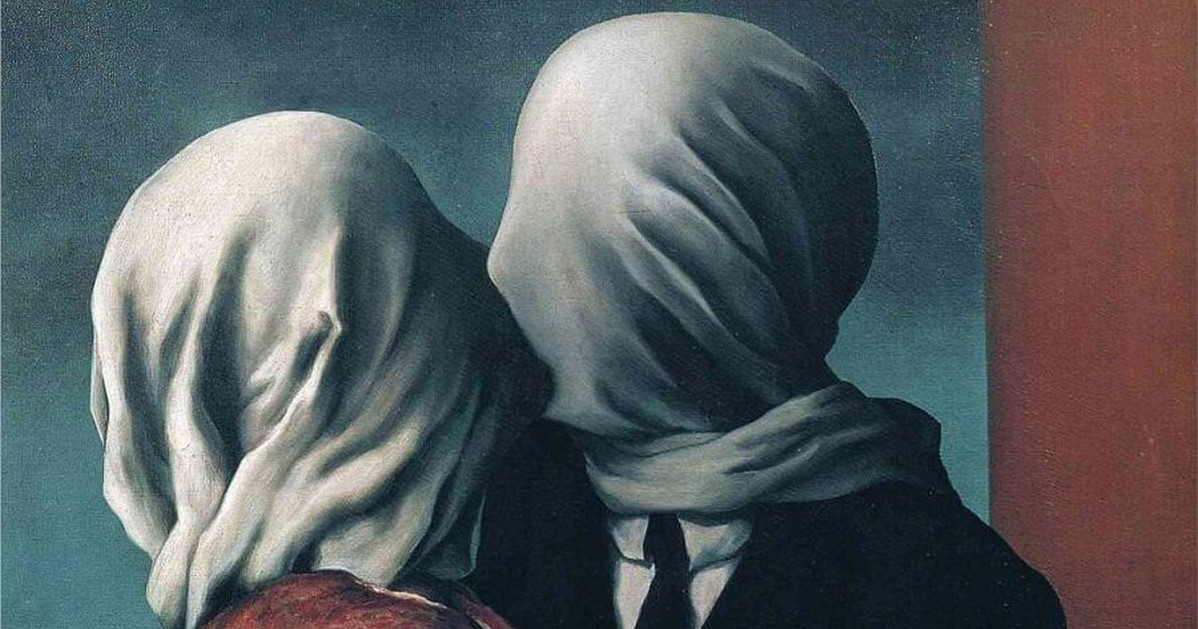
To understand Magritte’s advocacy for joy, one must first examine the profound personal and collective trauma that shaped his early life. Born in Lessines, Belgium, in 1898, Magritte’s adolescence was marked by the 1912 suicide of his mother, Régina, who drowned herself in the River Sambre. This event, often cited by art historians as the source of his recurring motifs of veiled faces and water, established a baseline of tragedy that could have easily led to a lifelong commitment to nihilism.
Furthermore, Magritte’s career spanned the two most destructive conflicts in human history. Living through the German occupations of Belgium during World War I and World War II, he witnessed firsthand the erosion of civil society and the industrialization of terror. It was during the height of the Second World War—specifically between 1943 and 1947—that Magritte’s philosophy underwent its most radical shift. Moving away from the dark, unsettling imagery typical of early Surrealism, he began his "Renoir period," characterized by a vibrant palette and impressionistic brushwork. This shift was a direct response to the atmosphere of the war; Magritte concluded that adding to the world’s darkness through art was an act of "intellectual laziness." Instead, he sought to create a "parallel reality" where the inherent wonder of existence remained intact despite the surrounding devastation.
The Architecture of the Counter-Offensive
In a 1947 interview featured in Selected Writings, Magritte articulated his stance with clinical clarity, stating that experience had taught him that the celebration of "joy for the eyes and the mind" was the most vital contribution an artist could make. He famously noted, "It is much easier to terrorize than to charm." This statement serves as the foundation of his aesthetic theory: that the "routine ugliness" of the world is a product of habit, and that art’s true purpose is to break that habit through enchantment.
Magritte’s manifesto, Surrealism in the Sunshine, further develops this critique of cultural pessimism. He argued that modern society had been conditioned to believe that viewing life through a tragic lens was a sign of intellectual maturity or "objectivity." According to Magritte, this is a fallacy. He posited that the belief that "the greater the terror, the greater the objectivity" is a psychological trap that equates suffering with truth. By rejecting this premise, Magritte positioned himself against both the materialist and idealist philosophies of his time, which he believed reduced the mystery of existence to a "dream-nightmare."
Chronology of René Magritte’s Intellectual and Artistic Evolution
A chronological review of Magritte’s life highlights the consistent development of his "enchantment" philosophy:
- 1898–1912: Early childhood in Belgium, concluding with the traumatic death of his mother.
- 1924–1927: Magritte becomes a leading figure in the Belgian Surrealist movement, influenced by Giorgio de Chirico. His work in this period often explores the uncanny and the unsettling.
- 1940–1945: During the Nazi occupation of Belgium, Magritte breaks with the "orthodox" Surrealism of André Breton. He begins experimenting with a brighter, more optimistic style, which he calls "Surrealism in full sunlight."
- 1946: Magritte publishes the manifesto Surrealism in the Sunshine, officially codifying his belief that art should provide a sense of enchantment as a remedy for the horrors of war.
- 1947–1967: Magritte returns to his precise, linear style but retains the philosophical core of his wartime realizations. He achieves international acclaim, culminating in major retrospectives in New York and London before his death in August 1967.
Supporting Data: The Neurophysiology of Awe and Enchantment
Magritte’s intuitive understanding of enchantment as a "valuable" state of being finds support in contemporary scientific research. Recent studies in neurophysiology and positive psychology suggest that the experience of enchantment—often categorized as "awe"—has measurable benefits for human health and social cohesion.
Research led by psychologists such as Dacher Keltner at the University of California, Berkeley, indicates that exposure to "enchanting" stimuli (such as art or nature) reduces levels of cytokines, which are markers of inflammation in the body. Furthermore, the experience of awe has been shown to diminish the "small self," leading individuals to feel more connected to a larger collective and reducing symptoms of anxiety and depression. Magritte’s assertion that "life becomes more joyful, thanks to the extraordinary effort needed to create this charm" aligns with the modern understanding of "active hope," a psychological framework where joy is not a passive emotion but a disciplined practice.
Comparative Intellectual Frameworks: Fromm, Frankl, and Whitman
Magritte’s writings do not exist in a vacuum; they resonate with the works of other major 20th-century thinkers who addressed the "banality of pessimism."

- Erich Fromm: A quarter-century after Magritte’s manifestos, the humanistic philosopher Erich Fromm described pessimism as an "alienated form of despair." Like Magritte, Fromm argued that a fixation on destructiveness was a symptom of a society that had lost touch with the "biophilous" (life-loving) instinct.
- Viktor Frankl: The psychiatrist and Holocaust survivor Viktor Frankl, in his seminal work Man’s Search for Meaning, argued that the ability to find meaning—and even moments of joy—in the midst of suffering was the ultimate human freedom. Magritte’s "counter-offensive" can be viewed as the artistic equivalent of Frankl’s psychological "will to meaning."
- Walt Whitman: The American poet Walt Whitman viewed optimism as a "force of resistance" essential for the survival of democracy. Magritte’s insistence that we must "go in search of enchantment" mirrors Whitman’s belief that the poet’s role is to illuminate the divinity in the commonplace.
Broader Impact and Modern Implications
The release of Magritte’s prose in English arrives at a time of significant global "crisis fatigue." The contemporary landscape, characterized by a 24-hour news cycle and the digital amplification of catastrophe, mirrors the "unpleasant world" Magritte sought to counteract. His writings suggest that the modern tendency toward "doom-scrolling" or cynical detachment is not a form of heightened awareness, but rather a surrender to "intellectual laziness."
Magritte’s work challenges the contemporary art world and the public alike to reconsider the value of beauty and charm. In the mid-20th century, his "Sunshine" period was largely dismissed by critics who found it kitsch or escapist. However, viewed through the lens of his Selected Writings, these works emerge as a sophisticated form of psychological warfare. By deliberately choosing to paint "joy for the eyes," Magritte was refusing to let the external world dictate his internal reality.
The legacy of this philosophy is evident in the works of modern artists and writers who prioritize "radical hope." Authors like Rebecca Solnit have echoed Magritte’s sentiments, noting that hope is not a sunny optimism that ignores reality, but an account of the complexities and uncertainties of the world that allows for the possibility of change.
Conclusion: The Discipline of Enchantment
René Magritte’s Selected Writings serve as a reminder that enchantment is not a luxury, but a necessity for the preservation of the human spirit. His life and work demonstrate that finding joy is an act of courage that requires "extraordinary effort." By labeling pessimism as "banal" and "easy," Magritte inverted the traditional hierarchy of intellectualism, suggesting that the most difficult—and therefore most radical—path is the one that leads to wonder.
As societies continue to navigate periods of instability, Magritte’s "counter-offensive" remains a relevant strategy. His prose provides a roadmap for moving beyond the "dream-nightmare" of existence toward a mental universe that is "enchanting, happy, and valuable." Ultimately, Magritte’s greatest contribution may not be the images he left behind, but the conviction that humanity possesses the inherent power to transform its reality through the deliberate pursuit of charm.









Leave a Reply